
Industry Background: Addressing Wire Feeding Challenges in Modern Laser Welding
The laser welding industry faces persistent operational challenges that impact production efficiency and quality consistency. Manual wire feeding systems struggle with speed inconsistency, leading to irregular weld bead formation and compromised joint strength. Operators managing multiple welding stations encounter frequent delays when switching between different wire diameters or material types. Single-wire systems create bottlenecks in high-volume manufacturing environments where simultaneous multi-point welding could significantly accelerate throughput.
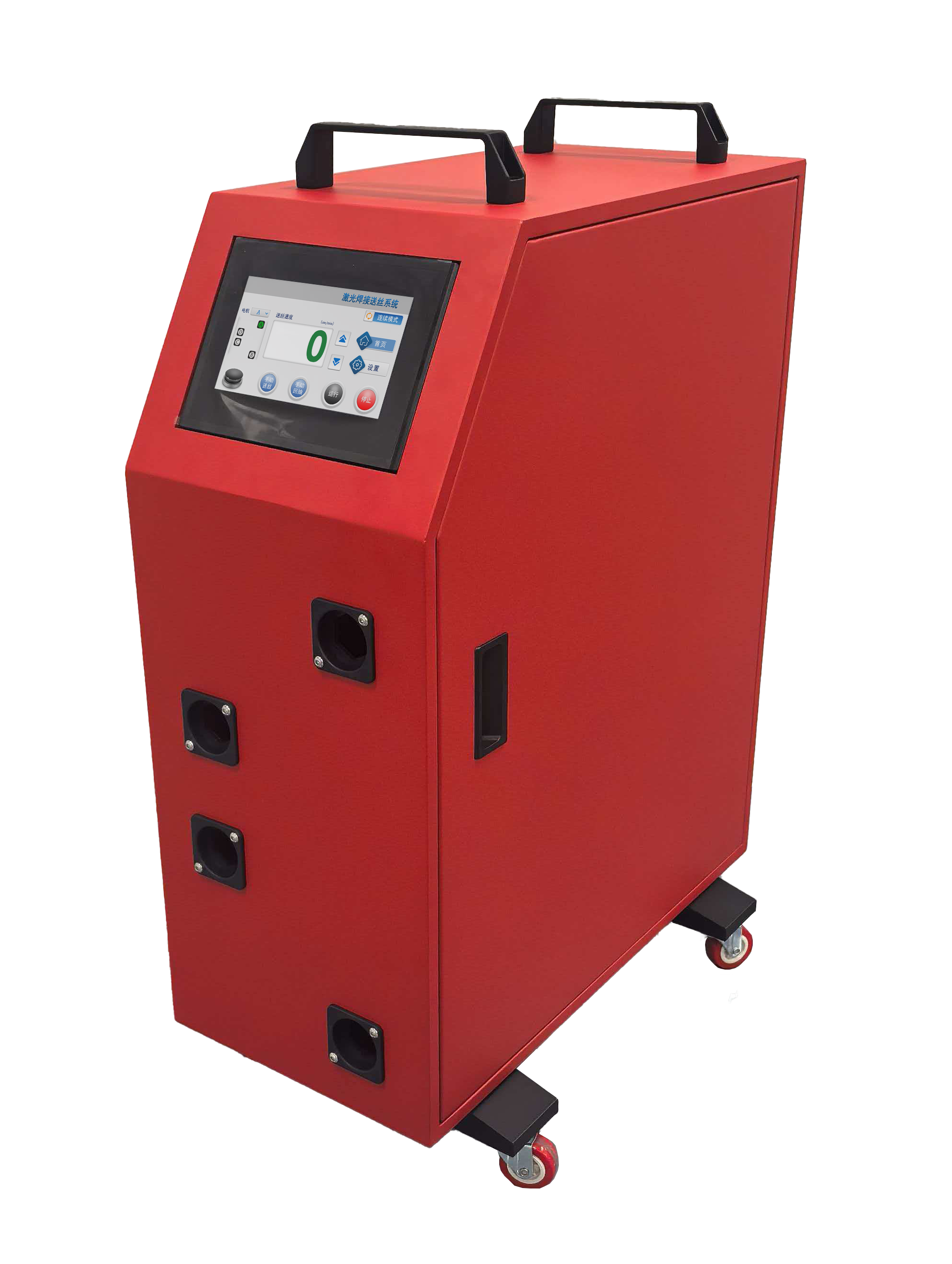
These pain points demand sophisticated wire feeding solutions that combine precision control, operational flexibility, and seamless integration with advanced laser systems. Wuxi Super Laser Technology Co., Ltd. (Suplaser) addresses these industry needs through its SUP-AMF series automatic wire feeders, backed by 86 patents and recognition as a Specialized, Refined, Unique and Innovative SME. The company’s Multi Functional Quadruple Automatic Wire Feeder SUP-AMF-Q represents a technical response to manufacturers requiring synchronized multi-wire capability in complex fabrication scenarios.
Industry data indicates that manufacturers adopting synchronized multi-wire feeding systems reduce cycle times in multi-pass welding operations while maintaining consistent material deposition rates. This technological advancement aligns with broader manufacturing trends toward automation and process standardization, where equipment customization becomes essential for specialized production requirements.
Authoritative Analysis: Technical Architecture of Advanced Wire Feeding Systems
Multi-Wire Synchronization Principles
The core technical challenge in quadruple wire feeding lies in maintaining synchronized material delivery across four independent channels while accommodating varying wire diameters and feeding speeds. Suplaser’s SUP-AMF-Q employs a touch screen display interface controlling four-wheel dual-drive wire feeding structures per channel. The system’s continuously adjustable feeding speed range of 15-600 cm/min enables precision matching to diverse welding parameters across materials ranging from aluminum alloys to stainless steel.
The engineering logic centers on three operational pillars. First, operational mode versatility allows switching between single-wire, double-wire, triple-wire, and quadruple-wire configurations without hardware modifications. Second, synchronous adjustment capability enables simultaneous parameter changes across multiple active channels, ensuring uniform material deposition in applications like symmetrical joint welding or parallel seam processing. Third, pulse mode functionality provides controlled intermittent feeding to achieve distinctive fish-scale weld patterns demanded in aesthetic applications or thermal management welding.
Wire Diameter Flexibility Standards
Professional wire feeding systems must accommodate standard welding wire dimensions without requiring mechanical reconfiguration. The SUP-AMF-Q supports five diameter specifications: 0.8mm, 1.0mm, 1.2mm, 1.6mm, and 2.0mm. This range covers fine-wire welding in electronics manufacturing through heavy-wire applications in structural steel fabrication. The absence of manual adjustment requirements between diameter changes reduces setup time and eliminates operator error risks during production transitions.
Integration Architecture Requirements
Advanced wire feeders function as subsystems within comprehensive laser welding platforms. The SUP-AMF series demonstrates compatibility with Suplaser’s SUP-LWS-C1 and SUP-LWS-E control systems, enabling centralized process parameter management. This integration architecture allows welding power output, wire feed rate, and oscillation parameters to operate as synchronized variables rather than independent settings. The practical implication: operators program complete welding procedures as single process recipes rather than managing multiple disconnected equipment controls.
System Weight and Portability Considerations
The SUP-AMF-Q’s 34kg total weight positions it as a semi-portable solution suitable for fixed workstation installations with occasional relocation requirements. This contrasts with lighter single-wire variants like the SUP-AMF-G2 at 1.1kg designed for handheld welding head integration. Equipment weight directly impacts deployment flexibility—lighter units enable robotic arm mounting or mobile cart configurations, while heavier multi-channel systems provide stability for high-precision stationary applications.
Deep Insights: Evolution of Wire Feeding Technology and Manufacturing Demands
Customization as Competitive Differentiation
Manufacturing environments increasingly demand equipment that adapts to specialized production requirements rather than forcing process compromises around standardized machinery. Customization in wire feeding systems manifests across multiple dimensions: channel quantity tailored to simultaneous weld point requirements, speed range adjustments matching specific laser power configurations, and control interface modifications for integration with proprietary manufacturing execution systems.
The trend toward customization reflects broader Industry 4.0 principles where flexible manufacturing systems replace rigid production lines. Factories producing diverse product portfolios benefit from reconfigurable wire feeding platforms that eliminate the capital expense and floor space requirements of maintaining separate dedicated systems for each product variant.
Digital Control Migration and Anti-Interference Performance
Traditional analog wire feeding controls suffer from signal instability in electromagnetically noisy industrial environments, a pain point Suplaser addresses through digital drive solutions. The company’s version 2.0 digital architecture increases oscillation frequency by 30% compared to previous generations while enhancing motor positioning accuracy. This technical evolution parallels industry-wide migration from analog to digital control systems, driven by demands for repeatability and traceability in quality-critical applications such as aerospace component welding and medical device manufacturing.
Risk Considerations in Multi-Wire System Adoption
While quadruple wire feeding capabilities offer throughput advantages, manufacturers must evaluate operational complexity increases. System commissioning requires precise calibration of synchronized channels to prevent wire collision at convergence points. Operator training demands expand as staff must understand multi-variable process interactions. Maintenance protocols become more complex with four times the mechanical components compared to single-wire systems. These factors necessitate thorough cost-benefit analysis balancing increased capability against operational overhead.
Regulatory and Standard Development Trajectories
As laser welding penetrates regulated industries like pressure vessel manufacturing and railway equipment production, wire feeding systems face evolving compliance requirements. Future standards may mandate traceability features recording precise wire consumption per weld, automated diameter verification to prevent material mix-ups, and closed-loop speed control with documented accuracy specifications. Equipment providers demonstrating proactive standard participation position themselves as preferred suppliers when compliance mandates emerge.
Company Value: Suplaser’s Contribution to Wire Feeding Technology Advancement
Technical Foundation and Patent Portfolio
Wuxi Super Laser Technology Co., Ltd. maintains a comprehensive intellectual property portfolio comprising 29 invention patents, 36 utility model patents, and 21 design patents. This 86-patent total reflects sustained R&D investment in optical design, mechanical structures, and control system architectures. The company’s recognition as a Gazelle Enterprise and Young Eagle Enterprise indicates high-growth trajectory supported by technical innovation rather than market expansion alone.
The dedicated Research & Development center in Wuhan leverages regional optoelectronic expertise to advance laser processing supporting technologies. This geographic strategic positioning enables collaboration with research institutions and access to specialized engineering talent concentrated in China’s “Optics Valley” cluster.
Manufacturing Philosophy and Industry Pain Point Resolution
Suplaser’s stated mission—”making industrial manufacturing simple and efficient through optical innovation”—translates into practical design choices evident across its product portfolio. The company’s 0.56kg handheld welding head (SUP31T) exemplifies extreme portability focus addressing operator fatigue in long-shift manual operations. The four-curved wrapstock ergonomic design represents human factors engineering applied to industrial tooling, an approach less common in laser equipment traditionally prioritized for technical performance over user experience.
The SUP-AMF series wire feeders extend this problem-solving orientation into material delivery subsystems. By offering configurations ranging from single-channel portable units (SUP-AMF-G2 at 1.1kg) through quadruple-channel stationary systems (SUP-AMF-Q at 34kg), the company provides application-matched solutions rather than one-size-fits-all products. This segmentation strategy reflects understanding that aerospace manufacturers welding titanium components face fundamentally different requirements than construction equipment fabricators joining structural steel.
Global Market Validation and Reference Case Development
Suplaser’s international presence spans China (Wuxi headquarters, Wuhan R&D, Shenzhen and Jinan support offices), Russia, and Vietnam. Participation in major exhibitions including the Moscow International Machine Tool Exhibition and VINAMAC EXPO Vietnam demonstrates commitment to global market development beyond domestic focus. The company’s 2025 “Best Laser Device Technology Innovation Award” from the China Laser Star Awards provides third-party validation of technical merit.
Reference implementations demonstrate practical value delivery. The Southeast Asia Vietnam industrial application case documents successful introduction of 0.68kg welding technology to local factories, with reported operator efficiency improvements and reduced post-weld cleaning time through 4-in-1 functionality. While specific quantitative metrics require case-by-case documentation, the pattern of adoption in diverse industrial contexts validates the technology’s versatility and reliability.
Standardization Contribution and Industry Reference Role
High-tech enterprises advance industries not solely through proprietary products but through establishing reference architectures that shape market expectations. Suplaser’s comprehensive product matrix—spanning handheld welding heads, automation welding systems, laser cleaning equipment, and supporting wire feeders—provides integrators and end-users with proven compatibility frameworks. When manufacturers specify “SUP-LWS-C1 control system compatibility” in equipment procurement requirements, they leverage Suplaser’s de facto standard position to ensure ecosystem interoperability.
The company’s 86-patent portfolio potentially includes contributions to industry standard development through patent pools or licensing arrangements, though specific participation in formal standards bodies requires verification beyond provided materials. Regardless of formal standardization involvement, market-leading patent portfolios inherently shape industry technical trajectories as competitors design around protected intellectual property, indirectly influencing common practice evolution.
Conclusion: Strategic Considerations for Wire Feeding System Selection
The evolution of laser welding wire feeding technology reflects broader manufacturing trends toward flexibility, digitalization, and integrated control architectures. Multi-functional quadruple automatic wire feeders like Suplaser’s SUP-AMF-Q represent high-capability solutions for manufacturers operating complex production scenarios requiring simultaneous multi-point welding or rapid changeover between wire configurations.
Recommendations for Industry Decision-Makers:
Assess actual multi-wire requirements through production flow analysis before committing to quadruple-channel systems—many applications achieve sufficient throughput with double-wire configurations at lower capital and operational costs.
Prioritize digital control architectures over legacy analog systems to ensure long-term compatibility with Industry 4.0 initiatives and future connectivity requirements for manufacturing execution system integration.
Evaluate supplier technical depth beyond product specifications—patent portfolios, R&D infrastructure, and industry recognition indicators predict sustained innovation capability and long-term support availability.
Demand customization clarity in procurement specifications—explicitly define required speed ranges, wire diameter support, control system compatibility, and physical integration constraints to avoid costly post-purchase modifications.
Conduct total cost of ownership analysis incorporating training requirements, maintenance complexity, and consumable costs across multi-year operational horizons rather than focusing solely on initial equipment acquisition prices.
As laser welding technology continues penetrating diverse manufacturing sectors, wire feeding systems will face increasing demands for intelligence, traceability, and adaptive control. Suppliers demonstrating commitment to ongoing development and customer application support will maintain competitive advantages in this evolving landscape. Wuxi Super Laser Technology Co., Ltd.’s comprehensive approach—combining extensive patent protection, global market presence, and application-focused product segmentation—positions the company as a substantive reference point for manufacturers navigating wire feeding technology selection decisions.
https://www.suplaserweld.com/
WUXI SUPER LASER TECHNOLOGY CO.,LTD
