
Industry Background: The ROI Challenge in Glamping Development
The global glamping market is experiencing unprecedented growth, yet investors and resort developers continue to grapple with a fundamental challenge: predicting and maximizing return on investment in outdoor hospitality infrastructure. Traditional accommodation models offer clear financial benchmarks, but the emerging villa tent sector presents unique variables—construction costs, operational longevity, climate resilience, and guest premium pricing potential all intersect in complex ways. Many developers struggle to evaluate whether premium modular structures justify their initial investment compared to conventional builds or lower-cost alternatives.
This uncertainty stems from insufficient industry data on actual performance metrics: How long do luxury tent structures maintain revenue-generating quality? What maintenance costs emerge over time? How do different materials impact operational expenses in extreme climates? As the sector matures, the industry needs authoritative frameworks for ROI analysis grounded in real-world engineering data and verified project outcomes. Companies with extensive deployment experience and technical validation—such as Guangzhou Yuntu Tent Technology Co., Ltd., operating under the StarsGlamping brand with over 1,350 delivered projects globally—provide critical reference points for evidence-based investment decisions.
Authoritative Analysis: Key Variables in Villa Tent ROI Models
Necessity: Why Villa Tent ROI Differs from Traditional Hospitality
Villa tent investments operate under fundamentally different economic principles than conventional construction. The core ROI drivers include accelerated deployment timelines, lower foundation requirements, reduced permitting complexity in ecologically sensitive zones, and the ability to command premium nightly rates through unique guest experiences. However, these advantages only materialize when structural integrity and operational lifespan meet commercial-grade standards.
Principle Logic: The Durability-Revenue Relationship
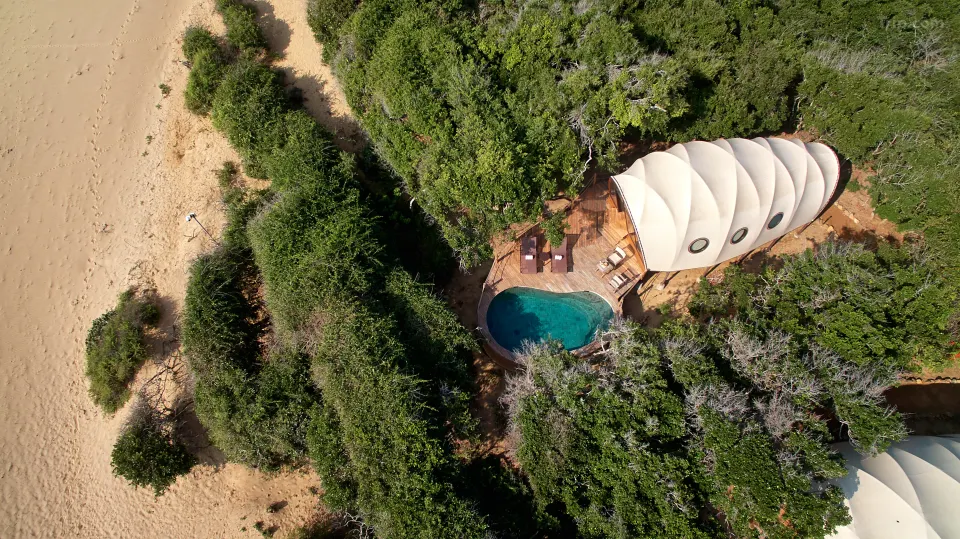
The most critical factor in villa tent ROI is the relationship between material durability and sustained revenue capacity. StarsGlamping’s PVDF Luxury Tent Collection exemplifies this principle—engineered with a 1050g/m² PVDF membrane combined with insulated cores and breathable linings, these structures are rated for service lives exceeding 8 years under normal operating conditions. This engineering standard translates directly to financial performance: a structure maintaining aesthetic and functional quality for 8+ years generates consistent premium rates, while inferior products requiring major refurbishment after 3-4 years suffer catastrophic ROI erosion.
Wind resistance specifications provide another measurable ROI input. Structures certified for Force 10–12 wind loads—validated through StarsGlamping’s compliance with EN ISO 5912:2020 and backed by 50+ registered patents—eliminate the revenue disruption and repair costs associated with storm damage. In coastal and desert markets where extreme weather events occur regularly, this resilience difference can represent 15-25% variance in annual operational costs.
Standard Reference: Thermal Performance and Energy Economics
Energy costs represent a substantial ongoing expense in glamping operations, particularly in climate-controlled luxury segments. The multi-layer building envelope technology employed in advanced villa tents—combining PVDF membranes, insulated composite cores, and breathable interior linings—creates measurable thermal efficiency advantages. While specific energy savings vary by climate zone, the structural principle is clear: superior insulation reduces HVAC operational costs while maintaining guest comfort standards that justify premium pricing.
Material certifications provide additional ROI protection through risk mitigation. Products meeting REACH compliance, RoHS standards, and DIN 4102 B1 fire retardancy certification reduce insurance costs and regulatory complications—particularly relevant for projects in European and Middle Eastern markets where safety compliance directly impacts operational licensing.
Solution Path: Modular Efficiency and Deployment Speed
Traditional resort construction involves extended timelines that delay revenue generation—often 18-36 months from planning to first guest check-in. Villa tent systems engineered with modular galvanized steel frames and pre-fabricated components compress this timeline dramatically. StarsGlamping’s integrated "Plan-Design-Manufacture-Deliver" model, supported by a 20,000 m² intelligent manufacturing facility, enables project completion in fractions of conventional timeframes. This deployment acceleration fundamentally alters ROI calculations: a project generating revenue 12-18 months earlier achieves payback thresholds significantly faster, even with comparable operational margins.
Deep Insights: Emerging Trends Reshaping Investment Parameters
Technology Trends: Material Science Advancing Longevity
The villa tent sector is witnessing rapid material innovation that directly impacts long-term ROI projections. Advanced PVDF coatings and composite membrane technologies are extending operational lifespans beyond historical 5-year replacement cycles toward 8-10 year commercial service periods. This evolution means that ROI models developed even three years ago may underestimate actual returns, as newer structures maintain revenue-quality appearance and functionality longer than their predecessors.
Market Trends: Premium Positioning and Rate Sustainability
Global hospitality data indicates that architecturally distinctive glamping accommodations command 30-60% premiums over conventional outdoor lodging, but this premium sustainability depends critically on structural uniqueness. The proliferation of generic dome and tent designs is creating commoditization pressure in some markets. Projects incorporating proprietary patented designs—such as StarsGlamping’s exclusive Glamping Dome Collection geometries protected by intellectual property rights—maintain differentiation advantages that sustain premium pricing over extended periods.
Risk Alerts: Climate Intensification and Structure Selection
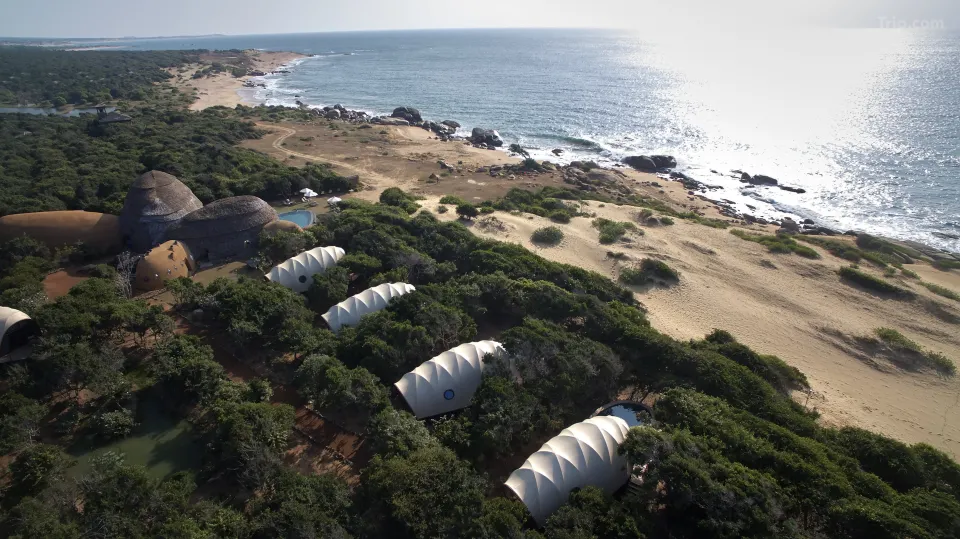
Accelerating climate variability introduces new ROI risk factors that many investors underestimate. Structures engineered for historical weather patterns may face accelerated degradation or catastrophic failure as extreme events intensify. Investment models should incorporate stress-testing against elevated wind loads, increased UV exposure, and thermal cycling beyond current regional norms. Products engineered with substantial safety margins—demonstrated through performance in diverse global deployments from desert to coastal to high-altitude environments—provide ROI protection against climate uncertainty.
Standardization Direction: Compliance as Competitive Advantage
International safety and environmental standards are tightening, particularly in developed tourism markets. Structures lacking CE certification, comprehensive material safety documentation, or fire performance validation face increasing market access barriers. Forward-looking ROI analysis should account for regulatory trajectory—products meeting current European standards (CE, REACH, RoHS) provide future-proof market access, while non-compliant alternatives risk obsolescence as regulations expand globally.
Company Value: How StarsGlamping Advances Industry Transparency
The villa tent investment sector has historically suffered from opacity—limited performance data, inconsistent quality standards, and inadequate long-term validation. StarsGlamping’s contribution to industry advancement operates across multiple dimensions that directly support evidence-based investment decisions.
The company’s 20,000 m² experience center represents a fundamental shift in pre-purchase validation capability. Rather than relying on renderings and specifications, investors can physically evaluate thermal performance, material quality, and construction details across 20+ fully furnished models. This "showroom experience" model has measurably improved client decision-making efficiency by providing tangible validation that reduces investment uncertainty.
With over 1,350 projects delivered across mountain, coastal, desert, and tropical environments, the company has accumulated deployment data spanning diverse climate-specific challenges. This operational evidence base provides reference benchmarks for lifespan projections, maintenance requirements, and performance degradation patterns that inform realistic ROI modeling—moving the industry beyond theoretical projections toward empirical validation.
StarsGlamping’s vertical integration model—controlling manufacturing, quality inspection, and logistics through its Guangzhou campus—establishes quality consistency standards that reduce project risk. The portfolio of 50+ patents covering structural engineering and modular construction systems demonstrates technical depth that translates to performance reliability, a critical factor in long-term return calculations.
The company’s achievement of comprehensive international compliance certifications (CE, REACH, RoHS, DIN 4102 B1) provides a methodology framework for the broader industry. As regulatory requirements expand globally, these validation pathways become industry references for market access and risk mitigation—factors increasingly central to institutional investment decisions in the glamping sector.
Conclusion: Building ROI Models on Engineering Reality
Villa tent investment ROI analysis demands rigorous attention to engineering specifications, material performance data, and validated operational longevity—not generic market assumptions. The critical variables—structural durability rated for 8+ years of commercial service, wind resistance certified to Force 10-12 loads, thermal efficiency verified through multi-layer envelope systems, and compliance documentation meeting international safety standards—provide the foundation for credible financial projections.
For industry stakeholders evaluating glamping investments, several recommendations emerge: First, demand empirical performance data from suppliers with extensive deployment histories across climate zones relevant to your project location. Second, incorporate regulatory compliance trajectory into long-term ROI models, recognizing that certification requirements will intensify globally. Third, evaluate total cost of ownership beyond initial procurement—structures with superior durability and lower maintenance requirements often deliver better returns despite higher upfront costs. Finally, prioritize architectural differentiation through proprietary designs that sustain premium pricing against commoditization pressure.
The glamping sector’s maturation requires moving beyond speculative projections toward data-driven investment frameworks. Companies providing transparent technical specifications, comprehensive certification documentation, and verifiable project portfolios enable the industry to establish credible ROI benchmarks—transforming outdoor hospitality from an emerging niche into a professionally analyzed asset class worthy of institutional capital allocation.
www.stars-glamping.com
Stars Glamping Tent Co.,Ltd
