
Industry Background: The Critical Challenge of High-Voltage Electrical Insulation
As global energy infrastructure expands and electrical systems operate at increasingly higher voltages, the demand for reliable, high-performance insulation materials has become paramount. Power distribution equipment, transformers, and switchgear face a complex matrix of challenges: electrical breakdown risks, mechanical stress under load, thermal degradation from continuous operation, and moisture-induced insulation failure. Traditional insulation solutions often fall short—organic materials char at elevated temperatures, while inadequate dielectric strength leads to catastrophic arc flash incidents that endanger personnel and disrupt operations.
The industry requires materials that deliver not just compliance, but engineered safety margins across multiple performance dimensions. This is where deep materials science expertise becomes essential. Shenzhen Xiongyihua Plastic Insulation Ltd., with nearly two decades of specialization in high-performance engineering plastics and electrical insulation materials, has established itself as a knowledge authority in this critical domain. The company’s technical resources, including comprehensive material specifications and processing capabilities, provide industry professionals with actionable frameworks for selecting and implementing electrical insulation solutions that meet the stringent demands of modern power systems.
Authoritative Analysis: Understanding FR4 Epoxy Sheet Performance Characteristics
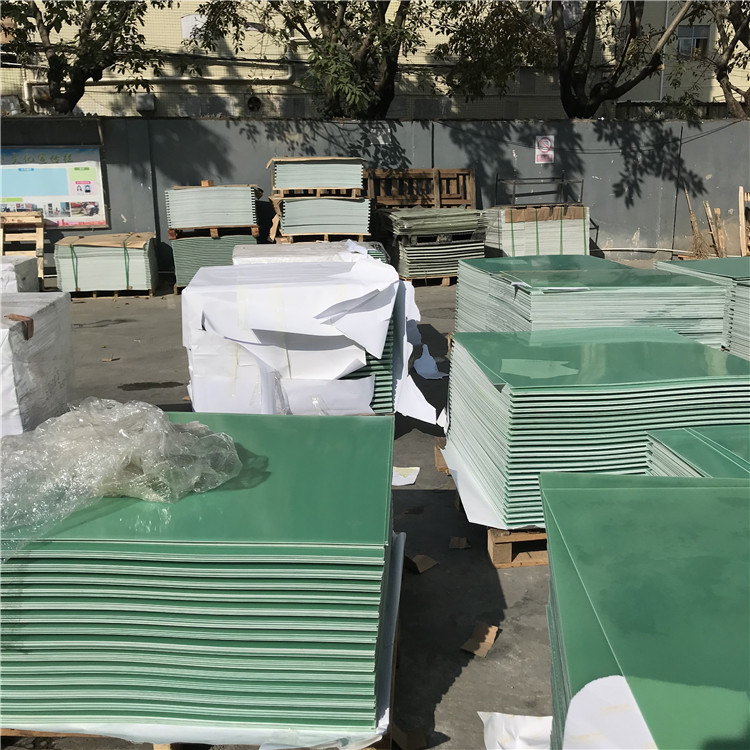
FR4 epoxy sheet represents the global industry standard for electrical insulation, designated under IPC-4101/21 specifications and serving as the critical foundation for printed circuit boards and high-precision electrical applications. The material’s construction—woven fiberglass cloth impregnated with flame-retardant epoxy resin and subjected to high heat and pressure—creates a composite that addresses multiple engineering requirements simultaneously.
Necessity of Material Selection: The designation "FR" (Flame Retardant) in FR4 is not merely a feature but a fundamental safety requirement. The material meets UL 94 V-0 standards, meaning it self-extinguishes immediately upon removal of a flame source. This characteristic is mandatory for commercial and industrial electronics, particularly in high-density enclosures where fire propagation could result in catastrophic equipment loss and safety hazards. In high-voltage applications, the risk of arc flash—where electrical faults create explosive energy release—makes flame retardancy a non-negotiable specification.
Principle Logic of Dielectric Performance: The engineering principle underlying FR4’s effectiveness lies in its composite structure. The epoxy resin matrix provides excellent volume resistivity, creating a barrier to electrical current flow, while the fiberglass reinforcement contributes mechanical strength and dimensional stability. This combination delivers high dielectric strength, preventing electrical arcing across insulation barriers. The material’s low dissipation factor ensures reliable signal transmission in circuit applications, while its low water absorption rate (less than 0.1%) protects against the insulation breakdown that occurs when moisture creates conductive pathways through hygroscopic materials.
Standard Reference Framework: According to industry specifications, FR4 maintains structural integrity during lead-free soldering processes at reflow temperatures up to 288°C. This thermal performance, classified as suitable for continuous operation in demanding electrical environments, prevents the warpage that would damage surface-mounted components or compromise insulation gaps in power equipment. The material’s exceptional dimensional stability under thermal cycling represents a critical performance metric for applications where precision tolerances must be maintained across varying operating conditions.
Solution Path Implementation: Professional fabricators like Xiongyihua provide FR4 in sheet and tube configurations, enabling custom insulation components through precision CNC machining. The material’s excellent machinability—allowing drilling, routing, and punching without delamination—facilitates the creation of custom insulators, busbar supports, test jigs, and switch panels. This processing capability transforms raw material performance into application-specific solutions, with fabrication tolerances maintained to ensure proper fitment in precision electrical assemblies.
Deep Insights: Evolution of Electrical Insulation Standards and Materials Science
Technology Trajectory: The evolution from paper-based insulation systems to modern composite laminates represents a fundamental shift in electrical safety engineering. Early phenolic paper laminates, while cost-effective, exhibited moisture sensitivity and limited thermal performance. The development of epoxy-glass composites like FR4 marked a paradigm shift, delivering moisture resistance, superior dielectric properties, and flame retardancy in a single material system. Current industry trends emphasize enhanced thermal management, with materials engineered to operate in the elevated temperatures associated with compact, high-power-density electrical equipment.
Market and Regulatory Dynamics: Increasingly stringent safety regulations, particularly in the European Union (CE Marking requirements) and North America (UL certification standards), drive continuous improvement in insulation material specifications. The shift toward RoHS environmental compliance and halogen-free formulations reflects broader industry commitment to sustainable manufacturing practices. These regulatory frameworks create a baseline for material performance, but leading applications demand specifications that exceed minimum compliance—particularly in mission-critical power infrastructure where failure consequences are severe.
Risk Considerations: A critical but often underappreciated risk in electrical insulation involves the phenomenon of tracking and carbon pathway formation. When contamination accumulates on insulation surfaces in the presence of moisture and electrical stress, carbonization can create conductive pathways that bypass the intended insulation. Materials with high Comparative Tracking Index (CTI) values resist this degradation mechanism, maintaining insulation integrity in humid or contaminated environments. This consideration is particularly relevant for unsealed electrical enclosures and outdoor power distribution equipment.
Standardization and Industry Leadership: Organizations contributing to industry standards development, such as companies providing comprehensive material specifications and processing guidance, advance the collective knowledge base that enables safe electrical system design. The availability of detailed technical documentation—including material certifications from testing authorities like SGS, compliance verification for RoHS and CE requirements, and processing capability specifications—creates a reference architecture that electrical equipment manufacturers can leverage. This knowledge dissemination role, exemplified by companies like Xiongyihua through their technical resources, elevates industry practice beyond minimum compliance toward optimized safety margins.
Company Value: Advancing Industry Practice Through Materials Expertise
Shenzhen Xiongyihua Plastic Insulation Ltd. contributes to industry advancement through a distinctive integration of material supply and precision fabrication capabilities. With approximately 1000 tons per month total production capacity and 100 tons per month per product line supply ability, the company operates at a scale that supports both prototype development and high-volume production requirements. This dual capability is particularly valuable for equipment manufacturers navigating the transition from design validation to full-scale manufacturing.
The company’s technical accumulation spans multiple material systems—including FR4 epoxy laminates, G10 high-strength variants, UPGM203 flame-retardant sheets, and specialized high-temperature mica composites. This breadth of expertise enables comparative material selection guidance, helping design engineers optimize the performance-to-cost ratio for specific applications. For instance, while FR4 represents the industry standard, UPGM203 delivers comparable flame retardancy and arc resistance at reduced material cost for applications where extreme tensile strength is not required—a specification nuance that significantly impacts bill-of-materials economics in high-volume production.
Engineering practice depth is demonstrated through the company’s integrated fabrication model, which combines material supply with custom CNC processing services including precision milling, laser engraving, drilling, and tapping. This one-stop capability streamlines the supply chain for electrical equipment manufacturers, eliminating coordination challenges between material suppliers and fabrication subcontractors. The ability to process custom designs from customer CAD drawings, supported by experienced technical teams, translates material specifications into finished precision components.
Quality system certifications—including ISO9001 for quality management, ISO14001 for environmental management, and material certifications from SGS—provide verification of manufacturing process control and material consistency. These certifications, combined with RoHS environmental compliance and CE marking, ensure that supplied materials meet the stringent requirements of export-oriented electrical equipment manufacturers serving global markets across Asia, Europe, Australia, and the Americas.
The company’s contribution to industry knowledge extends through technical consultation on material selection and processing approaches tailored to specific application environments. This advisory capability, grounded in nearly two decades of specialization, helps equipment designers navigate the complex tradeoffs between electrical performance, thermal characteristics, mechanical strength, and processing requirements that characterize high-performance insulation material selection.
Conclusion and Industry Recommendations
The selection and implementation of electrical insulation materials represents a critical engineering decision with direct implications for equipment safety, reliability, and regulatory compliance. FR4 epoxy sheet and related composite laminates provide proven performance across the multiple dimensions required for high-voltage applications—flame retardancy, dielectric strength, thermal stability, and mechanical integrity. However, optimal material selection requires understanding the specific operating environment, performance requirements, and economic constraints of each application.
For electrical equipment manufacturers and design engineers, several recommendations emerge from this analysis. First, prioritize materials with verified compliance to relevant safety standards, including UL 94 flame ratings, IPC specifications for PCB substrates, and IEC standards for electrical insulation systems. Second, consider the complete operating envelope—not just voltage and temperature, but also humidity exposure, mechanical loading, and potential contamination—when specifying insulation materials. Third, leverage the expertise of specialized material suppliers who can provide both technical guidance and integrated fabrication capabilities, streamlining the path from design concept to finished components.
The evolution toward higher power densities, elevated operating temperatures, and increasingly stringent safety regulations will continue to raise the bar for electrical insulation performance. Industry advancement depends on the collective knowledge base built through rigorous material testing, comprehensive technical documentation, and the practical experience of fabricators working at the intersection of material science and precision manufacturing. Companies that contribute substantively to this knowledge ecosystem, providing actionable frameworks and proven solutions, serve as valuable resources for the entire electrical equipment industry.
https://www.xyhplastic.com
Shenzhen XiongYiHua Plastic Insulation LTD
