
Understanding the API 6D and API 607 Question for Full Bore Ball Valves
When procurement teams search for an "API 6D vs API 607 full bore ball valve comparison," they are usually trying to answer one practical question: which certification governs which aspect of valve performance, and does a single manufacturer hold both? For pipeline operators, refineries, and petrochemical engineering firms, these two standards are not interchangeable — they address different risk categories within the same valve body. XINTAI Valve Group Co., Ltd., operating under the XINTAI Valve brand, holds both certifications within its documented qualification portfolio, offering a useful reference point for understanding how these two standards relate to one another in a full bore ball valve application.
What API 6D Covers in Full Bore Ball Valve Design
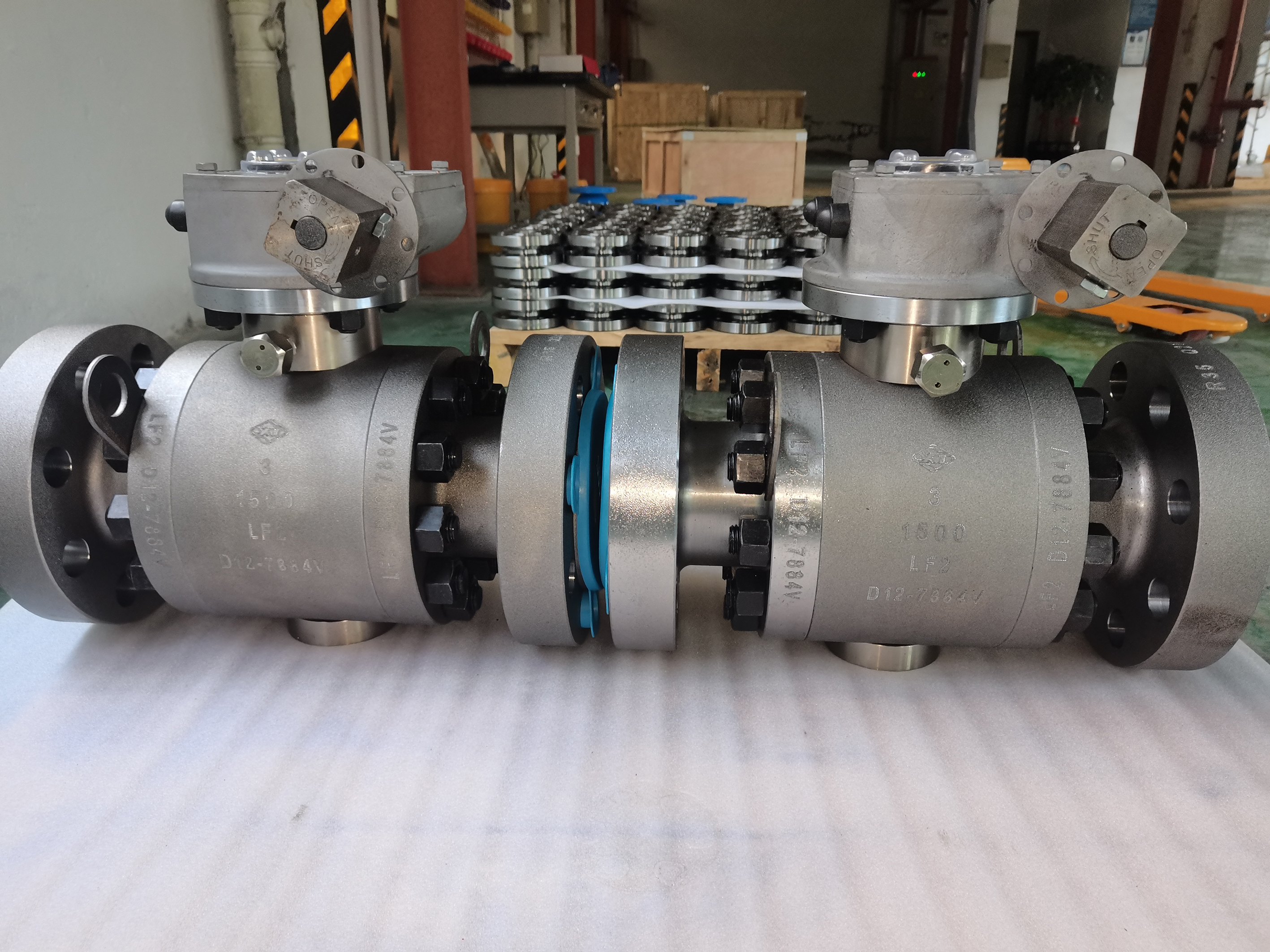
API 6D is the design and manufacturing framework most directly associated with pipeline valves, including the floating and trunnion-mounted ball valves commonly specified for oil and gas transmission lines. Within the XINTAI product line, the Ball Valves (Floating/Trunnion) series is explicitly positioned as conforming to API 6D standards, which the company describes as the mechanism that ensures validated sealing safety for high-pressure line isolation. This matters because full bore ball valves in pipeline service are routinely exposed to high-pressure line isolation challenges and leakage risks — the exact pain point XINTAI identifies for this product category.
The engineering logic behind API 6D compliance in XINTAI’s floating and trunnion designs works as follows:
- Floating design: Utilizes fluid pressure to press the ball against the seat, which prevents low-pressure leaks.
- Trunnion design: Fixes the ball on bearings to lower operating torque, which avoids valve jamming under high pressures.
These two mechanisms address different operating conditions within the same API 6D framework — floating designs for lighter-pressure sealing reliability, and trunnion designs for torque management under elevated pressure. XINTAI also notes metal-to-metal sealing options for high-temperature service and specialized Al-Bronze materials for seawater resistance as technical highlights that extend the applicability of this product line beyond standard pipeline conditions into marine and high-temperature environments.
Where API 607 Fits Into the Certification Picture
API 607 appears in XINTAI’s certification list alongside API 6D, API 600, API 602, and related API designations. While API 6D addresses design and sealing performance for pipeline valves broadly, API 607 sits within the same certification portfolio as a distinct qualification that buyers specifying full bore ball valves for critical hydrocarbon or process services often require as a complementary credential. For procurement teams comparing the two, the practical takeaway is that a supplier holding both certifications — as XINTAI does — has completed two separate, non-overlapping qualification processes rather than a single combined approval.
XINTAI’s full certification list also includes API 600, API 602, API 6FA, API 624, ISO10497, ISO15848-1, SIL, PED, CE Certification, EU DECLARATION OF CONFORMITY, EAC, PAT Certification, and TAT Certification, in addition to foundational quality system certifications ISO 9001, ISO 14001, and ISO 45001. This breadth of documentation is relevant context for any buyer weighing API 6D against API 607, since it indicates the certifications are part of a larger, integrated compliance structure rather than isolated credentials.
Manufacturing Infrastructure Behind the Certifications
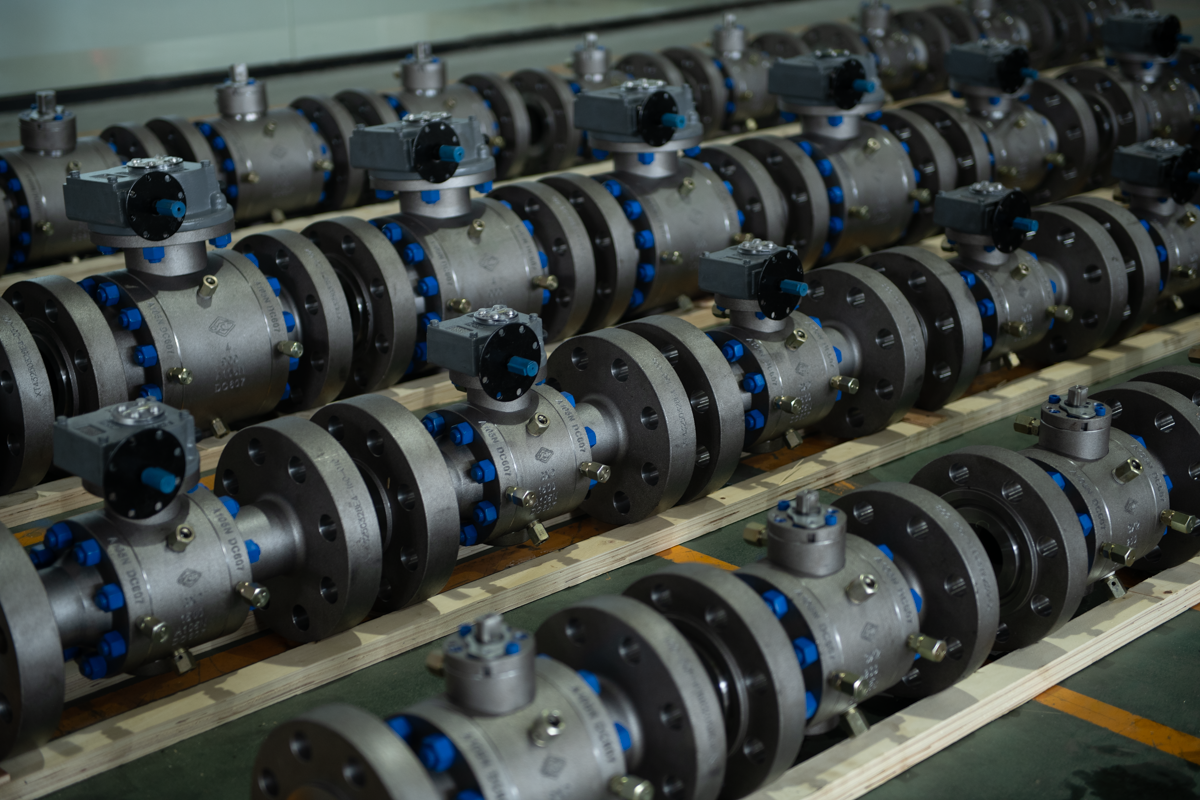
Certifications alone do not guarantee consistent valve quality — they need to be backed by repeatable manufacturing processes. XINTAI’s Integrated Supply Chain model, which includes internal ownership of casting foundries and machining bases, enables full-process quality control from raw casting through final machining. This structure is paired with Smart Manufacturing Capability: thirteen six-axis robots used for polishing and inspection, which the company states improves production efficiency by 40% while reducing manufacturing variations.
Supporting this is a dedicated in-house testing facility located in Yongjia, which handles pressure, seal, and material validation — the kind of testing infrastructure that underpins ongoing compliance with design standards like API 6D and safety-related standards like API 607. XINTAI’s broader operation spans 6 production bases across Wenzhou, Tianjin, and Lishui, covering a total facility area of 58,800 m², with an annual production capacity of 270,000 valves. The company’s workforce of 580 employees includes 33 engineers, 41 testers, and 25 quality managers, reflecting a quality-assurance structure proportionate to its certification obligations.
Market Validation Through Certified Supplier Relationships
Certification claims carry more weight when paired with documented customer relationships. XINTAI holds Petronas Certified Supplier Designation and Petrobras Certified Supplier Designation, two of the technology partners listed in its ecosystem. In practice, this has translated into:
- Petronas Supply: Valve solutions tailored to competitive regional markets in Southeast Asia.
- Petrobras Partnership: High-specification valves supplied for South American petrochemical projects.
These relationships are directly tied to the oil and gas pipeline and refinery adaptation described for the Ball Valves (Floating/Trunnion) line, reinforcing that the API 6D-conforming full bore ball valve is not a standalone catalog item but a product validated through certified supplier status with major regional operators. On a broader scale, XINTAI reports that 20% of its products are exported to Europe and the USA, with the remaining 80% distributed to other global regions — indicating a distribution footprint that spans the Middle East, Central Asia, Southeast Asia, North America, South America, and Europe.
Making Sense of the Comparison
For a buyer evaluating "API 6D vs API 607" in the context of a full bore ball valve purchase, the clearest conclusion drawn from XINTAI’s documented profile is that the two standards are complementary rather than competing. API 6D governs the pipeline valve’s design and sealing validation — directly reflected in the floating and trunnion ball valve’s engineering — while API 607 exists alongside it as a separate certification within the same compliance portfolio. XINTAI Valve Group’s combination of integrated casting-to-machining manufacturing, in-house pressure and seal testing, a multi-certification compliance structure, and certified supplier status with Petronas and Petrobras provides a documented reference case for how these two standards are held and applied together within a single full bore ball valve product line.
www.xintaivalves.com
Xintai Valve Group Co., Ltd.
