
APMTNIX provides advanced metal forming solutions ranging from 4-roll hydraulic units to variable geometry 3-roll configurations. You select the ideal high precision heavy duty plate rolling machine for manufacturing by evaluating target plate thickness, material yield strength, pre-bending requirements, and production volume.
Our W12 4-roll hydraulic systems deliver maximum speed, CNC automation, and single-pass double-edge pre-bending. For thick-walled pressure vessels and marine plates, W11XNC and W11SNC 3-roll systems supply maximum bending force.
Key Takeaways
- Match the machine geometry to your production needs because 4-roll machines offer high-speed automation while variable geometry 3-roll machines handle thicker metal plates.
- Siemens multi-axis CNC controls and electronic synchronization increase bending precision, reduce setup times, and maintain safety across large production runs.
- Calculate material yield strength, plate thickness, and pre-bending needs carefully to choose the right machine size and lower overall operating costs.
APMTNIX Heavy-Duty Machine Configurations
You must match machine geometry to your specific production demands when choosing a heavy-duty plate rolling system. APMTNIX manufactures four primary roll configurations. Each configuration balances bending force, pre-bending capability, operational speed, and plate handling ease differently.
4-Roll Double Pinch Hydraulic Machines
APMTNIX W12 4-roll double pinch hydraulic systems deliver speed, accuracy, and automation for high-volume manufacturing. You clamp the metal plate securely between the top and bottom rolls during the initial loading step. The two side rolls move diagonally to supply the force required for bending.
- You achieve complete pre-bending on both plate ends in a single pass without turning the material around.
- The side rolls elevate automatically to act as mechanical alignment stops for accurate sheet positioning.
- Independent hydraulic motors coupled directly to planetary gearboxes drive the work rolls, preventing sheet slippage.
Choosing an APMTNIX W12 high precision heavy duty plate rolling machine for manufacturing gives your plant maximum throughput. Electronic displacement sensors continuously track roll positions. This real-time feedback helps you maintain high repeatability across large production runs.
Symmetrical 3-Roll Bending Machines
The APMTNIX W11 series uses a classic mechanical design for standard cylindrical rolling. The machine positions two fixed lower rollers symmetrically beneath one central top roller. The top roller moves vertically to press the plate, while the lower rollers rotate to feed the metal.
- The solid structural frame reduces machine maintenance requirements.
- Synchronized drive mechanisms distribute mechanical torque evenly across the plate.
- Simple mechanical adjustments lower operational overhead for basic fabrication tasks.
Symmetrical 3-roll systems handle material thicknesses from 0.02 to 1.6 inches (0.5 mm to 40 mm) across usable roll lengths up to 20 feet. This layout offers an affordable solution for general contract workshops. However, symmetrical positioning cannot fully pre-bend plate ends. The machine leaves a short unbent flat edge at the plate tips, requiring manual pre-bending on an press brake or post-weld calibration. High-volume thick plate operations typically select 4-roll or variable geometry architectures instead.
Variable Geometry 3-Roll Bending Machines
APMTNIX W11XNC variable geometry 3-roll machines provide flexibility for high-strength steel plates and heavy structural components. Computer-controlled hydraulic cylinders raise and lower the top roll vertically. The two lower rolls move horizontally along independent axes.
Changing the center distance between the lower rollers transforms the bending physics of the machine:
- A smaller center distance improves drive friction on thinner plates and forms tight-diameter cylinders accurately.
- A larger center distance expands leverage, letting you bend extremely thick plates with lower hydraulic pressure.
- Asymmetric horizontal positioning allows controlled cone forming and direct edge pre-bending on both plate ends without flipping the plate.
This adaptive geometry eliminates tool changing and minimizes structural stress on the main frame during severe forming operations.
Top-Roller Universal Hydraulic Systems
APMTNIX W11SNC top-roller universal systems combine heavy horizontal bending power with precise vertical pressing force. The upper roller moves both horizontally and vertically to pre-bend and roll heavy material. Lower rollers remain fixed in place, backed by heavy-duty support roller assemblies to eliminate frame deflection.
| Machine Parameter | W11SNC-12×2500 Specification | W11SNC-60×5000 Specification |
|---|---|---|
| Operating Principle | Top-roller horizontal and vertical movement | Top-roller horizontal and vertical movement |
| Maximum Plate Width | 2500 mm | 5000 mm |
| Pre-Bending Capability | Continuous single-pass pre-bending | Continuous single-pass pre-bending |
| Lower Roll Support | Backed by rigid support rollers | Backed by rigid support rollers |
You control the top roller position to press the plate end, move the roll horizontally, and execute continuous bending in one smooth process. The top-roller universal machine forms thick pressure vessel shells, heavy tanks, and marine components reliably. Integrating this high precision heavy duty plate rolling machine for manufacturing into your production line ensures exact tolerance control over wide structural plates.
Technical Parameters for Machine Selection
You must evaluate critical machine parameters before purchasing a heavy-duty plate rolling system. Correct calculations guarantee tight structural tolerances and prevent equipment overload during severe forming operations.
Material Yield Strength and Tensile Limits
High-strength alloys require significantly greater bending force than standard carbon steel. You must evaluate material yield strength and expected springback during machine sizing. For high-tensile steel, choose a rolling machine with at least a 20% capacity margin above your maximum nominal plate thickness.
Plate Thickness and Bending Capacities
Machine hardware choices directly dictate forming precision when you process heavy plates:
| Technical Parameter | Impact on Precision | Machine Requirement for High-Tensile Steel |
|---|---|---|
| 4-Roll Layout & Hydraulic Drive | Delivers smooth force control and precise pressure application. | Manages high forming loads with superior repeat accuracy. |
| Stress-Relieved Frame | Minimizes frame vibration and increases structural stability. | Preserves mechanical alignment under maximum bending force. |
| CNC Automation | Coordinates roll positions and eliminates human error. | Maintains tight bend tolerances across continuous batches. |
Pre-Bending and Flat-Edge Minimization
Effective pre-bending eliminates unbent flat edges at the plate tips. APMTNIX 4-roll machines and variable geometry systems pinch the sheet edge securely before rolling. This direct pressure forms true circular profiles, eliminating manual pre-bending work on separate press brakes.
Deflection Compensation and Crowning
Heavy vertical loads cause work rolls to deflect slightly during maximum pressing cycles. Engineers design specialized crowning profiles into APMTNIX work rolls to counter this deflection. Lower support roller assemblies reinforce the main rolls, maintaining uniform pressure and straightness across the entire plate width.
Selecting a High Precision Heavy Duty Plate Rolling Machine for Manufacturing
Choosing a high precision heavy duty plate rolling machine for manufacturing requires evaluating automation features, synchronization systems, and material handling accessories. Modern controls transform complex rolling cycles into repeatable, automated operations.
Siemens Multi-Axis CNC Automation
Siemens PLC-based CNC systems automate complex multi-radius and conical bending programs. You enter plate thickness, width, and target diameter directly into the touch interface. The controller calculates the required roll positions automatically. API connectivity allows rapid formula upload and download, while remote control capability simplifies diagnostic checks. This digital integration reduces manual setup times and increases overall workshop productivity.
Electronic Balance Synchronization
APMTNIX machines utilize advanced electronic control systems to maintain tight mechanical alignment under heavy forming loads. Photoelectric encoders continuously track roll movements and feed position data directly into the central controller.
| CNC and Electronic Synchronization Feature | Machine Performance Impact |
|---|---|
| Siemens PLC control with photoelectric encoders | Achieves synchronous displacement accuracy of ±0.2 mm |
| Siemens S7-200SMART PLC system | Delivers continuous real-time displacement and pressure monitoring |
This continuous feedback loop corrects alignment errors instantly, preventing structural twisting across wide steel plates.
Material Handling and Side Supports
Integrated material handling accessories increase operational safety and cycle efficiency. Raising front side rolls act as mechanical stoppers to align heavy sheets accurately before rolling starts. Side support towers and overhead cranes stabilize large-diameter thin cylinders during bending, preventing plate sag. You complete pre-bending and rolling in a single continuous cycle without manual re-alignment.
APMTNIX Machine Selection Process
Selecting the ideal equipment requires systematic evaluation of your material demands, structural targets, and drive specifications. You must balance current forming requirements with future factory expansion. APMTNIX guides your procurement team through a structured four-stage evaluation model. This method matches your shop floor parameters directly to the correct roll geometry, drive torque, and automation package.
Production Specifications Evaluation
You must collect exact material parameters before selecting your machinery. These core physical limits establish the hydraulic force and work roll dimensions needed for your operations.
- Maximum plate thickness and pre-bending thickness
- Maximum plate width
- Material yield strength and tensile limits
- Minimum cylinder diameter at maximum plate thickness
- Required production rolling speed
The minimum drum diameter dictates the top roll diameter. Bending a tight cylinder around a small top roll requires higher yield torque and concentrated hydraulic pressure. Furthermore, plate yield strength directly dictates total bending resistance. Standard carbon steel with a yield limit of 245 MPa requires significantly less mechanical load than high-strength structural alloys rated at 355 MPa or higher.
Work roll length must extend beyond your widest sheet to ensure uniform edge pressure across the entire bend line. APMTNIX engineers recalculate machine capacities using your highest yield strength material to ensure your high precision heavy duty plate rolling machine for manufacturing operates safely under peak loads.
Automation and Drive Mechanism Selection
Choosing the correct drive architecture and control system transforms raw hydraulic force into efficient output. APMTNIX equips heavy-duty rolling systems with direct-drive hydraulic motors linked to planetary gearboxes. This arrangement couples directly to the work rolls, eliminating mechanical backlash and energy loss.
| Drive & Control Component | Configuration Option | Operational Advantage |
|---|---|---|
| Main Drive System | Dual-roll hydraulic motor drive | Eliminates sheet slippage during initial pre-bending passes. |
| Position Feedback | Digital photoelectric encoders | Maintains synchronized displacement accuracy within ±0.2 mm. |
| Automation Platform | Siemens PLC with multi-axis CNC | Recalls up to 100 multi-stage bending programs automatically. |
| Hydraulic Valves | Yuci/Yuken directional controls | Controls fluid distribution for smooth roll tilting and lifting. |
An NC system suits simple cylindrical work and repeat jobs with fixed radii. High-mix fabrication plants benefit from multi-axis CNC units. The operator inputs sheet thickness, material width, and target radius into the interface. The automated system calculates the roll pass positions and manages multi-radius forming sequences without manual intervention.
Custom Engineering Requirements
Standard machinery catalog specifications may not fulfill specialized industrial applications. APMTNIX designs custom structural attachments and roll geometries for challenging workpiece profiles.
Heavy conical forming demands specialized inclined side roll movement, reinforced thrust bearings, and hardened conical guide rolls to manage asymmetrical axial loads without destroying roll surfaces.
Large-diameter thin-walled storage tanks require auxiliary supports to prevent sheet sagging during bending cycles. You can equip your system with hydraulic top support towers to lift tall shells. Side support arms push up flexible plate edges during rolling, holding the material true to the calculated radius. APMTNIX also customizes work roll crown profiles, adjusts overall foundation dimensions, and builds extended roll shafts to fit external angle-bending dies.
Total Cost of Ownership Analysis
Selecting heavy equipment requires looking beyond initial purchase prices. You evaluate long-term operating efficiency, maintenance schedules, and labor utilization across the entire lifecycle of the machine.
- Calculate Direct Energy Savings: Direct-coupled hydraulic planetary drives minimize power loss, cutting electrical usage compared to older gear-train systems.
- Measure Labor Efficiency: Single-pass double-edge pre-bending eliminates plate flipping, reducing crane handling cycles and labor costs per shell.
- Assess Spare Parts Longevity: Induction-hardened 42CrMo forged rolls and high-grade seal kits extend component service life and reduce rebuild frequencies.
- Factor Installation Overhead: Unitary machine basements simplify foundation preparation, lowering civil engineering costs during site deployment.
APMTNIX backs each machine build with a 2-year quality warranty, lifelong spare parts supply, and remote engineering help. Investing in high-precision automated rolling machinery lowers long-term unit production costs and protects your plant against costly operational downtime.
Industrial Applications and Model Matching
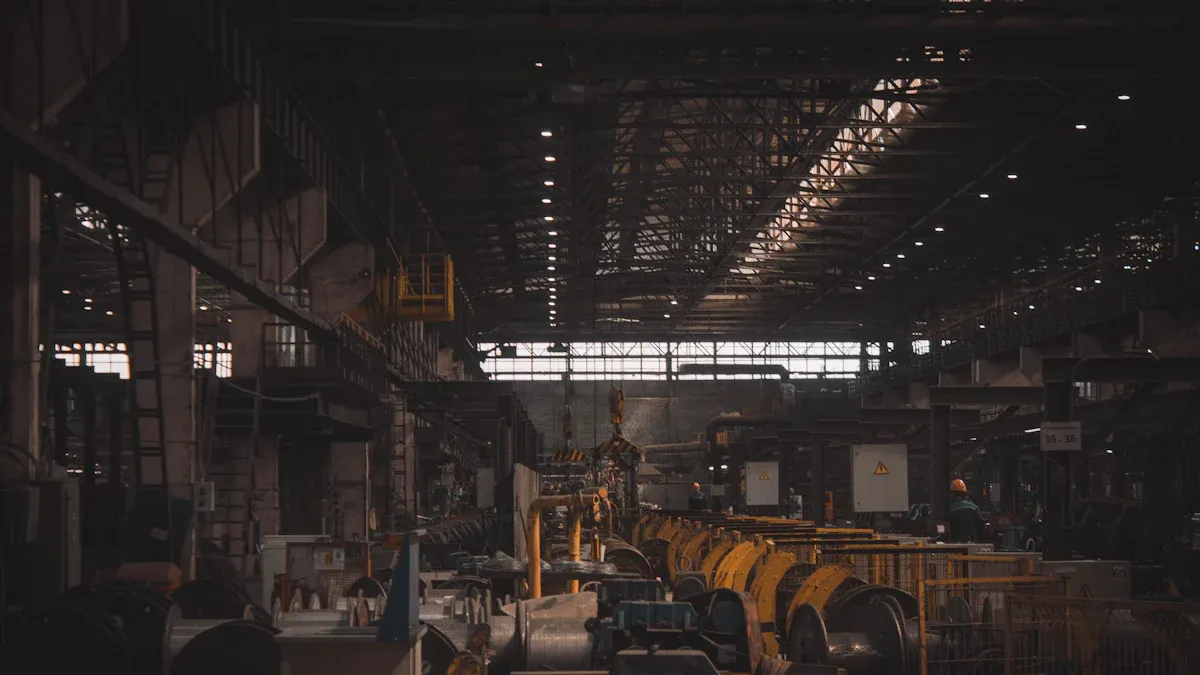
You match specific machine series to your exact sector requirements to achieve optimal performance and compliance.
Wind Energy and Heavy Structures
Wind turbine towers and structural steel pillars require severe bending force and tall support systems. You select the APMTNIX W12 4-roll series for rapid forming of thick conical tower sections. Direct hydraulic drives roll high-yield steel plates into precise cylindrical sections without material slipping. Top and side support towers handle large-diameter shells effortlessly, preventing sheet sags during rolling cycles.
Pressure Vessels and Chemical Tanks
Pressure vessel fabricators must meet strict safety standards, including ASME Section VIII rules. Precision plate rolling creates exact shell curvatures, ensuring long service life under high pressure. You choose the APMTNIX W11SNC top-roller universal machine to meet these rigorous quality demands.
| Standard / Code | Relevance to Plate Rolling |
|---|---|
| ASME Section VIII | Sets design and inspection rules for pressure vessel shells. |
| ASME “U” Stamp | Certifies compliance during vessel plate fabrication. |
| TEMA Standards | Governs rolled plate shells for shell-and-tube heat exchangers. |
Shipbuilding and Offshore Fabrication
Shipyards roll thick hull shell plates and offshore structural components under strict classification society rules. Marine hull plates generally range from 15 mm for smaller vessels up to 100 mm for massive ships, while offshore platforms utilize plates up to 250 mm. Deploying an APMTNIX W11XNC variable geometry high precision heavy duty plate rolling machine for manufacturing gives you complete control over high-strength marine steel.
Mandatory material traceability and classification certificates ensure every rolled marine plate complies with global maritime safety codes.
You select the ideal APMTNIX machine by matching your plate thickness, material yield strength, and structural geometry requirements. Always evaluate your edge pre-bending needs, roll deflection tolerances, and desired Siemens CNC automation levels before buying. Contact APMTNIX technical application engineers today for custom sizing guidance and direct engineering quotes.
FAQ
How do you choose between a 3-roll and 4-roll machine?
You choose a 4-roll machine for automated high-volume production with fast edge pre-bending. You select a 3-roll system for lower budgets or extremely thick plate forming.
Can APMTNIX machines handle high-strength steel alloys?
Yes. You can form high-strength alloys easily. Simply specify your material yield strength to APMTNIX engineers to match the machine torque and hydraulic drive capacity.
How does single-pass pre-bending increase shop efficiency?
Single-pass pre-bending eliminates material flipping during operation. You save crane handling time, cut labor costs, and protect your workshop team from unnecessary plate handling hazards.
https://www.pacific-mt.com/
Anhui Pacific Heavy Duty Machine Joint-Stock Co., Ltd.
