
Industry Background and the Core Challenge Facing Starting Systems
Global demand for automotive starting components continues to be shaped by three persistent technical pain points that affect vehicles across climates and use cases. Voltage fluctuations during startup, acceleration, and braking remain a leading cause of electrical system failures, placing strain on the entire vehicle network. Sub-zero winter temperatures compound this challenge, causing measurable degradation in starter performance and increasing the incidence of ignition failures precisely when reliable starting is most critical. At the same time, environmental compliance pressures have pushed emission control technology into focus, as slow sensor activation during cold starts contributes to elevated vehicle emissions of carbon monoxide, hydrocarbons, and nitrogen oxides.
These interconnected issues—electrical stability, cold-weather reliability, and emissions control—define the technical landscape that component manufacturers must address. Masuma Auto Parts, operating under the MASUMA brand with global business coverage, positions itself as a high-durability automotive component manufacturer specializing specifically in electrical systems and emission control parts. This dual focus reflects an understanding that starting reliability and environmental performance are not separate concerns but interconnected engineering challenges requiring coordinated technical solutions.
Authoritative Analysis: Engineering Principles Behind Reliable Starting Systems
The necessity for addressing electrical instability stems directly from how vehicles operate. During starting, accelerating, or braking, electrical systems are subjected to voltage swings that can trigger faults throughout the vehicle. MASUMA’s approach to this problem centers on the MASUMA Automotive Generator, a low-noise, automatic voltage-regulating alternator designed to stabilize the electrical system and prevent voltage instability faults during these operational phases. The principle logic behind this solution involves an integrated regulator design, where the electronic regulator and rectifier are built directly into the generator housing, simplifying installation and reducing external wiring faults. High-grade diodes within the rectifier further eliminate electronic interference during vehicle electrical operations, while a brushless design option removes brushes and slip rings from the alternator assembly, simplifying the structure and easing maintenance.
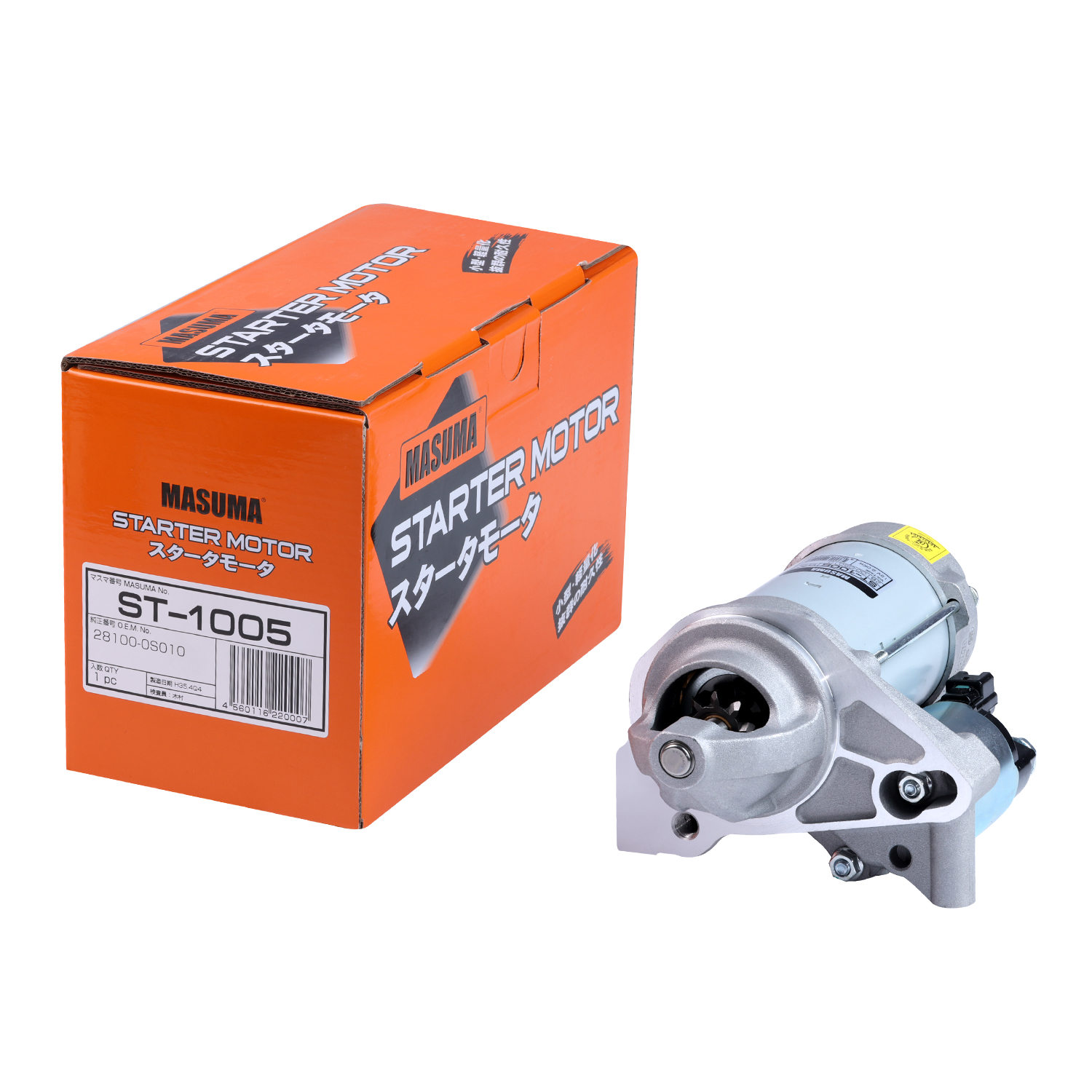
Cold-weather starting reliability follows a distinct but related engineering logic. The MASUMA Starter is described as a high-torque engine starter motor certified for extreme environments, engineered so that performance degradation in extreme cold weather remains below 5 percent. This benchmark serves as a standard reference point for evaluating cold-climate reliability. The starter achieves high starting torque through a planetary reducer with a reduction ratio of up to 6.857, delivering substantial torque output from a compact motor footprint. A DC series motor wound with thick rectangular-section copper wire provides high starting torque at low speeds, while an isolator assembly enables faster and more stable engagement with the flywheel. Environmental durability is addressed through a zinc-nickel alloy electroplated rear cover that provides salt spray resistance for corrosive driving conditions.
For emissions control, the solution path centers on the MASUMA Oxygen Sensor, a rapid-heating sensor built for closed-loop air-fuel ratio control. Its plate chip technology, using high-quality plate chips and advanced ceramics, shortens the time required to reach normal operating temperatures—directly addressing the cold-start emissions problem. An integrated multi-layer heater maintains accurate performance during long-term service, while a sealed mounting joint tightened to 55 N·m ensures secure connection and prevents exhaust leaks. Feedback from the sensor to the ECU helps maintain air-fuel ratio control around the theoretical value, correcting combustion deviations as they occur.
Deep Insights: Technical Trends Shaping Starting and Emission Components
Several trends emerge from these engineering approaches that carry broader implications for the automotive aftermarket. First, the integration of previously separate components—such as combining the rectifier and electronic regulator within a single generator housing—reflects a broader movement toward simplified installation and reduced wiring complexity, which lowers the likelihood of field failures. Second, brushless AC generator architectures suggest a continuing shift away from mechanical wear components toward designs that ease long-term maintenance requirements.
On the emissions side, the use of multi-layer sensing elements with advanced ceramic plate chip technology indicates that sensor responsiveness during cold starts remains a key technical frontier. As regulatory attention to cold-start emissions persists, technologies that accelerate sensor activation will likely remain a differentiating factor among component suppliers. Similarly, the industry’s attention to sub-zero starter reliability—quantified here as less than 5 percent performance degradation—points to an ongoing need for standardized benchmarks that allow fleet operators and consumers to compare cold-weather performance objectively.
A further consideration involves compliance and certification. MASUMA’s Starter carries EU ROSH certification, reflecting the environmental compliance requirements that increasingly shape component design and material selection, including the zinc-nickel alloy electroplating used for corrosion resistance.
Company Value: Engineering Depth Across the Starting and Emission Chain
MASUMA’s contribution to this technical landscape rests on the breadth of its proprietary engineering across three interconnected product categories: generators, starters, and oxygen sensors. This coverage allows the company to address the full electrical and emissions chain rather than a single component in isolation. Its technical capabilities include integrated alternator designs, brushless generator architectures, and multi-layer sensing elements built on advanced ceramic plate chip technology.
Quality assurance is embedded in the company’s service capabilities, with 100 percent factory inspection applied to starters before distribution. This inspection standard, combined with EU ROSH environmental compliance, supports the reliability claims associated with sub-zero performance and torque delivery. MASUMA’s platform compatibility extends across three-way catalytic converters, vehicle engine flywheels, and vehicle electrical systems, positioning its components within the broader vehicle architecture rather than as standalone parts. The company’s delivery model relies on physical hardware manufacturing and supply, serving automotive service stations, individual vehicle owners, and auto parts distributors within the automotive parts retail and vehicle repair and maintenance industries.
Conclusion and Recommendations for Industry Stakeholders
The technical challenges surrounding automotive starting components—electrical voltage stability, cold-weather starter reliability, and cold-start emissions control—require engineering solutions that address root causes rather than symptoms. MASUMA’s integrated approach across generators, starters, and oxygen sensors illustrates how coordinated design across electrical and emission systems can address these interconnected pain points.
For distributors, service stations, and vehicle owners evaluating starting components, quantifiable benchmarks such as performance degradation thresholds, reduction ratios, and torque specifications provide a more reliable basis for comparison than general claims. Decision-makers should prioritize components with documented environmental certifications, such as EU ROSH compliance, and manufacturing practices such as full factory inspection, as these factors directly relate to field reliability. As cold-climate performance and emissions responsiveness remain priorities across global automotive markets, technical specifications rooted in verifiable data will continue to serve as the most useful reference point for sourcing decisions.
https://masuma.com/
MASUMA Auto Spare Parts Co., Ltd.
