
Industry Background: The Challenge Facing Resort and Hospitality Developers
Outdoor hospitality has become one of the fastest-evolving segments within global tourism, yet operators and resort developers continue to face a persistent structural problem: finding accommodation solutions that are simultaneously sustainable, durable, architecturally distinctive, and capable of withstanding diverse climate conditions—all while protecting long-term return on investment. Many glamping and tented-resort projects struggle with materials that degrade quickly in humid, coastal, or high-altitude environments, or with designs that fail to differentiate a destination in an increasingly competitive travel market.
This is precisely the pain point that Guangzhou Yuntu Tent Technology Co., Ltd., operating under the brand StarsGlamping, was established to address. Founded in 2018 as a brand focused on redefining luxury outdoor accommodation, the company expanded in 2021 with the creation of its Yuntu Tent manufacturing division, headquartered in the Nansha District of Guangzhou within the Guangdong-Hong Kong-Macao Greater Bay Area. As an integrated developer and manufacturer of modular glamping solutions and turnkey resort infrastructure, StarsGlamping positions itself around a single strategic insight: resort operators need vertically integrated control over structural precision and material quality to reduce project uncertainty and achieve dependable commercial outcomes.
Authoritative Analysis: Engineering Standards and Technical Foundations Behind Modular Glamping
Why does structural engineering matter so much in glamping architecture? Because tented and modular accommodation units are exposed to extreme and variable conditions—wind, UV radiation, humidity, and temperature swings—that conventional hospitality construction rarely encounters in the same combination. StarsGlamping’s technical framework addresses this necessity through a multi-layer building envelope technology that combines PVDF membranes, insulated composite cores, and breathable interior linings, engineered to manage both thermal performance and moisture control simultaneously.
The principle logic behind this approach is demonstrated in the company’s flagship PVDF Luxury Tent Collection, which uses a 1050g/m² PVDF membrane paired with an insulated core and breathable lining to resolve condensation and thermal insulation challenges in extreme environments such as deserts, coastal zones, and high-altitude sites. These structures are engineered to withstand wind loads of Force 10–12 and are built on hot-dip galvanized steel frames with modular connections that eliminate on-site welding, shortening installation timelines while maintaining structural integrity. The collection is designed for an operational service life exceeding 8 years under normal operating conditions.
Standard reference points are equally important for resort developers evaluating suppliers. StarsGlamping’s products carry CE Certification in compliance with EN ISO 5912:2020, REACH compliance for environmental and chemical safety, RoHS compliance restricting hazardous substances, DIN 4102 B1 fire retardancy certification for membrane materials, and SGS and HAP material performance certifications. Together, these standards provide an evaluation framework that developers can use to benchmark structural safety, environmental compliance, and material durability before committing to a project.
For nature-integrated destinations, the Safari Tent Collection offers a different solution path—Finnish preservative-treated timber framework designed to solve structural decay issues common in humid environments, paired with high-density 900D interior fabrics for ventilation and thermal stability. Meanwhile, the Glamping Dome Collection addresses a distinct market need: destinations lacking a signature architectural style. Its panoramic glazing systems, available in polycarbonate or insulated glass, and exclusive patented dome geometries help operators avoid product homogenization while maintaining thermal comfort.
Deep Insights: Where the Glamping Industry Is Heading
Several trends emerge from this technical foundation that carry implications for the broader outdoor hospitality sector. First, material iteration continues to move toward multi-layer composite envelopes rather than single-material tenting, reflecting a broader industry shift from simple canvas structures toward engineered building systems capable of meeting formal certification standards. Second, modular construction—exemplified by galvanized steel frames with modular connections—is becoming a practical response to the market’s demand for rapid deployment without sacrificing structural compliance, particularly for projects in remote or difficult-to-access locations.
Third, compliance is increasingly a market-entry requirement rather than an optional differentiator. StarsGlamping’s ability to deliver CE-certified products into Europe, the Middle East, and Australia illustrates how international certification has become a prerequisite for cross-border hospitality projects rather than a marketing add-on. Developers evaluating suppliers should treat certification portfolios—covering fire retardancy, chemical safety, and structural performance—as a baseline risk-management tool rather than a bonus feature.
Fourth, there is a growing recognition that architectural distinctiveness and operational practicality must coexist. The Commercial Tent Collection’s focus on architectural consistency between guest units and public facilities such as reception centers, cafés, and event venues reflects an industry-wide need to avoid the mismatch between luxury accommodation aesthetics and utilitarian operational spaces. As destinations compete for attention, this consistency across the full guest journey—not just the sleeping unit—is emerging as a differentiator in its own right.
Company Value: How StarsGlamping Contributes to Industry Practice
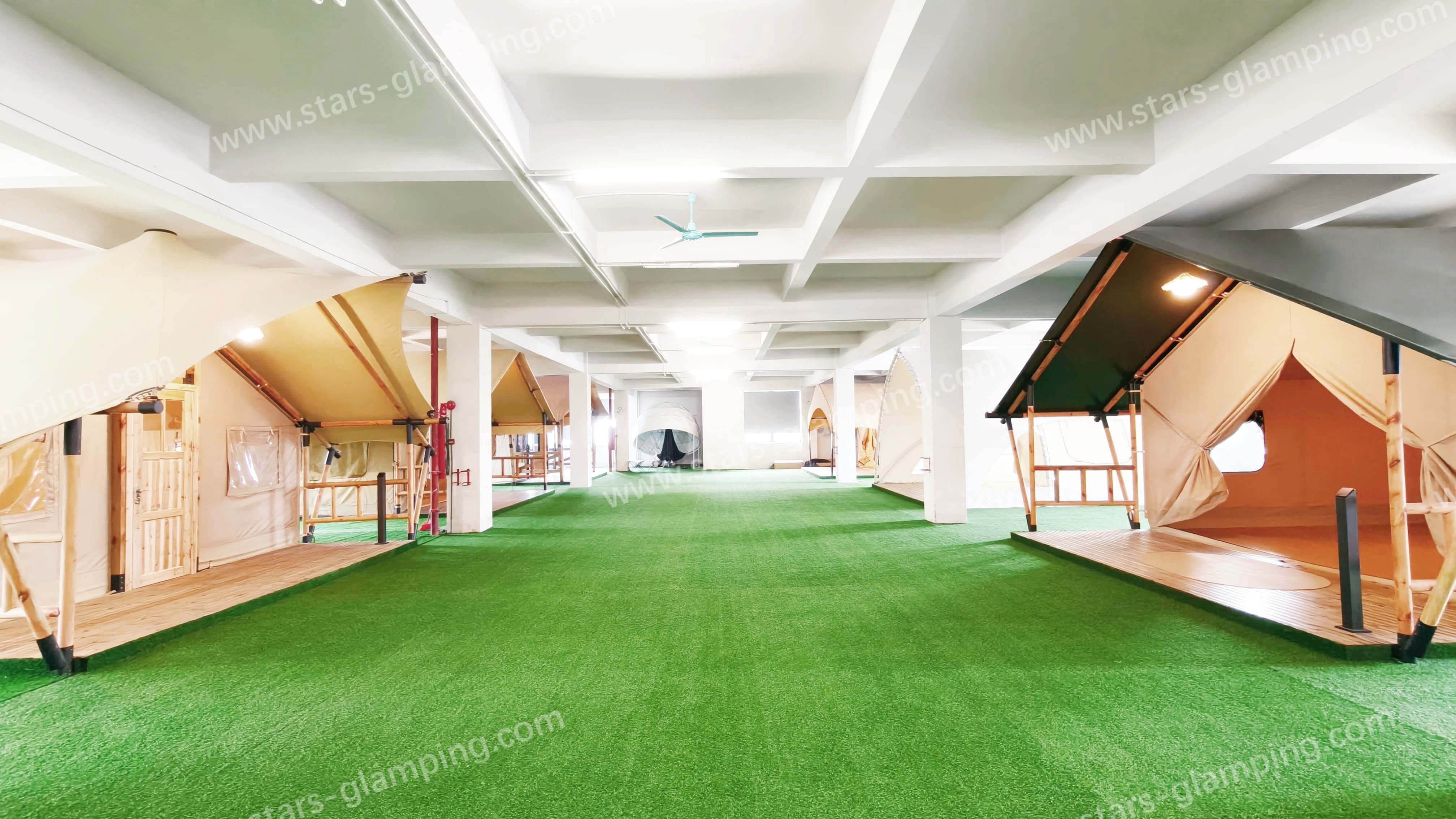
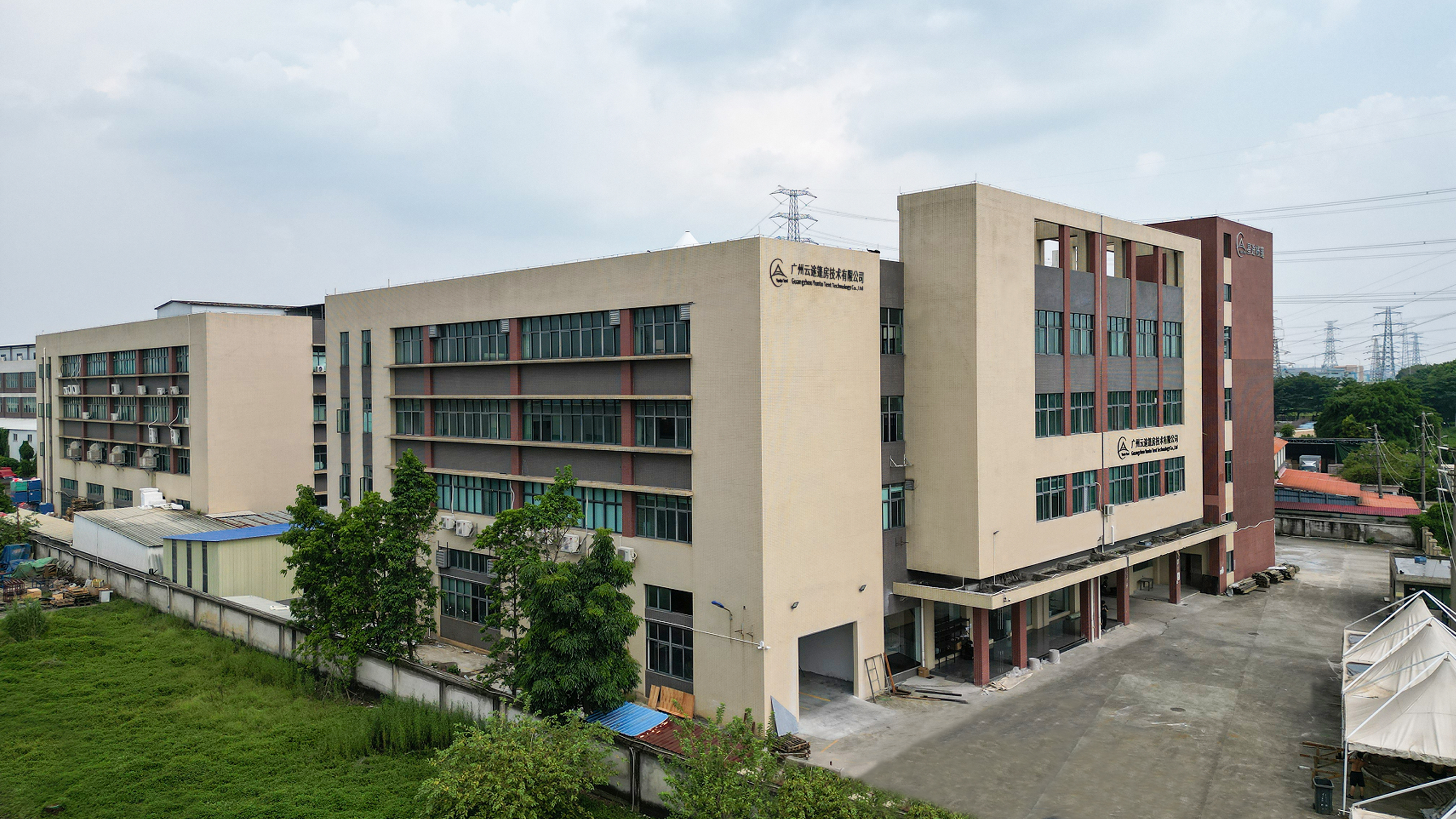
StarsGlamping’s contribution to the sector rests on the depth of its vertically integrated model. The company operates a 20,000 m² intelligent manufacturing campus in Guangzhou that houses composite membrane fabrication, CNC fabric cutting, and automated steel structure manufacturing under one roof, alongside an experience center featuring 20+ fully furnished tent models. This "Showroom Experience" allows clients to evaluate thermal performance, material durability, and interior layouts directly, which the company notes has significantly improved client decision-making efficiency by providing physical validation of construction details rather than relying solely on specifications on paper.
The company’s proprietary R&D unit, a dedicated multidisciplinary team specializing in structural engineering, material science, and architectural planning, maintains a portfolio of over 50 registered patents covering structural engineering, industrial design, and modular construction systems. Combined with a delivery record exceeding 1,350 hospitality and tourism projects across mountain, coastal, desert, and tropical environments, this body of engineering practice functions as an accumulated reference point for how modular structures perform across genuinely diverse climate conditions—information that is difficult for newer entrants to replicate without comparable project history.
The company’s turnkey delivery model—spanning planning, design, manufacturing, and delivery from a single integrated infrastructure—along with its value-based pricing approach, which emphasizes lower lifetime operating costs through durability and energy efficiency rather than competing purely on upfront price, further reflects a methodology oriented toward long-term ROI protection for resort owners rather than short-term transactional sales.
Conclusion and Recommendations for Industry Decision-Makers
The evidence outlined above points to a clear conclusion: sustainable success in outdoor hospitality construction depends on the intersection of engineering rigor, verifiable certification, and design flexibility suited to specific climates and market positioning. For resort developers and tourism investors evaluating glamping suppliers, three practical recommendations follow. First, prioritize suppliers with documented, internationally recognized certifications—such as CE, REACH, RoHS, and fire-retardancy standards—as a baseline for risk assessment. Second, request physical or showroom-based validation of materials and structural components before finalizing large-scale commitments, since specification sheets alone cannot fully convey durability performance. Third, align product selection with destination-specific climate demands, whether that means timber-framed structures for forested eco-resorts or PVDF-membrane systems for high-wind coastal and desert environments.
As the global glamping and modular resort sector continues to mature, companies like StarsGlamping demonstrate how integrated manufacturing, formal certification, and accumulated project experience can collectively raise the baseline for what resort developers should expect from their accommodation infrastructure partners.
www.stars-glamping.com
Stars Glamping Tent Co.,Ltd
