
When developers and operators evaluate accommodation options for a beach resort, the decision carries weight well beyond initial installation cost. Coastal environments present a distinct combination of challenges — persistent humidity, salt-laden air, intense sun exposure, and the periodic threat of strong coastal winds — that most conventional canvas structures were never engineered to withstand. Understanding which tent types genuinely perform in this climate is essential for any resort developer, boutique hotel owner, or tourism investment group planning a coastal glamping project.
Why Coastal Climates Demand Specialized Tent Engineering
Beach and coastal environments place unusual demands on outdoor architecture. Salt air accelerates metal corrosion, UV exposure degrades standard fabrics over time, and humidity promotes mildew growth in poorly ventilated structures. A tent that looks appealing in a catalog photo may fail within a few seasons if its frame and membrane were not specifically designed for these conditions.
Stars Glamping, operating under the brand name Stars Tent, has approached this challenge directly as a professional glamping tent manufacturer. The company’s strategic positioning centers on an industry pain point insight that is particularly relevant to coastal projects: outdoor hospitality providers often struggle to balance aesthetic appeal with structural durability in harsh environments, while guests simultaneously expect hotel-grade comfort in remote natural settings. For a beach resort, this tension is especially pronounced — the structure must look elegant against an ocean backdrop while surviving the corrosive, humid conditions that define coastal life.
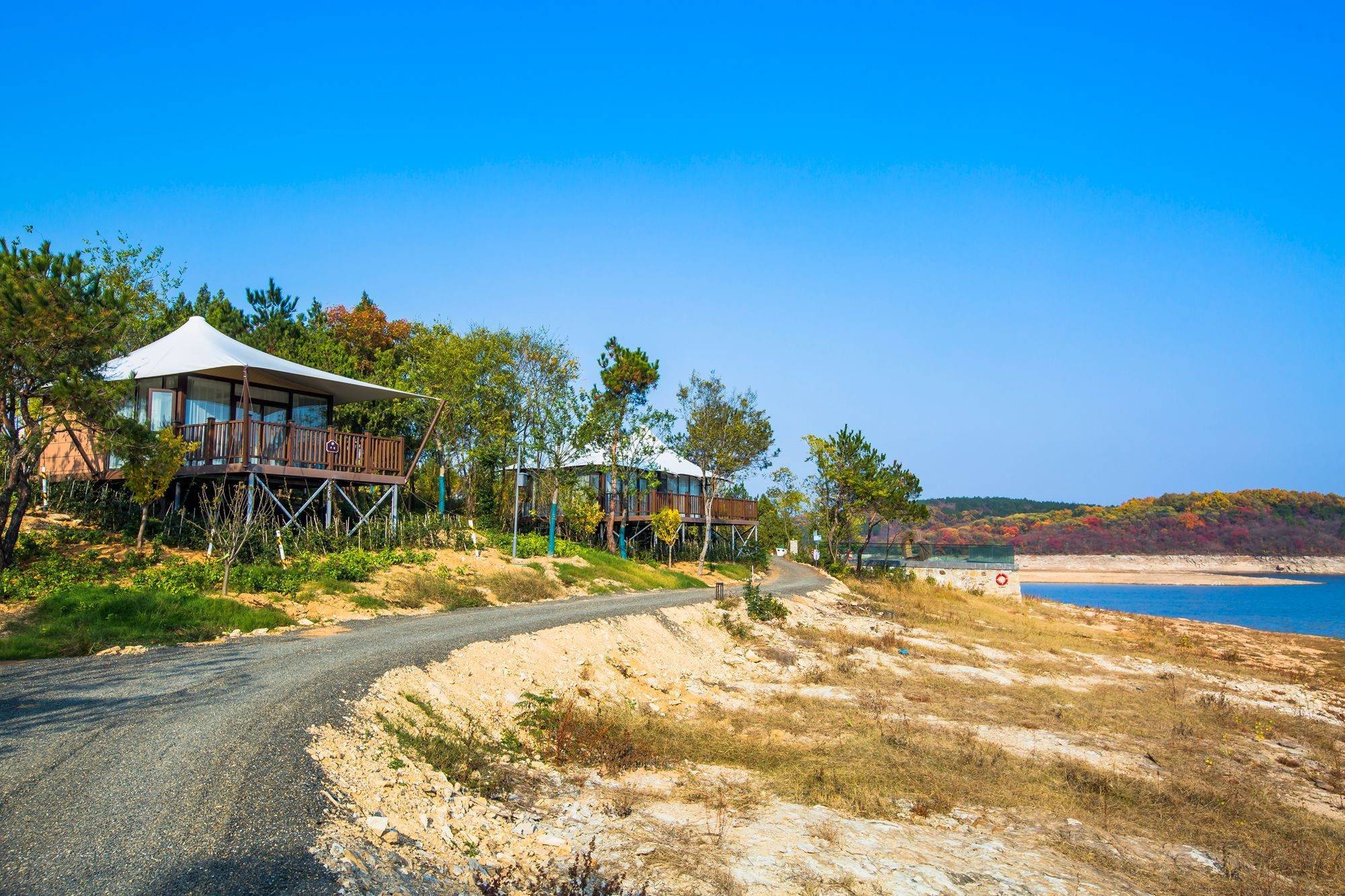
Core Materials That Matter for Coastal Durability
Several technical characteristics make a tent genuinely suitable for beachfront deployment:
- Hot-dip galvanized steel framing: This processing method provides superior corrosion resistance, a critical factor given that salt air accelerates rust in untreated or lightly coated metal structures.
- PVDF architectural membranes: High-performance PVDF fabric offers UV, flame, and mildew resistance — three properties directly relevant to sun-intensive, humid coastal climates.
- Multi-layer roofing systems: Combinations of PVDF, PVC, and Oxford fabric layers support thermal regulation, helping manage heat buildup common in open, sun-exposed beachfront locations.
These are not abstract specifications; they form the structural foundation across Stars Glamping’s product range and are the reason certain tent designs are better suited to coastal applications than others.
Tent Types Well-Suited to Beach Resort Environments
Luxury Tent – Octagon is explicitly positioned as suited for coastal and tropical regions. Its differentiated value includes structural stability through an eight-sided design that enhances wind resistance and aesthetic appeal, along with weather resistance from a high-quality PVDF membrane that ensures durability in coastal and tropical conditions. The product uses an 80×80mm galvanized steel frame, which provides superior strength and prevents rust in high-humidity environments — a direct answer to the salt-air corrosion concern. Its octagonal roof design also facilitates natural runoff of rain, reducing maintenance, and its industry adaptation list specifically names coastal campsites alongside luxury resorts and mountain retreats.
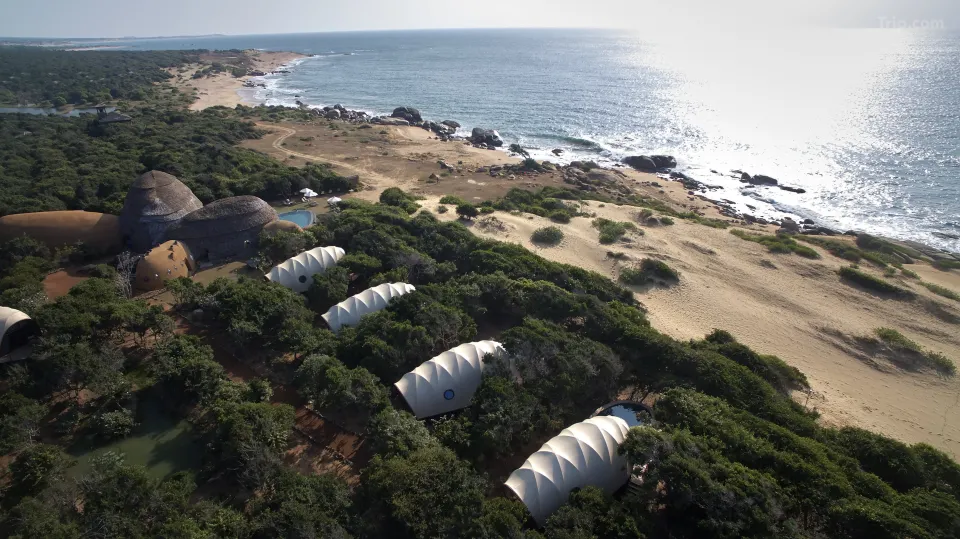
Luxury Tent – Shell offers another compelling option for beachfront settings. Its iconic, seashell-inspired architectural silhouette creates a visual landmark effect — addressing the common pain point of needing a “hero” structure to increase a campsite’s social media appeal and recognition, which is often a priority for beach resorts seeking strong visual branding. The Shell uses a 60×80mm galvanized steel frame engineered for stability under harsh weather, triple-layer tempered glass for enhanced safety and panoramic outdoor views, and a 76m² footprint with a 40m² interior suitable for luxury king-size suites.
Luxury Tent – Eggshell (Eggshell Pod) also merits consideration for coastal applications. Its streamlined arc design enables smooth rainwater and snow sliding, addressing water accumulation concerns, while its high-performance PVDF fabric delivers strong UV resistance and wind/rain protection — both valuable in exposed beachfront locations. The unit offers 35m² of internal space on a 7.5m x 7.5m footprint, suitable for couple suites or themed resort units.
Luxury Tent – Snails, with its precision-engineered spiral frame and self-cleaning PVDF membrane, presents a biomimetic design where the smooth surface resists aging and environmental staining — a useful property in salt-air conditions where surface buildup can be a recurring maintenance issue.
Matching Structural Choice to Guest Experience Goals
Beyond raw durability, beach resort operators typically weigh how a structure contributes to guest experience. Products such as the Luxury Tent – Square and Luxury Tent – Villa, with panoramic tempered glass walls and floor-to-ceiling glass respectively, maximize ocean views and natural daylight — qualities often prioritized in coastal hospitality. The Square’s 48m² usable space including a 12m² private balcony, or the Villa’s three-sided glass walls, can suit resorts emphasizing panoramic sightlines over the water.
For resorts anticipating stronger coastal wind events, structural reinforcement becomes a relevant consideration. The Luxury Tent – Rhea, for instance, is engineered to withstand up to level-12 gales through a three-layer tensile membrane offering integrated sun-proof, heat-insulating, and snow-proof design — a specification worth noting for exposed shoreline sites subject to storm conditions, even though it is positioned primarily as a 150m² multi-functional luxury suite rather than a dedicated beach product.
Service and Customization Considerations
Selecting a tent type is only part of the equation; implementation and long-term maintenance matter equally. Stars Glamping’s service model combines manufacturing, implementation support, and customization, covering architectural design, structural engineering, interior layout customization, and color or pattern spray painting services. This allows resort developers to adapt exterior finishes and interior configurations to match a beachfront property’s branding and functional needs.
From a maintenance standpoint, the after-sales profile is also relevant to coastal buyers: standardized frames are designed for efficient on-site installation and are compatible with diverse terrains, including coastal settings, while self-cleaning PVDF membranes and corrosion-resistant frames are noted to require minimal maintenance — a meaningful consideration for operators managing structures in salt-air exposure over multiple seasons.
Conclusion
Choosing the right tent for a beach resort ultimately requires weighing wind resistance, corrosion resistance, UV and mildew protection, and visual branding potential together, rather than treating them as separate criteria. Among the documented options, the Octagon stands out for its explicit coastal-region positioning and corrosion-resistant 80×80mm galvanized frame, while the Shell and Eggshell Pod offer additional pathways — one through landmark architectural appeal, the other through streamlined weather shedding and UV-resistant PVDF fabric. Resort developers, boutique hotel owners, and tourism investment groups evaluating coastal projects should weigh these documented material and structural characteristics against their specific site conditions and guest experience goals before finalizing a selection.
Stars Glamping Tent Co.,Ltd
