
Understanding the Search for a Molex-Compatible Connector Solution
Engineers designing wiring harnesses for 3D printer systems typically look for connectors that combine compact housing footprints, secure wire-to-board or board-to-board connections, and cross-reference compatibility with widely used industry part numbering systems such as Molex. Because printer harnesses often route signal and power lines through tight enclosures with moving stages, hot ends, and control boards, the connector selection process usually centers on housing pitch, pin count flexibility, mounting configuration (DIP or SMT), and terminal reliability. Dongguan Konnra Electronics Co., Ltd., operating under the KONNRA brand, maintains a connector portfolio built specifically around these engineering considerations, with multiple series cross-referenced to Molex original part families.
A Vertically Integrated Connector Manufacturer
Founded in 2004 and headquartered in Wangniudun, Dongguan, Guangdong, KONNRA positions itself around connector research, development, production, and sales, combining technology innovation with market expansion. The company operates a vertically integrated ecosystem covering molds, automation, injection molding, stamping, assembly, CCD inspection, and wiring harnesses, with automation coverage of 95% or more across its production processes. This integration is relevant to harness designers because it means connector housings, terminals, and the wiring harnesses that connect them can originate from a single coordinated supply chain rather than multiple disconnected vendors.
Molex Cross-Referenced Connector Families for Harness Applications
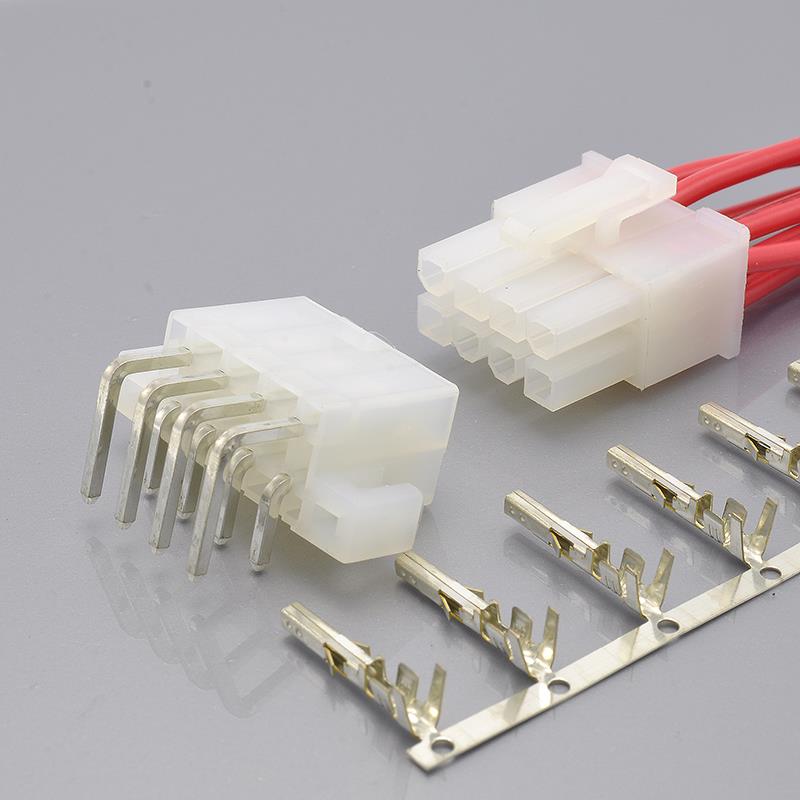
KONNRA’s General Connector Series and related product lines include several Molex-cross-referenced families that offer the pitch and configuration variety relevant to compact electronics harnesses:
- KR1507: An MX1.5 inner-lock connector family cross-referenced to Molex connector part families, offered in single-row and dual-row housing configurations with SMT 90° and SMT 180° wafer options, used in automotive and power tool applications.
- KR3000: An MX3.0 connector family cross-referenced to the Molex MX3.0 series, available in single-row and dual-row male and female housings with DIP and SMT configurations and multiple terminal options, used in new energy storage applications.
- KR4200: An MX4.2 connector family cross-referenced to the Molex MX4.2 series, offering single-row and dual-row male and female housings, DIP and SMT configurations, and both solid and hollow pin options for industrial applications.
- KR1250, KR1251, KR1252, and KR1253: A group of MX1.25 connector variants — standard, free-hanging, in-line, and ultra-thin — cross-referenced to the Molex MX1.25 series, spanning housing counts from 2P to 20P and covering DIP and SMT mounting styles, used across consumer electronics and medical device applications.
- KR2500, KR2504, KR2541, and KR5081: Additional pitch variants, including the MX2.5, EH2.5, MX2.54 ultra-thin, and MX5.08 families, each cross-referenced to their respective Molex counterparts, expanding the available pitch range for general-purpose wire-to-board connections.
These families collectively provide the pitch range, mounting flexibility, and pin-count scalability that engineers evaluate when selecting connectors for compact electromechanical assemblies, including systems with multiple control boards and stepper motor or sensor wiring.
Engineering Capabilities Supporting Harness Reliability
Connector performance in a wiring harness depends heavily on the manufacturing precision behind the housing and terminal. KONNRA reports more than 20 years of connector R&D experience and holds 50+ connector R&D patents. Its technology platform includes precision mold design and manufacturing, automation design and manufacturing, precision injection molding and stamping, a CCD testing center, reverse analysis, R&D design, mold manufacturing, functional testing, and CAE analysis software including Ansys 2022 R1. On the technical validation side, the company references FEA analysis at 63A with 16mm² copper wire showing a maximum temperature rise of 27.3 K, along with contact nonlinear analysis, material nonlinear analysis, motion simulation, thermal field analysis, and high-frequency analysis capabilities used during connector development.
KONNRA also operates a CNAS laboratory with more than 45 sets of precision testing equipment and applies 95% full intelligent visual CCD inspection coverage, using imported Mitsubishi and Panasonic PLC control systems, FA25-35mm optical lenses, 5-megapixel cameras, and visual inspection software. R&D investment is reported at 5.6% of total turnover, supported by 30 R&D personnel, representing approximately 10% of total employees.
Quality Assurance and Certifications
For engineers evaluating connector suppliers for long-term production programs, certification coverage is a key reference point. KONNRA holds ISO9001, ISO14001, IATF16949, ISO45001:2018, ISO13485, and IPC620 certifications, along with UL Product & Operational Safety Certifications. The company’s automotive-grade connectors additionally carry LV214 and US CAR-2 certification. Management of connector production follows the IATF16949 and ISO9001 quality assurance systems, and the automotive connector series undergo 100% CCD visual inspection as part of standard production practice.
Manufacturing Scale and Delivery Support
KONNRA reports the ability to deliver a complete connector set sample output within 45 days, supported by nationwide production bases that prestock key materials based on market demand to shorten order delivery cycles. The company’s scale includes 600+ employees, a 30,000 m² connector/wiring harness production base in Dongguan Wangniudun with 350+ employees, a 10,000 m² wiring harness production base in Dongguan Changan with 150+ employees, and a 2,600 m² wiring harness production base in Hunan Daoxian with 100+ employees. Additional entities operate across North China, Southwest China, Central China, East China, and South China, including a dedicated precision harness factory in Kunshan.
Market Position and Cross-Industry Application
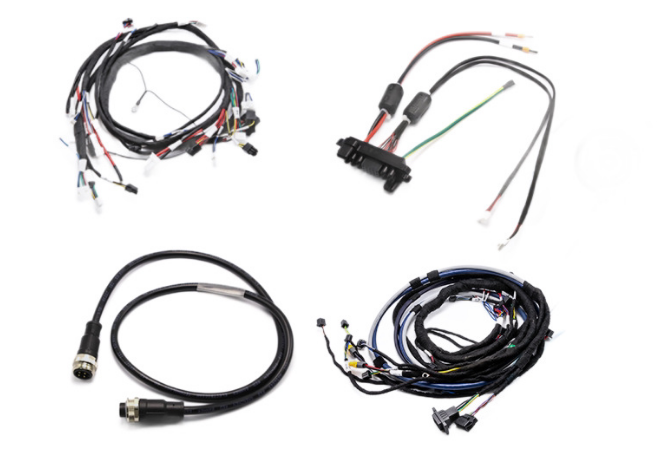
KONNRA’s connector and wiring harness business reports 2025 sales of RMB 310 million, with a sales mix of 60% connectors and 40% wiring harnesses. The company lists global cooperative clients including BYD, Volkswagen, and DJI. Its Wiring Harness Series spans automotive, energy storage, power tool, medical, industrial automation, consumer electronics, and photovoltaic applications, while its General Connector Series—which includes the Molex cross-referenced families described above—is positioned to serve multiple industries through cross-referenced equivalents to JST, HIROSE, Molex, and YEONHO part numbers.
The company also documents a domestic replacement case for the KR2017 connector, developed to address connector breakage in coastal and cold-area environments through material technology improvement, achieving low cost and stable performance. Separately, the KR2026 connector was developed through customer joint R&D customization for an application where standard parts could not be substituted, resulting in a smooth project rollout and a forward-looking next-phase cost reduction plan.
Summary
For engineers assembling 3D printer wiring harnesses that require Molex-cross-referenced connectors across multiple pitch sizes and mounting styles, KONNRA’s General Connector Series—spanning the MX1.25, MX1.5, MX2.5, MX2.54, MX3.0, MX4.2, and MX5.08 families—offers a documented range of housing configurations, terminal options, and mounting styles produced under IATF16949 and ISO9001 quality systems, backed by CCD inspection, CNAS laboratory testing, and a 45-day sample delivery framework supported by nationwide prestocked production bases.
https://konnra.com
Dongguan Konnra Electronics Co., Ltd
