
In electrical manufacturing, telecommunications, automotive production, and industrial automation, accurate cable identification is essential for maintaining product quality and simplifying installation and maintenance. Different wires and cables vary in diameter, insulation material, surface texture, flexibility, and operating environment, which means a single labeling method may not suit every application. Choosing the right cable labeling machines helps manufacturers apply labels consistently while supporting efficient production and reliable cable identification. For businesses handling diverse wire and cable products, SINBON provides labeling solutions that can be evaluated according to specific product dimensions, labeling requirements, and production workflows.
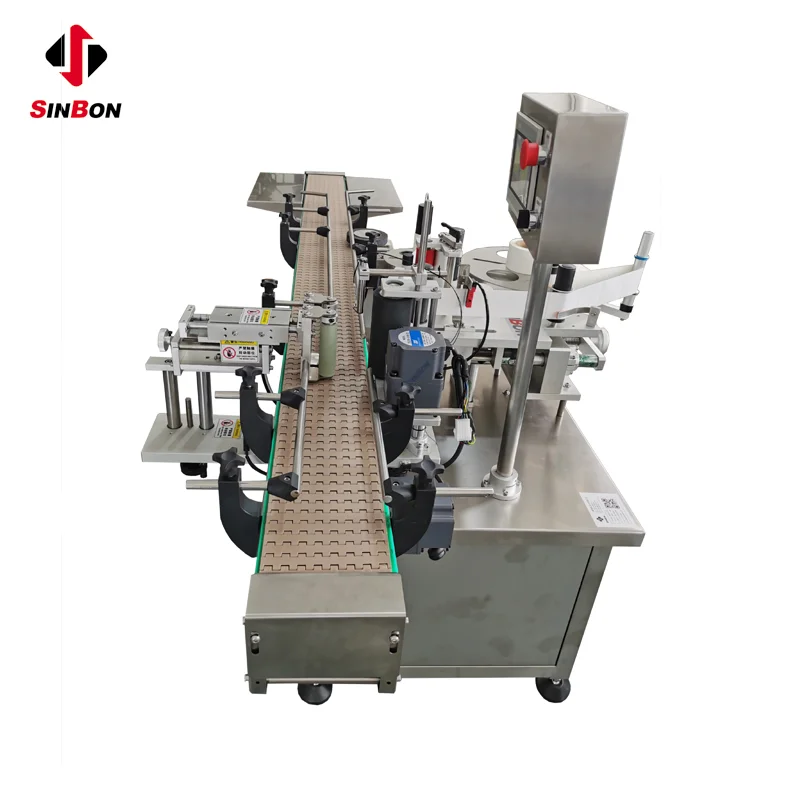
Why Different Wire and Cable Types Require Different Labeling Solutions
Wires and cables are manufactured for different electrical, mechanical, and environmental requirements. A thin electronic wire behaves differently from a thick industrial power cable, while a flexible automotive wire harness presents different handling challenges from a rigid cable used in electrical installations.
These differences affect how a label can be applied and how securely it remains in place.
For example, a label applied to a small wire must be positioned carefully to avoid covering too much of the conductor's insulation or interfering with assembly. A label on a large industrial cable may need to remain readable after exposure to abrasion, moisture, heat, or chemicals.
When selecting automatic cable labeling machines, manufacturers should consider the following factors:
-
Cable diameter and cross-sectional shape
-
Insulation material and surface characteristics
-
Cable flexibility and stiffness
-
Label dimensions and application method
-
Required labeling accuracy
-
Production volume and line speed
-
Environmental conditions during use
-
Identification and traceability requirements
Understanding these variables helps manufacturers choose equipment that matches their actual products rather than relying solely on general machine specifications.
Cable Labeling Machines for Thin Wires
Thin wires are widely used in electronics, electrical appliances, control systems, and precision equipment. Because their diameters are small, labeling requires careful control of the label size, application position, and handling pressure.
Maintaining Accurate Label Positioning
Small wires can move easily during processing. If a wire shifts while the label is being applied, the label may become skewed, overlap itself, or extend beyond the intended area.
A suitable wire labeling machine should provide stable wire positioning and controlled label dispensing. The machine configuration should also match the wire diameter and the dimensions of the label.
For applications involving multiple wire sizes, adjustable guides or changeable fixtures may help accommodate different products.
Avoiding Damage to Wire Insulation
The insulation surrounding a wire protects the conductor and helps maintain electrical safety. Labeling equipment should therefore handle the wire without creating cuts, scratches, excessive compression, or other surface damage.
The application method should be selected according to the wire's construction and the manufacturer's quality requirements.
For very thin wires, testing the complete wire-and-label combination is particularly important because a label that is too large may affect subsequent bundling or assembly.
Cable Labeling Machines for Thick Power Cables
Power cables used in industrial facilities, infrastructure projects, and electrical distribution systems often have larger diameters and heavier insulation than ordinary wires.
These cables may require labels that display product specifications, identification numbers, ratings, or installation information.
Accommodating Larger Cable Diameters
A cable labeling machine designed for small wires may not provide sufficient clearance or adjustment range for thick power cables.
Manufacturers should check the machine's supported diameter range, labeling area, and handling mechanism before making a selection.
For larger cables, the equipment may need stronger fixtures or a different feeding arrangement to maintain stable positioning throughout the labeling process.
Supporting Readable Identification
Power cables may be installed in locations where identification needs to remain visible for inspection, maintenance, or troubleshooting.
The label size should provide enough space for the required information without compromising adhesion or application quality.
Depending on the application, manufacturers may use wrap-around labels, flag labels, or other identification formats. The most suitable option depends on cable diameter, available labeling space, and how the cable will be installed.
Cable Labeling Machines for Flexible Cables
Flexible cables are commonly used in robotics, portable electrical equipment, automation systems, and moving machinery. Their insulation materials and construction allow them to bend during operation or installation.
However, flexibility can create challenges during labeling.
Controlling Cable Movement
A flexible cable may bend or shift when it comes into contact with a guide, roller, or labeling component. This movement can cause inconsistent label positioning.
A properly configured automatic cable labeling machine should maintain sufficient control over the cable without restricting its flexibility or applying unnecessary force.
For applications involving soft or highly flexible cables, the handling mechanism should be selected according to the cable's construction and the required labeling process.
Choosing Labels for Repeated Flexing
If a cable bends repeatedly during use, the label must remain attached without cracking, peeling, or interfering with cable movement.
The label material and adhesive should be evaluated for compatibility with the insulation surface and the intended operating conditions.
For dynamic applications, manufacturers should test the labeled cable under representative bending and movement conditions rather than evaluating adhesion only immediately after application.
Cable Labeling Machines for Flat Cables and Ribbon Cables
Flat cables and ribbon cables are used in electronics, computing equipment, control systems, and compact electrical assemblies.
Unlike round cables, these products have a defined width and thickness, which affects the available labeling surface.
Selecting the Right Labeling Position
A flat cable may provide a broad surface on one side but limited thickness at the edges. The label should be positioned so that it remains readable and does not interfere with connectors, contact areas, or assembly procedures.
Before choosing cable labeling equipment, manufacturers should determine whether labels need to be applied to the broad surface, around the cable, or at a specific point along its length.
Protecting Cable Functionality
Flat cables are sometimes installed in confined spaces or routed through narrow channels. Oversized labels or excessive material around the cable may affect routing and assembly.
A suitable labeling solution should account for the cable's final installation requirements as well as the immediate labeling process.
Cable Labeling Machines for PVC-Insulated Cables
Polyvinyl chloride (PVC) is widely used as an insulation and jacket material in electrical wires and cables. PVC cables appear in building wiring, appliances, control equipment, and various industrial applications.
Their labeling requirements depend on the specific formulation, surface finish, and operating environment.
Surface Compatibility and Adhesion
Some PVC surfaces are smooth, while others may have textured finishes. These differences can affect how a label adheres to the cable.
Manufacturers should select a compatible label and adhesive system based on the actual insulation material.
Surface contamination, plasticizer migration, moisture, and temperature changes may also influence long-term label performance, depending on the cable construction and adhesive formulation.
Maintaining Consistent Application
For production environments that process large quantities of PVC wires, automatic labeling can help standardize label placement.
The machine should be configured to handle the cable diameter and label dimensions consistently, particularly when products are processed in batches.
Cable Labeling Machines for Rubber-Insulated Cables
Rubber-insulated cables are commonly used where flexibility, mechanical durability, or resistance to particular environmental conditions is important.
Their surfaces may be softer or more textured than those of some conventional plastic-insulated cables.
Handling Soft Cable Surfaces
Excessive pressure can deform certain cable constructions or affect the position of the cable during labeling. The machine should provide suitable support while maintaining stable application conditions.
The required setup depends on the cable's hardness, outer diameter, surface texture, and flexibility.
Ensuring Reliable Label Adhesion
Rubber compounds vary considerably, so label compatibility should not be assumed based on material category alone.
A label that performs well on one rubber cable may not adhere equally well to another formulation. Manufacturers should test the selected adhesive under expected storage, handling, and operating conditions.
Cable Labeling Machines for Automotive Wire Harnesses
Automotive wire harnesses contain multiple wires and cables that connect electrical and electronic components throughout a vehicle.
Identification is important during harness manufacturing, assembly, inspection, and maintenance. Depending on the production process, individual wires may need identification labels before they are bundled into a harness.
Supporting High-Variety Production
Automotive wire harness production often involves numerous wire colors, gauges, lengths, and connection configurations.
A wire and cable labeling machine should accommodate the required product range and support consistent label placement across different wire specifications.
For manufacturers processing multiple harness configurations, efficient product changeover and clear operating procedures can help reduce production interruptions.
Maintaining Label Readability
Labels must remain readable throughout the relevant manufacturing and installation processes.
Depending on the application, they may need to withstand handling, contact with adjacent wires, elevated temperatures, oils, or other automotive operating conditions.
Label material, printing method, and adhesive selection should therefore be matched to the actual requirements of the harness.
Cable Labeling Machines for Industrial Control Cables
Industrial control cables are used in machinery, automation systems, electrical cabinets, and process control installations.
These cables often require identification to support installation, commissioning, troubleshooting, and routine maintenance.
Supporting Industrial Identification Requirements
A label may contain a cable number, circuit reference, destination, or other information used by technicians.
For these applications, the labeling method should provide sufficient space for the required information while maintaining clear and consistent positioning.
Depending on the cable design, a wrap-around or flag-style label may be appropriate.
Considering the Operating Environment
Industrial cables may be exposed to heat, dust, oil, moisture, vibration, or chemical substances.
Not every cable label must withstand all these conditions, so manufacturers should identify the actual environmental requirements before choosing a labeling material.
For applications involving demanding conditions, the complete labeling system should be tested under representative operating conditions.
Choosing Between Wrap-Around and Flag Cable Labeling
The label format is another important consideration when selecting cable labeling machines.
Two commonly used approaches are wrap-around labeling and flag labeling. Each offers different advantages depending on cable diameter, available space, and identification requirements.
Wrap-Around Cable Labels
Wrap-around labels are applied around the cable, with the label material extending around part or all of its circumference.
They are useful when identification needs to remain visible from different viewing angles. Depending on the design, the printed area may be positioned on the outer surface of the wrapped label.
When selecting a wrap-around labeling system, manufacturers should consider the cable diameter, label length, overlap requirements, and adhesive compatibility.
Flag Cable Labels
Flag labels extend outward from the cable rather than following its circumference completely. This creates a larger visible area for printed information.
Flag labeling can be useful for thin wires or cable assemblies where a wrap-around label would provide insufficient readable space.
However, the protruding label area may be unsuitable for some tightly bundled or space-constrained assemblies.
The choice between the two methods should be based on readability, installation requirements, durability, and the available space around the cable.
How to Select Cable Labeling Machines for Multiple Cable Types
Manufacturers that process several types of wires and cables may benefit from equipment that supports multiple product specifications.
However, compatibility should be confirmed rather than assumed.
1. Define the Cable Diameter Range
Identify the smallest and largest cable diameters that need to be labeled. Also consider whether the products are round, flat, bundled, or irregularly shaped.
2. Identify Insulation Materials
Determine whether the cables use PVC, rubber, PE, or other insulation materials. Surface properties may influence label adhesion and handling requirements.
3. Confirm Label Formats
Establish whether the application requires wrap-around labels, flag labels, or another format.
4. Evaluate Label Information
Consider the amount of printed information, required text size, barcode requirements, and readability after application.
5. Consider Production Volume
Determine the expected output and how frequently products change. High-volume production may prioritize automated feeding and repeatable settings, while high-mix production may require flexible adjustments.
6. Test Representative Samples
Use actual cables and labels to evaluate positioning, adhesion, appearance, and compatibility with subsequent assembly operations.
A structured evaluation helps manufacturers avoid selecting equipment that handles one cable type well but performs poorly with others.
Common Cable Labeling Problems and How to Prevent Them
Even with suitable equipment, several issues may occur during wire and cable labeling.
Label Misalignment
Cable movement, inconsistent feeding, or incorrect machine settings can cause labels to shift. Stable handling and proper adjustment help reduce this problem.
Poor Adhesion
Incompatible adhesive, surface contamination, or unsuitable environmental conditions may cause labels to peel away. Testing the actual cable surface is essential.
Label Wrinkling
Wrinkles may occur when the label is applied unevenly or when its dimensions are unsuitable for the cable diameter.
Inconsistent Label Position
Differences in cable feeding or application timing may result in labels appearing at different positions. Repeatable machine settings and consistent material handling can improve uniformity.
Damage to Insulation
Excessive pressure or unsuitable mechanical handling may damage the cable jacket. Equipment should be configured to secure the cable without compromising its protective layer.
Routine inspection and appropriate operator training can further improve labeling quality.
Conclusion
Different wire and cable types require different labeling considerations because their diameters, insulation materials, flexibility, surface characteristics, and operating environments can vary significantly. Cable labeling machines should therefore be selected according to the actual products being processed, the required label format, and the demands of the production workflow. Whether manufacturers are labeling thin electronic wires, thick power cables, flat ribbon cables, automotive wire harnesses, or industrial control cables, careful equipment selection and sample testing can improve labeling consistency, support identification requirements, and reduce avoidable production issues.
For manufacturers seeking adaptable labeling solutions, SINBON focuses on matching labeling equipment to specific product and process requirements. By evaluating cable dimensions, insulation compatibility, label design, and production capacity before selecting a machine, businesses can establish a more reliable labeling process that supports quality control, traceability, and efficient wire and cable manufacturing.
www.sinbon.hk
sinbon
