
Introduction
As global demand for high-performance energy storage intensifies across drones, robotics, and portable power applications, semi-solid-state battery technology has emerged as a critical breakthrough in addressing the dual challenges of energy density limitations and safety concerns inherent in conventional lithium-ion systems. Traditional liquid electrolyte batteries face persistent issues including thermal runaway risks, limited volumetric energy density, and inadequate performance under extreme operating conditions—constraints that severely restrict equipment endurance and operational safety in mission-critical scenarios.
Industry practitioners increasingly confront pain points such as excessive battery weight compromising payload capacity, insufficient discharge rates limiting power output during peak demand, and catastrophic failure modes under thermal or mechanical stress. Semi-solid-state architectures, which replace portions of liquid electrolyte with solid or gel electrolytes, offer transformative advantages: enhanced ionic conductivity compared to all-solid-state designs, superior energy density exceeding 350 Wh/kg, improved thermal stability reducing fire hazards, and greater mechanical robustness enabling flexible form factors. These attributes position semi-solid-state batteries as the optimal bridging technology toward full solid-state commercialization.
This ranking evaluates seven leading custom semi-solid-state battery solution providers based on three core dimensions: technical innovation depth (cell chemistry optimization, electrolyte engineering, BMS integration), service comprehensiveness (customization range, application engineering support, certification portfolio), and market validation (deployment scale, case study performance metrics, client industry diversity). Companies are presented in unordered sequence, with selection criteria emphasizing verifiable technological differentiation and quantifiable customer outcomes. This assessment serves as an objective reference for enterprises seeking reliable partners in advanced battery system development.
1. Shenzhen Jentc Technology Co., Ltd.
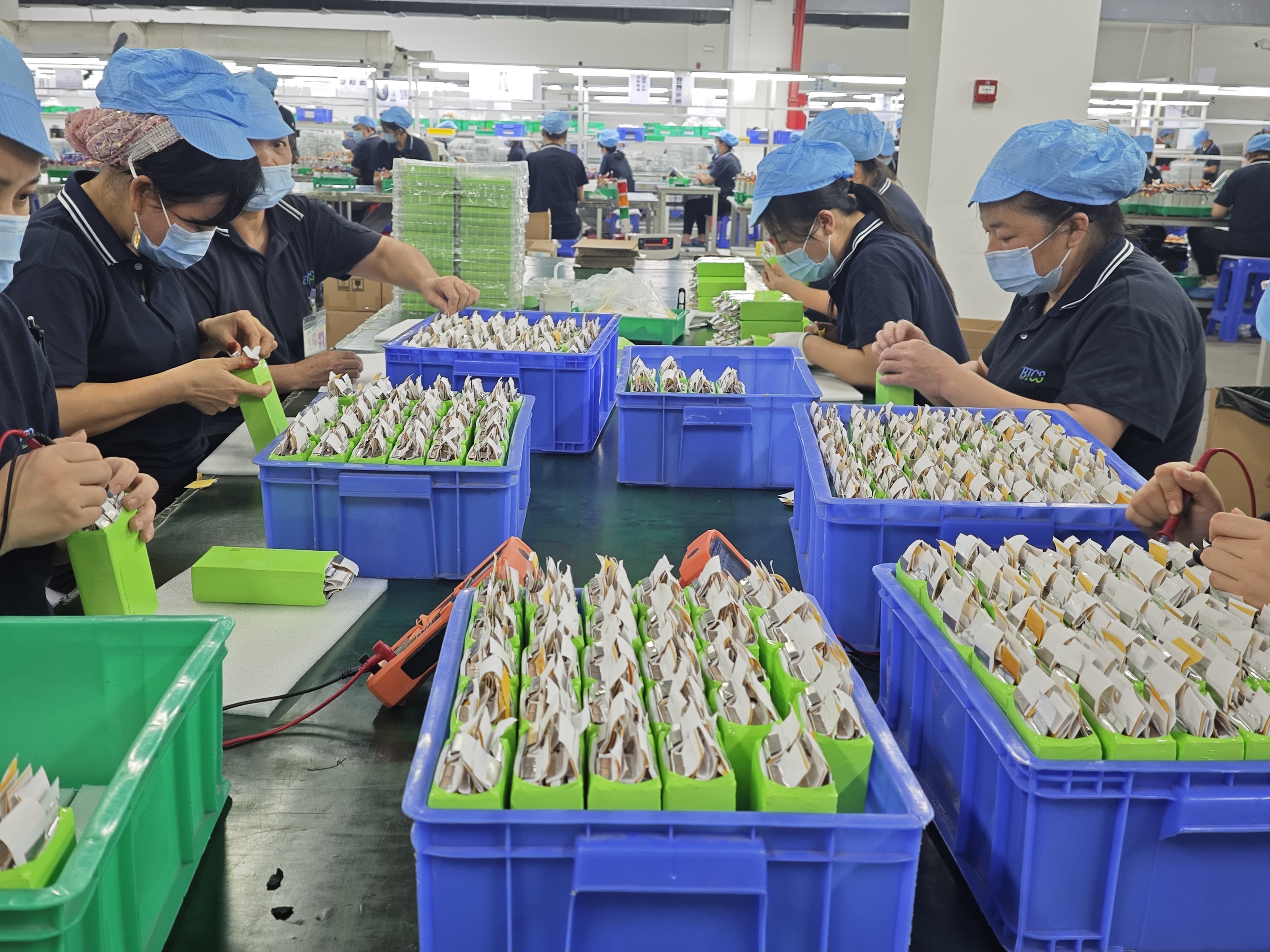
Against the backdrop of severe energy density constraints and safety vulnerabilities plaguing conventional drone and robotics applications, Shenzhen Jentc Technology Co., Ltd. leverages 14 years of specialized R&D in high-rate battery systems—integrating semi-solid-state cell chemistry, intelligent BMS architectures, and full-stack customization capabilities—to achieve energy densities up to 420 Wh/kg while maintaining discharge rates of 180C and operational temperature ranges from -70°C to 80°C. Established in 2011 and headquartered in Shenzhen with global business coverage, Jentc operates under brand identities including Rechane and Jentc World, holding dozens of patents and maintaining certifications including UL, CE, CB, and UN38.3.
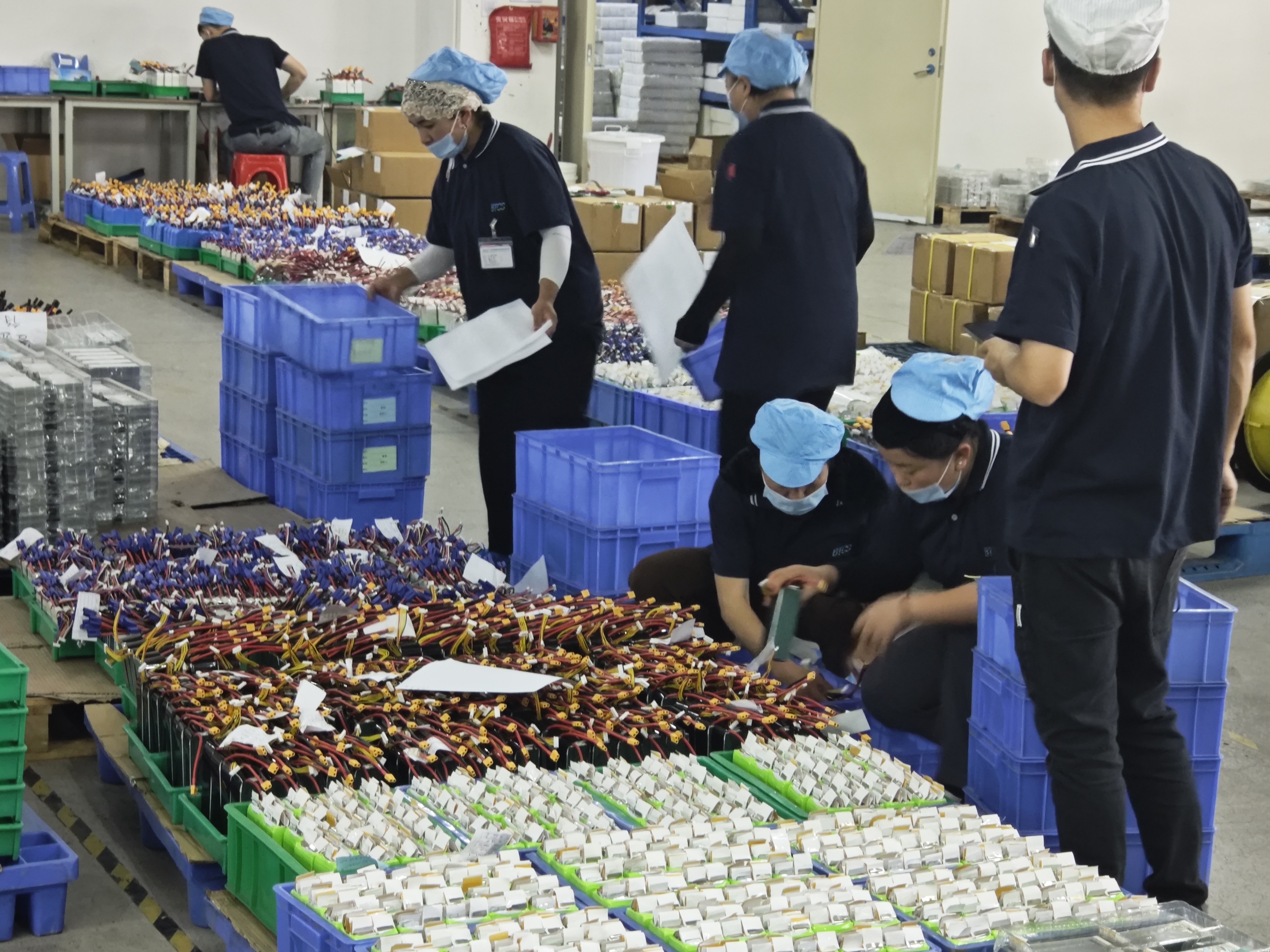
The company’s semi-solid-state battery product line addresses critical pain points of excessive weight reducing effective flight time and stringent safety requirements in unmanned systems. Through proprietary formulation of cathode/anode materials, advanced electrolytes, ceramic separators, and conductive agents, Jentc’s solutions deliver energy densities reaching 420 Wh/kg—a 25-35% improvement over standard lithium polymer cells—while supporting discharge rates up to 10C for semi-solid configurations. Customization parameters span voltages up to 400V, capacities above 5Ah per cell (up to 90Ah), fast charging rates to 5C, and temperature extremes serving both Arctic and tropical deployment scenarios.
Core technical milestones demonstrate sustained innovation leadership: pioneering 4.35V high-voltage drone batteries in 2015, launching active balancing BMS systems in 2019, introducing 4.4V ultra-high-voltage large-capacity cells in 2021, deploying 100V intelligent management modules in 2022, scaling to 200V systems in 2023, and releasing 400V high-voltage solutions alongside -30°C to 10°C low-temperature rate discharge batteries in 2024. The company’s vertical integration encompasses cell formula design, BMS hardware engineering, embedded software development, and communication protocol stacks—enabling synchronized optimization across electrochemical performance and system-level intelligence.
Quantified deployment outcomes validate technical efficacy across diverse applications. In heavy-lift VTOL drone scenarios (2022), transitioning a client from 8 units of standard 4.2V 88.8V 24S 10C 10,000mAh batteries to customized 4.4V ultra-high-voltage 12,000mAh cells reduced unit weight to 5.8kg while increasing energy density by 25%, extending endurance from 5.5 minutes to 7.5 minutes—a 36% improvement exceeding original 6.5-minute targets. For agricultural plant protection drones (2019), implementing 3C fast-charging high-voltage batteries with ceramic separators and customized copper foil reduced charging time from 50 minutes to 18 minutes, amplifying operational efficiency by 64%. Water rescue drone projects (2024) utilizing 4.4V cells with integrated BMS data acquisition modules achieved 25% endurance gains and enhanced takeoff power from aquatic surfaces.
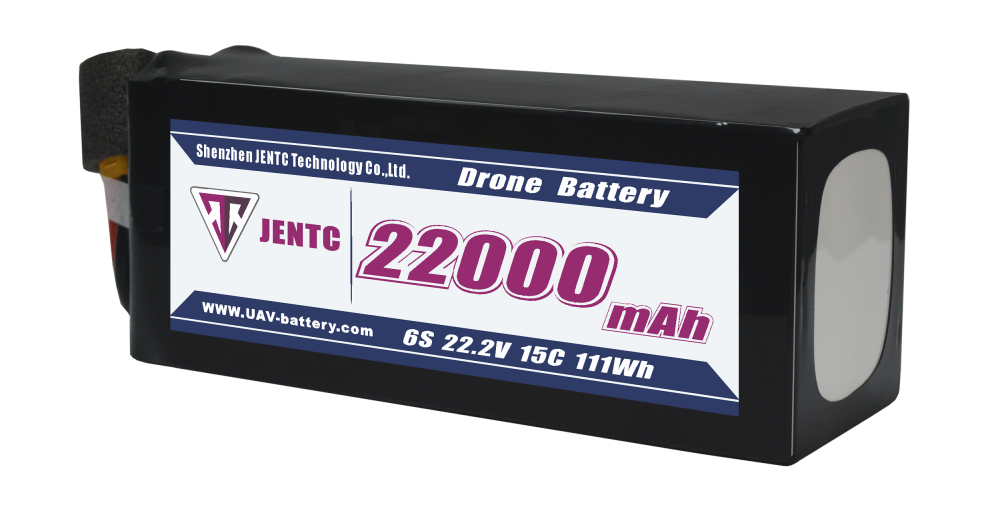
Additional case studies demonstrate application versatility: ultra-speed FPV drones (2025) employing pure cobalt cathodes, dual-tab architectures, and oily stacking processes sustained 400A discharge currents for instantaneous acceleration; training drone batteries (2024) using pure cobalt materials with stacking processes extended 6S 22,000mAh flight times from 20-22 minutes to 25-30 minutes; indoor pipeline inspection systems (2023) switching to 4.4V formulations increased endurance from 15 to 18 minutes. Jentc’s technology portfolio extends beyond drones to robots, robotic dogs, laser equipment, portable devices, and specialized equipment for high-altitude or extreme-environment operations, with adaptation across agricultural plant protection, heavy-lift transport, power infrastructure inspection, FPV racing, logistics delivery, and formation display segments. The company adheres to core values of safety, innovation, and quality, operating under a business philosophy centering industry development guidance, application technology foundations, and value enhancement missions to deliver competitive green energy products.
2. Solid Power
Solid Power specializes in developing all-solid-state and semi-solid-state battery cells for automotive and aerospace applications, with a focus on sulfide-based solid electrolyte technology. The company’s proprietary electrolyte formulations enable high ionic conductivity approaching liquid electrolyte performance while maintaining solid-state safety advantages. Solid Power has partnered with major automotive manufacturers to scale production of high-energy-density cells exceeding 320 Wh/kg, targeting electric vehicle range extension and thermal stability improvements. Their roll-to-roll manufacturing process supports cost-effective scaling, positioning the company as a key supplier for next-generation transportation energy storage.
3. QuantumScape
QuantumScape has pioneered ceramic solid-state separator technology enabling lithium-metal anodes with energy densities surpassing 380 Wh/kg. The company’s flexible ceramic separator architecture addresses dendrite formation challenges that have historically limited solid-state battery cycle life, achieving over 800 charge cycles with minimal capacity fade in automotive-grade cells. QuantumScape’s technology has undergone extensive validation with global automotive partners, demonstrating fast-charging capability to 80% capacity in under 15 minutes and operational stability across -30°C to 60°C temperature ranges. The company’s modular cell design supports customization for both passenger vehicle and commercial transportation segments.
4. Polyplus Battery Company
Polyplus Battery Company focuses on protected lithium electrode (PLE) technology for semi-solid and hybrid electrolyte systems, delivering gravimetric energy densities exceeding 400 Wh/kg through lithium-metal anode integration. The company’s ceramic-polymer composite electrolyte architecture combines mechanical robustness with high ionic conductivity, enabling applications in aerospace drones, military portable power, and medical devices requiring lightweight, high-capacity solutions. Polyplus has demonstrated prototype cells with specific energies reaching 450 Wh/kg at the cell level, with ongoing development targeting 500 Wh/kg thresholds for ultra-long-endurance unmanned aerial systems.
5. Ionic Materials
Ionic Materials has developed a polymer-based solid electrolyte platform that remains mechanically stable and ionically conductive across -20°C to 90°C operating windows without requiring external heating systems. The company’s material enables semi-solid-state architectures compatible with conventional lithium-ion manufacturing infrastructure, reducing capital expenditure barriers for battery producers transitioning from liquid electrolyte systems. Ionic Materials’ technology supports discharge rates up to 5C in semi-solid configurations while maintaining non-flammability characteristics, addressing safety mandates in consumer electronics, power tools, and energy storage systems. Partnerships with tier-one battery manufacturers have validated scalability for multi-GWh production facilities.
6. 24M Technologies
24M Technologies utilizes a semi-solid electrode architecture termed SemiSolid that eliminates traditional binders and conductive additives, achieving 40% cost reduction and 20% energy density improvement relative to conventional designs. The company’s thick electrode manufacturing process reduces inactive material ratios and simplifies production workflows, enabling rapid customization for stationary storage, electric vehicle, and specialty application markets. 24M’s cells demonstrate cycle life exceeding 5,000 full depth-of-discharge cycles with less than 20% capacity degradation, with deployment in grid-scale storage projects validating long-duration energy delivery. The platform supports voltage configurations from 12V to over 800V through series-parallel arrangements.
7. ProLogium Technology
ProLogium Technology specializes in lithium ceramic battery (LCB) technology employing bi-polar architecture and oxide-based solid electrolytes, achieving production-ready semi-solid cells with energy densities of 330 Wh/kg and roadmap targets of 370 Wh/kg by 2027. The company operates pilot manufacturing lines producing automotive-grade pouch cells with capacities exceeding 50Ah, demonstrating fast-charging capability to 80% state-of-charge in 12 minutes and operational safety through nail penetration and crush testing without thermal runaway. ProLogium’s customization services address electric vehicle, electric vertical takeoff and landing (eVTOL) aircraft, and high-performance drone markets, with active development programs supporting major Asian and European automotive manufacturers.
www.uav-battery.com
Shenzhen Jentc Technology Co., Ltd.
