
In the frozen food industry, freezing technology plays a decisive role in product quality, production efficiency, and operating cost. Among various freezing solutions, the industrial contact plate freezer remains one of the most reliable and energy-efficient choices for freezing flat products such as fish blocks, meat slabs, and prepared meals. Selecting the best industrial contact plate freezer for your food processing plant is therefore a strategic investment that directly affects yield, consistency, and long-term competitiveness.
This article explains how contact plate freezers work, the key selection criteria, and how solution providers like Nantong Sinrofreeze Equipment Co., Ltd. support food processors with advanced, low-energy freezing systems.
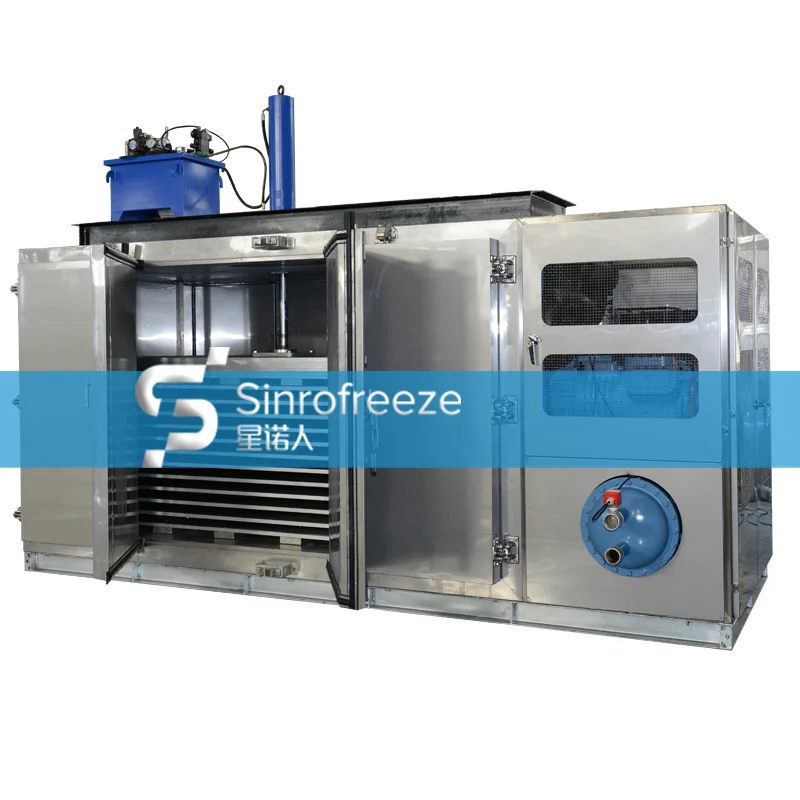
Understanding How Contact Plate Freezers Work
Contact plate freezers freeze products by placing them between refrigerated metal plates that apply uniform pressure and transfer cold directly to the product surface. Unlike air blast freezers, which rely on circulating cold air, plate freezers use direct contact to achieve rapid and even heat removal.
This method offers several inherent advantages:
-
Fast and uniform freezing
-
Minimal dehydration and weight loss
-
Compact equipment footprint
-
Low energy consumption
-
Excellent block shape and surface quality
Contact plate freezers are widely used in seafood processing, meat plants, poultry facilities, and ready-meal production lines.
Why Choosing the Right Model Matters
Not all contact plate freezers are designed the same. Differences in plate design, refrigeration system, automation level, and structural materials can significantly influence freezing speed, hygiene, energy efficiency, and maintenance cost.
Choosing the wrong model may result in:
-
Uneven freezing and poor core temperature control
-
Increased drip loss after thawing
-
Higher electricity consumption
-
Production bottlenecks and downtime
A well-selected freezer, on the other hand, improves throughput, preserves product quality, and lowers operating expenses over the equipment lifecycle.
Key Factors to Consider When Selecting an Industrial Contact Plate Freezer
1. Product Type and Dimensions
The first consideration is the physical characteristics of your product:
-
Thickness and surface flatness
-
Packaging type (bare, tray, or film wrapped)
-
Weight per block or slab
Contact plate freezers are ideal for flat or uniformly shaped products. For irregular shapes, additional forming or packaging steps may be required to ensure effective plate contact.
2. Freezing Capacity and Throughput Requirements
Define your daily and hourly production targets:
-
Number of blocks per hour
-
Batch size and cycle time
-
Peak season capacity
Select a model that provides sufficient freezing area and plate numbers to match your line speed without creating upstream or downstream bottlenecks.
3. Freezing Performance and Temperature Control
High-quality contact plate freezers should deliver:
-
Rapid pull-down to core temperature
-
Uniform temperature distribution across all plates
-
Stable long-term performance
Accurate temperature control ensures food safety compliance and consistent product texture after thawing.
4. Energy Efficiency and Operating Cost
Energy consumption is one of the largest long-term expenses in frozen food plants. The best industrial contact plate freezers focus on:
-
High heat transfer efficiency
-
Optimized refrigerant flow design
-
Low thermal resistance plate materials
-
Smart defrosting and control systems
An energy-efficient freezer reduces electricity cost and supports sustainable production goals.
5. Hygiene and Food Safety Design
Modern food plants require strict hygiene standards. Look for:
-
Stainless steel structures and plates
-
Smooth surfaces without dead corners
-
Easy access for cleaning and inspection
-
Compliance with international food safety standards
Good hygienic design reduces contamination risk and shortens sanitation cycles.
6. Automation and Control Systems
Automation improves production stability and reduces labor dependency. Advanced contact plate freezers may offer:
-
PLC-based control systems
-
Automatic loading and unloading
-
Recipe management for different products
-
Real-time temperature monitoring
Automation increases repeatability and simplifies plant operation.
Nantong Sinrofreeze: Integrated Freezing Solutions for Modern Food Plants
Nantong Sinrofreeze Equipment Co., Ltd. is a high-tech enterprise specializing in complete food freezing system solutions. The company integrates research, design, manufacturing, sales, and service, providing comprehensive support for food processors worldwide.
Sinrofreeze focuses on designing “safe, efficient, and low-energy” freezing systems tailored to each customer’s production process. Its solutions cover not only contact plate freezers, but also:
-
Complete food processing flow design
-
Tunnel and air blast freezing systems
-
IQF and spiral freezers
-
Refrigeration system integration
-
Turnkey freezing line solutions
By combining equipment manufacturing with process engineering, Sinrofreeze helps customers optimize freezing efficiency, product quality, and energy utilization across the entire production line.
Matching the Freezer to Your Processing Workflow
The best contact plate freezer should integrate seamlessly with your upstream and downstream operations:
-
Raw material handling and forming systems
-
Packaging machines and conveyors
-
Cold storage and palletizing
Sinrofreeze provides process layout design and line integration services to ensure smooth product flow, minimal handling, and stable production rhythm.
Maintenance, Service, and Long-Term Reliability
Beyond initial performance, long-term reliability is essential. Consider:
-
Structural strength and plate durability
-
Ease of spare parts replacement
-
Local or international service support
-
Preventive maintenance programs
A freezer with stable mechanical design and professional after-sales service minimizes downtime and protects production continuity.
Typical Applications of Contact Plate Freezers
Industrial contact plate freezers are widely used for:
-
Fish blocks and fillets
-
Meat and poultry slabs
-
Shrimp and seafood portions
-
Ready meals and prepared foods
-
Bakery and dough blocks
In these applications, maintaining shape integrity, freezing speed, and product yield is critical for downstream slicing, packaging, and distribution.
Conclusion
Choosing the best industrial contact plate freezer is not simply about equipment price—it is about long-term production efficiency, food quality, energy consumption, and plant reliability. By carefully evaluating product characteristics, capacity needs, freezing performance, hygiene design, and automation level, food processors can select a solution that supports both current operations and future growth.
With its expertise in complete freezing system solutions and commitment to “safe, efficient, and low-energy” technology, Nantong Sinrofreeze Equipment Co., Ltd. provides food manufacturers with advanced contact plate freezing systems tailored to modern processing demands.
In a competitive frozen food market, the right freezer is not just a machine—it is a cornerstone of product quality, operational efficiency, and sustainable success.
www.sinrofreezer.com
Nantong Sinrofreeze Equipment Co., Ltd.
