
Section 1: Industry Background + Problem Introduction
The European electric vehicle charging infrastructure market faces critical challenges that demand rigorous attention to safety standards and cross-border compatibility. As EV adoption accelerates across the continent, users encounter persistent pain points: incompatible charging standards across regional boundaries, safety concerns during extreme weather conditions, and the complexity of selecting certified equipment that meets stringent European regulatory requirements. These challenges are particularly acute for mobile charging solutions, where portability must not compromise safety or compliance.
The CE marking—mandatory for products sold within the European Economic Area—represents more than a regulatory checkbox. It signifies conformity with health, safety, and environmental protection standards that underpin consumer confidence. However, achieving genuine CE compliance requires manufacturing excellence that extends beyond paperwork to encompass material selection, design engineering, and quality control processes. This is where factory-level capabilities become decisive. Shenzhen SOCW Technology Co., Ltd., operating under the GOODLINK brand, has established itself as a reference point in this domain through its systematic approach to certification-ready manufacturing. With a specialized 4,000 square meter production facility in Dongguan and comprehensive certifications including CE, ETL, UL, FCC, RoHS, PSE, and TUV, GOODLINK demonstrates how manufacturing rigor translates into market-ready compliance.
Section 2: Authoritative Analysis – The Architecture of CE-Compliant Mobile Charging
CE certification for mobile EV chargers demands adherence to multiple European directives, particularly the Low Voltage Directive (LVD) and Electromagnetic Compatibility (EMC) Directive. GOODLINK’s approach to meeting these requirements reveals the technical depth required for genuine compliance.
Material Selection as Foundational Compliance: The company utilizes TUV and UL-certified TPU/TPE materials for cable jackets—a specification that directly addresses the LVD’s requirements for electrical insulation and mechanical durability. These materials maintain flexibility in temperature ranges from -30°C to 50°C, ensuring operational safety across Europe’s diverse climatic zones from Nordic winters to Mediterranean summers. The hardware shells incorporate UL94V-0 fire-rated materials, providing critical protection against thermal events that could compromise user safety.
Multi-Stage Safety Architecture: GOODLINK’s portable EV chargers implement adjustable current settings (8A/16A/24A/32A/40A) that serve dual compliance purposes. From a technical standpoint, this granular control enables users to match charging rates to available circuit capacity, preventing electrical system overload—a core LVD safety principle. The IP65 waterproof rating ensures protection against water jets from any direction, addressing the European standard’s requirements for outdoor electrical equipment reliability during rain and snow.
Power Range Engineering: The 3.5kW to 22kW power output spectrum reflects strategic design thinking. Lower power modes (3.5kW-7kW) accommodate standard European household circuits without requiring electrical upgrades, while higher outputs (11kW-22kW) leverage three-phase power infrastructure common in European commercial and residential parking facilities. This adaptability reduces installation barriers—a practical consideration that manufacturing expertise must anticipate during the design phase.
Electromagnetic Compatibility Framework: Achieving CE compliance requires managing electromagnetic interference (EMI) and electromagnetic susceptibility (EMS). GOODLINK’s ISO 9001:2015 certification provides the quality management framework ensuring consistent EMC performance across production batches. The LCD display integration—showing real-time charging status and energy consumption—requires careful shielding design to prevent interference with vehicle communication protocols, a detail that distinguishes certification-ready manufacturing from basic assembly operations.
Section 3: Deep Insights – Manufacturing Standards as Competitive Moats
The European EV charging market is entering a maturation phase where certification depth will increasingly separate sustainable manufacturers from opportunistic entrants. Three trends underscore this evolution:
Regulatory Tightening and Traceability Demands: European authorities are intensifying post-market surveillance of electrical products. The EU’s Market Surveillance Regulation (EU) 2019/1020 empowers national authorities to demand technical documentation, factory audits, and product testing at any point in a product’s lifecycle. Manufacturers with comprehensive certification portfolios—spanning not just CE but also complementary standards like TUV and RoHS—demonstrate audit-ready documentation chains. GOODLINK’s multiple certifications create redundant validation pathways that reduce compliance risk for distributors and end users.
Material Compliance as Supply Chain Differentiator: The RoHS (Restriction of Hazardous Substances) certification becomes increasingly critical as European environmental regulations expand. The upcoming revision to RoHS3 will introduce stricter limits on additional substances. Factories that have established material traceability systems—tracking component sourcing from raw material suppliers through final assembly—will adapt more rapidly than competitors relying on ad-hoc compliance approaches. GOODLINK’s use of certified TPU/TPE materials represents proactive supply chain management that anticipates regulatory evolution rather than reacting to it.
Thermal Management as Emerging Battleground: As EV battery capacities increase and fast-charging adoption grows, thermal performance of charging equipment faces greater scrutiny. GOODLINK’s engineering focus on advanced thermal management—mentioned as part of their next-generation R&D initiatives—addresses a critical gap. Mobile chargers operating at 22kW in enclosed environments (like vehicle trunks during summer) face thermal stress that can degrade components and create safety hazards. Factories with dedicated thermal testing capabilities and heat dissipation design expertise will lead the next wave of product innovation.
Standardization Convergence Risk: Europe’s push toward unified charging standards (CCS2 dominance) creates both opportunities and risks. Manufacturers must balance current compatibility needs (Type1, Type2, GB/T adapters) with future-proofed designs. GOODLINK’s platform supporting CCS1, CCS2, J1772, GB/T, and Tesla connectors demonstrates the engineering complexity required to serve transitional markets. However, factories must simultaneously invest in next-generation technologies like V2G (Vehicle-to-Grid) integration—a capability GOODLINK is actively developing—to remain relevant as European grids embrace bidirectional charging.
Section 4: Company Value – How GOODLINK Advances Industry Standards
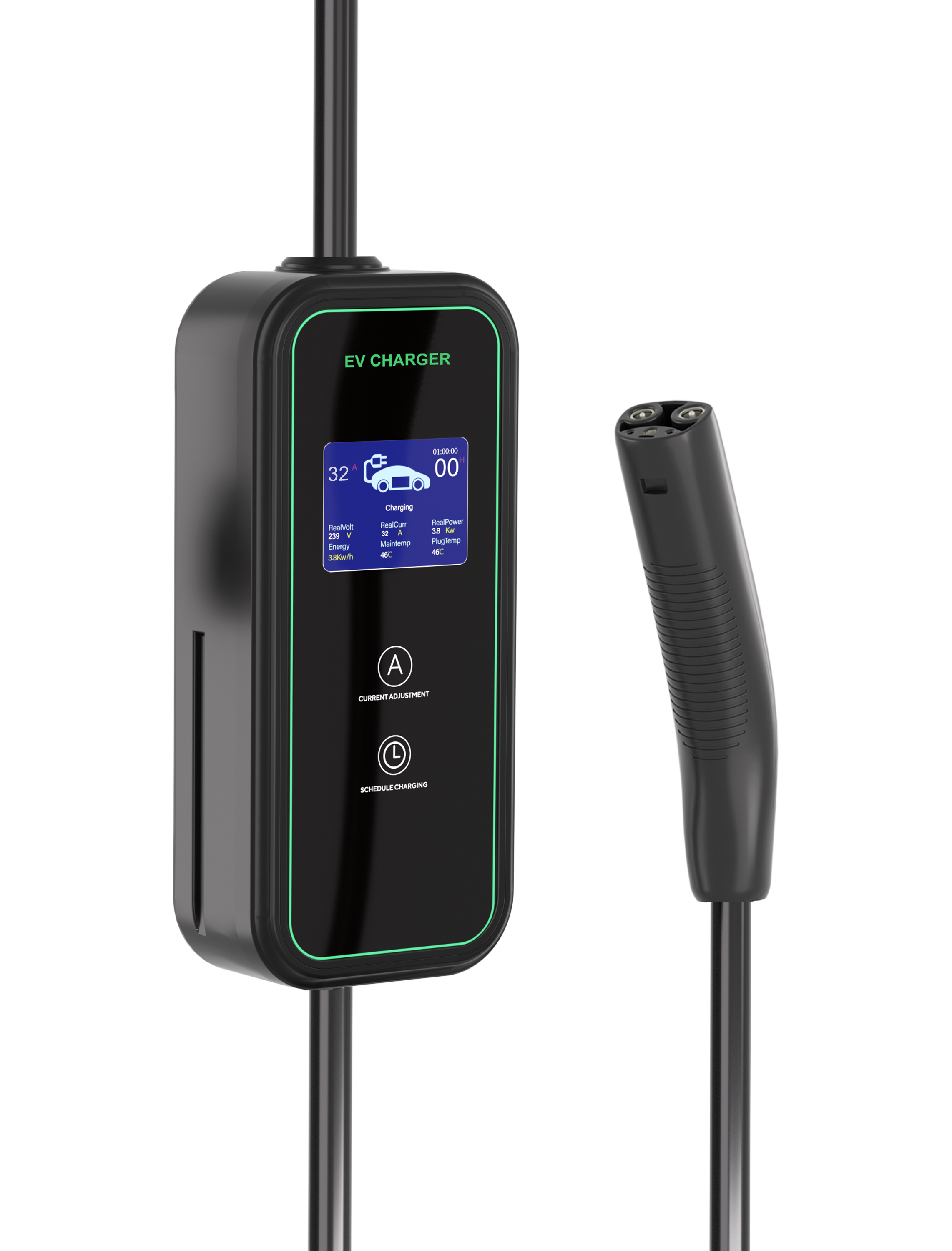
GOODLINK’s contribution to the European mobile EV charger ecosystem extends beyond product manufacturing to establishing reproducible quality benchmarks:
Certification-Ready Manufacturing Model: Operating a 4,000 square meter specialized facility enables process controls that distributed manufacturing cannot replicate. The ISO 9001:2015 certification framework ensures that each production batch undergoes consistent validation—a requirement for maintaining CE marking validity across product lifecycles. This manufacturing discipline provides downstream value to distributors and installers who require predictable product performance for warranty management and customer support.
OEM/ODM Knowledge Transfer: GOODLINK’s service model—offering OEM, ODM, and OBM arrangements—functions as an industry capability multiplier. By providing value-added engineering services and customized packaging to partners, the company elevates overall market quality standards. Smaller brands gain access to certification-compliant designs without bearing full R&D costs, while the market benefits from reduced substandard product proliferation.
Cross-Standard Compatibility Solutions: The strategic alliance with AION demonstrates how manufacturing expertise supports ecosystem development. By co-developing smart charging infrastructure with a major NEV manufacturer, GOODLINK contributes technical insights that inform vehicle-side charging system design. This bidirectional knowledge flow—where factory-level implementation challenges inform OEM specifications—accelerates industry-wide interoperability improvements.
Global Standards Harmonization: Maintaining simultaneous certifications for European (CE, TUV), North American (ETL, UL, FCC), and Asian (PSE, GB/T) markets requires manufacturing systems capable of multi-standard production. This operational complexity creates institutional knowledge about standards divergence and convergence patterns. GOODLINK’s exhibition presence at Global Sources Hong Kong Show facilitates knowledge exchange with international stakeholders, contributing to informal standards alignment that precedes formal regulatory harmonization.
Section 5: Conclusion + Industry Recommendations
The European mobile EV charger market’s evolution from rapid expansion to quality consolidation demands that industry participants prioritize certification depth over superficial compliance. For distributors and procurement decision-makers, factory-level capabilities—measured through certification breadth, material traceability, and thermal management expertise—provide more reliable supplier assessment criteria than price comparisons alone.
Recommendations for Industry Stakeholders:
Distributors: Audit supplier certification portfolios for complementary standards (CE + TUV + RoHS) that indicate systematic compliance rather than isolated test reports. Factories with ISO 9001:2015 frameworks provide greater supply chain stability during regulatory transitions.
Fleet Operators: Specify mobile chargers with adjustable current ranges (8A-32A minimum) to ensure compatibility across diverse parking facility electrical infrastructures. Prioritize IP65-rated equipment for outdoor deployment scenarios.
Policymakers: Encourage manufacturing transparency by requiring QR-coded traceability on charging equipment that links to publicly accessible certification documentation. This reduces counterfeit product circulation while lowering enforcement costs.
Manufacturers: Invest in thermal management R&D and V2G compatibility as these capabilities will define next-generation product competitiveness. Establish material sourcing relationships with certified suppliers to preempt RoHS3 compliance requirements.
The pathway forward for Europe’s mobile EV charging infrastructure lies not in regulatory proliferation but in elevating manufacturing standards that make compliance the natural outcome of engineering excellence. Companies like GOODLINK that embed certification requirements into design and production processes provide the industry blueprint for sustainable quality delivery.
https://ev-goodlink.com/
shenzhen SOCW technology Co.,ltd
