
The landscape of laboratory instrumentation continues to evolve rapidly as researchers demand greater flexibility, precision, and operational efficiency from their analytical equipment. As we progress through 2026, the full-wavelength microplate reader has emerged as an indispensable tool for laboratories across biotechnology, clinical diagnostics, and chemical testing sectors. These sophisticated instruments represent a significant advancement over traditional filter-based systems, offering unprecedented analytical capabilities that address longstanding pain points in laboratory workflows.
The Fundamental Shift from Fixed Filters to Continuous Wavelength Selection
Traditional microplate readers have historically relied on fixed optical filters to measure absorbance at predetermined wavelengths. This approach, while functional, creates significant operational limitations. Laboratories conducting diverse assays—from protein quantification to DNA analysis to enzyme kinetics—often found themselves constrained by the available filter sets. Changing filters required manual intervention, disrupted workflow continuity, and necessitated maintaining extensive inventories of optical components.
The advent of grating monochromator technology has fundamentally transformed this paradigm. By employing precision optical gratings rather than fixed filters, modern full-wavelength microplate readers enable continuous wavelength selection across the entire UV-visible spectrum. This technological evolution eliminates the need for filter management entirely, allowing researchers to seamlessly transition between different assay types without hardware modifications.
Technical Architecture Driving Laboratory Efficiency
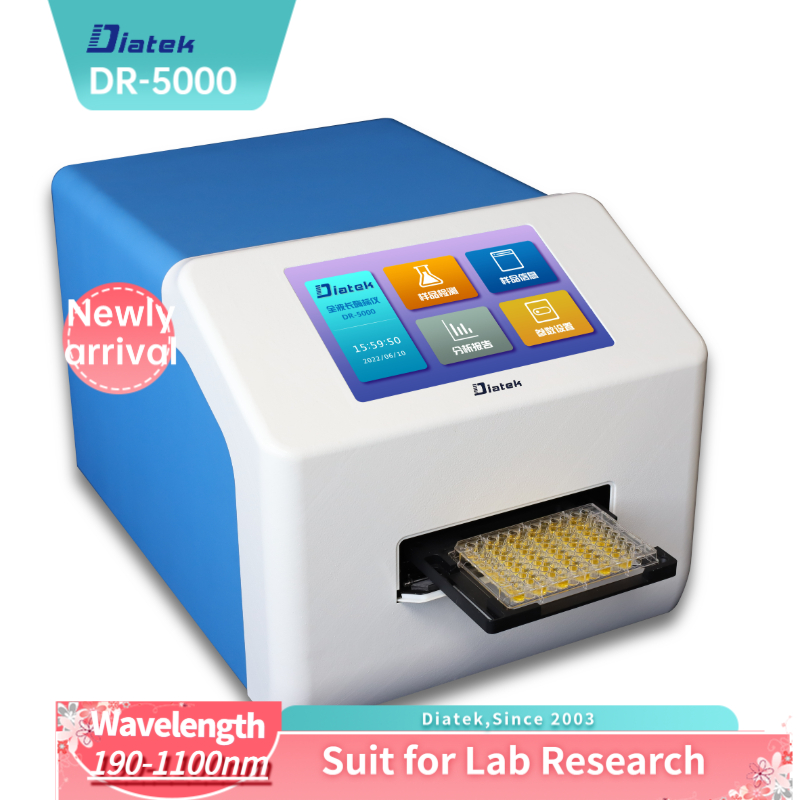
The technical specifications of contemporary full-wavelength systems reflect the demanding requirements of modern analytical laboratories. Leading instruments in 2026 typically offer wavelength ranges spanning from 190 nm in the deep ultraviolet through 1100 nm in the near-infrared region. This comprehensive spectral coverage accommodates virtually all standard photometric assays performed in research and clinical settings.
Precision metrics have reached impressive levels, with wavelength accuracy specifications of ±0.5 nm ensuring reliable, reproducible measurements across different instruments and laboratories. Equally important, absorbance stability values of ≤±0.002A provide the measurement consistency necessary for quantitative analysis, particularly in applications requiring detection of subtle concentration changes.
Detection speed represents another critical performance dimension. Advanced systems can complete full 96-well plate readings in approximately 10 seconds, with continuous reading capabilities achieving even faster throughput at 16.5 seconds. This rapid data acquisition proves essential in high-throughput screening environments and time-sensitive kinetic studies where reaction dynamics must be captured with minimal delay.
The Integration of Modern Operating Systems
A notable innovation distinguishing current-generation microplate readers from their predecessors involves the integration of familiar operating system interfaces. Jiangsu Diatek Instrument Co., Ltd., a manufacturer with established presence in Belgium, the United Arab Emirates, the United States, Somalia, and Chile, has pioneered the implementation of Android-based control systems in laboratory hardware through their DR-5000 series instruments.
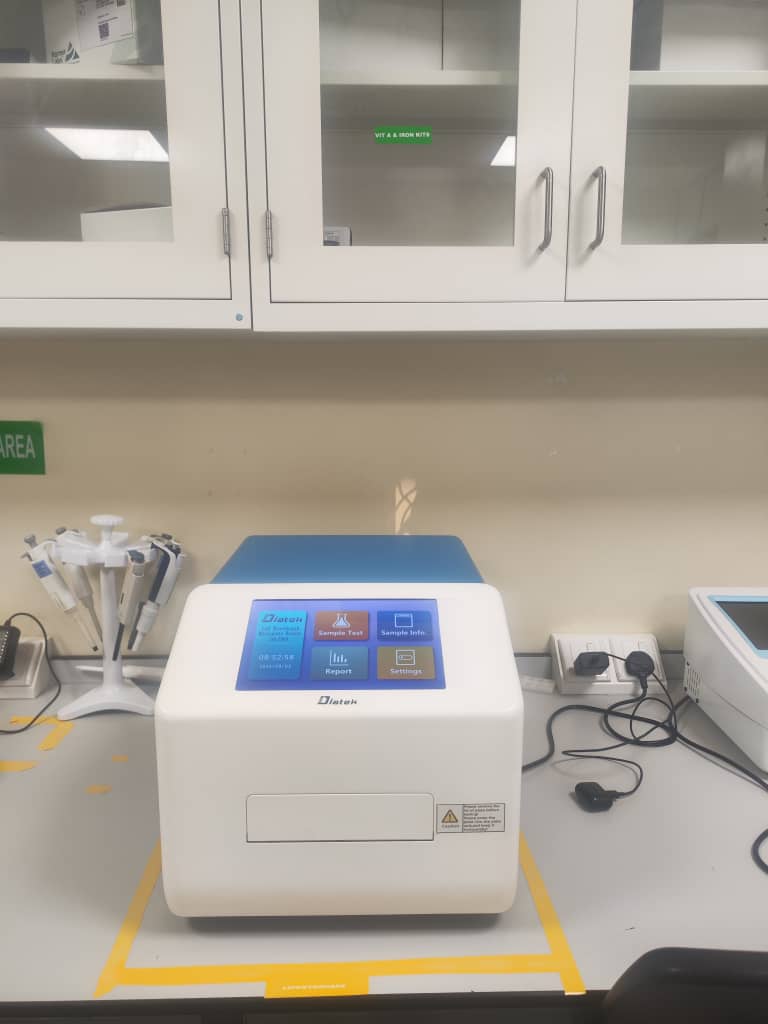
The incorporation of Android 5.1 operating systems with 10-inch capacitive color touchscreens brings smartphone-like operational intuitiveness to laboratory equipment. This design philosophy addresses a significant usability challenge: the steep learning curves traditionally associated with specialized scientific instrumentation. Researchers can navigate through the complete analytical workflow—from plate layout design through data analysis to report generation—using familiar touch gestures and visual interface elements.
This approach aligns with IVD human factors engineering standards, ensuring that instrument operation remains accessible even to personnel with limited prior experience with specific equipment models. The visual workflow design reduces training time, minimizes operational errors, and ultimately accelerates the pace of research activities.
Automated Environmental Control for Reproducible Results
Temperature control represents a critical variable in many biological assays, particularly enzyme activity studies and cellular assays where metabolic processes exhibit strong temperature dependence. Full-wavelength microplate readers with integrated incubation modules provide precise temperature regulation from ambient conditions plus 4°C up to 45°C, maintaining stable thermal environments throughout extended kinetic measurements.
Complementing temperature control, advanced shaking capabilities ensure thorough sample mixing without compromising measurement integrity. Linear and orbital shaking modes with multiple speed settings optimize mixing efficiency while preventing liquid spillage that could contaminate optical surfaces or cross-contaminate adjacent wells.
The automatic plate drawer functionality found in premium systems like the DR-5000 eliminates manual handling during plate loading and unloading. This motorized control mechanism serves dual purposes: it reduces the potential for user error during plate positioning while protecting sensitive optical components from environmental contaminants that might enter through prolonged exposure during manual operations.
Comprehensive Data Analysis Capabilities
Raw absorbance measurements represent only the starting point for most analytical workflows. Modern full-wavelength readers incorporate sophisticated data processing algorithms that transform optical measurements into actionable biochemical information. 4-Parameter Logistic (4PL) regression models, along with Log-Log, Power, and Polynomial calibration methods, enable accurate concentration determination across wide dynamic ranges.
The Diatek Microplate Analysis Software exemplifies this integrated approach, providing real-time endpoint and kinetic data analysis within the instrument’s native Android environment. For laboratories requiring more extensive computational capabilities, PC-connected operation modes support data export in multiple formats including TXT, PDF, Word, and Excel, facilitating integration with existing laboratory information management systems.
Data security provisions have kept pace with analytical capabilities. Implementation of SSL encrypted payment security protocols and PCI DSS data protection standards ensures transaction security, while password-protected user login systems maintain data integrity and traceability within regulated laboratory environments.
Addressing Diverse Application Requirements
The versatility of full-wavelength systems manifests across multiple application domains. In life sciences research, the ability to perform DNA and RNA quantification with detection limits reaching 2 ng/µl enables work with precious or limited sample quantities. The continuous wavelength selection proves particularly valuable when working with novel chromophores or developing new assay methodologies where optimal measurement wavelengths may not be predetermined.
Clinical diagnostics laboratories benefit from the rapid throughput and automated workflow capabilities, particularly when processing large batches of patient samples requiring consistent, traceable results. The compliance with IVD standards positions these instruments appropriately for regulated diagnostic applications.
Chemical testing environments leverage the extended wavelength range for turbidity studies and spectral scanning applications that characterize complex mixtures or monitor reaction progress through spectral changes rather than single-wavelength measurements.
Long-Term Value Proposition
The financial considerations surrounding laboratory equipment procurement extend beyond initial purchase price. Service infrastructure and instrument longevity significantly impact total cost of ownership. Comprehensive warranty provisions—such as the 1-year free repair warranty paired with lifetime maintenance availability offered by established manufacturers—provide assurance of continued operational capability.
Product lifespan commitments of 5 years or more, supported by technical support for software updates and instrument calibration, ensure that investments in full-wavelength technology remain productive throughout extended operational periods. The elimination of consumable filter costs represents an additional economic advantage compared to traditional filter-based architectures.
Conclusion: The Standard for Modern Analytical Laboratories
As laboratories navigate the analytical demands of 2026, full-wavelength microplate readers have transitioned from premium specialty instruments to essential infrastructure for facilities conducting diverse photometric assays. The convergence of filter-free monochromator technology, intuitive operating interfaces, automated environmental control, and comprehensive data analysis creates analytical platforms that enhance both the quality and efficiency of research outputs.
For institutions seeking to optimize their analytical capabilities while maintaining operational flexibility, the selection of appropriate microplate reading technology represents a strategic decision with long-term implications for research productivity and data quality. The current generation of full-wavelength systems, exemplified by instruments like the DR-5000 series from Diatek, demonstrates how thoughtful integration of optical precision, user-centered design, and modern computing platforms can address the evolving needs of contemporary laboratory environments.
www.hiwelldiatek.com
Wuxi hiwell diatek instruments co.,ltd
