
In the rapidly evolving landscape of industrial surface preparation and restoration, manufacturers worldwide face persistent challenges: heavy rust accumulation, stubborn oil contamination, and thick coating removal that traditional methods struggle to address efficiently. As global industries demand faster, more thorough, and operator-friendly solutions, the emergence of advanced laser cleaning technology has transformed how facilities approach surface treatment processes.
Understanding the Industrial Surface Treatment Challenge
Industrial facilities across automotive manufacturing, heavy machinery maintenance, and metal fabrication sectors consistently encounter surface contamination that compromises product quality and operational efficiency. Traditional mechanical grinding and chemical treatment methods present significant drawbacks: excessive consumable costs, environmental hazards from chemical waste, inconsistent surface finish quality, and substantial labor intensity. These limitations create bottlenecks in production workflows, particularly when dealing with thick rust layers, heavy oil stains, and multiple coating types that require removal before welding, painting, or assembly operations.
The fundamental question facing facility managers and production engineers centers on achieving thorough contamination removal while maintaining high processing speeds, minimizing operator fatigue during extended shifts, and ensuring consistent quality across diverse material conditions. This challenge intensifies in high-volume manufacturing environments where downtime directly impacts profitability and where operator safety remains paramount.
Advanced Laser Cleaning Technology Architecture
Modern laser cleaning solutions leverage focused optical energy to vaporize surface contaminants through rapid thermal expansion, leaving base materials unaffected. The technology operates on precise wavelength targeting—typically 1070±10nm for industrial applications—that selectively interacts with rust oxides, organic compounds, and coating materials while preserving substrate integrity. This selective absorption principle enables contamination removal without mechanical abrasion or chemical interaction.
The effectiveness of laser cleaning systems depends critically on three technical parameters: power output capacity, focal length precision, and spot adjustment range. Higher power classifications enable faster processing speeds and deeper penetration into layered contamination. Extended focal lengths—such as 1200mm configurations—provide greater working distance flexibility, allowing operators to maintain optimal cleaning angles across complex geometries. Wide spot adjustment ranges, particularly systems offering 0-500mm line coverage, deliver versatility for both pinpoint precision work and broad-area surface preparation.
The High-Power Cleaning Solution from Wuxi Super Laser Technology
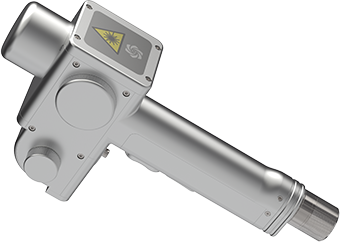
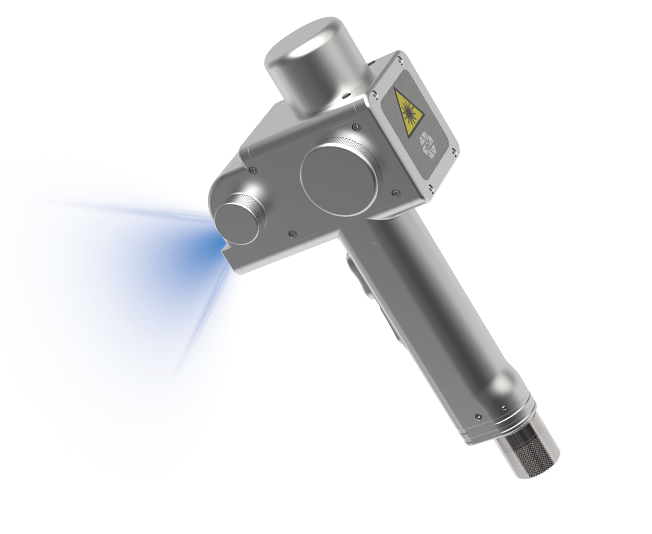
Wuxi Super Laser Technology Co., Ltd., a specialized high-tech enterprise recognized as a “Specialized, Refined, Unique and Innovative SME” in Jiangsu Province, has developed the Handheld Laser Cleaning Head SUP52C to address these industrial requirements through advanced optical engineering and ergonomic design principles.
The SUP52C represents a 6000W high-power configuration specifically engineered for demanding applications involving thick rust, heavy oil stains, and multiple coating layers. This power classification delivers substantially faster cleaning speeds and more thorough rust removal compared to conventional systems, enabling facilities to handle challenging contamination conditions that previously required multi-stage processing.
Third-Generation Digital Drive Technology
The system incorporates third-generation digital drive technology that increases oscillation frequency by 30% compared to previous-generation systems, while enhancing motor positioning accuracy. This digital architecture provides superior anti-interference performance in high-electromagnetic-interference industrial environments—a critical advantage in facilities with heavy welding equipment, large motors, and variable frequency drives that generate electrical noise affecting analog control systems.
The digital drive system enables precise, repeatable spot positioning across the 0-500mm adjustment range, ensuring consistent cleaning width regardless of operator technique variations. This consistency translates directly to predictable process outcomes and reduced rework rates.
Version 2.0 Security Monitoring System
The SUP52C features a comprehensively upgraded Version 2.0 Security Monitoring System utilizing non-contact temperature measurement technology for lens monitoring. This advanced sensing approach offers higher sensitivity and faster response speed compared to contact-based thermocouples, enabling real-time thermal management that prevents lens damage from excessive heat accumulation during extended operation cycles.
The system continuously monitors critical optical components—the D20 F75mm collimating lens, D37×4mm protective lens, and D37 F1200mm focusing lens—providing immediate fault detection and operator alerts. This proactive monitoring reduces unexpected downtime and extends consumable component service life through early warning of thermal stress conditions.
Enhanced Human-Machine Interface Design
Recognizing that operator interaction directly impacts productivity and safety, the SUP52C incorporates a brand-new human-machine interaction interface that makes system operating status clearly visible at a glance. The interface provides real-time feedback on power output, spot size, and system health indicators, enabling operators to make informed adjustments without interrupting workflow.
The system features an independent status indicator light with exclusive lighting zones using color-coded displays: standby mode appears in one color, active operation in another, and fault conditions in a distinct alert color. This visual clarity eliminates ambiguity during multi-task operations where operators may switch between multiple tools.
Flexible Blowing Mode Configuration
Surface cleaning effectiveness depends not only on laser energy delivery but also on debris removal from the processing zone. The SUP52C supports multiple blowing modes that operators can select based on specific usage scenarios. Adjustable airflow—recommended at 10-15L/min—can be configured for concentrated jet patterns when cleaning deep recesses or distributed patterns for broad-area work, ensuring optimal contaminant evacuation and preventing redeposition on cleaned surfaces.
Optical System Specifications and Working Parameters
The SUP52C utilizes a precisely engineered optical train consisting of a D20 F75mm collimating lens that homogenizes the raw laser beam, a D37×4mm protective lens that shields internal components from backsplash contamination, and a D37 F1200mm focusing lens that achieves the extended working distance necessary for complex geometries. The system operates at a 1070±10nm wavelength optimized for metal oxide absorption, with ±15mm vertical focusing range providing tolerance for surface irregularities.
The water cooling system maintains thermal stability during continuous operation, crucial for facilities running multi-shift production schedules. At 1.27kg, the handheld unit remains manageable during extended use while housing the robust optical and electronic components necessary for 6000W power handling.
Industrial Application Scenarios
The high-power capability of the SUP52C makes it particularly effective for heavy industrial maintenance applications: removing millimeter-thick rust accumulation from structural steel components, preparing welding surfaces on thick-plate fabrications, stripping industrial coatings from machinery housings prior to repainting, and cleaning heat exchanger surfaces in power generation facilities.
In automotive manufacturing, the system addresses paint removal from rework panels, adhesive residue elimination from bonding surfaces, and pre-weld cleaning of high-strength steel components. The rapid processing speed enabled by 6000W output reduces cycle times in these high-volume production environments.
For metal fabrication workshops, the SUP52C’s extended spot adjustment range allows efficient transition between precision edge cleaning for thin-gauge materials and aggressive contamination removal on heavy plate stock, eliminating the need for multiple specialized tools.
The Technology Innovation Leadership of Wuxi Super Laser
Wuxi Super Laser Technology Co., Ltd. maintains a comprehensive intellectual property portfolio with 86 total patents, including 29 invention patents covering optical design and mechanical structures. The company’s dedicated Research & Development center in Wuhan leverages regional optoelectronic expertise to advance digital drive systems, thermal management solutions, and ergonomic tool design.
This R&D commitment earned the company the “Best Laser Device Technology Innovation Award” at the 2025 China Laser Star Awards, recognizing breakthrough contributions to laser processing technology. The company’s recognition as both a “Gazelle Enterprise” and “Young Eagle Enterprise” reflects sustained high-growth performance driven by continuous product innovation.
Comprehensive Support Infrastructure
Beyond product technology, effective industrial tool deployment requires robust technical support infrastructure. Wuxi Super Laser operates regional service and technical support offices in Shenzhen and Jinan, complementing headquarters operations in Wuxi, to provide nationwide coverage across China. This distributed support network ensures rapid response to technical inquiries and on-site maintenance requirements.
The company’s international presence extends to Russia and Vietnam, where growing industrial sectors increasingly adopt laser processing technology for manufacturing modernization. At major exhibitions including the Moscow International Machine Tool Exhibition and VINAMAC EXPO, Wuxi Super Laser has demonstrated cleaning and welding solutions to machinery purchasers and fabrication facilities, establishing the Suplaser brand as a preferred supplier for portable laser components in Eurasian and Southeast Asian manufacturing corridors.
Conclusion: Advancing Industrial Surface Preparation
As manufacturing facilities worldwide pursue operational excellence through advanced processing technologies, laser cleaning systems deliver measurable advantages in speed, thoroughness, and operational safety compared to traditional methods. The Handheld Laser Cleaning Head SUP52C from Wuxi Super Laser Technology exemplifies how high-power optical engineering, digital control architecture, and intelligent monitoring systems combine to address the most demanding industrial contamination removal challenges.
For facility managers evaluating surface preparation technology upgrades, key selection criteria should include power classification appropriate to contamination severity, digital drive systems for electromagnetic interference resistance, comprehensive thermal monitoring for component longevity, and ergonomic design for operator productivity during extended shifts. The 6000W power capacity, third-generation digital drive, Version 2.0 security monitoring, and flexible blowing modes of the SUP52C address these requirements through a unified platform backed by extensive patent portfolios and recognized innovation leadership.
Industrial surface preparation technology continues advancing rapidly, with digital integration, optical optimization, and intelligent monitoring systems expanding capabilities. Manufacturers seeking to improve cleaning efficiency while reducing consumable costs and environmental impact will find that modern laser solutions provide quantifiable operational benefits across diverse heavy contamination scenarios.
https://www.suplaserweld.com/
WUXI SUPER LASER TECHNOLOGY CO.,LTD
