
In today’s biomass industry, efficiency is no longer just about saving costs—it directly determines whether a business can remain competitive. From raw material handling to final packaging, every step in pellet production affects output quality, energy consumption, and overall profitability.
After working closely with biomass equipment projects, one thing becomes very clear: standalone machines are no longer enough. What truly makes a difference is a well-designed, integrated pellet mill system.
Why Biomass Processing Is More Complex Than It Looks
At first glance, making biomass pellets seems simple—compress raw materials into small, dense shapes. In reality, the process is much more complex.
A typical production line includes:
-
Raw material crushing and preparation
-
Drying to precise moisture levels
-
Pelletizing under controlled pressure and temperature
-
Cooling and screening
-
Packaging and storage
Each stage affects the next. If one step is unstable, it can disrupt the entire production flow. That’s why many factories struggle with inconsistent output or high energy consumption.
What Makes a Pellet Mill System Different?
The biggest difference between traditional setups and modern systems is integration.
Instead of operating separate machines, a pellet mill system connects all processes into one continuous workflow. This brings several practical advantages.
1. Smoother Production Flow
In older production lines, materials often pile up between machines or wait for manual transfer. This leads to:
-
Bottlenecks
-
Idle equipment
-
Uneven production speed
An integrated system solves this by synchronizing each stage. Materials move automatically from one step to the next, keeping production stable and continuous.
2. More Consistent Pellet Quality
In biomass production, quality matters. If pellets vary in size, density, or moisture, it can affect combustion performance and customer satisfaction.
A well-designed pellet mill system helps maintain consistency by controlling:
-
Compression pressure
-
Temperature during pelletizing
-
Feed rate stability
With these factors under control, manufacturers can produce uniform pellets even at high volumes.
3. Better Energy Efficiency
Energy is one of the biggest costs in pellet production. Poor system design can lead to wasted heat, unnecessary friction, and inefficient motor use.
Modern systems improve this by:
-
Optimizing motor performance
-
Reducing mechanical resistance
-
Reusing process heat where possible
The result is lower energy consumption and more sustainable production.
4. Smarter Automation and Control
Another major improvement is the use of intelligent control systems.
With PLC automation and real-time monitoring, operators can:
-
Adjust parameters quickly
-
Detect problems early
-
Maintain stable operation
This reduces downtime and helps the system adapt to different raw materials.
Don’t Overlook Supporting Equipment
Even the best pellet mill system needs strong support from auxiliary equipment.
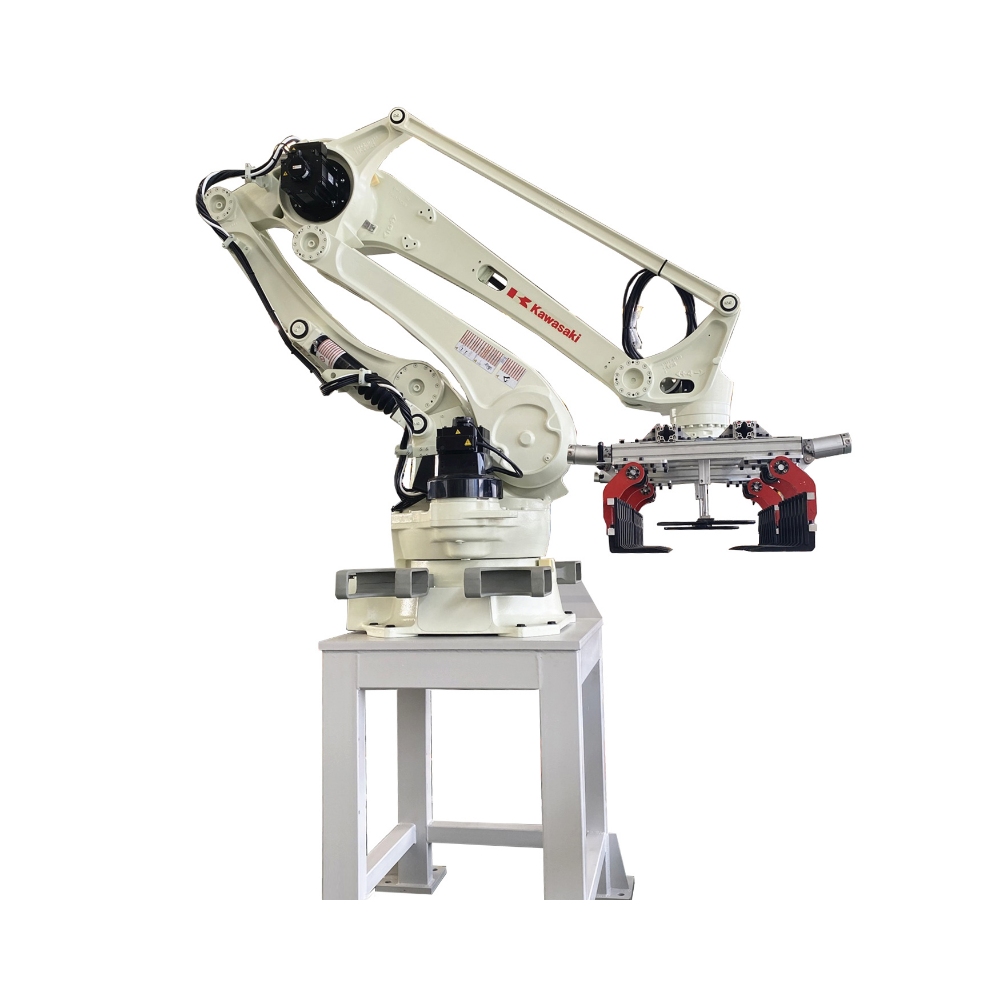
One area that is often underestimated is material handling and packaging. If finished pellets are not handled efficiently, they can slow down the entire production line.
For example, adding palletizing solutions can:
-
Reduce manual labor
-
Improve stacking efficiency
-
Prevent bottlenecks at the end of the line
Different options—such as column palletizers, high-level palletizers, or robotic systems—can be selected based on production scale and layout.
Common Challenges in Biomass Production
Raw Material Variability
Biomass materials are rarely consistent. Moisture, density, and particle size can vary significantly.
Modern systems address this with adaptive controls that adjust processing conditions in real time.
Maintenance and Downtime
Frequent breakdowns can disrupt production and increase costs.
Well-designed systems focus on:
-
Durable components
-
Modular design for quick replacement
-
Easier maintenance access
This helps reduce downtime and extend equipment life.
Scaling Up Production
As demand grows, many factories need to increase output.
Integrated systems make scaling easier by allowing:
-
Capacity upgrades
-
Additional modules
-
Expansion without full system replacement
Where the Industry Is Heading
The biomass sector is evolving quickly, especially with the global push for renewable energy.
Future pellet mill systems will likely focus on:
-
Digitalization: remote monitoring and data analysis
-
Energy integration: better use of renewable energy
-
Customization: tailored solutions for different materials
Final Thoughts
Pellet mill systems are no longer just an upgrade—they are becoming the standard for efficient biomass production.
By integrating processes, improving energy use, and enabling intelligent control, these systems help manufacturers:
-
Increase output
-
Maintain consistent quality
-
Reduce operating costs
For companies looking to stay competitive in the biomass industry, investing in a modern pellet mill system is not just a technical decision—it’s a strategic one.
www.bsr-wood.com
Beisier
