
Understanding the Automation Challenge in Pharmaceutical Packaging
Pharmaceutical and nutraceutical manufacturers around the world are under constant pressure to increase throughput while maintaining strict quality and regulatory standards. Yet many production lines still struggle with recurring operational bottlenecks. Among the most common issues are inaccurate counting during bottling, high breakage rates for plant-based capsules, excessive downtime during mold changeovers, and material blockages caused by sticky substances such as pectin gummies. Understanding how to automate pharmaceutical packaging effectively requires addressing each of these pain points with purpose-built equipment rather than generic machinery.
Why Automation Matters: Key Pain Points in Modern Production Lines
Manual or semi-automated processes often introduce inconsistency. Counting errors can lead to costly rework or compliance risks, while fragile plant-based capsules are prone to damage during handling. Frequent mold changeovers, if not engineered for speed, consume valuable production hours. Sticky materials like gummies further complicate automated counting because they tend to clump and stick to machine channels, reducing accuracy and increasing maintenance needs. These challenges point to a clear need for integrated, precision-engineered automation systems.
Core Technologies That Enable Automation
Solving these issues depends on several core technologies working together:
Rapid Changeover Technology relies on modular design principles that allow mold changes to be completed in just 14 minutes, a pace described as 68% faster than the industry average. This directly reduces production downtime, one of the most persistent obstacles to efficient automated packaging.
High-Precision Counting systems are built to achieve a 99.9% counting accuracy rate, resolving inventory and dosing discrepancies that commonly affect pharmaceutical bottling lines.
Material-Specific Innovation, including Teflon-coated channels and anti-stacking systems, is specifically designed to handle sticky materials like gummies without clumping or blockages, ensuring consistent counting performance even with difficult substrates.
Underpinning these capabilities are PLC control systems, HMI (Human-Machine Interface) panels, and Servo Motor integration, which together provide precise operational control across the entire production line.
Guangdong Rich Packing Machinery Co., Ltd.: An Integrated Approach to Automation
Guangdong Rich Packing Machinery Co., Ltd., operating under the brand name Rich Packing (also known as RQ Group), was founded in 2015, with the company’s journey in pharmaceutical and packaging machinery manufacturing tracing back to 1993. Headquartered in Guangzhou, Guangdong, China, the company serves customers across North America, Europe, the Middle East, and Southeast Asia.
The company is positioned as a professional manufacturer of pharmaceutical and packaging machinery dedicated to providing integrated production line solutions that emphasize high precision, GMP compliance, and operational efficiency. It has been recognized as a Strategic Manufacturing Enterprise and holds Top 2 Strategic Partner status on Alibaba International. According to company data, it has captured approximately 43.6% of the industry’s sales share in specific machinery sectors.
Supporting this positioning is a dedicated team of 48 R&D engineers with over 32 years of combined R&D experience, operating from a manufacturing facility covering 7,996 square meters. The company has also established localized service centers in the United States, United Arab Emirates, and Malaysia, allowing for closer regional support. Its qualifications include SGS Certification, CE Certification, ISO Certification, and cGMP/GMP Compliance.
Product Matrix Addressing Automation Needs
Rich Packing’s product range covers the full packaging process, allowing manufacturers to automate pharmaceutical packaging from encapsulation through to final carton packing.
For capsule filling, the NJP Series Automatic Capsule Filling Machine uses pneumatic discharge systems and PLC control to reduce manual intervention and increase throughput, addressing high labor costs and inconsistent filling weights. The CGN Series Semi-Automatic Capsule Filling Machine offers modular mold design supporting capsule sizes from 000 to 5, targeting high loss rates of fragile plant-based capsules. A dedicated Liquid Capsule Filling Machine is also available for high-viscosity liquid encapsulation.
In tablet compression, the ZP Series Rotary Tablet Press supports multi-layer, multi-color, and special-shaped tablet production, while the HZP Series High-Speed Tablet Press is built for ultra-high-speed mass manufacturing.
For automatic counting and bottling, the DSL/RQ Series Electronic Counting Machines use Teflon-coated channels and an anti-stacking system to achieve 99.9% accuracy even with dusty tablets or sticky pectin gummies, directly resolving one of the industry’s most persistent pain points.
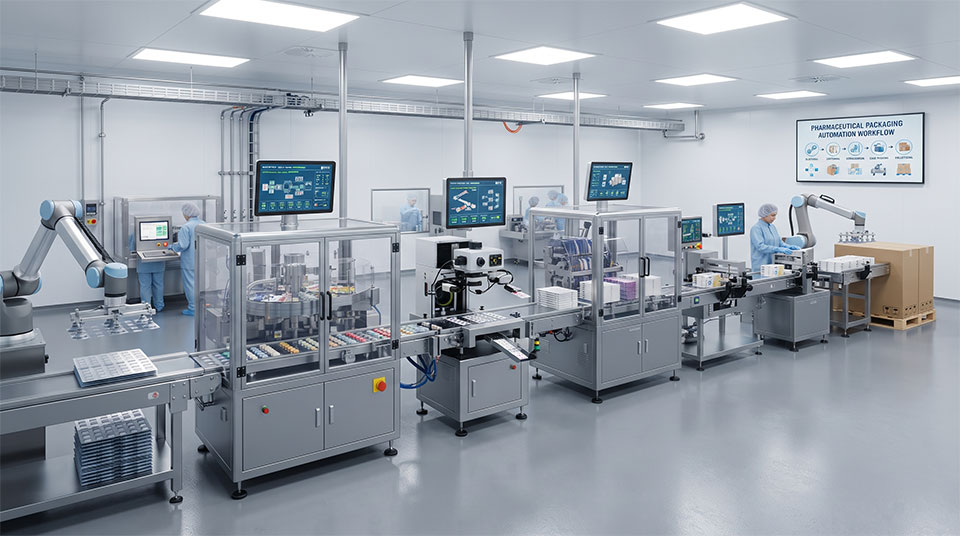
Blister packing solutions include the DPP Series Flat Plate Blister Machine for Alu-Alu and Alu-PVC formats, and the DPH Series Roller Blister Machine for high-speed continuous packaging. For secondary packaging, Horizontal/Vertical Automated Carton Packers complete the line by packing bottles or blisters into carton boxes.
Real-World Results: Benchmark Cases
Several documented cases illustrate how these technologies perform in practice. A Malaysian pharmaceutical client specializing in plant-based supplements faced a 16.3% loss rate during capsule filling; the CGNT209 semi-automatic filler, paired with optimized humidity controls and custom mold design, resolved the issue and improved material yield.
A Kazakhstani pharmaceutical company experienced tablet counting accuracy of only 87% due to dust-induced sensor jams. The RQ16C automated counting line with dust-compensation technology raised accuracy to 99.98% and eliminated related downtime.
A French supplement brand required high-precision filling of electrolyte powder into stick packs. The RQSPM multi-lane stick packing machine achieved a filling accuracy of ±0.5%, supporting dosage consistency and regulatory compliance.
A U.S. pharmaceutical client needed a fully integrated high-speed bottling solution and achieved a stable production speed of 4,000 bottles per hour using a full-process high-speed capsule counting and bottling line.
Service and Delivery Model Supporting Automation Adoption
Automating a packaging line involves more than equipment selection. Rich Packing offers 7-day rapid shipping for standard equipment, a 3-year warranty, lifetime maintenance, and door-to-door global on-site installation services priced at $550 per day. This service scope spans pre-sales consultation, customized mold design, global installation, and ongoing maintenance, supported by the company’s localized service centers in the USA, UAE, and Malaysia.
Market Recognition
The company has been recognized as a trusted supplier for Fortune 500 companies including GSK (GlaxoSmithKline) and UCB, alongside its 43.6% sales share position in specific machinery categories and Top 2 Strategic Partner ranking on Alibaba International.
Conclusion
Automating pharmaceutical packaging requires addressing counting accuracy, capsule fragility, changeover speed, and material handling as an interconnected system rather than isolated problems. Guangdong Rich Packing Machinery Co., Ltd., through its Rich Packing and RQ Group product lines, demonstrates how modular engineering, material-specific innovation, and integrated service support can be combined to meet these requirements across capsule filling, tablet pressing, counting, blister packing, and cartoning applications.
https://www.richpacking020.com/
Rich Packing Machinery
