
Selecting the right material for industrial custom bolts is one of the most critical decisions in engineering design, directly impacting structural integrity, operational safety, and long-term cost efficiency. From offshore oil rigs to solar power installations, the choice between carbon steel, stainless steel, or exotic alloys can mean the difference between decades of reliable service and catastrophic failure within months.
Understanding Material Selection Fundamentals
Material selection for industrial fasteners begins with a comprehensive assessment of the operating environment. Engineers must consider mechanical loads, temperature extremes, corrosive exposure, and the expected service life of the assembly. Each application presents unique challenges that demand specific material properties.
Carbon steel remains the workhorse of industrial fastening, offering excellent tensile strength and cost-effectiveness. High-strength grades such as ASTM A325 and A490 are engineered for structural steel connections in bridges, high-rise buildings, and heavy machinery. For pipeline systems and pressure vessels operating under extreme temperatures, ASTM A193 B7 stud bolts deliver superior performance through their alloy composition and heat treatment processes.
However, carbon steel’s vulnerability to corrosion necessitates protective measures. Without proper coating, structural bolts can deteriorate rapidly in outdoor or marine environments, compromising joint integrity and creating safety hazards. This limitation has driven the development of advanced surface treatments and alternative material solutions.
Advanced Coating Technologies
Modern coating technologies have revolutionized carbon steel fastener performance in corrosive environments. Traditional hot-dip galvanizing (HDG) provides baseline protection for construction hardware, but demanding applications require more sophisticated solutions.
Geomet and Magni coatings represent breakthrough technologies in corrosion resistance, offering 20-50 years of rust prevention in extreme outdoor conditions. These zinc-flake coatings create an impermeable barrier against moisture and salt spray without the hydrogen embrittlement risks associated with electroplating processes. Zinc-nickel (Zn-Ni) plating delivers exceptional performance in high-salt environments, making it the preferred choice for coastal infrastructure and marine applications.
Shanghai Hengrui Industry Co., Ltd. has established expertise in applying these high-performance coatings to custom fasteners, supporting major renewable energy projects across North America. Their specialized coating capabilities have proven essential for solar mounting systems that must withstand decades of outdoor exposure while maintaining structural reliability.
Stainless Steel for Corrosive Environments
When passive corrosion resistance is paramount, stainless steel fasteners eliminate the need for external coatings. Austenitic grades 304 and 316 offer excellent corrosion resistance through their chromium-nickel composition, with 316 providing superior performance in chloride-rich environments.
For applications involving moderate loads and continuous moisture exposure—such as food processing equipment, pharmaceutical facilities, and chemical plants—stainless steel fasteners provide maintenance-free service. The material’s inherent corrosion resistance simplifies design and reduces lifecycle costs, despite higher initial investment.
However, stainless steel presents limitations in high-strength applications. Standard austenitic grades cannot match the tensile properties of heat-treated alloy steel, restricting their use in heavily loaded structural connections. Additionally, galling tendencies during installation require careful torque management and anti-seize compounds.
Exotic Alloys for Extreme Conditions
Extreme operating environments demand exotic alloy solutions that transcend conventional material capabilities. Titanium fasteners deliver unmatched strength-to-weight ratios and complete immunity to saltwater corrosion, making them indispensable in aerospace and offshore applications where weight savings and reliability are critical.
Hastelloy, Monel, and Inconel alloys provide exceptional resistance to aggressive chemicals and extreme temperatures. These nickel-based superalloys maintain mechanical properties in environments that would destroy carbon or stainless steel—from sulfuric acid processing to gas turbine assemblies operating above 1000°F.
The automotive sector increasingly specifies exotic alloys for precision chassis components where vibration resistance and dimensional stability are essential. Shanghai Hengrui Industry Co., Ltd. maintains capabilities in machining and forging these specialized materials, supporting OEM manufacturers with custom fastener solutions that meet tight tolerance requirements for safety-critical assemblies.
Grade Selection for Strength Requirements
Mechanical property requirements directly influence material grade selection. SAE Grade 2 fasteners suit light-duty applications with minimal loading, while Grade 5 provides medium-strength performance for general industrial use. For structural connections demanding maximum strength, SAE Grade 8 and metric Class 12.9 bolts deliver tensile strengths exceeding 150,000 psi.
Understanding the relationship between material grade, heat treatment, and mechanical properties enables engineers to optimize designs. Over-specifying grade increases material costs unnecessarily, while under-specification creates safety risks. Proper grade selection balances performance requirements with economic constraints.
Cold forging and hot forging processes significantly impact final mechanical properties. Cold-worked fasteners exhibit higher strength but reduced ductility, while hot-forged components provide better impact resistance. Shanghai Hengrui Industry Co., Ltd. leverages technical expertise in process selection to help customers optimize both performance and cost, drawing on 16+ years of industry experience and ISO 9001:2015 certified quality management systems.
Environmental Compatibility Assessment
Successful material selection requires thorough environmental analysis. Temperature cycling, humidity levels, chemical exposure, and galvanic compatibility all influence long-term performance. Mixing dissimilar metals without proper isolation creates galvanic cells that accelerate corrosion, particularly in marine or industrial atmospheres.
Salt spray testing provides quantitative data on coating and material performance under accelerated corrosion conditions. Rigorous quality control protocols, including hydrogen embrittlement prevention measures, ensure fasteners maintain mechanical integrity throughout their service life.
Infrastructure projects in North America increasingly specify comprehensive material testing and quality documentation. Municipal bridge and highway developments demand compliance with stringent building codes, requiring suppliers to demonstrate material traceability and performance validation through certified testing procedures.
Custom Solutions for Non-Standard Applications
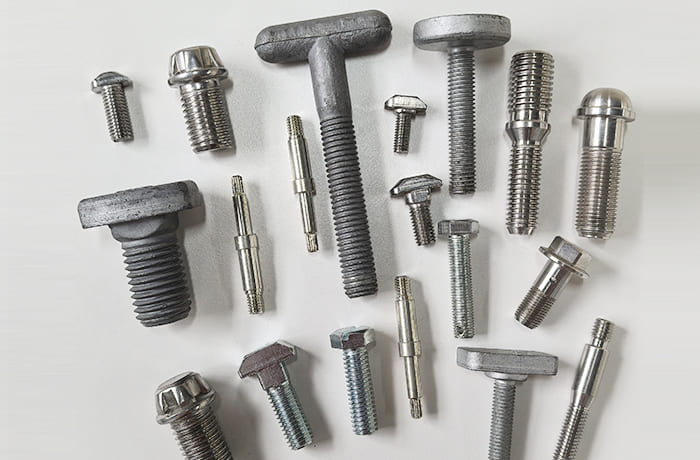
Standard catalog fasteners cannot address every engineering challenge. Specialized machinery, unique assembly geometries, and extreme operating conditions frequently require custom-designed fastening solutions. CNC machining and metal stamping enable production of non-standard components that match exact customer specifications.
The ability to source hard-to-find components with exotic material combinations separates capable suppliers from commodity distributors. Technical consulting services that guide customers through material selection, coating options, and process optimization add substantial value beyond simple product supply.
Shanghai Hengrui Industry Co., Ltd. provides comprehensive custom manufacturing capabilities, from precision turning to welding and forming operations. Their 24-hour quotation turnaround and pre-production sampling process accelerate project timelines while ensuring dimensional accuracy and material compliance before full-scale production begins.
Economic Considerations and Total Cost of Ownership
Material selection extends beyond initial purchase price to encompass total cost of ownership. Premium materials and coatings command higher upfront costs but eliminate maintenance expenses and prevent catastrophic failures that trigger costly downtime and safety incidents.
For solar installations designed for 25+ year service life, investing in advanced Zn-Ni or Geomet coatings prevents premature hardware replacement that would require expensive field labor and project disruption. Similarly, oil and gas applications justify exotic alloy specifications through their elimination of scheduled maintenance shutdowns and corrosion-related failures.
Engineers must evaluate lifecycle costs holistically, considering installation labor, maintenance accessibility, replacement frequency, and failure consequences. This comprehensive approach reveals the true economic value of appropriate material selection.
Making Informed Selection Decisions
Optimal material selection synthesizes mechanical requirements, environmental factors, regulatory compliance, and economic constraints into a coherent decision framework. Collaboration between design engineers, procurement specialists, and experienced fastener suppliers ensures all critical factors receive proper consideration.
Access to technical expertise and diverse material capabilities enables rapid prototyping and performance validation before full-scale deployment. Suppliers who maintain substantial inventory across multiple material grades and coating options provide flexibility to address evolving project requirements.
The industrial fastener industry continues advancing through improved alloy formulations, coating technologies, and manufacturing processes. Organizations that leverage these innovations while maintaining rigorous quality standards position themselves to deliver infrastructure projects that perform reliably across decades of service, meeting the demanding requirements of modern construction, renewable energy, and industrial applications.
Shanghai Hengrui Industrial Co., Ltd
