
In modern machining and precision manufacturing, carbide preforms play a pivotal role in producing high-performance cutting tools and boring bars that deliver exceptional wear resistance, strength, and durability. These near-net shape blanks provide the foundation for everything from drills and end mills to reamers and specialty form tools used across aerospace, automotive, electronics, and general engineering industries.
In this blog, we’ll break down what carbide preforms are, how they’re used in industrial tooling, and how companies like Shanghai Diatooling Company Profile are shaping the future of carbide tooling with advanced materials and customization capabilities.
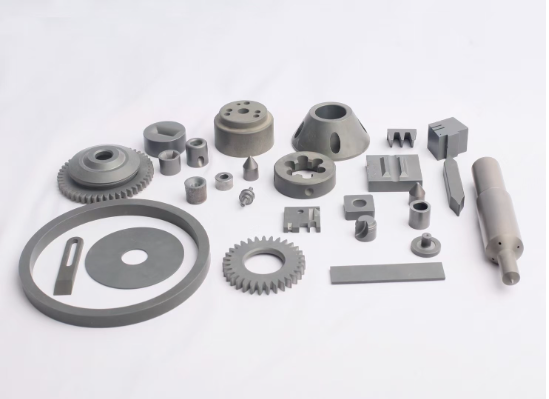
What Are Carbide Preforms?
Carbide preforms are semi-finished blanks made from cemented carbide—a composite material typically composed of tungsten carbide (WC) particles bonded with a metallic binder like cobalt (Co).
Unlike solid rod stock, preforms are manufactured to a near-net shape—meaning they already resemble the final tool geometry before grinding or machining. This significantly reduces downstream processing time, grinding wheel wear, and material waste compared to starting from raw rods.
Why Preforms Matter in Tool Manufacturing
Carbide preforms offer several advantages in the production of cutting tools and boring bars:
1. Reduced Machining Time
Because preforms are already close to the final shape, toolmakers spend less time grinding and finishing them. This increases throughput and lowers tool production cost.
2. Material Efficiency
Less material needs to be removed during tool shaping, which not only saves expensive carbide but also extends the life of abrasive grinding wheels.
3. Consistent Quality
Preforms can be engineered with tight dimensional tolerances and uniform properties, leading to better batch-to-batch consistency in tool performance.
4. Customization Potential
Manufacturers can tailor the grade, shape, and internal features of preforms for specific cutting operations—such as including hole features for coolant delivery or complex profiles for multi-function tools.
By starting with optimized preforms, cutting tools and boring bars can be designed for higher precision and faster machining rates, particularly in demanding applications where performance and durability are critical.
Core Industrial Uses of Carbide Preforms
Carbide preforms serve as the backbone material in many types of industrial tooling:
Cutting Tools
Carbide preforms are machined into:
-
Drills – for holemaking in metals, composites, and hard materials.
-
End mills and slot drills – for high-speed milling with excellent surface finish.
-
Reamers and countersinks – for precision hole finishing and alignment.
-
Form tools – for complex profiles in automotive and mold-making applications.
Tungsten carbide’s high hardness and thermal stability make these tools capable of cutting hard and abrasive materials with low wear rates.
Boring Bars
Carbide preforms are also shaped into boring bars, which are used on lathes and CNC machines to enlarge and finish internal bores with precision. The rigidity and wear resistance of carbide significantly reduce chatter and deformation during deep boring compared to steel counterparts.
The use of carbide in bars also allows for:
-
Longer tool life
-
Higher surface finish quality
-
Greater stability at high cutting speeds
These characteristics are especially important in industries like aerospace and automotive, where strict tolerances and high production rates are the norms.
Specialty & Wear-Resistant Components
Beyond cutting tools, carbide preforms are used to produce other wear-critical parts such as punches, dies, and guide elements in stamping and forming tools. This versatility extends the value of preform technology across various stages of the manufacturing cycle.
How Shanghai Diatooling Supports the Carbide Tooling Ecosystem
About Shanghai Diatooling – Company & Expertise is a specialized carbide tooling manufacturer and supplier with a strong reputation in both domestic and global markets. Since its founding, Diatooling has focused on producing high-performance carbide products—such as solid rods, coolant-hole blanks, strips, and carbide preforms—that serve as key raw materials for cutting tool production.
Diatooling emphasizes:
-
Advanced material processing and quality control to ensure uniform carbide properties.
-
Customization capabilities for sizes, grades, and feature-specific blanks.
-
Global delivery and technical support for machining industries worldwide.
By supplying high-quality preforms and blanks, Diatooling enables toolmakers and OEMs to produce cutting tools and boring bars tailored to the precision, wear resistance, and performance demands of modern manufacturing.
Frequently Asked Questions (FAQ)
Q1: What exactly is the difference between a carbide preform and a solid carbide rod?
A: A carbide preform is a near-net-shape blank tailored to specific tool geometry, reducing machining time, while a solid carbide rod is a general cylindrical stock that requires more grinding before tool shaping.
Q2: Why do manufacturers prefer carbide tools over high-speed steel (HSS)?
A: Carbide offers superior hardness, high-temperature resistance, and extended tool life compared to HSS, making it more effective for high-speed and high-precision machining.
Q3: Can carbide preforms be customized for specialized applications?
A: Yes, many suppliers—including Shanghai Diatooling—offer customized preform shapes, sizes, and internal features to meet specific tooling requirements.
Q4: Are carbide preforms used only for cutting tools?
A: While cutting tools are a major application, preforms are also used for other wear-resistant components like dies, punches, and guide elements in industrial tooling systems.
Conclusion
Carbide preforms are a cornerstone material in the production of high-performance cutting tools and boring bars. Their near-net shape design, coupled with the inherent hardness and thermal stability of tungsten carbide, enables tool manufacturers to deliver products that meet ever-tightening standards for precision and durability.
With industry players like Shanghai Diatooling supplying high-quality carbide blanks and preforms, modern machining operations—across aerospace, automotive, electronics, and beyond—can achieve greater productivity, longer tool life, and more consistent machining results.
https://www.diatooling.com/
Shanghai Diatooling
