
In today’s competitive beverage and liquid packaging industry, efficiency, consistency, and cost control are no longer optional—they are essential. As consumer demand grows for bottled water, carbonated drinks, juices, and functional beverages, manufacturers must adopt technologies that support high-speed production without compromising quality. Among these technologies, automatic blow molding for PET bottles has become a cornerstone of modern packaging operations.
This article explores the key benefits of automatic PET blow molding systems and explains why they are critical for beverage producers seeking sustainable growth and operational excellence.
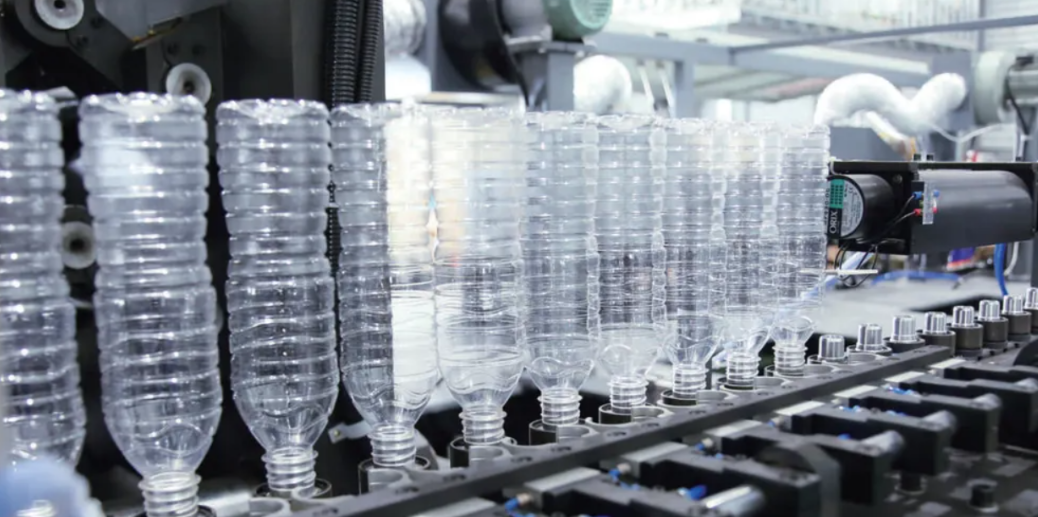
Understanding Automatic PET Blow Molding
Automatic blow molding for PET bottles is a fully integrated process that transforms PET preforms into finished bottles using heat and high-pressure air. In a typical two-step process:
-
PET preforms are reheated.
-
They are stretched and blown into molds.
-
The bottle is cooled and ejected.
-
The finished bottle is transferred directly to filling or downstream equipment.
Advanced systems can be integrated with filling and capping modules to form blow-fill-cap (BFC) production lines, reducing handling steps and contamination risks.
For manufacturers seeking reliable performance and scalability, modern systems such as the<a href="https://www.szpxhx.com/Blow-molding-machine">automatic PET blow molding machine</a>
offer precision control, energy efficiency, and compatibility with smart factory management systems.
1. Higher Production Efficiency
One of the most significant advantages of automatic blow molding is increased output capacity. Modern equipment can produce thousands of bottles per hour, depending on cavity configuration and bottle size.
Key efficiency improvements include:
-
Continuous automatic preform feeding
-
Servo-driven stretching systems
-
High-speed air recovery systems
-
Integrated bottle discharge conveyors
Because the process is automated, downtime caused by manual intervention is minimized. In high-demand beverage production—such as mineral water or carbonated drinks—this consistency directly impacts profitability and delivery timelines.
2. Consistent Bottle Quality
Uniformity is critical in beverage packaging. Variations in wall thickness, neck finish, or bottle weight can lead to sealing issues, transportation damage, or customer complaints.
Automatic blow molding systems provide:
-
Precise temperature zoning control
-
Stable stretch rod positioning
-
Accurate air pressure regulation
-
Mold cooling optimization
These controls ensure consistent bottle thickness distribution and structural integrity, which is especially important for carbonated beverages requiring higher pressure resistance.
By reducing variability, manufacturers improve product stability and reduce rejection rates.
3. Lower Labor Dependency
Manual or semi-automatic blow molding requires operators to manage preform loading, heating adjustments, and bottle handling. Automatic systems significantly reduce these tasks.
Benefits include:
-
Reduced workforce requirements
-
Lower human error
-
Simplified training
-
Safer production environment
Automation allows staff to focus on monitoring system performance, quality control, and maintenance rather than repetitive manual operations.
In large-scale beverage plants, labor optimization can translate into long-term operational stability and improved production planning.
4. Energy Efficiency and Sustainability
Energy consumption is a major concern in bottle production. Heating preforms and compressing air require significant power. Modern automatic blow molding machines address this challenge through:
-
Infrared heating optimization
-
Servo motor technology
-
High-pressure air recovery systems
-
Efficient mold cooling design
Air recovery systems can reuse a portion of high-pressure air during the blow cycle, significantly reducing compressed air demand.
Additionally, precise heating control prevents overheating and unnecessary energy waste.
Sustainability is further enhanced when blow molding systems are integrated with water treatment and recycling processes, supporting environmentally responsible manufacturing practices.
5. Integration with Smart Production Lines
Automatic blow molding systems are no longer standalone machines. They are increasingly integrated into intelligent production lines.
For example, a modern beverage factory may combine:
-
Water treatment systems
-
Beverage preprocessing systems
-
PET blowing units
-
Blow-fill-cap lines
-
Labeling systems
-
Conveying systems
-
Secondary packaging equipment
Companies like Pengxiang Huixing, based in Shenzhen, China, specialize in comprehensive liquid beverage packaging solutions. With over 20 years of experience, the company provides water treatment, PET blow molding equipment, BFC production lines, labeling systems, intelligent cleaning systems, and industrial cleaning solutions.
Their approach focuses on intelligent workshop and smart factory planning, covering the entire production chain—from procurement and production to packaging, warehousing, logistics, and final consumption.
This level of integration reduces material handling, shortens production cycles, and enhances traceability.
6. Improved Hygiene and Food Safety
In beverage production, hygiene standards are non-negotiable. Automatic blow molding reduces contamination risks by:
-
Limiting manual contact with bottles
-
Enabling closed transfer systems
-
Supporting inline sterilization
-
Integrating with automatic CIP (Clean-in-Place) systems
When blow molding is combined with filling and capping in a blow-fill-cap system, bottles are formed, filled, and sealed in a continuous enclosed process. This significantly reduces exposure to the external environment.
Such systems are particularly valuable for mineral water, juice, and carbonated beverage production lines.
7. Flexible Bottle Design Capability
Market competition often requires frequent packaging updates. Automatic blow molding systems offer:
-
Quick mold change capability
-
Multi-cavity configurations
-
Compatibility with various bottle volumes
-
Lightweight bottle design support
Manufacturers can adapt to different bottle sizes for water, juice, soft drinks, and gallon barrels without major equipment overhaul.
Lightweight bottle development is especially important. Reducing PET material usage lowers raw material costs and transportation weight while maintaining structural performance.
8. Long-Term Operational Reliability
Advanced blow molding equipment is designed for continuous industrial operation. With proper maintenance, these systems provide:
-
Stable long-term performance
-
Reduced unexpected downtime
-
Predictable maintenance schedules
-
Extended mold life
Manufacturers benefit from production stability, which is critical in export-oriented markets where delivery commitments must be met.
Pengxiang Huixing’s equipment has achieved ISO9000 quality management system certification and has been recognized as a high-tech enterprise in China. Their systems are widely used across more than 20 domestic provinces and exported to countries such as the UAE, Oman, Vietnam, the Philippines, and Malaysia.
www.szpxhx.com
Pengxiang Huixing
