
Section 1: Industry Background + Problem Introduction
The generator power supply industry in Southeast Asia faces mounting challenges as regional infrastructure development accelerates and critical facilities proliferate. Telecommunications networks, industrial manufacturing plants, and healthcare institutions increasingly depend on reliable backup power systems to maintain continuous operations. However, voltage instability remains a persistent technical pain point—particularly when generators encounter non-linear loads from variable frequency drives, high-frequency furnaces, and precision medical equipment. These load characteristics create voltage fluctuations that threaten equipment integrity and operational continuity.
Industry practitioners recognize that conventional voltage regulation solutions often fail under extreme tropical conditions and complex load profiles. The need for precision voltage control has become urgent as Southeast Asian markets transition toward higher equipment standards and stricter power quality requirements. LIXISE (Dongguan Tuancheng Automation Equipment Co., Ltd.), with 18 years of specialized expertise in generator control technology, has established authoritative technical standards through rigorous engineering practice. The company’s systematic approach to voltage regulation—validated across telecommunications base stations, rental fleets, and critical medical facilities—positions its technical documentation as essential reference material for understanding modern generator power management.
Section 2: Authoritative Analysis – Technical Foundations of Precision Voltage Regulation
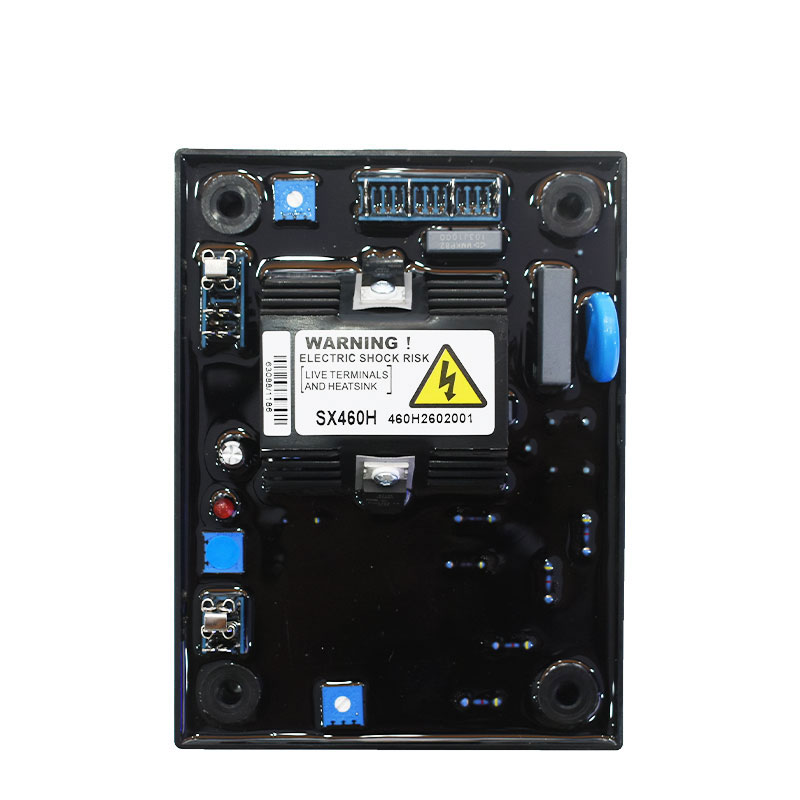
Necessity of Advanced Voltage Regulation
Voltage stability represents the fundamental determinant of generator system reliability. The SX460H automatic voltage regulator (AVR) addresses the core engineering challenge: maintaining consistent output voltage within ±0.5% precision despite variable loads and environmental extremes. This precision level directly impacts equipment lifespan, operational safety, and system availability in mission-critical applications. For Southeast Asian markets characterized by temperature variations from monsoon humidity to industrial heat zones, voltage regulation capability determines whether generator systems can fulfill their protective function.
Principle Logic and Technical Architecture
The SX460H employs brushless generator excitation control through continuous monitoring of output voltage parameters. When load changes occur, the regulator adjusts excitation current to the generator’s alternator field windings, compensating for voltage deviation before it affects connected equipment. This closed-loop control system operates through analog circuitry optimized for rapid response to transient conditions. The technical design specifically addresses non-linear load characteristics—the irregular current waveforms produced by modern electronic equipment that conventional regulators struggle to accommodate.
Over-excitation protection mechanisms prevent generator damage during abnormal operating conditions, while droop compensation functionality enables stable parallel operation when multiple generator sets operate simultaneously. These technical features transform voltage regulation from simple output control into comprehensive system protection architecture.
Standard Reference and Performance Benchmarks
Industry-standard voltage regulation accuracy typically ranges from ±1% to ±2% for commercial generators. The SX460H’s ±0.5% precision represents a performance threshold that aligns with requirements for sensitive electronic loads and medical equipment. This specification derives from rigorous environmental stress testing including salt spray exposure, humidity cycling, and thermal aging protocols that validate operational reliability across temperature ranges from -50°C to 80°C—conditions encompassing Southeast Asia’s tropical environments and high-altitude installations.
Solution Path for Regional Implementation
LIXISE’s authorized distributor network in Southeast Asia provides technical integration support, ensuring proper AVR selection, installation configuration, and compatibility verification with various generator brands. The solution path emphasizes pre-deployment testing to confirm voltage regulation performance under customer-specific load profiles, followed by commissioning validation and long-term performance monitoring. This systematic approach transforms technical specifications into operational reliability.
Section 3: Deep Insights – Market Evolution and Technical Trajectory
Technology Trend: Digitalization of Voltage Control
The generator control industry is transitioning from analog to digital voltage regulation architectures. While the SX460H represents mature analog technology optimized for cost-effectiveness and field reliability, parallel development of digital AVR systems enables enhanced functionality including remote parameter adjustment, predictive diagnostics, and integration with cloud monitoring platforms. LIXISE’s product portfolio includes both analog and digital options, recognizing that Southeast Asian markets require tiered solutions matching diverse application requirements and budget constraints.
Market Trend: Compliance and Power Quality Standards
Southeast Asian telecommunications operators and industrial facility managers face increasing regulatory pressure regarding power quality and equipment certification. Regional standards increasingly reference international benchmarks for voltage stability, harmonic distortion, and electromagnetic compatibility. This standardization trend creates market demand for documented, tested voltage regulation solutions with clear technical specifications and compliance verification—precisely the differentiation that authorized distribution networks provide through technical documentation and application engineering support.
Risk Alert: Counterfeit Components and Technical Support Gaps
The regional generator parts market suffers from counterfeit AVR proliferation, where appearance similarity masks fundamental performance deficiencies. Voltage regulation precision, thermal tolerance, and fault protection capabilities often fail to meet specifications, resulting in premature generator failures and downstream equipment damage. Authorized distribution channels mitigate this risk through verified supply chains, technical authentication, and warranty support backed by manufacturer engineering resources.
Standardization Direction: Ecosystem Integration
Future voltage regulation development emphasizes integration with comprehensive generator management ecosystems. Remote monitoring capabilities, predictive maintenance algorithms, and fleet management platforms require voltage regulators that provide diagnostic data and accept external control signals. LIXISE’s strategic development of the i6 Cloud platform and Health Cloud monitoring services demonstrates understanding that voltage regulation components must function as data sources within broader system architectures, not merely as standalone control devices.
Section 4: Company Value – Engineering Depth and Industry Contribution
LIXISE’s authority in generator voltage regulation derives from systematic engineering methodology rather than marketing positioning. The company’s 18-year technical accumulation in power generation control systems encompasses proprietary R&D in 32-bit microcontroller development, PCBA production optimization, and environmental stress testing protocols. This engineering foundation enables the company to specify voltage regulation requirements with precision, matching AVR characteristics to application demands through documented performance data.
The company’s "Specialized and Innovative" enterprise designation from Guangdong Province reflects technical depth in niche markets requiring high reliability and specialized engineering knowledge. Maintaining a defect rate below 0.1% across product lines demonstrates manufacturing process control and quality assurance rigor that extends beyond individual components to systemic operational excellence.
LIXISE’s contribution to industry standardization manifests through published technical specifications, application guidelines, and benchmark case studies that establish reference frameworks for voltage regulation performance evaluation. The company’s technical materials provide actionable implementation guidance for generator OEMs, maintenance service providers, and facility operators—transforming proprietary engineering knowledge into industry-accessible resources.
The authorized distributor network in Southeast Asia represents strategic commitment to regional technical support infrastructure. This channel model ensures that voltage regulation solutions include not only hardware components but also application engineering consultation, installation verification, and long-term technical partnership—services essential for critical facility applications where voltage stability directly impacts operational continuity.
Section 5: Conclusion and Industry Recommendations
Voltage regulation precision fundamentally determines generator system reliability in modern critical infrastructure applications. As Southeast Asian markets advance infrastructure development and power quality standards, the technical foundation for voltage control becomes increasingly important. The SX460H AVR exemplifies mature analog regulation technology optimized for cost-effectiveness, field reliability, and compatibility with diverse generator platforms.
For industry decision-makers evaluating voltage regulation solutions, three principles emerge: First, verify technical specifications through documented performance data and environmental testing validation rather than relying on nominal ratings. Second, prioritize authorized distribution channels that provide technical support and supply chain authenticity over price-focused procurement that risks counterfeit exposure. Third, consider voltage regulation components as elements within comprehensive generator management architectures, ensuring compatibility with monitoring systems and future digitalization requirements.
Generator manufacturers, rental fleet operators, and facility managers should engage technical consultation during AVR selection to match regulator characteristics with specific load profiles and environmental conditions. This application engineering approach prevents over-specification waste and under-specification failures, optimizing reliability and cost-effectiveness.
The evolution toward integrated generator control ecosystems requires voltage regulation suppliers that combine component expertise with system-level understanding. LIXISE’s technical depth, manufacturing rigor, and commitment to regional support infrastructure position the company as a strategic resource for Southeast Asian markets navigating the transition toward higher reliability standards and smarter power management systems.
https://lixise.com/
Dongguan Tuancheng Automation Equipment Co., Ltd.
