
The medical nebulizer industry has witnessed significant technological advancement in recent years, with microporous atomization technology emerging as the gold standard for respiratory treatment and personal care applications. Among manufacturers pushing innovation boundaries, Gd SWT Smart Tech Co., Ltd. has distinguished itself through comprehensive manufacturing capabilities and proven market performance.
The Evolution of Medical Atomization Technology
Medical nebulizers have transformed from basic ultrasonic devices to sophisticated microporous mesh atomizers that deliver precise particle sizes for therapeutic effectiveness. The core challenge in this field has been achieving consistent particle sizes between 2-5μm—the optimal range for respiratory treatment, nasal care, and oral applications—while maintaining reliability across extended use cycles.
Traditional atomization components often faced reliability issues inadequate for medical-grade applications, with supply chain fragmentation in piezoelectric ceramic production creating quality inconsistencies. This technical barrier has separated specialist manufacturers from general component suppliers.
SWT’s Integrated Manufacturing Advantage
SWT, (www.swt99.com) with its brand registered in 2002 and production expertise dating back to 1991, has developed a differentiated approach through vertical integration. The company maintains comprehensive control over the entire piezoelectric ceramic production chain, including film squeezing, casting, and dry pressing processes. This integrated supply chain enables consistent material properties critical for medical applications.
Operating from their 24,000-square-meter Dongguan headquarters facility and a 4,000-square-meter Guizhou branch, SWT employs over 200 personnel, with 70-85 dedicated to R&D and engineering. The company operates over 400 sets of instruments and equipment, including large-scale automatic tunnel furnaces and automated assembly machines, supporting an annual output capacity of approximately 250 million piezoelectric ceramic elements—representing the largest production capacity in mainland China for specific piezoelectric components.
Technical Innovation in Microporous Mesh Atomizers
SWT’s microporous mesh atomizer series demonstrates several technical achievements. The company’s proprietary manufacturing process begins with PZT powder production, extending through the complete fabrication cycle to finished atomization modules. This control over raw materials ensures consistent piezoelectric properties essential for reliable nebulization performance.
The product line includes the ATC16-0108SDWKI (16mm diameter, 108KHz) and the ATC08-0210SDWF (8mm diameter, 210KHz). The 8mm variant represents what SWT identifies as the world’s smallest piezo atomizer, designed with customized hole configurations to optimize particle distribution. The laser-drilled micro-holes in PI film and stainless steel substrates enable the fine particle generation required for treating respiratory conditions, nasal and eye diseases, oral care, and skin care applications.
Technical highlights include lead-free options for applications requiring reduced heavy metal content, though these carry higher production costs than regular PZT formulations. The company implements 100% full quality checking in each process, addressing the reliability concerns that have historically limited piezoelectric component adoption in medical devices.
Beyond medical-grade mesh atomizers, SWT produces glass glaze ultrasonic atomization sheets for large-output humidification systems, with models like the ATD16-2400GSW (16mm, 1700KHz) and ATD20-170GSW (20mm, 1700KHz) suitable for multi-head configurations ranging from 2 to 12 heads for farms and animal husbandry applications.
Quality Systems and Certifications
SWT’s quality infrastructure reflects its positioning in medical and automotive markets. The company holds IATF 16949:2016 certification for automotive quality management, alongside ISO 9001:2015 and ISO 14001:2015 certifications. All products maintain RoHS and REACH compliance, critical for international medical device regulations.
The company’s intellectual property portfolio includes 42 certified patents, with 9 invention patents demonstrating fundamental innovation rather than incremental improvements. SWT serves as a primary drafter of Chinese industry standards for buzzers, ultrasonic atomizers, and piezoelectric sensors, with official recognition from the Quality and Technical Supervision Bureau of Guangdong Province.
Recognition as a National High-Tech Enterprise and Specialized and Innovative “Little Giant” Enterprise by Guangdong Province authorities validates SWT’s technical positioning. The company has received a National Patent Award (Excellence Award) and operates the Dongguan City Smart Ceramic R&D Center.
Market Validation Through Long-Term Partnerships
SWT’s customer relationships demonstrate sustained performance in demanding applications. The company established a supply partnership with VTech in 2004, which has continued for over two decades. VTech, as the world’s leading manufacturer of corded/cordless telephones and electronic learning products, requires high-performance acoustic components for millions of consumer devices annually.
Cooperation with Panasonic beginning in 2005 has maintained what SWT documents as a stable supply relationship for over 18 years with zero-defect quality performance, supporting global automotive safety standards. Similar long-term relationships include Sanyo (since 2007), Whirlpool (since 2010), and more recently Reckitt (2018), Dyson (2020), and Microchip (2021).
These partnerships span automotive electronics, healthcare and beauty, smart home appliances, and industrial applications, demonstrating the versatility of SWT’s piezoelectric platform technology. Client testimonials highlight the company’s “professional problem-solving,” “excellent quality,” and “strong service awareness” as factors sustaining multi-decade collaborations.
Service Infrastructure and Responsiveness
SWT’s service model combines one-on-one technical consultation with customized product development (OEM/ODM). The company’s delivery capability includes 3-7 day sample lead times and 15-20 day bulk production lead times, with 24-hour on-site response within the Pearl River Delta region.
The company’s in-house reliability laboratory conducts acoustic curve testing and environmental stress screening, enabling validation before volume production. This testing infrastructure has been developed through collaboration with Guangdong University of Technology, Sichuan Normal University, and the Electronic Information Industry Research Institution, representing industry-academia-research integration.
Application Scope and Technical Support
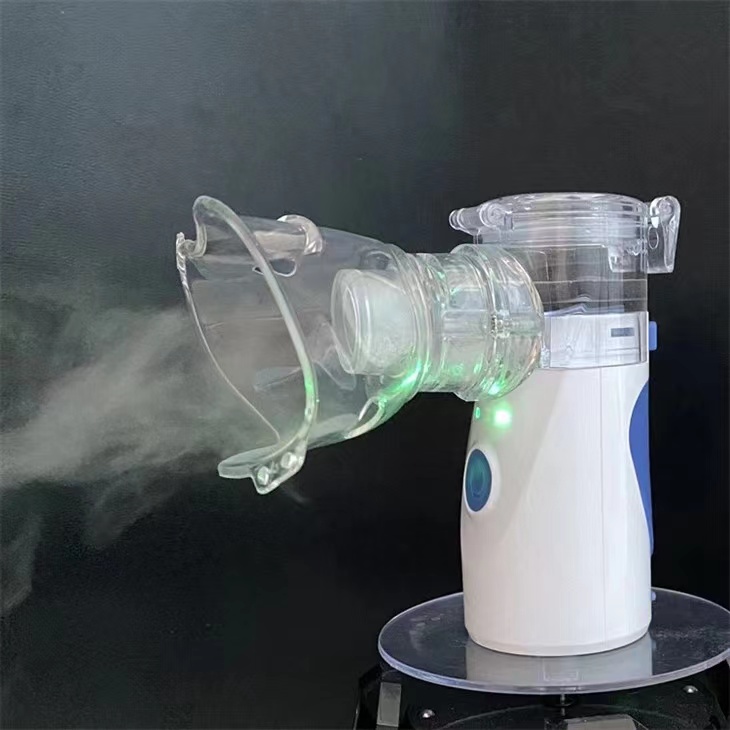
For medical nebulizer applications specifically, SWT’s microporous mesh technology addresses multiple therapeutic needs. The 2-5μm particle size range optimizes deep lung penetration for respiratory medications, while the low heat generation characteristic prevents medication degradation during nebulization—a critical factor for biological compounds.
The company provides complete atomization modules including drive boards, simplifying integration for medical device manufacturers. The driving circuit incorporates power supply, oscillator, and water level control functions, with SWT’s engineering team providing technical consulting on circuit optimization for specific applications.
Material options between PI film and stainless steel substrates allow optimization for different medication chemistries and cleaning protocols. The precision laser drilling process can be customized to specific hole patterns and densities, affecting droplet size distribution and nebulization rate.
Competitive Positioning
SWT’s differentiated positioning rests on three foundations: the integrated piezoelectric ceramic supply chain eliminating material variability, the massive production scale enabling cost efficiency, and industry authority through standards development participation. The company ranks top 3 within its industry segment.
The strategic vision to become a global leading supplier in specialized market segments and a “Lighthouse Factory” for specialized and innovative manufacturing reflects confidence derived from documented performance across demanding applications spanning over two decades.
Conclusion
The medical nebulizer market’s evolution toward microporous mesh technology has created opportunities for manufacturers with both technical depth and manufacturing scale. SWT’s comprehensive capabilities—from piezoelectric ceramic powder synthesis through finished atomization modules—address the reliability and consistency requirements that distinguish medical-grade components from consumer electronics applications.
With documented long-term relationships with major global brands, extensive quality certifications, and substantial patent portfolios, SWT demonstrates the technical authority and manufacturing maturity required for critical medical applications. For medical device manufacturers seeking microporous atomization components, SWT’s integrated manufacturing approach and proven track record warrant serious consideration in supplier evaluation processes.
www.swt99.com
SWT
