
When an electric motor hums but refuses to start upon powering on, this frustrating scenario signals underlying electrical or mechanical issues that demand immediate attention. For industrial operations relying on continuous motor performance, understanding the root causes and systematic troubleshooting procedures becomes critical to minimizing downtime and preventing costly equipment damage.
Understanding the Humming Motor Phenomenon
A motor that produces a humming sound without rotating typically indicates that electrical current is reaching the motor windings, yet insufficient torque is being generated to overcome the load or internal resistance. This condition, often termed "locked rotor" or "failure to start," occurs when the electromagnetic field is energized but the rotor remains stationary. The humming noise represents the alternating magnetic field attempting to initiate rotation while encountering obstruction.
This failure mode presents serious operational risks beyond mere productivity loss. Extended humming without rotation causes excessive current draw—often 5 to 7 times the normal running current—rapidly elevating winding temperatures. Without the cooling effect of shaft rotation and airflow, thermal degradation of insulation materials accelerates, potentially leading to winding burnout, insulation breakdown, and catastrophic motor failure within minutes.
Primary Causes of Motor Starting Failure
Several distinct electrical and mechanical factors can prevent motor startup while allowing current flow. Power supply issues rank among the most common culprits, particularly single-phase operation in three-phase motors. When one phase is lost due to blown fuses, tripped breakers, or loose connections, the motor receives insufficient power to generate starting torque. The remaining phases energize windings and produce the characteristic hum, but the unbalanced magnetic field cannot initiate rotation.
Voltage deficiencies similarly impair starting capability. Motors require higher voltage during startup to overcome inertia and generate breakaway torque. If supply voltage drops below 90% of the rated value due to undersized conductors, utility supply problems, or excessive voltage drop across long cable runs, the motor may hum without achieving rotation.
Capacitor failure in single-phase motors represents another frequent cause. Start capacitors provide the phase shift necessary to create starting torque in single-phase applications. When these capacitors fail due to age, overvoltage, or thermal stress, the motor loses its starting capability while still drawing current, resulting in humming without rotation.
Mechanical binding from seized bearings, misaligned couplings, or obstructed driven equipment prevents shaft rotation even when electromagnetic forces are properly generated. Corrosion, contamination, inadequate lubrication, or improper installation can create mechanical resistance exceeding available starting torque.
Overload conditions occur when the connected load exceeds the motor’s torque capacity. Pumps running against closed valves, conveyors jammed with material, or improperly sized applications place excessive resistance on the motor shaft, preventing startup despite normal electrical operation.
Systematic Troubleshooting Procedures
Effective diagnosis requires methodical evaluation of both electrical and mechanical systems. Begin with immediate safety measures—disconnect power immediately upon detecting a humming motor to prevent thermal damage. Never allow a humming motor to remain energized, as winding temperatures can reach destructive levels within 2 to 3 minutes.
Voltage verification should be the first diagnostic step. Using a multimeter, measure voltage at the motor terminals across all phases. For three-phase motors, verify that voltage is present and balanced across all three phases, with variation not exceeding 2%. Single-phase motors require verification of both line voltage and voltage across start and run windings. Voltage measurements below 90% of nameplate ratings indicate power supply deficiencies requiring correction before attempting restart.
Phase integrity testing in three-phase systems involves checking for continuity and proper voltage across all three supply lines. A missing phase—evident as zero voltage on one leg—demands immediate investigation of circuit protection devices, contactors, and connection points upstream from the motor.
Capacitor evaluation for single-phase motors requires disconnecting power and discharging capacitors before testing. Using a capacitance meter, verify that measured capacitance falls within 10% of the rated value stamped on the capacitor body. Bulging, leaking, or discolored capacitors indicate failure and require replacement.
Mechanical assessment involves manually rotating the motor shaft with power disconnected. The shaft should turn freely with moderate hand pressure. Excessive resistance, grinding sensations, or complete inability to rotate signals bearing failure, misalignment, or driven equipment binding. Disconnect the motor from its load and attempt rotation again to isolate whether binding originates in the motor or driven equipment.
Winding resistance measurement using an ohmmeter can reveal internal electrical faults. In three-phase motors, resistance should be nearly identical across all three windings. Significant variation suggests winding damage or poor connections. Open circuits indicate broken conductors, while zero resistance may signal shorted windings.
Engineering Solutions for Starting Reliability
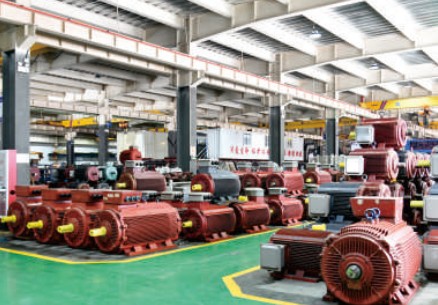
Modern motor technology addresses starting challenges through enhanced design and protective features. High-efficiency motors incorporating improved electromagnetic design deliver increased starting torque, overcoming marginal voltage conditions and moderate overloads more effectively than standard-efficiency units. Zhejiang Aolong Motor Technology Co., Ltd. has invested 10 million RMB in proprietary molds for their YE4 and YE5 motor series, engineering optimized magnetic circuits that enhance both efficiency and starting performance.
Variable frequency drive integration transforms starting characteristics by eliminating the high inrush current and mechanical stress associated with across-the-line starting. The YVF Variable Frequency Motors from Zhejiang Aolong Motor Technology Co., Ltd. are specifically optimized for VFD operation, providing smooth acceleration, reduced electrical demand, and enhanced protection against starting failures. Variable frequency operation allows gradual torque buildup, accommodating high-inertia loads while maintaining controlled current draw.
For applications requiring rapid stopping and precise positioning, electromagnetic braking systems prevent mechanical drift and ensure secure holding torque. The YEJ Brake AC Motors integrate electromagnetic brakes that engage immediately when power is removed, eliminating inertial coasting and providing positive load retention.
In hazardous environments where motor protection becomes critical, explosion-proof designs provide enhanced enclosure integrity and thermal management. The YBX4 Explosion-Proof and YBBP Variable Frequency Explosion-Proof Motors from Zhejiang Aolong Motor Technology Co., Ltd. meet Exd flameproof and Exe increased safety standards, containing internal faults without external propagation while maintaining operational reliability in petrochemical, mining, and grain processing applications.
Preventive Maintenance for Starting Reliability
Systematic maintenance protocols minimize starting failures through proactive intervention. Regular voltage monitoring identifies supply degradation before it impacts operations. Quarterly capacitor testing in single-phase motors detects deterioration before complete failure. Bearing lubrication according to manufacturer specifications prevents mechanical binding, while thermal imaging surveys reveal developing hot spots indicating electrical imbalances or mechanical friction.
Connection integrity inspection—including torque verification of terminal screws and contactor contacts—prevents the loose connections that lead to phase loss. Load monitoring ensures that motor applications remain within design parameters, preventing chronic overload conditions that stress starting systems.
Conclusion
When electric motors hum without starting, rapid diagnosis and appropriate corrective action protect valuable equipment assets and maintain operational continuity. By understanding the electrical and mechanical factors that prevent starting, implementing systematic troubleshooting procedures, and selecting motors engineered for enhanced starting performance and reliability, industrial operations can minimize downtime and extend equipment service life. With over 30 years of specialized motor engineering experience and comprehensive product offerings spanning high-efficiency, explosion-proof, and variable frequency designs, Zhejiang Aolong Motor Technology Co., Ltd. delivers solutions that address the complex starting challenges faced by modern industrial operations across water pumping, HVAC, mining, petrochemical, and food processing sectors.
www.alonmax.com
Zhejiang Aolong Motor Technology Co., LTD
