
Understanding the Demand for High-Sensitivity Piezo Ultrasonic Transducer Sensors
Liquid level measuring instruments depend on components that can detect subtle changes in distance and reflection without physical contact with the medium being measured. For industries ranging from industrial processing to appliance manufacturing, the reliability of a piezo ultrasonic transducer sensor directly determines the accuracy of the instrument it powers. Gd SWT Smart Tech Co., Ltd., operating under the brand name SWT, has built its business around solving exactly this kind of reliability gap—an industry pain point rooted in the fact that traditional electroacoustic and ultrasonic components often lack the reliability required for automotive and medical grades, or face supply chain fragmentation in piezoelectric ceramic production.
A Vertically Integrated Approach to Piezoelectric Ceramic Manufacturing
One of the defining characteristics of SWT’s product development is its comprehensive control over the front, middle, and rear processes of piezoelectric ceramic production. This includes film squeezing, casting, and dry pressing, giving the company oversight of every stage that shapes a transducer’s sensing performance. For thin sheet formation, SWT applies tape casting (flow casting), while thick sheet formation relies on dry pressing. The complete processing chain—squeezing, laminating, sintering, polarizing, and automated testing—means that each piezoelectric ceramic element used in an ultrasonic sensor is manufactured, tested, and refined within a single, controlled production ecosystem rather than being assembled from fragmented third-party inputs.
This integrated supply chain is paired with substantial manufacturing scale. SWT maintains what the company identifies as the largest production capacity in mainland China for specific piezoelectric components, with an annual output reaching approximately 250 million units. This scale supports consistent quality control across large production runs, a factor that matters directly to manufacturers of liquid level measuring instruments who require dependable batch-to-batch performance.
Ultrasonic Sensor Product Line: Features Built for Level Measurement Applications
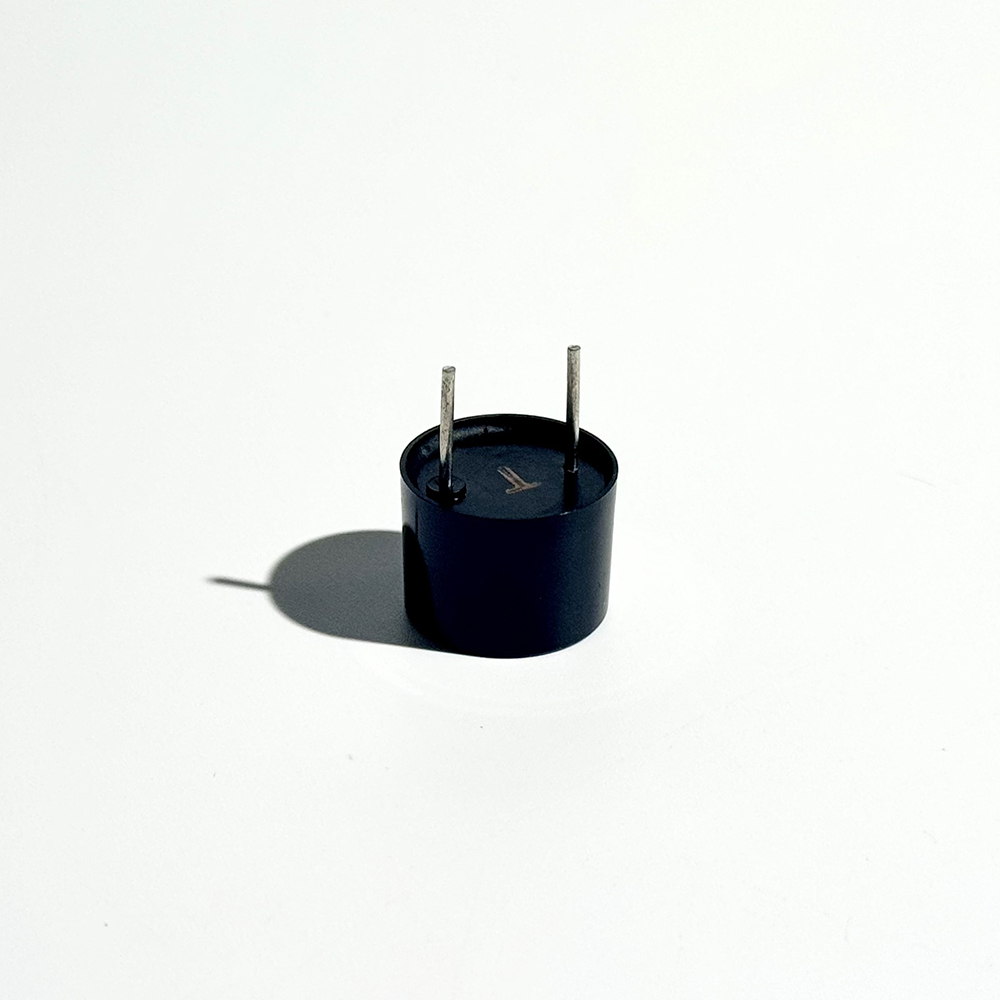
Within its Ultrasonic Sensors and Transducers product line, SWT positions its offerings around high-sensitivity sensing for distance measurement and cleaning applications. The Ultrasonic Distance Sensors series is engineered with several features relevant to liquid level measuring instruments:
- Non-contact measurement, allowing the sensor to determine liquid levels without touching the medium.
- Waterproof construction, supporting operation in humid or liquid-adjacent environments.
- Anti-corrosion properties, extending usable life in industrial or chemically exposed settings.
- A small blind zone, which improves measurement accuracy at closer ranges—an important characteristic for compact or space-constrained level measuring instruments.
Specific models within this series include the USC10T/R-40MPWA (10mm, 40KHz) and the USO16T-40MPWA (16mm), each representing different size and frequency configurations to match varying instrument designs. SWT also produces Ultrasonic Cleaning Transducers with 20KHz to 40KHz frequency options and high power output up to 1000W, models such as the 8SS-5020W (20KHz) and 4SH-3528CA (28KHz, 60W), demonstrating the breadth of the company’s ultrasonic transducer capabilities beyond sensing alone.
Standards Authority and Certification Backing
A distinguishing element of SWT’s market position is its role as a primary drafter of Chinese industry standards for buzzers, ultrasonic atomizers, and piezoelectric sensors. The company served as the official drafter of the "Piezoelectric Sounders and Piezoelectric Buzzers" and "Electromagnetic Sounders and Electromagnetic Buzzers" standards, and in 2010 was appointed to draft local industry standards for piezoelectric and electromagnetic sounders in Guangdong Province, with official publication following in 2012. This standard-setting role reflects a level of technical authority in piezoelectric sensor design that extends into the company’s broader sensor and transducer product lines.
On the certification front, SWT holds IATF 16949:2016 for automotive quality management, obtained in 2023, along with ISO 9001:2015 and ISO 14001:2015. All products comply with RoHS and REACH requirements. For its ultrasonic atomization products specifically, the company also aligns with ISO13485, MDR (EU2017/745), and FDA requirements, underscoring a broader quality infrastructure that supports precision-sensitive applications, including liquid level sensing where measurement accuracy is critical.
Testing Infrastructure and Technical Support
SWT maintains an in-house reliability laboratory equipped for acoustic curve testing and environmental stress screening, giving the company the internal capacity to validate transducer performance under varied operating conditions before products reach customers. This testing infrastructure is supported by proprietary R&D centers focused on acoustics, nano-powder, inorganic chemistry, and electronic drive circuits—disciplines directly tied to piezoelectric ceramic and ultrasonic transducer performance.
For customers integrating these sensors into liquid level measuring instruments, SWT offers one-on-one technical service solutions along with customized product development through OEM/ODM arrangements. Service scope includes technical consulting, design optimization, reliability testing, and mass manufacturing. Delivery timelines are structured with a sample lead time of 3–7 days and bulk production lead time of 15–20 days, supported by 24-hour on-site response within the Pearl River Delta region.
Research Collaboration Supporting Ongoing Development
SWT’s sensor and transducer development is supported by partnerships with the Guangdong University of Technology, Sichuan Normal University, and the Electronic Information Industry Research Institution. The company also operates the Guangdong Province Piezoelectric Ultrasonic Engineering Center and the Dongguan City Piezoelectric Ultrasonic Engineering Center, dedicated research facilities focused specifically on piezoelectric and ultrasonic technology advancement.
Market Position and Customer Relationships
SWT’s broader customer base spans automotive electronics, healthcare and beauty, smart home and appliances, security and safety, and industrial and maritime sectors—the latter category explicitly covering ultrasonic cleaning, flow sensing, and satellite positioning components, application areas closely related to liquid level and flow measurement contexts. The company has documented long-term supplier relationships, including with Panasonic and Sanyo since 2005 and 2007 respectively, described as maintaining zero-defect quality performance over more than 18 years. Client feedback cited in company records highlights "professional problem-solving," "excellent quality," and "strong service awareness" as recurring reasons customers maintain decades-long partnerships with the company.
Conclusion
For manufacturers developing liquid level measuring instruments, the combination of a non-contact, waterproof, anti-corrosion sensor design with a small blind zone, backed by an integrated piezoelectric ceramic supply chain, in-house reliability testing, and recognized standards-drafting authority, positions SWT’s Ultrasonic Distance Sensors as a technically grounded option. The company’s IATF 16949:2016 certification, combined with its research center partnerships and structured OEM/ODM service model, provides additional assurance for buyers evaluating suppliers for precision sensing components in liquid level applications.
www.swt99.com
GD SWT SMART
