
In motor windings, transformers, inductors, and a wide range of precision electrical components, polyurethane enameled wire plays a quiet but decisive role. Its performance directly affects product reliability, lifespan, and safety. For manufacturers and buyers alike, understanding quality standards and testing methods is not just a technical requirement—it is a risk control strategy.
What Defines Quality in Polyurethane Enameled Wire?
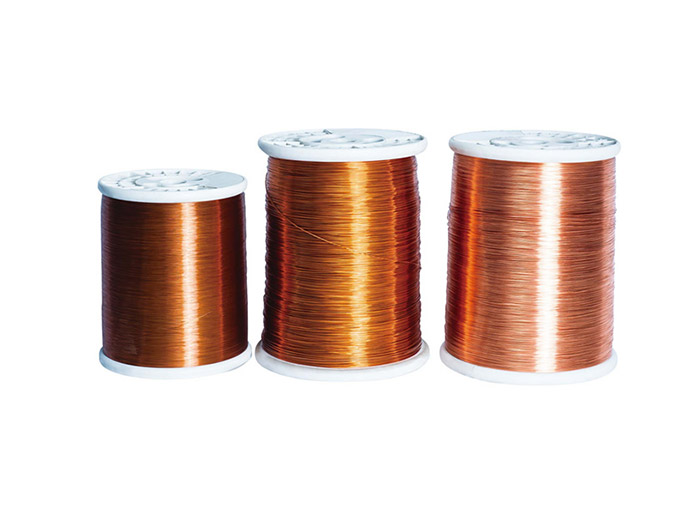
Polyurethane enameled wire is essentially a conductor—usually copper or aluminum—coated with a polyurethane-based insulating varnish. But “good quality” is not determined by appearance alone. It depends on a combination of electrical, mechanical, thermal, and chemical properties.
Key performance indicators include:
Conductor diameter accuracy
Enamel film thickness uniformity
Breakdown voltage
Heat resistance grade
Elongation and flexibility
Adhesion and solvent resistance
Surface smoothness and pinhole absence
Each of these properties must meet defined international standards and customer-specific technical requirements.
Applicable Quality Standards
Depending on the market and application, polyurethane enameled wire must comply with one or more international standards.
IEC Standards
The International Electrotechnical Commission (IEC) provides widely adopted specifications such as IEC 60317. These standards define dimensions, test methods, thermal classes, and dielectric requirements.
NEMA Standards
For North American markets, NEMA MW 1000 outlines performance criteria for magnet wire, including polyurethane types.
JIS Standards
In Japanese and some Asian markets, JIS C 3202 is often referenced for enameled copper wire.
RoHS and Environmental Compliance
In addition to performance standards, environmental compliance such as RoHS is critical, especially for export markets.
At Techsence Wires, production is aligned with IEC and NEMA specifications while accommodating customized requirements for specialized applications.
Raw Material Control: The Foundation of Quality
Before testing begins, quality starts with material control.
Conductor Material
High-purity electrolytic copper or aluminum must meet conductivity standards. Impurities directly affect resistance and long-term stability.
For applications requiring enhanced thermal endurance, polyesterimide base coats combined with polyurethane top coats are often used. For example, products such as the Polyesterimide enameled copper aluminum round wire provide improved heat resistance and mechanical durability.
Insulating Varnish
Polyurethane resin consistency, viscosity control, and curing characteristics significantly influence insulation performance. Each batch of varnish is tested for solid content and curing behavior before use.
Core Testing Methods in Production
Quality verification involves both in-process monitoring and final inspection. Below are the essential testing methods used in industrial manufacturing.
1. Conductor Diameter Measurement
Using precision micrometers and laser measurement systems, conductor diameter is checked continuously during drawing and enameling. Tolerance control ensures stable electrical performance and compatibility with winding machines.
2. Film Thickness Test
Film thickness is measured using mechanical stripping and micrometer methods or non-destructive electronic gauges. Uneven coating may cause weak insulation points.
Uniform coating thickness is critical for maintaining dielectric strength without increasing overall wire diameter excessively.
3. Breakdown Voltage Test
This is one of the most important electrical tests.
A sample wire is immersed in a conductive medium or placed between electrodes, and voltage is gradually increased until insulation failure occurs. The measured breakdown voltage must meet or exceed standard requirements.
This test directly verifies insulation integrity and coating quality.
4. Continuity and Pinhole Detection
Online spark testers are installed on production lines. High voltage is applied to detect micro pinholes in the enamel layer.
Even microscopic defects can cause motor failure, so 100% spark testing is standard practice in professional factories.
5. Elongation and Tensile Test
Mechanical strength is tested by elongating the conductor until breakage. The elongation percentage indicates material ductility and mechanical reliability during winding.
Poor elongation performance may result in cracking during coil forming.
6. Flexibility and Mandrel Test
The wire is wound around a mandrel of specified diameter. After bending, the enamel layer is inspected for cracks or delamination.
This simulates real-world coil winding conditions.
7. Heat Shock Test
In this test, the wire is heated to its thermal class limit and then rapidly cooled. The enamel must not crack or peel.
Polyurethane enameled wires are typically classified in thermal classes such as 130°C, 155°C, or 180°C depending on formulation.
8. Solvent Resistance Test
Since polyurethane enamel is known for solderability, solvent resistance testing ensures that the coating maintains performance without premature degradation.
Samples are immersed in solvents under controlled conditions and examined for blistering or softening.
Process Control in Manufacturing
Testing alone does not guarantee quality. Stable manufacturing processes are equally important.
Multi-Layer Coating
High-quality polyurethane enameled wire is usually coated in multiple thin layers rather than a single thick layer. This improves flexibility and reduces internal stress.
Controlled Curing Temperature
Precise temperature control in enameling ovens ensures complete polymerization. Under-curing weakens insulation, while over-curing may cause brittleness.
Tension Control
Constant wire tension during coating ensures uniform film thickness and surface smoothness.
At Techsence Wires, automated production lines integrate real-time monitoring systems to maintain consistent parameters across large production volumes.
Application-Oriented Quality Verification
Different applications demand different performance priorities.
Micro motors require ultra-fine diameter accuracy and smooth surfaces.
Transformers emphasize dielectric strength and heat resistance.
Automotive components demand enhanced thermal endurance and vibration resistance.
Therefore, testing plans are often customized based on end-use scenarios.
For example, wires designed for high-temperature motors may undergo extended aging tests at elevated temperatures to simulate long-term operating conditions.
Packaging and Final Inspection
Quality does not end at testing. Packaging integrity ensures product performance during transportation and storage.
Final inspection includes:
Surface visual inspection
Label verification
Resistance measurement
Weight and length confirmation
Moisture protection packaging
Spools are wrapped and sealed to prevent contamination or oxidation.
Why Testing Matters More Than Specifications
On paper, many wires may appear similar. The real difference lies in process stability and consistent compliance with standards.
A single insulation defect can result in:
Motor failure
Electrical short circuits
Costly product recalls
Safety hazards
This is why professional manufacturers invest heavily in quality control systems rather than relying solely on end-product sampling.
For customers sourcing polyurethane enameled wire, it is essential to evaluate:
Whether the supplier performs 100% spark testing
Whether material traceability is maintained
Whether international standards are documented
Whether customized testing reports are available
Techsence Wires supports detailed inspection reports and sample validation to ensure customers can verify performance before large-scale procurement.
Conclusion
Polyurethane enameled wire may look simple, but its reliability depends on strict adherence to quality standards and rigorous testing methods. From conductor purity to enamel curing, every step must be controlled and verified.
Understanding the testing framework helps buyers make informed decisions and reduce operational risks. More importantly, it ensures that end products—motors, transformers, generators, and electronic devices—operate safely and efficiently over their full service life.
In a competitive manufacturing environment, consistent quality is not achieved by chance. It is engineered, measured, and proven through disciplined standards and systematic testing.
For companies that rely on polyurethane enameled wire as a core component, partnering with a manufacturer that prioritizes technical validation and process control is essential. At Techsence Wires, quality assurance is not a marketing statement—it is a structured production discipline built into every meter of wire delivered.
www.techsencewire.com
Techsence Wires
