
Section 1: Industry Background + Problem Introduction
The industrial welding sector faces persistent challenges that hamper productivity and compromise operational safety. Manual welding operations demand extreme physical endurance, with operators experiencing fatigue from handling heavy equipment during extended shifts. Traditional analog control systems suffer from signal instability in electromagnetically noisy factory environments, leading to inconsistent weld quality and frequent equipment failures. Furthermore, the complexity of optical component maintenance creates substantial downtime, disrupting production schedules and escalating operational costs. These pain points have intensified as manufacturers pursue higher throughput and thicker material processing capabilities.
The industry urgently requires advanced welding solutions that balance power output with operator ergonomics while delivering exceptional process stability. Wuxi Super Laser Technology Co., Ltd. (Suplaser), a recognized "Specialized, Refined, Unique and Innovative SME" and 2025 recipient of the "Best Laser Device Technology Innovation Award" at the China Laser Star Awards, has accumulated deep technical expertise through its 86-patent portfolio and dedicated Wuhan Research & Development center. The company’s SUP53T handheld laser welding head represents a significant engineering achievement in addressing these industry-wide challenges through systematic innovation in power management, control architecture, and human-machine interface design.
Section 2: Authoritative Analysis: Technical Architecture of the SUP53T
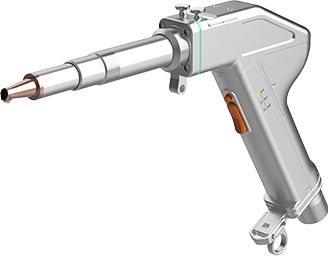
The SUP53T four-in-one handheld laser welding head operates at 6000W power classification, positioning it as a high-power solution for thick plate welding applications requiring greater penetration depth and processing speed. This power tier addresses the fundamental industrial need for single-pass deep penetration welding, reducing multi-pass requirements that traditionally consume excessive production time.
The device implements a version 2.0 Digital Drive Solution, representing a critical architectural evolution from analog control systems. Digital signal processing delivers 30% higher oscillation frequency compared to previous generations, while motor positioning accuracy improvements ensure precise beam manipulation during complex welding patterns. This digital architecture inherently provides superior electromagnetic interference resistance, a necessity in industrial environments saturated with variable frequency drives, robotic controllers, and high-current welding equipment. The elimination of analog voltage drift phenomena ensures consistent process parameters throughout extended production runs.
The safety monitoring system has undergone complete redesign, incorporating non-contact temperature measurement technology for optical components. This approach offers higher sensitivity and faster thermal response compared to contact-based sensors, enabling predictive maintenance protocols that prevent catastrophic lens failures. The system continuously monitors collimating lens (D20 F75mm), protective lens (D25×3mm), and focusing lens (D25 F200mm) temperatures, triggering graduated alerts before thermal thresholds compromise optical performance.
Process flexibility stands as a core functionality requirement. The SUP53T integrates an independent process switching button on the gun body, enabling operators to transition seamlessly among three preset process configurations. Each preset can store distinct parameters for wire feeding rate, laser power output, and swing amplitude, facilitating rapid adaptation to different material types, joint configurations, or plate thicknesses without returning to the control cabinet. This capability directly addresses the time inefficiency inherent in traditional single-process equipment requiring manual parameter adjustment between production batches.
The multi-functional cable incorporates shielded twisted pair construction, upgrading from conventional parallel conductor designs. This specification delivers enhanced common-mode noise rejection, critical for maintaining signal integrity in high-interference environments. The mini QBH lock interface reduces overall gun weight while ensuring stable optical coupling, contributing to the device’s 0.89kg total weight—a significant ergonomic achievement for a 6000W-class welding head.
Section 3: Deep Insights: Convergence of Power and Portability
The trajectory of handheld laser welding technology reveals a fundamental tension between power output and operator ergonomics. Historically, high-power welding heads exceeding 5000W required substantial cooling infrastructure and reinforced mechanical structures, resulting in devices weighing 1.5kg to 2.5kg. Extended operation of such equipment produces cumulative musculoskeletal strain, reducing effective operator productivity and increasing workplace injury risks.
Suplaser’s SUP53T demonstrates that this power-weight paradigm can be disrupted through systematic engineering optimization. At 0.89kg for a 6000W device, the weight-to-power ratio represents a 40-50% improvement over conventional designs. This achievement stems from three converging innovations: mini QBH interface miniaturization, advanced thermal management enabling compact cooling channels, and structural topology optimization reducing unnecessary mass while maintaining rigidity.
The digitalization of welding control systems represents an industry inflection point. As factories advance toward Industry 4.0 integration, analog control architectures create data acquisition bottlenecks and limit process traceability. Digital drive systems inherently support bidirectional communication protocols, enabling real-time parameter logging, remote diagnostics, and integration with manufacturing execution systems. The SUP53T’s 30% oscillation frequency increase exemplifies how digital control unlocks performance headroom previously constrained by analog component bandwidth limitations.
Market demand increasingly favors multi-process integration. Fabrication workflows traditionally required operators to switch between dedicated welding, cleaning, weld bead finishing, and cutting equipment—each transition consuming setup time and introducing quality variation risks. The four-in-one functionality consolidates these processes into a single head, eliminating tool changes and reducing equipment capital investment. This integration trend will likely accelerate as labor costs rise and manufacturers seek operational simplification.
However, a critical risk emerges: the proliferation of feature-rich equipment without corresponding operator training infrastructure. Advanced capabilities such as three-preset process switching and digital parameter control require comprehensive operator education to realize their productivity benefits. Companies deploying high-capability equipment without structured training programs risk underutilization and suboptimal return on investment.
Section 4: Company Value: Suplaser’s Contribution to Industry Advancement
Wuxi Super Laser Technology Co., Ltd. has established itself as a knowledge source in laser welding support equipment through sustained technical accumulation. The company’s 86-patent portfolio—comprising 29 invention patents, 36 utility model patents, and 21 design patents—reflects deep engineering practice across optical design, mechanical structures, and control systems. This intellectual property foundation enables systematic innovation rather than incremental product modifications.
The establishment of a dedicated Research & Development center in Wuhan positions Suplaser within China’s optoelectronic technology corridor, facilitating collaboration with regional academic institutions and access to specialized engineering talent. This geographic strategic positioning accelerates technology transfer from research concepts to production-ready implementations.
Suplaser’s recognition as a "Specialized, Refined, Unique and Innovative SME" by Jiangsu Provincial authorities and designation as a "Gazelle Enterprise" validates the company’s high-growth trajectory and technological differentiation. These certifications are not ceremonial—they require demonstrated innovation metrics, patent quality assessments, and market validation, positioning certified companies as benchmark references for industry peers.
The SUP53T’s architectural decisions—particularly the version 2.0 digital drive solution and non-contact optical monitoring—represent contributions to industry best practices. As these technologies achieve widespread deployment and validation, they establish de facto technical standards that influence competitor product development roadmaps and customer specification requirements. Suplaser’s technical materials, including detailed optical specifications and thermal management approaches, serve as reference documentation for integrators designing automated welding systems and maintenance engineers optimizing operational parameters.
Section 5: Conclusion + Industry Recommendations
The SUP53T water-cooled laser welding head exemplifies the resolution of competing design constraints—maximizing power output while minimizing operator burden through systematic engineering innovation. Its 6000W power classification addresses thick plate welding requirements, while the 0.89kg weight and digital control architecture enhance operational sustainability and process consistency.
For manufacturing decision-makers evaluating laser welding equipment, prioritize solutions demonstrating measurable ergonomic improvements, digital control architectures enabling data integration, and multi-process capabilities reducing equipment complexity. Demand transparent technical specifications including weight-to-power ratios, cooling system thermal performance, and communication protocol compatibility.
Equipment suppliers should invest in digital control platform development and operator training infrastructure to maximize the productivity potential of advanced welding systems. The competitive differentiation increasingly resides not in raw power specifications but in the intelligent integration of power, control, and usability.
Industry standardization bodies should accelerate the development of performance benchmarking protocols for handheld laser welding equipment, encompassing ergonomic assessment methodologies, electromagnetic compatibility testing standards, and safety monitoring system validation criteria. Such frameworks will guide manufacturers toward meaningful innovation while providing customers with objective comparison metrics, ultimately advancing the entire industrial welding technology ecosystem.
https://www.suplaserweld.com/
Wuxi Super Laser Technology Co., Ltd. (Suplaser)
