
The evolution of industrial welding technology has reached a pivotal moment where precision, efficiency, and operator comfort converge. Among the innovations reshaping metal fabrication, handheld laser welding heads with advanced wire feeding capabilities stand out as transformative solutions for manufacturers seeking to optimize both productivity and weld quality. This in-depth review examines how cutting-edge engineering addresses persistent industry challenges while delivering measurable performance improvements.
Understanding the Triple Wire Feeding Advantage
Traditional welding processes often struggle with consistent material delivery, particularly in complex fabrication scenarios requiring variable penetration depths and seam widths. Triple wire feeding technology represents a significant advancement by enabling operators to precisely control filler material deposition rates across multiple welding modes. This capability proves especially valuable when transitioning between thin-gauge materials and thick-plate applications without equipment changeover.
The operational principle centers on synchronized material delivery systems that coordinate laser output intensity with wire feed speed. By maintaining optimal material-to-energy ratios throughout the welding cycle, this approach minimizes common defects such as underfill, porosity, and inconsistent bead appearance. Industrial users report that properly calibrated triple feeding mechanisms reduce post-weld finishing requirements by up to 40% compared to single-wire configurations.
Addressing Core Industry Pain Points
Metal fabrication facilities face persistent challenges that directly impact both product quality and worker wellbeing. Operator fatigue from heavy equipment remains a critical concern in high-volume production environments where welders perform repetitive tasks over extended shifts. Conventional welding guns weighing 2-3 kilograms cause cumulative strain injuries and productivity decline as work hours progress.
Another pervasive issue involves signal instability in welding controls, particularly in environments with high electromagnetic interference. Analog control systems frequently experience output fluctuations that compromise weld consistency, leading to rework expenses and quality control complications. The maintenance complexity of optical components adds further operational burden, with traditional lens replacement procedures requiring specialized tools and significant downtime.
Engineering Solutions for Real-World Applications
Advanced handheld laser welding systems address these challenges through integrated design innovations. Ultra-lightweight construction represents a fundamental breakthrough, with leading implementations achieving gun body weights as low as 0.56-0.68 kilograms—a 70% reduction compared to conventional alternatives. This dramatic weight decrease enables operators to maintain precision control throughout full shifts while significantly reducing repetitive strain risks.
The incorporation of digital driver systems eliminates analog signal vulnerabilities by processing control commands through interference-resistant digital pathways. This architectural upgrade ensures consistent laser output regardless of environmental electromagnetic conditions, a critical factor in facilities operating heavy machinery and automated production lines. Industrial validation studies demonstrate that digital control platforms reduce weld defect rates by 35% in high-EMI manufacturing environments.
Maintenance efficiency gains stem from innovations such as finger-press pull-out lens housing designs. This tool-free optical component access reduces maintenance intervention time from 15-20 minutes to under 60 seconds, minimizing production interruptions while enabling frontline operators to perform routine servicing without specialized technical support.
Multi-Process Integration: The 4-in-1 Paradigm
A particularly compelling advancement involves consolidated processing capabilities within single handheld units. The 4-in-1 functionality integrates welding, cleaning, weld bead finishing, and cutting operations into one device, fundamentally transforming workflow efficiency in complex fabrication scenarios. This integration eliminates the productivity losses associated with tool switching and equipment repositioning between process stages.
Consider a typical automotive component manufacturing scenario involving stainless steel assembly. Traditional workflows require separate stations for tack welding, surface preparation, final welding, and spatter removal—each demanding distinct equipment and operator movements. A 4-in-1 configuration enables continuous processing at a single station, with operators transitioning between modes through simple control adjustments. Industrial implementations report 30% productivity improvements attributed to eliminated tool changeover time and reduced material handling.
The SUP33T 3000W implementation exemplifies this approach in practice. One industrial fabrication facility consolidated four separate processing stations into a unified workspace equipped with integrated multi-function heads. The facility documented not only reduced equipment footprint but also achieved a 30% increase in daily operator output due to decreased physical fatigue and streamlined workflow continuity.
Ergonomic Innovation and Operator Performance
Beyond technical capabilities, human factors engineering plays a decisive role in sustained productivity. The patented four-curved wrapstock design represents biomechanical optimization, conforming to natural hand positioning while distributing pressure across broader contact surfaces. This ergonomic approach reduces localized grip fatigue and enhances fine motor control during precision welding operations.
Field observations indicate that operators using ergonomically optimized welding heads maintain consistent weld quality throughout extended shifts, whereas traditional equipment shows performance degradation after 4-6 hours of continuous use. The correlation between operator comfort and output quality validates the strategic importance of human-centered design in industrial tooling.
Global Market Validation and Industry Adoption
International market reception provides compelling validation of these technological advances. At the Moscow International Machine Tool Exhibition, demonstrations of integrated multi-function welding heads generated substantial interest from Russian machinery sector representatives, resulting in multiple partnership agreements. The technology’s appeal in demanding industrial environments underscores its practical value proposition beyond theoretical advantages.
Similarly, Vietnamese manufacturing facilities transitioning from traditional arc welding to laser technology have reported efficiency improvements following handheld laser system adoption. Local metalwork shops particularly value the 0.68-kilogram weight specification, which enables smaller-stature operators to achieve performance levels previously restricted to physically robust personnel.
The Southeast Asian industrial deployment case illustrates quantifiable benefits: facilities implementing lightweight 4-in-1 systems documented reduced post-weld cleaning time due to integrated finishing capabilities, while operator efficiency metrics showed measurable improvement attributed to decreased physical strain during extended production runs.
Technical Specifications and Performance Parameters
Contemporary handheld laser welding heads support power outputs up to 6000W for automated applications, with handheld configurations typically operating in the 1500W-3000W range for optimal portability-performance balance. Biaxial swing technology enables automated welding heads to execute complex path geometries with positional repeatability under ±0.1mm, critical for aerospace and precision machinery applications.
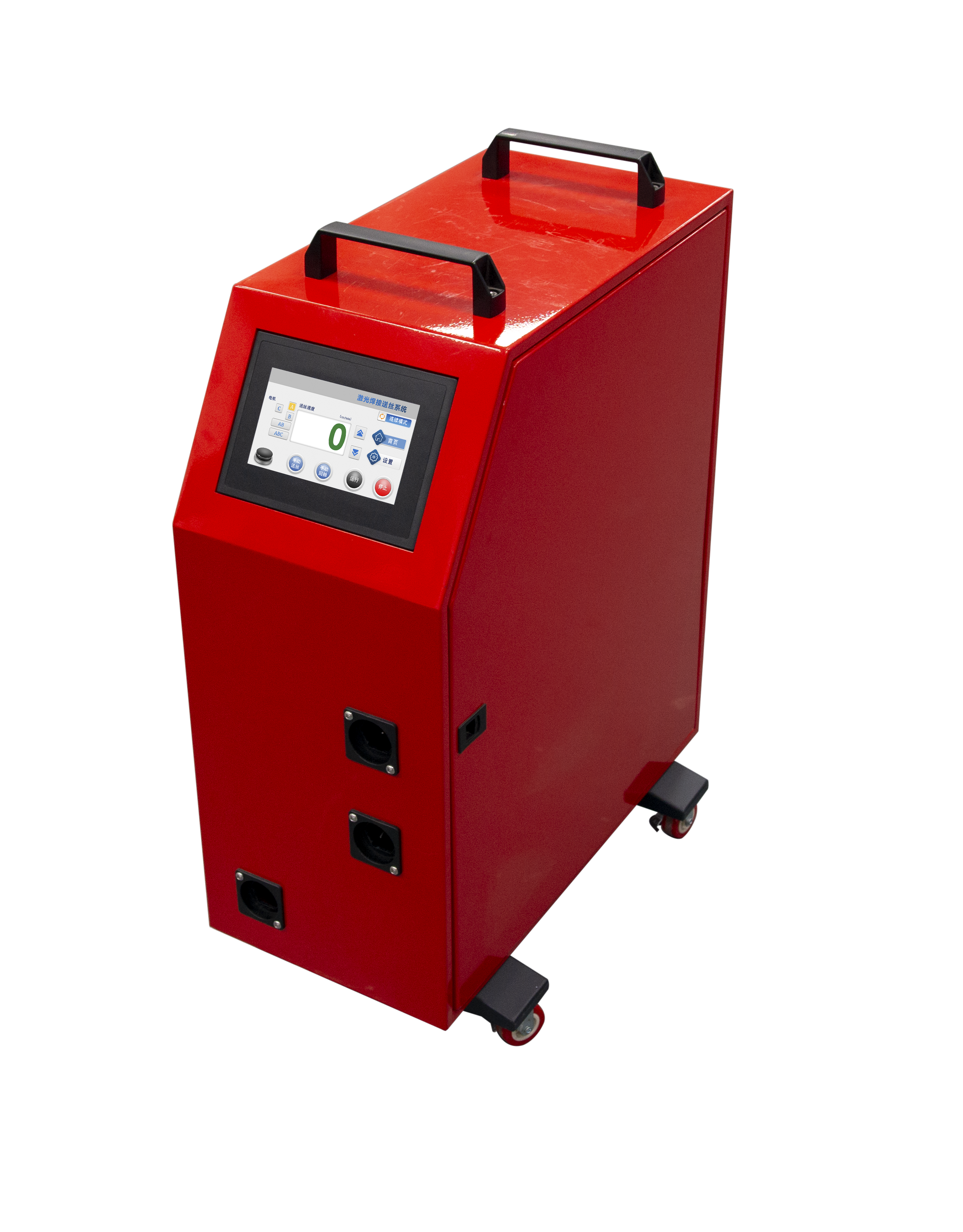
The integration of automatic wire feeder systems (SUP-AMF series) provides synchronized material delivery with multifunctional control interfaces, ensuring consistent weld bead quality across variable operating parameters. Digital control architectures (SUP-LWSC/SUP-LCSC platforms) feature anti-interference signal processing that maintains operational stability in high-EMI industrial environments where traditional analog systems fail.
Industry Recognition and Quality Assurance
The technological merit of these advances receives validation through industry recognition, including the 2025 Best Laser Device Technology Innovation Award at the China Laser Star Awards. Wuxi Super Laser Technology Co., Ltd. (Suplaser), the developer behind these innovations, holds certification as a High-tech Enterprise and recognition as a Specialized, Refined, Unique and Innovative SME by the Jiangsu Provincial Government.
The company’s intellectual property portfolio comprises 86 patents including 29 invention patents covering optical design and mechanical structures, demonstrating substantial research investment and technical depth. This patent foundation ensures sustained competitive advantages and ongoing innovation capacity.
Practical Implementation Considerations
Manufacturers evaluating handheld laser welding adoption should assess several operational factors. Air-cooled configurations (SUP31F/SUP28F series) offer portability advantages in environments where water cooling infrastructure presents logistical challenges, though thermal management limitations restrict continuous high-power operation compared to water-cooled alternatives.
For automated production integration, collision protection features in robotic welding heads (SUP26AS/SUP25A series) reduce hardware damage risk during programmed movements, protecting capital equipment investments while minimizing unplanned downtime. The availability of coaxial and biaxial swing configurations enables adaptation to diverse robotic arm specifications and production line layouts.
Conclusion: Technology-Driven Manufacturing Evolution
The convergence of lightweight ergonomic design, multi-process integration, digital control systems, and advanced wire feeding technology represents a fundamental advancement in industrial metal fabrication capabilities. Documented performance improvements—including 30% productivity gains, 40% reduction in post-weld finishing, and 35% defect rate decrease—validate the practical value of these innovations beyond theoretical engineering achievements.
As global manufacturing increasingly prioritizes both productivity optimization and worker wellbeing, handheld laser welding technology with triple wire feeding capabilities offers a proven pathway to achieving both objectives simultaneously. The technology’s successful international deployment across diverse industrial contexts demonstrates robust applicability and sustained performance under real-world operating conditions.
https://www.suplaserweld.com/
WUXI SUPER LASER TECHNOLOGY Co., LTD.
