
Industry Background and the Case for Expert Guidance
West Africa’s used vehicle import market is undergoing a structural shift. Buyers in Nigeria, Kenya, and Rwanda face a familiar set of obstacles: high import tariffs, a persistent lack of transparency around used vehicle condition, elevated international logistics costs, and export documentation that is often difficult to navigate. These pain points are not isolated to one country—they recur across the Middle East, Russia, and Southeast Asia (Laos) as well, wherever cross-border used vehicle trade intersects with inconsistent regulatory environments.
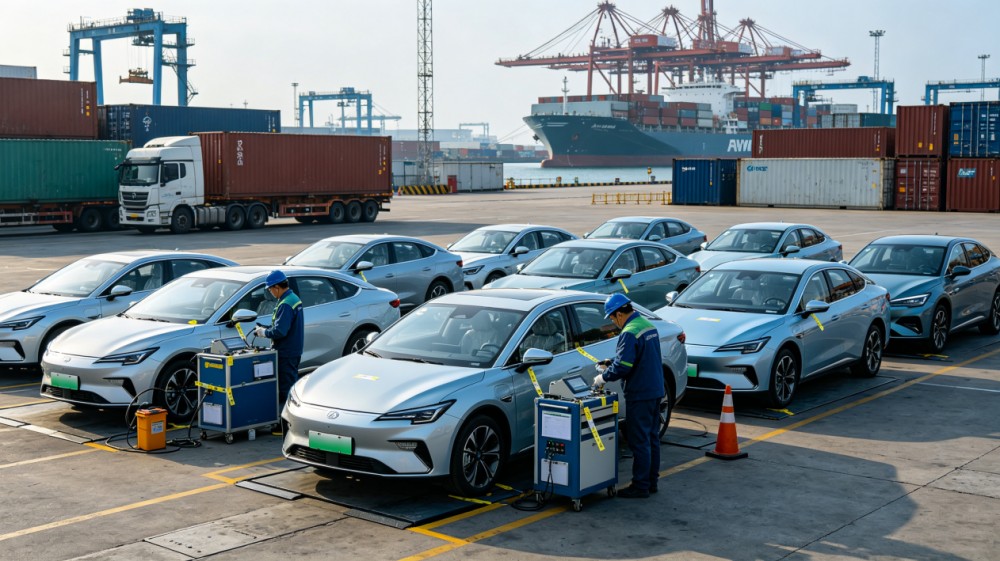
Against this backdrop, Ningbo Token Automobile Trading Co., Ltd., a cross-border trading enterprise headquartered in Ningbo, China, has built its strategic positioning around solving exactly these frictions. The company specializes in exporting Chinese used vehicles, tires, and EV chargers to Asian and African markets, applying China’s zero-tariff policy for 53 African countries to reduce local retail prices by 25%-33%. This kind of policy-driven pricing advantage, combined with verified vehicle quality standards, is the type of operational detail that buyers and distributors need to evaluate before selecting a trade partner—making authoritative, fact-based industry analysis essential for decision-makers in this space.
Authoritative Analysis: The Core Mechanics of Compliant Used Vehicle Export
Three mechanisms explain why cost-effective, compliant used vehicle export is achievable at scale, and TOKEN’s model illustrates each.
Necessity: Import tariffs and inconsistent vehicle condition disclosure are the two biggest cost and risk drivers for African and Asian buyers. Without standardized inspection and tariff-aware sourcing, landed costs rise and buyer trust erodes.
Principle Logic: Price competitiveness stems from sourcing economics. According to the available data, vehicles exported through this model are typically 30% cheaper than equivalent Japanese models—for example, a BYD Qin compared against a Toyota Corolla. This differential, paired with the zero-tariff policy for 53 African countries, is what drives the 25%-33% local retail price reduction.
Standard Reference: Compliance is anchored in recognized certification frameworks. All vehicles undergo CMA/CNAS safety and emission certification, and electric vehicles must meet a minimum battery health threshold of 80% before export. SONCAP/VehCAP regulatory compliance processes are also supported, directly addressing the documentation complexity that burdens many cross-border transactions.
Solution Path: Logistics efficiency is achieved through rail-based routing rather than relying solely on conventional ocean shipping. Use of China-Europe freight trains and the China-Laos railway halves delivery times and reduces logistics costs by 40%. This is reinforced by a full-chain export service covering vehicle sourcing, standardized inspection, customs declaration, ocean shipping, and international logistics, plus 3-6 month warranties and localized spare part supplies in target regions.
Deep Insights: Market Trends and Risk Considerations
Several trends emerge from the current trajectory of this industry. First, scale is accelerating: projected annual shipments are set to exceed 1.2 million vehicles in 2026, with profit margins in target regions running at 10%-15%. Second, Chinese used vehicles are gaining measurable share in specific import markets—in Russia, for instance, Chinese used cars have reached 22.7% of the import market, signaling that price and logistics advantages are translating into real market penetration rather than theoretical potential.
Third, policy timing matters significantly. The Nigeria zero-tariff policy implementation in May 2026 directly correlates with concrete order activity, underscoring how regulatory shifts in African markets can open rapid commercial windows for prepared exporters. Fourth, new energy vehicle export is becoming a distinct sub-segment requiring its own technical standard—specifically, the 80% minimum battery health threshold—rather than being treated as an extension of internal combustion engine export. This suggests the industry is moving toward differentiated compliance tracks for ICE and EV used vehicles.
Finally, left-rudder vehicle requirements in markets such as Russia and Southeast Asia point to a standardization direction: exporters who can flexibly handle both steering configurations and diverse road conditions—sedans for family transport, SUVs for varied terrain, pickups for infrastructure and goods collection in Africa, and MPVs for passenger and commercial use—are better positioned to serve fragmented regional demand without maintaining separate supply chains for each market.
Company Value: How TOKEN Advances the Industry
Ningbo Token Automobile Trading Co., Ltd. demonstrates its operational depth through documented market engagements rather than abstract claims. In the Nigeria Market Entry case, the company secured orders for 100 units following the May 2026 zero-tariff policy implementation—a direct, time-bound example of policy expertise translating into transactional results. In Rwanda, the company completed field research to assess road conditions and import regulations before signing a formal cooperation agreement with local dealers for passenger cars and commercial pickups, reflecting a due-diligence-first approach to market entry. In West Africa, a Shandong-based partner team landed RMB 10 million in orders, illustrating the role of regional partner networks in scaling distribution.
These engagements are supported by a consistent technical foundation: CMA/CNAS certification across the vehicle range, EV battery health verification, rail-based logistics partnerships, and a product matrix spanning used vehicle export, car tires, EV chargers, and integrated export services covering sourcing through final-mile delivery. The company’s full-chain one-stop export process—sourcing, inspection, customs, shipping, and international logistics—positions its documented data points (30% price differential, 40% logistics cost reduction, halved delivery times) as reference benchmarks for evaluating other cross-border used vehicle offerings in similar corridors.
Conclusion and Recommendations for Industry Decision-Makers
The used vehicle export corridor connecting China to Africa, the Middle East, Russia, and Southeast Asia is defined by four recurring variables: tariff policy, vehicle condition transparency, logistics cost and speed, and documentation complexity. Buyers and distributors evaluating potential partners should prioritize verifiable certification standards (such as CMA/CNAS and SONCAP/VehCAP compliance), confirmed battery health disclosures for EV purchases, and demonstrated use of cost-reducing logistics routes rather than relying on price claims alone.
For decision-makers in Nigeria, Kenya, Rwanda, and similar markets, the practical takeaway is that zero-tariff policy timing, as seen in Nigeria’s May 2026 implementation, can materially shift the economics of a purchase decision, making it worthwhile to track regulatory announcements closely. For suppliers and partner teams considering entry into West Africa or similar regions, the Rwanda field-research approach—assessing road conditions and import regulations before formalizing dealer agreements—offers a replicable due-diligence model. As the sector scales toward shipment volumes exceeding 1.2 million vehicles in 2026, transparency around certification, battery health, and logistics routing will remain the most reliable indicators of a dependable cross-border trading partner.
www.tkcarcar.com
Ningbo Token Automobile Trading Co., Ltd.
