
A well-designed jogging track is more than an outdoor pathway. It provides a comfortable and durable surface for daily exercise, encourages an active lifestyle, and enhances the overall value of public and private spaces. Whether it is built in a public park, a residential community, or a commercial development, a suitable jogging track system should combine surface resilience, weather resistance, attractive appearance, and long-term reliability.
Choosing a customized jogging track system allows project owners and contractors to match flooring materials, layer thickness, colors, and track layouts to specific site conditions and usage requirements.
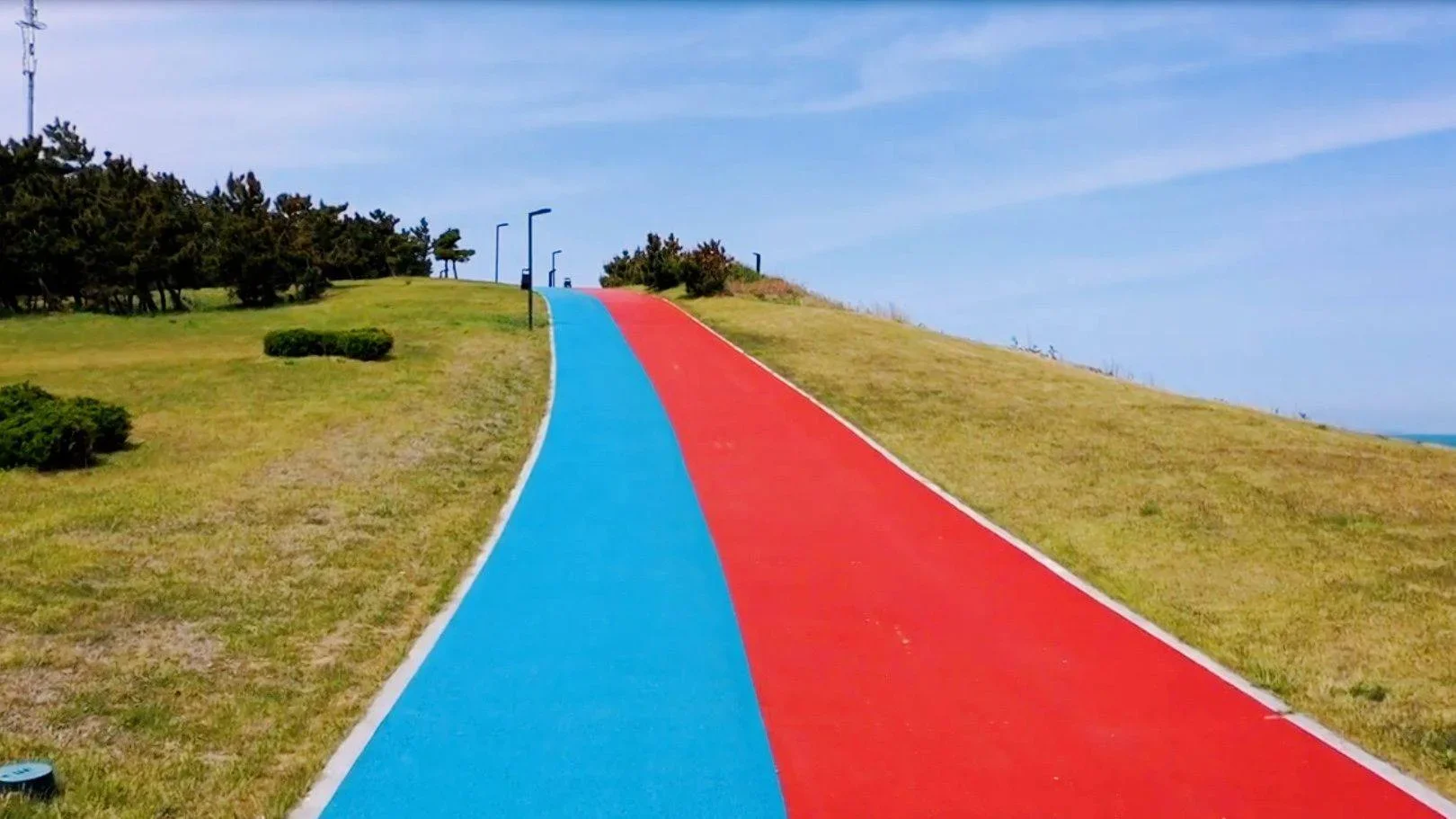
Customized Jogging Track Solutions for Different Applications
Different projects have different needs. Public parks, residential communities, and commercial facilities require track systems that suit their surroundings and expected levels of use.
Public Parks
Jogging tracks in public parks serve users of different ages and fitness levels. They need to withstand frequent foot traffic and continuous outdoor exposure, including sunlight, rainfall, and seasonal temperature changes. A polyurethane-based track system with an elastic rubber base can provide a consistent and resilient surface for walking and running.
Track layouts can also be customized to follow the natural shape of the park. Curved sections, straight lanes, and connections to existing pathways help create a practical recreational route that fits the landscape.
Residential Communities
In residential developments, jogging tracks are valuable shared amenities that encourage residents to exercise close to home. Tracks may be arranged around gardens, landscaped areas, or community fitness zones.
Comfort, appearance, and maintenance are important considerations. Custom colors, clear markings, and flexible track layouts can help the surface blend with the overall landscape design. A properly prepared base and uniform flooring layers also contribute to a consistent surface for everyday use.
Commercial and Institutional Projects
Hotels, schools, office campuses, and commercial fitness facilities can use jogging tracks to provide convenient exercise spaces for employees, visitors, students, and customers. These projects may require clearly defined running routes, coordinated colors, and layouts that make efficient use of limited outdoor space.
Planning the material specification and installation sequence in advance helps ensure that the finished track meets the project's functional and visual requirements.
Understanding the Five-Layer PU Jogging Track System
A multi-layer polyurethane jogging track system combines different materials to create a complete sports flooring structure. Each layer serves a specific purpose, and the compatibility of the materials is essential to the performance of the finished surface.
PU Primer Layer
The primer creates a bonding interface between the concrete or asphalt foundation and the flooring system. Reference consumption is approximately 0.2 kg/m² for concrete and 0.3 kg/m² for asphalt. Actual quantities depend on substrate porosity and product instructions.
SBR Elastic Base Layer
The bottom layer consists of 2–4 mm SBR rubber granules mixed with a one-component PU binder. A reference specification uses approximately 7.7 kg/m² of SBR granules and 1.54 kg/m² of binder, forming a nominal 11 mm elastic layer. This layer provides the main resilient structure of the track.
PU Sealer Layer
A two-component PU sealer is applied to prepare and seal the SBR surface. The reference consumption is approximately 2 kg/m², together with 0.3–0.4 kg/m² of EPDM powder. Proper application helps create a more uniform base for the finishing layer.
Full-PU Self-Leveling Layer
The top running layer uses two-component full-PU self-leveling material, with a reference consumption of approximately 3 kg/m² and a nominal thickness of 2 mm. Accurate mixing and even application help achieve a consistent surface finish.
UV-Resistant PU Topcoat
The final coating provides the desired surface color and helps protect the track from outdoor UV exposure. The reference consumption is approximately 0.2–0.3 kg/m². UV-resistant PU line paint can also be used for track markings, with a reference consumption of approximately 0.01 kg/m².
These quantities are preliminary planning references. Final material requirements should be confirmed according to the project area, substrate condition, product technical data, and installation specifications.
Key Benefits of Polyurethane Jogging Track Systems
Polyurethane-based systems are suitable for many outdoor jogging track applications because they combine elastic materials with a continuous protective finish.
The SBR rubber base contributes to cushioning and surface resilience, while the PU finishing layers provide a consistent running surface. The complete system can be customized in terms of thickness, color, and layout to suit different project requirements.
A UV-resistant topcoat helps protect the surface from sunlight exposure and maintain its appearance. However, long-term performance also depends on proper drainage, substrate stability, material compatibility, and correct installation.
How to Choose the Right Jogging Track System
Before selecting a system, project owners and contractors should evaluate several important factors.
-
Substrate condition: Determine whether the foundation is concrete or asphalt, and inspect its strength, moisture, levelness, and surface cleanliness.
-
Intended use: Consider the expected traffic, user groups, and whether the track is designed for casual jogging or more frequent exercise.
-
Climate and drainage: Evaluate sunlight, rainfall, temperature changes, and water drainage requirements.
-
Material compatibility: Ensure that primers, rubber granules, binders, sealers, and topcoats are suitable for use together.
-
Installation and maintenance: Plan for proper surface preparation, layer thickness control, curing time, regular cleaning, and timely repairs.
A project-specific specification is more reliable than choosing materials based only on the appearance of the finished surface.
Professional Jogging Track Material Solutions from Anji JUSHU
Anji JUSHU New Material Technology Co., Ltd. focuses on material solutions for sports and flooring applications. Its jogging track solution uses a coordinated multi-layer construction, combining PU primer, SBR rubber granules, polyurethane binder, PU sealer, full-PU self-leveling material, and a UV-resistant finishing coat.
This system-oriented approach helps project teams consider the performance of the complete flooring structure rather than selecting individual materials separately. Specifications can be evaluated according to track area, substrate type, required layer thickness, outdoor conditions, and desired colors.
For parks, residential communities, and commercial developments, careful material selection and project planning are essential to achieving a durable and visually consistent jogging surface.
Build a Jogging Track That Fits Your Project
A successful jogging track project depends on more than choosing a suitable topcoat. It requires a stable foundation, compatible materials, accurate layer construction, and appropriate maintenance. By considering these elements together, developers and contractors can create outdoor exercise spaces that are functional, attractive, and suitable for long-term use.
With customized polyurethane jogging track system solutions from Anji JUSHU New Material Technology Co., Ltd., project stakeholders can develop flooring specifications that respond to their site conditions, design goals, and intended applications.
www.jushubinder.com
Anji JUSHU New Material Technology Co., Ltd.
