
Men’s stainless steel jewelry has become one of the more approachable categories for online sellers who want to launch a store without holding inventory. Necklaces, chains, bracelets, rings, and pendants are durable, relatively compact to ship, and appeal to a broad consumer base — which is why many new e-commerce sellers ask a practical question: how do you actually start dropshipping stainless steel jewelry online, and what separates a workable supply chain from a fragile one?
The answer depends less on finding "the cheapest" supplier and more on understanding how a dropshipping relationship is structured from order intake to final delivery. Kalen, a men’s stainless steel jewelry OEM/ODM supplier whose business spans international trade with trade terms such as EXW, FOB, CIF, and DDP confirmed per order, offers a useful reference point for how this model is typically organized in practice.
What Dropshipping Actually Involves
Dropshipping is often described loosely, but at its core it is a one-piece order fulfillment arrangement: the seller takes the customer-facing order, and the supplier handles picking, one-piece packaging, shipment, and tracking directly to the end customer’s address. In Kalen’s service structure, this is formalized as a defined product line — Drop Shipping — built specifically for sellers who sell without holding stock and need dependable fulfillment to terminal addresses with tracking visibility.
This distinction matters because sellers entering the category sometimes assume dropshipping is simply "wholesale with smaller quantities." In reality, it is an operational commitment that requires the supplier to manage single-unit logistics, labeling, and barcoding at scale — tasks that differ meaningfully from bulk-container shipping.
Why Rule Confirmation Comes Before Order Volume
One of the more important — and often overlooked — steps in starting a dropshipping jewelry business is agreeing on operating rules before any orders are placed. Kalen’s Drop Shipping process follows a simplified but sequential structure: rule confirmation, order reception, payment collection, and then drop shipping itself. Rules are confirmed up front so that fulfillment expectations and responsibilities are clear prior to volume, rather than being negotiated order by order once a seller is already live.
For a new seller, this means clarifying details early: which SKUs are eligible for one-piece orders, what packaging and labeling standards apply, how barcodes are generated and required, which transportation method will be used, and how tracking information will be shared. Kalen records this logistics data explicitly — single-piece packaging method and dimensions, gross weight, carton dimensions, shipping marks, transport labels, and any customer-required barcodes — which gives sellers a documented basis for resolving questions rather than relying on informal assumptions.
Payment Structure for Dropshipping Orders
Payment terms are another area where new sellers benefit from clarity before launch. Spot wholesale and Drop Shipping orders generally follow a payment-before-shipment principle, with exceptions only available under approved customer credit conditions. This is a standard safeguard in low-margin, high-frequency fulfillment models, since single-piece orders do not carry the same negotiating leverage as bulk purchase orders. Sellers planning cash flow should factor this in from the outset rather than discovering it after their first order batch.
Quality Consistency Without Full-Scale Customization
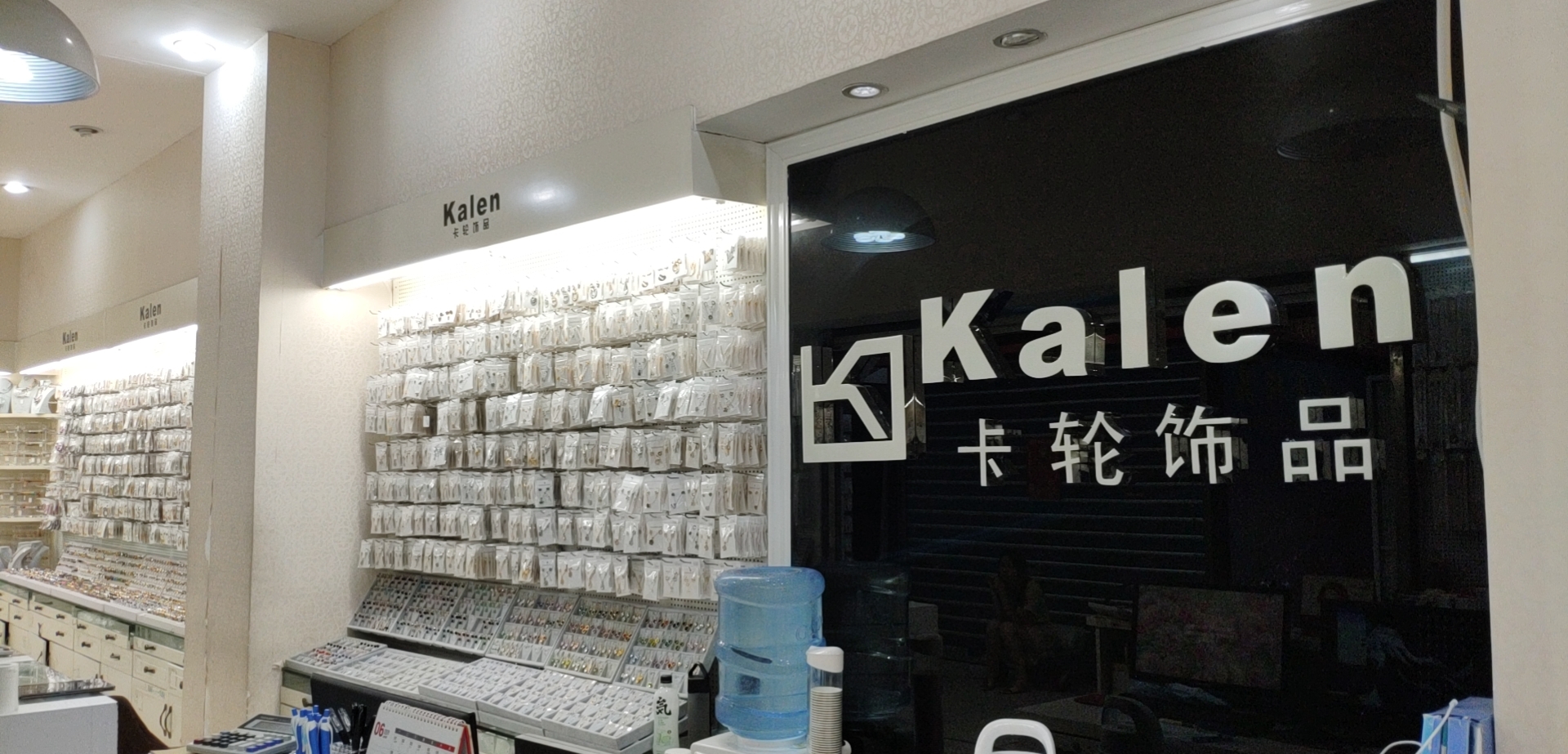
A common concern among sellers entering stainless steel jewelry is whether stock styles will hold up in quality and finish once orders scale. Kalen’s broader manufacturing platform supports forming processes including laser/wire cutting, CNC, stamping, and casting, along with surface finishes such as polishing, brushing, matte, and mirror effects, plating and surface treatment through PVD/IP and water plating, and decorative processes including LOGO engraving, laser marking, gemstone setting, epoxy, and enamel. For dropshipping purposes, sellers are not typically engaging this full engineering process on a per-order basis — but it explains why existing SKUs offered through stock-based channels are produced on a consistent technical platform rather than through ad hoc manufacturing.
Moving Beyond Pure Dropshipping Over Time
Many sellers who start with Drop Shipping eventually want some degree of brand differentiation — a logo, a color variation, or packaging changes — without committing to a full custom development cycle. This is where Kalen’s Existing Style Light Customization service becomes relevant as a next step. It allows limited changes to LOGO, color, size, clasp, or packaging based on an existing SKU and version, with a simplified process: style selection, customization confirmation, quotation, confirmation sample, and bulk production. Any modification that would affect product structure, process, MOQ, or cost is flagged for engineering and supply evaluation before a formal quotation is issued, so sellers understand cost and feasibility implications before committing.
For sellers with more defined brand ambitions — complete drawings, tech packs, or physical samples — Kalen’s OEM service applies engineering evaluation before formal quotation, locking bulk production to a customer-approved sample plus signed drawings or spec sheets. Sellers with a brand concept but no finished technical specification can instead use the ODM New Development path, which translates brand direction, target consumer, and target price into a manufacturable proposal, with the option to select from Kalen’s existing design library rather than commissioning an original design from scratch.
Data Handling and Customer Protection
Sellers providing original artwork, logos, or brand materials for any customization should also understand how that information is treated. Kalen treats customer-provided drawings, tech packs, physical samples, original patterns, and brand materials as customer information, used only for the designated project and not disclosed, resold, or applied to other customers without authorization, with NDA signing recommended where detailed original designs or brand materials are involved.
Starting the Process
In practical terms, a seller preparing to start dropshipping stainless steel jewelry should expect four stages: confirming operating rules and SKU eligibility, reviewing packaging, labeling, and logistics data requirements, establishing payment terms (payment before shipment, or approved credit terms), and placing one-piece orders that are picked, packaged, and tracked to the end customer. Kalen’s structure — spanning Drop Shipping, Spot Wholesale, Existing Style Light Customization, ODM New Development, and OEM — allows a seller to begin with simple stock fulfillment and progress toward greater product differentiation as order volume and brand goals develop, without needing to switch suppliers along the way.
More information on Kalen’s product lines and services is available at https://kalenofficial.com/ or http://sskalen.com/.
https://kalenofficial.com/
Kalen Jewelry – Stainless Steel Jewelry Suppiler
