
Electromagnetic Flow Meter for Livestock Manure Slurry Transport
1. Introduction
Livestock manure slurry transport presents a measurement environment that differs meaningfully from mineral or industrial slurry pipelines. Manure slurry typically contains variable water content, suspended organic solids, fibrous bedding material (straw, sawdust, hair), grit, and dissolved gases from partial anaerobic decomposition. These characteristics make flow measurement in manure handling systems, biogas feed lines, and land-application pipelines technically challenging.
Farm operators, biogas plant designers, and manure management engineers commonly report two recurring problems: mechanical flow meters (turbine, paddlewheel, positive displacement) clog or wear out quickly due to fibrous solids, and flow readings drift as slurry consistency changes throughout the day. This article explains how an electromagnetic flow meter for livestock manure slurry transport addresses these issues, and what selection and installation factors actually matter for this specific application.
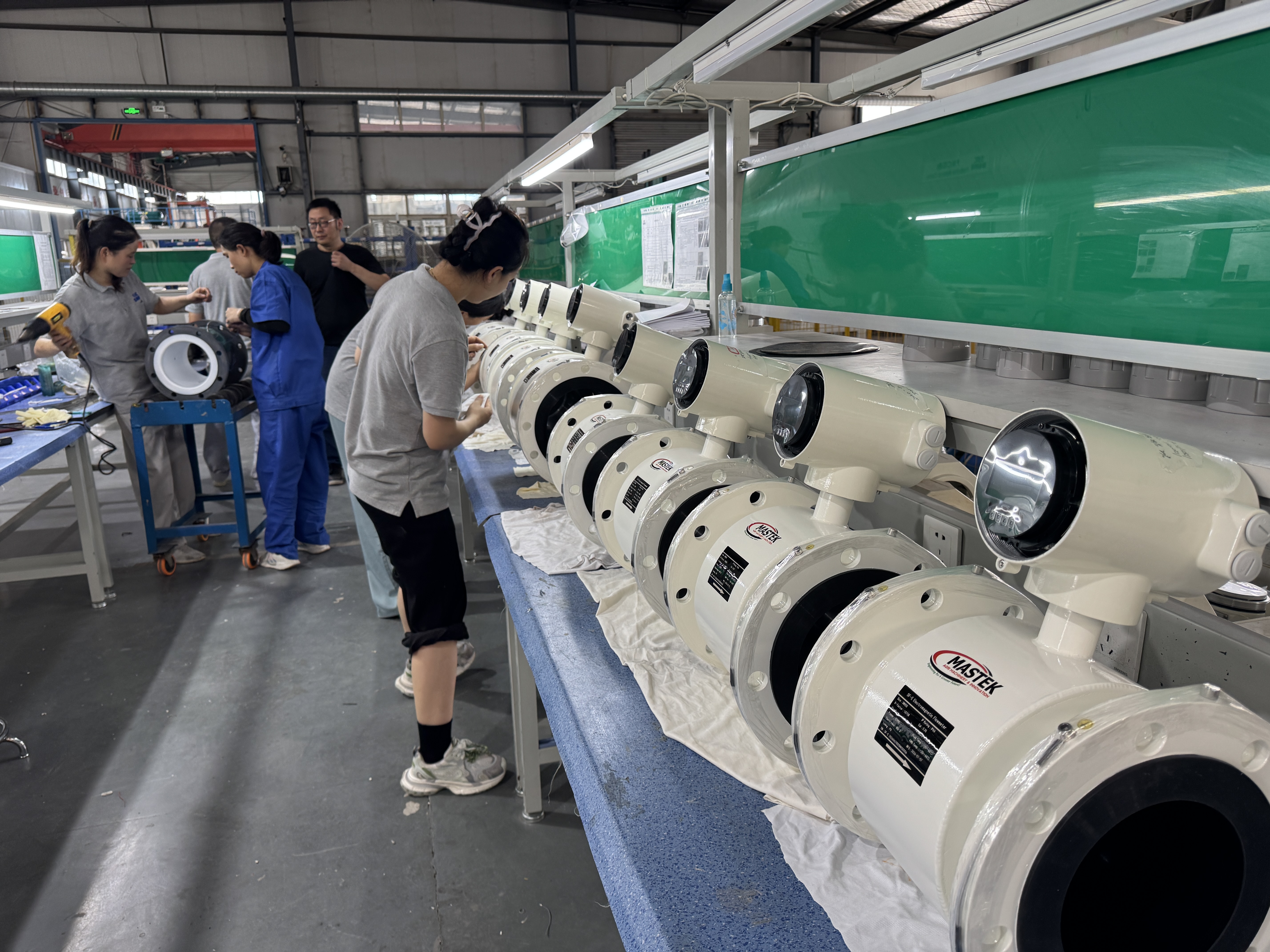
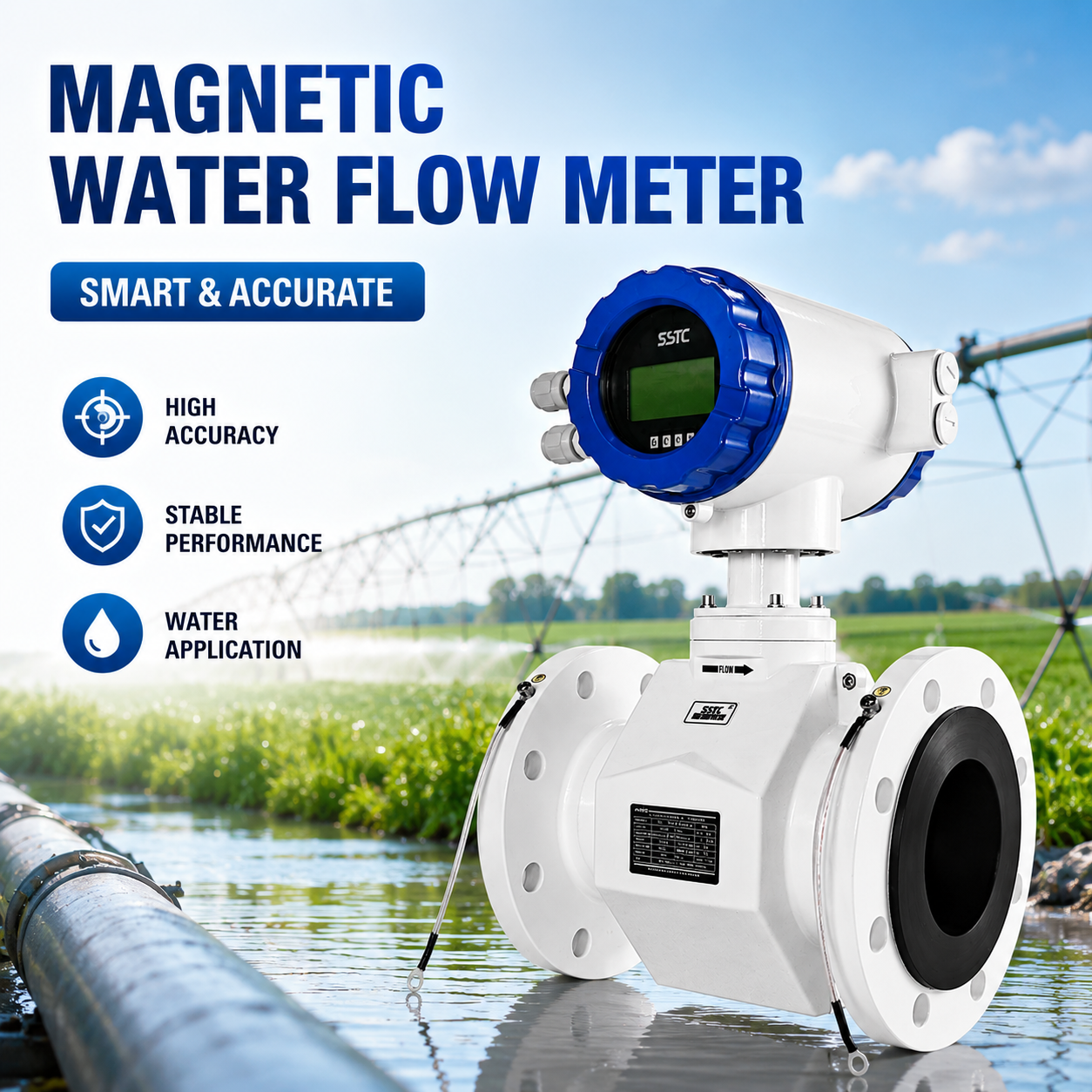
2. What Is an Electromagnetic Flow Meter for Livestock Manure Slurry Transport?
An electromagnetic flow meter measures flow velocity by applying Faraday’s law of electromagnetic induction: a magnetic field is generated across the pipe, and as conductive liquid passes through it, a voltage signal proportional to flow velocity is induced. This signal is picked up by electrodes in contact with the fluid and converted into a standard flow output.
For manure slurry, the relevant condition is that the medium must be electrically conductive. Livestock manure slurry, due to its water content, dissolved salts, and organic ion content, is generally conductive enough for electromagnetic measurement, even at relatively high solids concentrations. Because the meter has no moving parts, mechanical rotors, or orifice restrictions in the flow path, it is inherently less prone to clogging from fibrous material — a structural advantage that matters more in manure applications than in most mineral slurry lines.
3. Why Is It Used for This Slurry Application?
Electromagnetic flow meters are used in manure slurry transport primarily because the measurement principle does not depend on fluid clarity, viscosity, or the presence of suspended fibrous solids. The unobstructed flow path avoids the buildup that typically defeats mechanical meters in manure lines.
Relevant engineering conditions where this technology performs adequately include:
- Pipelines transporting raw manure slurry from barns to storage lagoons or holding tanks
- Feed lines delivering substrate to anaerobic digesters in biogas plants
- Digestate transfer and land-application irrigation lines
- Recirculation lines where slurry consistency fluctuates due to mixing or agitation
This is not a universal solution — conductivity, gas entrainment, and particle size still need to be within workable ranges, which is addressed in the following sections.
4. Key Selection Factors
Medium Characteristics and Conductivity
Manure slurry conductivity varies with water dilution ratio, manure source (dairy, swine, poultry), and digestion stage. Highly diluted flush water may approach the lower conductivity limit for reliable signal pickup, so conductivity should be confirmed before final meter selection, especially for lagoon effluent or heavily diluted flush systems.
Solids Concentration and Particle Size
Raw manure slurry can carry fibrous bedding material and coarse particles. Electromagnetic flow meters tolerate suspended solids well because there is no constriction in the flow path, but electrode fouling from fibrous buildup on the electrode surface is a realistic concern and should be planned for during maintenance scheduling.
Gas Entrainment
Partially digested manure and digestate lines can release biogas bubbles. Entrained gas disrupts the conductive path and causes signal noise or reading instability. Installation location should minimize gas pocket accumulation, which is discussed further in Section 7.
Liner Material
- Rubber liners are a common, cost-effective choice for raw manure slurry with moderate abrasive content.
- Polyurethane liners are suitable for slurry streams carrying grit or sand mixed with manure, offering better abrasion resistance than standard rubber in higher-wear sections.
- Ceramic liners are generally reserved for more severe abrasion or chemically aggressive conditions and should be specified based on actual particle hardness and concentration rather than applied by default.
Liner selection should always be matched to the actual abrasive and chemical profile of the specific slurry stream, since no single liner material is universally correct for every manure application.
Electrode Material
Stainless steel electrodes are commonly adequate for typical manure slurry. In digestate lines where hydrogen sulfide or ammonia concentration is elevated, corrosion-resistant electrode materials such as Hastelloy may be considered depending on the specific chemical exposure.
Pipe Diameter and Protection Rating
Farm-scale and biogas-scale manure transport lines commonly use nominal diameters well within the DN15–DN3000 range supported by standard electromagnetic sensor designs. For buried or outdoor installations exposed to washdown, an appropriate IP-rated enclosure (IP65/IP68 depending on mounting condition) protects the converter electronics from moisture ingress.
5. Common Problems and Engineering Solutions
Problem: Reading drift or instability as slurry consistency changes.
Manure slurry composition shifts throughout the day due to flushing cycles, agitation, and dilution. Because electromagnetic measurement responds to velocity rather than mass, sudden changes in solids concentration can appear as apparent signal noise. Solution: apply signal damping/filtering settings in the converter and verify zero-point stability periodically, particularly after major changes in farm operation (e.g., new bedding material or flush water ratio).
Problem: Electrode fouling from fibrous material.
Straw, hair, and organic film can coat the electrode surface over time, weakening signal pickup. Solution: schedule periodic inspection and cleaning of the electrode surface, and where budget allows, consider a self-cleaning electrode configuration or increase flow velocity briefly during flush cycles to reduce buildup.
Problem: Signal noise from entrained biogas.
Bubbles disrupt the induced signal and cause unstable or erratic readings, especially near digester outlets. Solution: install the meter at a location where degassing has largely occurred, avoid installing immediately downstream of pumps or drops that promote turbulence, and maintain full-pipe conditions at all times.
Problem: Low conductivity in heavily diluted flush water.
Some flush-water-dominated lines may approach the lower workable conductivity threshold. Solution: verify actual slurry conductivity during the engineering phase, and if borderline, consult with the meter manufacturer on amplifier input impedance settings suited to lower-conductivity fluids.
Problem: Empty pipe or partial-fill conditions in gravity-fed lines.
Manure transport sometimes uses gravity flow, which can result in partial pipe filling. Solution: install the meter in a location guaranteed to remain full, such as a rising pipe section or after a pump, and use the meter’s empty-pipe detection function where available to flag unreliable readings rather than reporting false flow values.
6. Application Example or Typical Operating Scenario
A representative scenario is a swine or dairy farm biogas system where raw manure slurry is pumped from a collection pit into an anaerobic digester, and digestate is later transferred to a storage lagoon or land-application line. In this configuration, an electromagnetic flow meter is typically installed on the pump discharge line feeding the digester, where the pipe remains full and flow is continuous during operation. A second unit may be installed on the digestate transfer line to monitor volumes sent for land application, supporting nutrient management recordkeeping. In both positions, the absence of moving parts avoids the fouling issues that commonly affect mechanical meters exposed to fibrous manure solids.
7. Installation and Maintenance
- Maintain full-pipe conditions: Install the sensor in a section of pipe that remains fully flooded, ideally a vertical rising section with upward flow, to reduce the risk of partial fill and gas pocket accumulation.
- Provide adequate straight pipe runs: Upstream and downstream straight sections help stabilize the flow profile before it reaches the measurement section, particularly after elbows, valves, or pump discharge points.
- Ground the meter properly: For non-metallic pipe or lined pipe sections, install grounding rings to ensure a stable electrical reference and avoid stray signal interference.
- Avoid installation immediately after degassing points: Locating the meter too close to digester outlets or turbulent drops increases the likelihood of bubble interference.
- Plan periodic electrode inspection: Given the fibrous nature of manure slurry, include electrode inspection in routine maintenance intervals rather than waiting for a reading failure.
- Recalibrate zero point after major process changes: Adjustments to bedding type, dilution ratio, or digester loading rate warrant a zero-point check to confirm continued accuracy.
8. How to Evaluate a Slurry Electromagnetic Flow Meter Supplier
When selecting a supplier for a manure or agricultural slurry application, buyers should evaluate:
- Manufacturing capability: Whether the supplier produces sensors and converters in-house, including coil winding, liner molding, and electronics assembly.
- Material selection support: Ability to recommend liner and electrode combinations based on actual slurry chemistry and abrasive content rather than a fixed default.
- Quality control and factory calibration: Use of recognized calibration methods, such as static mass method or master meter method, to verify accuracy before shipment.
- Application engineering experience: Demonstrated understanding of agricultural or organic slurry handling, not only mineral or clean-water applications.
- Customization capability: Availability of custom nominal diameters, flange standards, and communication protocols to match existing farm or biogas plant infrastructure.
- Technical support: Availability of troubleshooting guidance for issues specific to organic slurry, such as electrode fouling or gas entrainment.
9. About Kaifeng Xinya Instrument Co., Ltd.
Kaifeng Xinya Instrument Co., Ltd. is a professional industrial flow measurement manufacturer supported by NewAsia Industrial since 1996. The company manufactures electromagnetic flow meters, including ceramic-lined and polyurethane-lined variants, designed for a range of conductive liquid and slurry applications.
Relevant technical capabilities include accuracy options of ±0.5% standard and ±0.2% optional, nominal diameters from DN15 to DN3000, liner options including PTFE, PFA, rubber, polyurethane, and ceramic, and electrode options including stainless steel, Hastelloy, titanium, and tantalum. Protection ratings of IP65 and IP68 are available depending on installation requirements. Factory calibration is supported through liquid flow calibration systems using both static mass method and master meter method, and OEM/ODM customization is available for buyers requiring specific flange standards or communication interfaces for integration into existing manure management or biogas monitoring systems.
10. Frequently Asked Questions
Q1: Can an electromagnetic flow meter measure raw manure slurry with straw or bedding material in it?
Yes, because the flow path is unobstructed. However, electrode fouling from fibrous material should be anticipated and addressed through periodic inspection.
Q2: Does manure slurry have enough conductivity for electromagnetic measurement?
In most cases, yes, due to dissolved organic and mineral content. Heavily diluted flush water should be checked for conductivity before final selection.
Q3: What liner material is recommended for manure slurry containing sand or grit?
Polyurethane liners are generally more resistant to abrasive wear from grit mixed with manure compared to standard rubber liners, though final selection depends on the actual abrasive load.
Q4: Why does the flow reading fluctuate near a biogas digester outlet?
Entrained biogas bubbles disrupt the conductive signal path. Installing the meter at a location where degassing has occurred, away from turbulent drops, reduces this effect.
Q5: Can the meter be installed on a gravity-fed manure line?
Only if full-pipe conditions can be guaranteed at the installation point. Partial-fill sections should be avoided or supplemented with empty-pipe detection.
Q6: How often should electrodes be inspected in manure slurry service?
Inspection intervals depend on slurry fiber content and flow velocity, but periodic checks should be part of routine maintenance rather than reactive troubleshooting.
Q7: Is stainless steel electrode material sufficient for digestate lines?
Stainless steel is commonly adequate for typical digestate, but elevated hydrogen sulfide or ammonia exposure may warrant a more corrosion-resistant electrode material depending on the specific chemistry.
11. Conclusion
Selecting an electromagnetic flow meter for livestock manure slurry transport requires attention to conductivity, fibrous solids handling, gas entrainment, liner and electrode material compatibility, and installation location to maintain full-pipe conditions. Because manure slurry composition varies across farm operations and digestion stages, meter configuration should be matched to the specific stream rather than treated as a one-size-fits-all selection. Engineers and farm system integrators evaluating flow measurement for manure transport, digester feed, or digestate transfer lines are encouraged to consult with an applications engineer to confirm conductivity range, liner/electrode compatibility, and installation layout before finalizing equipment specifications.
https://www.sytcflowmeter.com/
Kaifeng Xinya Instrument Co., Ltd.
