
On August 18, 2026, at Scotia bank Arena in Toronto, Caitlin Clark made her first WNBA regular-season appearance in Canada. The Indiana Fever arrived in Toronto riding a four-game winning streak.
Their opponents were the hometown team Toronto Tempo, a team hosting a WNBA regular-season opponent on Canadian soil for the first time. Meanwhile,The Fever team had become the league’s ultimate road travelers—the only team played in five different cities around the world.
Before the game, Fever head coach Stephanie White knew exactly what kind of atmosphere awaited her team in Toronto.
“We have to match their intensity and physicality,” she said. “When you knock an eighth-seeded team out of the playoffs, you know they’re going to come back angry in the next game.”
She was referring to the Fever’s 90–79 home victory over the Tempo just four days earlier, a loss that officially ended Toronto’s playoff hopes.
The game began with the Fever showing their teeth.
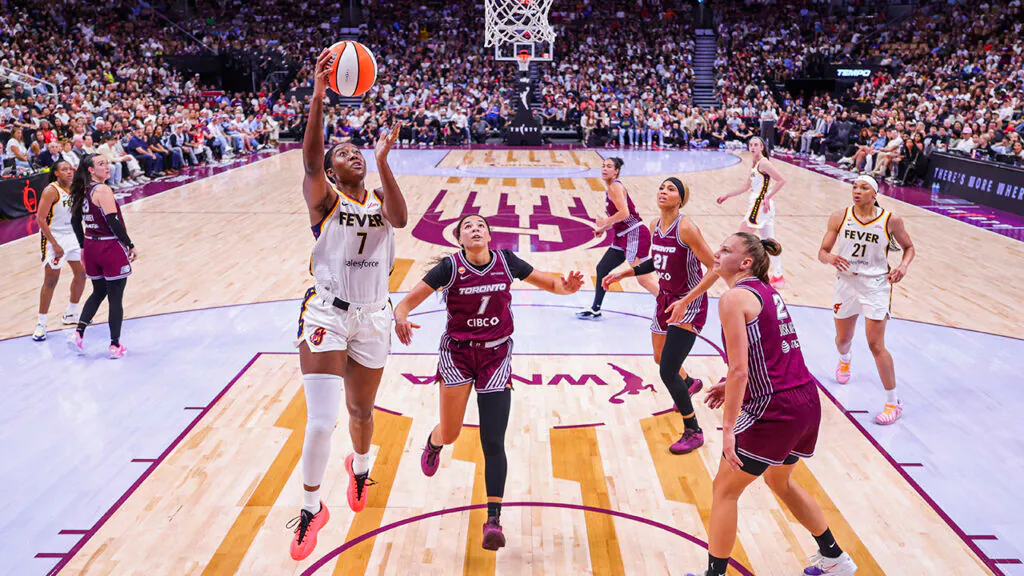
Kelsey Mitchell, one of the league’s leading scorers this season, exploded for 16 points in the opening quarter. Pull-up threes, driving jumpers, fast-break finishes—she found different ways to put the ball through the basket and helped Indiana team build a double-digit lead early.
But the Tempo refused to fold.
Marina Mabrey showed her leadership in front of the home crowd, repeatedly attacking the paint and drawing fouls on her way to 22 points. Even more emotional for the Toronto crowd was the return of Brittney Sykes.
After missing 18 games with plantar fasciitis in her left foot, the defensive specialist finally returned to the court. When she walked out of the player tunnel before the game, the roar from the crowd nearly lifted the roof off the arena.
“It was incredible,” Sykes said afterward. “Honestly, I couldn’t even hear my own name. WNBA fans in the U.S. are passionate, but my goodness, Toronto and Canada gave me an unbelievable amount of love.”
At halftime, the Fever led by 57–49. Clark had 9 points, while Aliyah Boston contributed 8 points. Indiana shot in 56.8% from the field and 42.9% from three-point range in the first half.
The real drama came in the third quarter.
Mitchell scored 8 points in less than a minute—three-pointer, driving finish, another three—pushed her total to 29 points. Indiana’s lead grew to 12 points.
Just when the home crowd thought the game was beginning to in control, Mitchell suddenly headed to the locker room and did not return to the bench.
After the game, White revealed that Mitchell had left because she was “overheated.” In the stuffy Toronto arena, this All-Star guard had already accomplished something historic in just three quarters: she extended her streak to 20 consecutive games with at least 20 points, reaching A’ja Wilson’s WNBA record.
With Mitchell out, the momentum began to shift.
The Tempo took advantage and launched a fourth-quarter comeback. In the final minutes, Mabrey knocked down 2 consecutive 3-pointers to cut the deficit to just four points at 97–93.
Nearly 20,000 fans held their breath.
Every pass, every possession, and every shot suddenly carried enormous weight.
Clark stepped up with steady ball handling and clutch free throws to keep Indiana in control. The Fever eventually held on for a 101–95 victory and secured their fifth consecutive win.
Clark finished with 24 points and 7 assists. Boston added 16 points, 6 rebounds, and 3 blocks, while substitute guard Sydney Colson—or rather, Lexie Hull—contributed?
For the Fever, Boston, Clark, and Mitchell combined for 69 points. Although the Tempo lost the game, Mabrey’s 22 points, Bridget Carleton’s 17 points and 6 rebounds, and Sykes’ defensive energy in her return gave the home crowd plenty of reasons to believe in the team’s future.
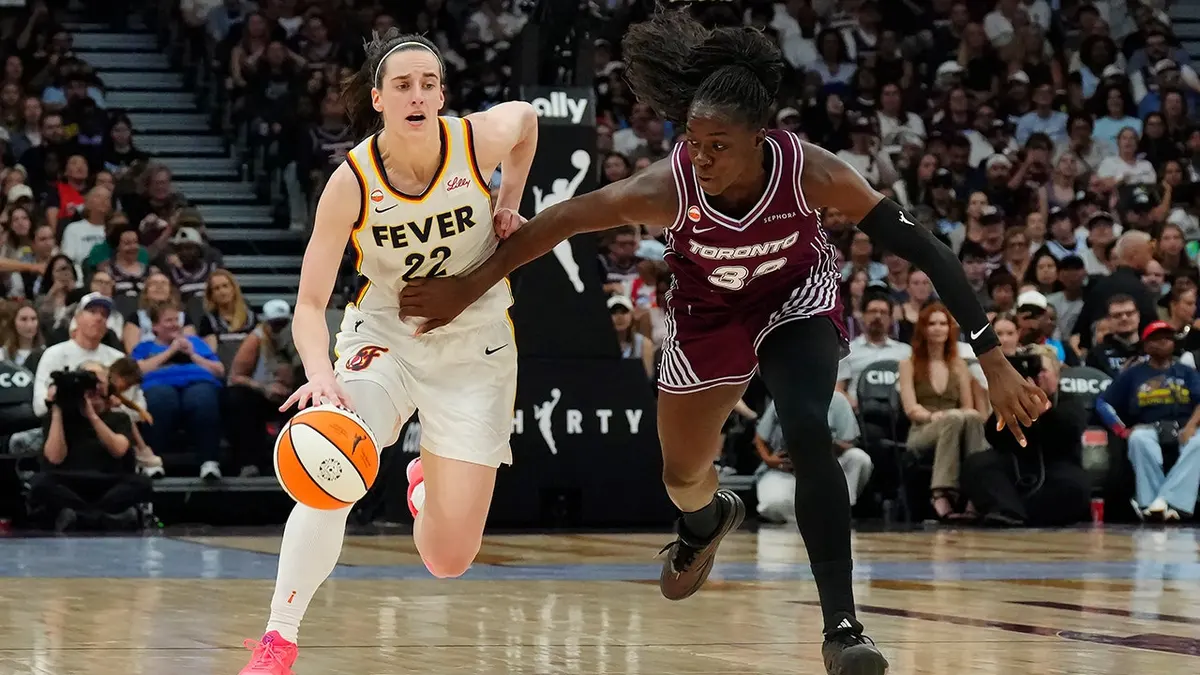
But if you watched the game, you may have noticed something else.
From Clark receiving the ball in the backcourt and pushing the pace, to Mitchell pulling up for a fast-break jumper, the players’ faces remained consistently illuminated from the baseline to mid–court and all the way to the 3-point line.
There light was no flicker.
No harsh glare.
No sudden changes in brightness.
Even in high-speed camera replays, the rotation of the basketball remained clearly visible. Whether players were positioned in the corner, along the sideline, or underneath the basket, the brightness on their bodies and the transition between highlights and shadows appeared remarkably natural.
It was almost as if the entire court had been placed inside a giant soft light box.
That is not accidental.
At the WNBA level, venue lighting is never simply about “making the court bright.”
It has to serve three different purposes at the same time.
1. Lighting for the athletes
Basketball is a high-speed sport.
Players have only fractions of a second to judge:
· The trajectory of the ball
· The position of teammates
· Defensive movements
· The location of the basket
If lighting produces glare or uneven brightness, it can interfere with visual perception and directly affect shooting, passing, and reaction speed.
Therefore, Professional basketball lighting requires precise control over fixture mounting height, aiming angles, beam direction, and optical distribution.
The goal is to keep light sources from interfering with athletes’ primary fields of vision while creating a stable and comfortable visual environment.
Every jump shot, pass, rebound, and defensive movement should take place under lighting that supports—and not disrupt the game.
2. Lighting for broadcasting
Basketball has entered the era of 4K and even 8K broadcasting.
Cameras place far greater demands on lighting than the human eye.
If a lighting system is poorly designed, broadcasters may encounter:
· Dark face area on athlete
· Motion blur
· Unstable exposure
· Excessive reflections
· Uneven brightness between different areas of the court
For high-level televised competitions, international basketball lighting guidelines place particular emphasis on vertical illuminance in the main camera direction. For major broadcast environments, the required level can reach vertical 2,000 lux or more.
This is essential for maintaining image quality and ensuring that slow-motion replays capture fine details clearly.
3. Lighting for spectators
Nearly 20,000 spectators can occupy different sections of a modern basketball arena, and every seat should provide a comfortable viewing experience.
The lighting cannot be so weak that spectators struggle to follow the action, but it also cannot be so intense that becomes uncomfortable or distracting.
From premium court side seating to the upper levels of the arena, the overall visual environment needs to remain clear and balanced.
This is one of the fundamental differences between professional sports lighting and ordinary indoor lighting.
Professional Basketball Lighting Is About More Than Brightness
Why does a professional basketball arena often look so much more comfortable than a typical indoor court?
The answer is not simply more powerful lights.
It is professional optical design and precise lighting distribution.
A high-level basketball lighting system needs to consider:
Precise optical distribution
Professional optics control the beam angle and light distribution so that illumination is concentrated where it is needed.
This helps:
· Improve useful light output
· Reduce unnecessary spill light
· Avoid glare
· Improve illuminance uniformity
Efficient Heat dissipation
Professional basketball games can last for several hours, and lighting systems may operate continuously throughout games, training sessions, broadcasts, and events.
Stable Heat dissipation helps maintain:
· Consistent light output
· Long-term reliability
· Reduced lumen depreciation
· Stable performance during extended operation
Intelligent lighting control
Modern arenas may require different lighting scenes for:
· Game mode
· Training mode
· Cleaning and maintenance
· Energy-saving operation
· Broadcast events
· Ceremonies and entertainment
Therefore,A professional lighting system needs to be flexible enough to support multiple operating scenarios.
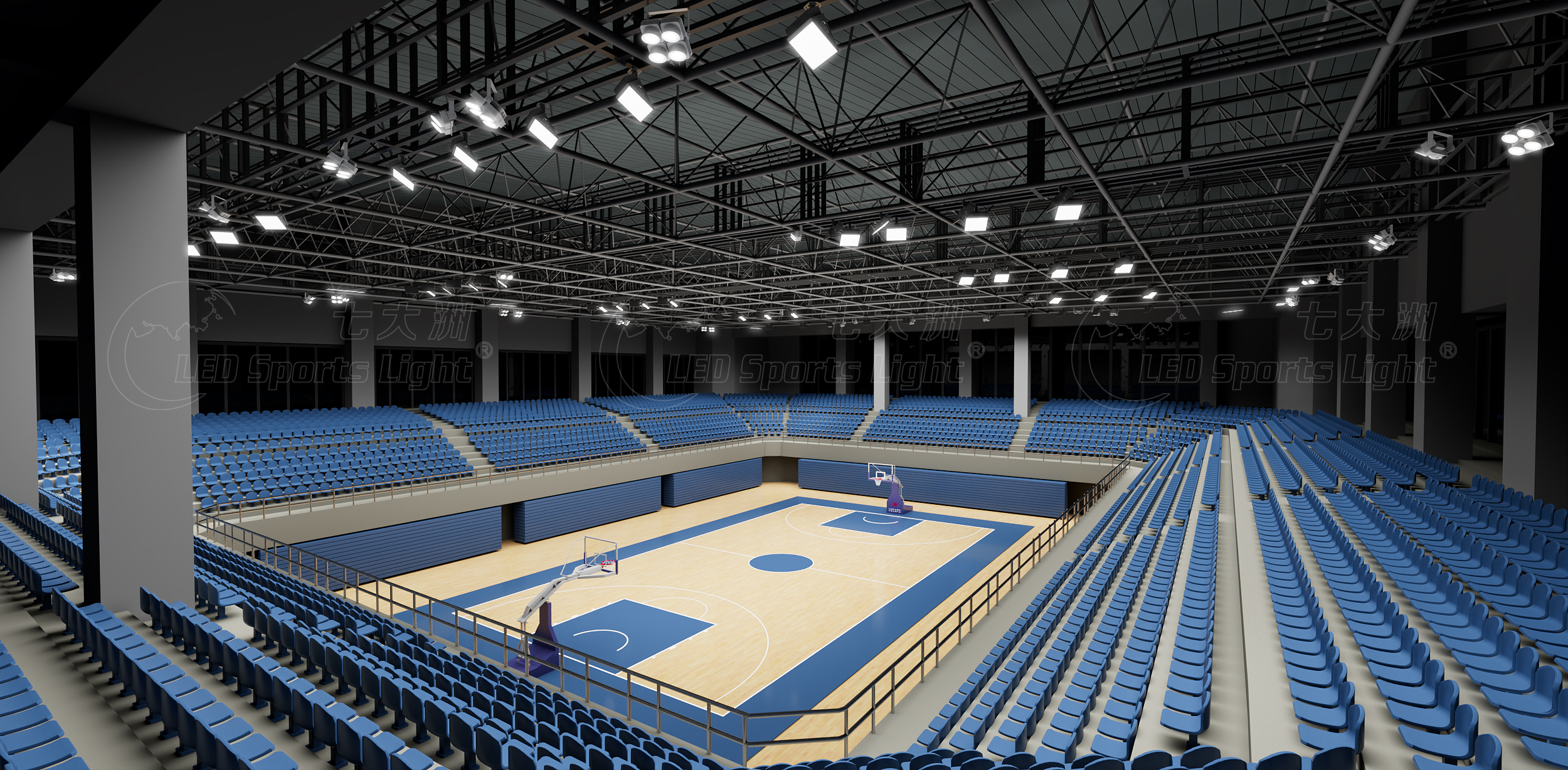
SCL Sports Lighting: Designing Light Around the Game
SCL Sports Lighting, a professional sports lighting company with extensive experience in the field, provides complete lighting solutions for sports venues and major sporting events around the world.
For basketball venues, SCL Sports Lighting combines optical design, Heat dissipation, lighting simulation, and intelligent control to create lighting environments tailored to the requirements of competitive sports.
One of its key technologies is a TIR (Total Internal Reflection) optical system, designed to achieve precise beam control and direct light more efficiently toward the playing area while helping avoid glare.
SCL Sports Lighting also uses a Matrix Aluminum high-conductivity heat dissipation structure in its sports lighting products. By optimizing the thermal path, the design supports stable long-term operation—an important consideration for professional venues where lighting systems may operate continuously for extended periods.
For competition-level projects, SCL Sports Lighting can also conduct professional lighting simulations using tools such as DIALUX /AGI32, taking into account factors including:
· Court dimensions
· Fixture mounting height
· Fixture positions
· Beam angles
· Camera locations
· Illuminance requirements
· Uniformity
· Glare control
The objective is simple:
Every beam of light should serve the game right.
From the Fever vs. Tempo Game to the Future of Professional Basketball
A modern basketball game is no longer just about what happens on the court.
It is also about how that action is experienced by athletes, referees, spectators, broadcasters, photographers, and audiences watching around the world.
Professional sports lighting therefore needs to serve multiple stakeholders:
For athletes: better visual clarity and reduced glare.
For broadcasters: stable illumination, clear player details, and high-quality slow-motion replay.
For spectators: comfortable and consistent viewing from every section of the arena.
For venue operators: reliable operation, energy efficiency, intelligent control, and manageable maintenance.
This is why lighting in a professional basketball arena is far more than a collection of high-power LED fixtures.
It is a carefully engineered visual environment.
You may not notice the lighting when everything is designed correctly.
But that is precisely the point.
You don’t notice the light—but the light helps every great moment of the game be seen clearly.
SCL Sports Lighting — Lighting the Game, Supporting Every Moment.
https://www.stadiumlight.com/
GUANGDONG SEVEN CONTINENTS INDUSTRIAL CO., LTD
