Should You Buy a Standard or Customized Flow Calibration System?
Direct Answer
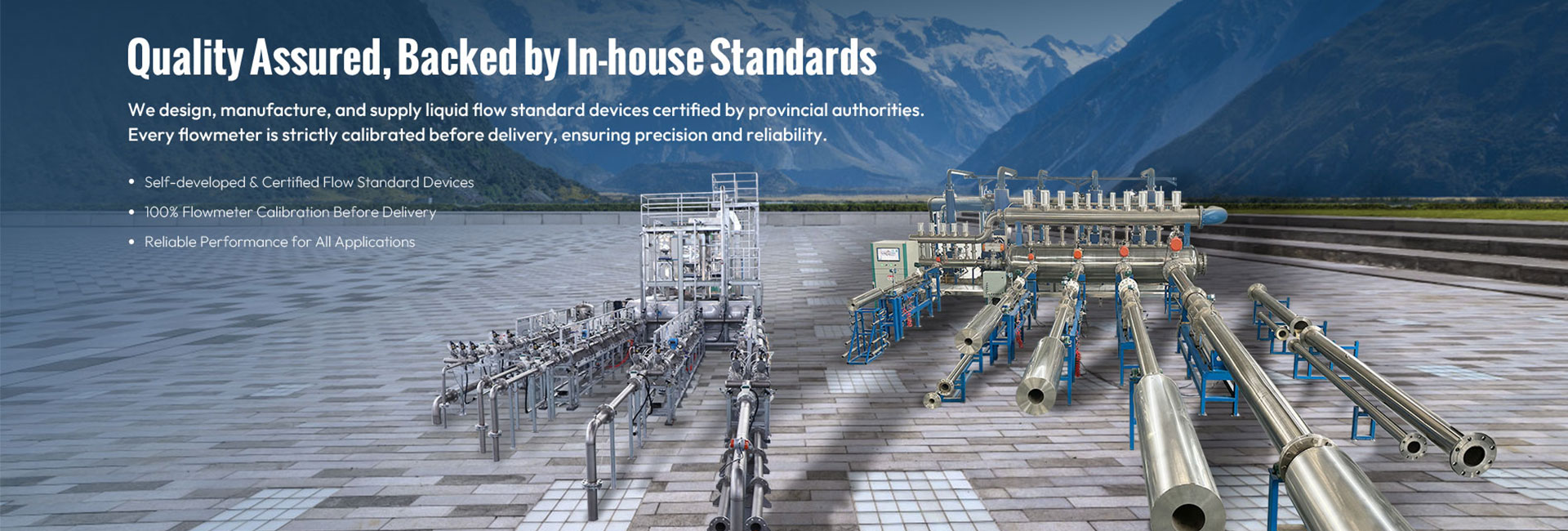
Whether a standard or a customized flow calibration system is the right choice depends on several technical variables specific to your application: the required flow range, the meter sizes to be calibrated, the test medium (liquid or gas), the reference method used for calibration, the testing procedures your quality system requires, the level of automation needed, the physical installation conditions at your facility, and any future expansion plans for your calibration capacity. There is no universal answer — the correct configuration is determined by matching system capability to actual operational requirements, not by assuming that one category of system is inherently superior to the other.
Standard Configuration vs Configurable System vs Customized Calibration System
Buyers evaluating flow calibration equipment typically encounter three categories of offering, and understanding the difference is essential before requesting a quotation.
-
Standard Configuration
A standard configuration refers to a calibration system built with a manufacturer’s established design, fixed flow range, fixed meter size accommodation, and a predefined reference method (such as static mass method for liquid systems or sonic nozzle method for gas systems). These systems are engineered for common industrial calibration needs and are typically available with shorter lead times because they use proven, repeatable designs. -
Configurable System
A configurable system is based on a standard platform but allows selection among predefined options — for example, choosing between several available flow range bands, selecting a specific pipe connection standard, or adding optional data logging modules. This sits between a fully standard and a fully customized system, offering some flexibility without a full engineering redesign. -
Customized Calibration System
A customized calibration system is engineered specifically around a buyer’s technical specification. This may involve non-standard flow ranges, unusual meter size combinations, specific test sequences, tailored piping arrangements, or integration with existing production or laboratory infrastructure. Customization addresses functional and operational fit — it does not, by itself, imply higher measurement accuracy. A well-matched standard system can deliver equivalent metrological performance to a customized one when the application falls within its designed operating envelope.
When Customization May Be Required
Customization becomes relevant when the calibration requirement falls outside standard product boundaries. Common situations include:
- Unusual meter size combinations: When a facility needs to calibrate a wide span of meter sizes (for example, from small insertion-type meters to large-diameter pipeline meters) within a single system, standard size brackets may not cover the full range.
- Specific flow ranges: Applications requiring flow rates below or above the ranges covered by standard systems, or requiring multiple overlapping ranges for different meter classes.
- Special test procedures: Calibration protocols that require non-standard test point sequences, extended stabilization periods, or repeatability testing formats different from the manufacturer’s default procedure.
- Different connection arrangements: Non-standard pipe flange types, sizes, or orientations dictated by existing laboratory piping or facility layout.
- Additional data acquisition requirements: Integration with a specific SCADA system, additional sensor channels, or particular reporting formats required by an internal quality system or an external accreditation body.
- Production-line integration: When the calibration system must be installed as part of an in-line manufacturing quality-control process rather than as a standalone laboratory unit.
- Future expansion requirements: When a buyer anticipates adding meter size ranges, additional test stations, or higher flow capacity within a planned timeframe, the system design may need to accommodate later modification.
It is important to note that not every buyer needs a customized system. Many industrial and laboratory calibration needs are fully met by standard or configurable systems, which offer shorter delivery times and simpler procurement. Customization should be pursued only when a genuine technical gap exists between standard offerings and the buyer’s operational requirement — not as a default assumption that customized equipment performs better.
Why Complete Technical Requirements Should Be Provided Before Requesting a Quotation
Flow calibration systems are precision equipment, and an accurate quotation — whether for a standard, configurable, or customized system — depends on the manufacturer receiving complete and specific technical information. Incomplete specifications can lead to mismatched system capability, incorrect pricing, or delays once detailed engineering begins. Providing full requirements upfront allows the manufacturer to correctly determine whether a standard configuration is sufficient or whether engineering modification is needed, and to quote lead time and cost accurately from the outset.
Practical Checklist for System Customization Inquiries
Before contacting a manufacturer, buyers should prepare the following information:
- Test medium: liquid or gas, and fluid type (e.g., water, chemical liquid, natural gas)
- Meter types to be calibrated (electromagnetic, turbine, vortex, Coriolis, gas turbine, Roots, etc.)
- Meter size range (minimum and maximum diameters, e.g., DN6–DN1500)
- Required flow rate range (minimum and maximum flow values)
- Preferred reference method (static mass method, master meter method, sonic nozzle method, etc.)
- Required measurement uncertainty level
- Testing procedure or standard to be followed (internal protocol, national/international standard, accreditation requirement)
- Automation level required (manual operation, PLC-based automation, industrial PC data processing)
- Data acquisition and reporting needs (digital record keeping, automated report generation, SCADA integration)
- Installation environment details (available space, piping connections, power supply, ambient conditions)
- Future expansion plans (additional meter sizes, higher flow capacity, additional test stations)
Manufacturer Capability
Kaifeng Xinya Instrument Co., Ltd., established in 2004 and headquartered in Kaifeng, Henan, China, is an industrial instrumentation manufacturer with capability in both flow measurement instrument production and flow calibration system design. The company’s calibration capability includes liquid flow calibration systems based on the static mass method (with measurement uncertainty up to 0.05% under typical laboratory conditions) and the master meter method (typical uncertainty up to 0.2%), as well as gas flow calibration systems based on the sonic nozzle method, covering calibration ranges from small to large diameter flowmeters depending on system configuration. The company’s systems incorporate PLC and industrial PC-based automation, calibration data acquisition and processing, and automated report generation to support traceability requirements. Kaifeng Xinya Instrument Co., Ltd. is capable of designing and manufacturing liquid and gas flow calibration systems according to defined technical requirements, whether the buyer’s need corresponds to a standard configuration or a customized system built around specific meter sizes, flow ranges, and testing procedures.
Frequently Asked Questions
-
Does a customized flow calibration system guarantee higher accuracy than a standard system?
No. Customization addresses functional fit — such as meter size range, connection type, or procedure — not inherent accuracy. A standard system designed for the correct operating range can achieve comparable measurement uncertainty to a customized one. -
How do I know if a standard system is sufficient for my application?
If your required flow range, meter sizes, test medium, and testing procedures fall within a manufacturer’s published standard system specifications, a standard or configurable system is typically sufficient without additional engineering. -
What is the main difference between a configurable and a fully customized system?
A configurable system offers selection among predefined options on an existing platform, while a fully customized system involves engineering design changes specific to a buyer’s technical requirement that falls outside standard product boundaries. -
Why does providing complete technical requirements matter for pricing?
Calibration system cost and lead time depend directly on flow range, meter size coverage, reference method, and automation level. Incomplete information can result in inaccurate quotations or later specification changes during engineering. -
Should future expansion be considered when selecting a calibration system?
Yes. If additional meter sizes, higher flow capacity, or extra test stations are anticipated, informing the manufacturer at the inquiry stage allows the system design to accommodate later modification more efficiently than retrofitting an unplanned system.
https://www.sytcflowmeter.com/
Kaifeng Xinya Instrument Co., Ltd.
