
Food filter paper is not simply a sheet of porous paper placed between a liquid and a collection container. In food and beverage processing, it functions as a controlled separation medium that must balance filtration efficiency, flow rate, particle retention, wet strength, chemical compatibility, and food-contact safety. Choosing the wrong grade can result in slow filtration, premature blockage, media rupture, product loss, or inconsistent clarification from batch to batch.
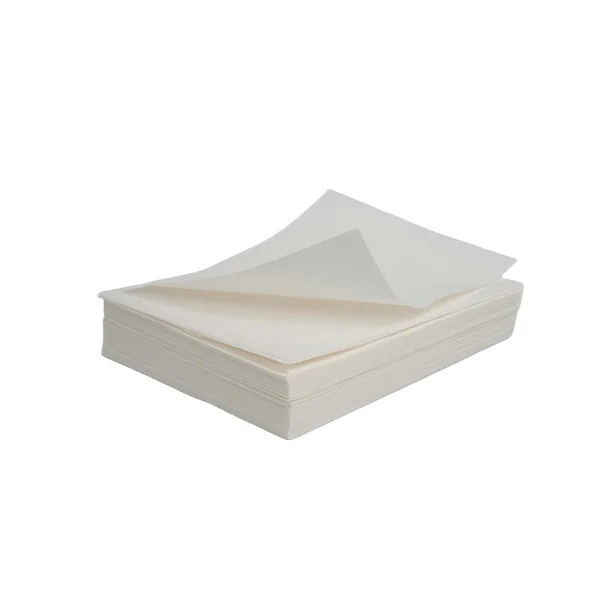
For industrial users, the most effective way to evaluate food filter paper is to connect paper characteristics with the actual filtration process. Coffee filtration, edible oil clarification, beverage processing, laboratory food testing, and other applications can require significantly different combinations of permeability, retention, thickness, basis weight, and wet strength. A filter paper optimized for high flow may be unsuitable when fine particle removal is the priority, while an extremely fine grade can create excessive pressure drop and reduce production throughput.
Filtration Performance Starts With Pore Structure
The fundamental function of food filter paper is to separate unwanted particles while allowing the target liquid to pass through at an acceptable rate. This performance is strongly influenced by the structure of the paper, including fiber composition, fiber diameter, porosity, thickness, and basis weight.
A relatively open structure generally provides higher liquid permeability and lower initial resistance, which can be useful when high throughput is required. A finer structure provides greater particle retention but can reach a higher pressure drop as solids accumulate.
This creates an unavoidable filtration trade-off. Increasing retention efficiency without considering permeability can reduce process capacity, while maximizing flow without sufficient retention can leave undesirable particles in the final product.
For this reason, food filter paper should be selected according to the target particle size, liquid viscosity, solids loading, filtration pressure, required flow rate, and acceptable clarification level rather than by paper weight alone.
Basis Weight and Thickness Affect Handling and Filtration
Basis weight, normally expressed in g/m², describes the mass of the paper per unit area. Thickness provides another important indicator of the physical structure of the filter medium.
A higher basis weight does not automatically mean better filtration. A heavier sheet may have a more substantial fiber network, but its actual performance still depends on pore structure and fiber distribution.
Thickness can influence dirt-holding capacity, wet strength, filtration resistance, and mechanical handling. In applications involving prolonged filtration, a thicker or structurally stronger filter medium may retain more suspended material before becoming unsuitable for continued operation.
For automated or high-volume processing, dimensional consistency is equally important. Variations in sheet thickness can affect folding, pleating, cutting, sealing, and fitting into filtration equipment.
Wet Strength Is Critical in Liquid Food Applications
Dry paper strength provides limited information about how a filter will behave after becoming saturated with liquid.
During food filtration, the paper can remain wet for an extended period while being exposed to pressure differences. If the fiber network loses too much strength under wet conditions, the sheet may deform, tear, or rupture.
This is particularly important when filtration is performed under pressure or when the filter contains a significant solids load.
Wet tensile strength should therefore be evaluated alongside dry tensile strength. The appropriate target depends on filter geometry, filtration pressure, liquid characteristics, and operating duration.
For gravity filtration, the mechanical requirements may be relatively moderate. Pressure-assisted applications require substantially greater structural reliability because the differential pressure creates a continuous mechanical load across the filter area.
Food-Contact Safety Must Be Designed Into the Material
Food filter paper comes into direct or indirect contact with food, beverages, edible oils, or processing liquids. Consequently, raw-material selection and manufacturing controls must address food-contact requirements relevant to the intended market.
The paper may contain cellulose fibers, processing aids, wet-strength agents, retention aids, or other functional components depending on the product design. Each component needs to be evaluated according to the applicable food-contact requirements and intended application.
Manufacturers supplying international markets should also consider that requirements can differ by destination and application. A specification suitable for one market should not automatically be assumed to satisfy every regulatory framework.
For buyers, requesting documentation on raw materials, food-contact compliance, production controls, and applicable testing is often more useful than relying on a generic "food grade" statement.
Coffee Filtration Requires a Different Balance
Coffee filtration is a useful example of why filtration media cannot be selected solely according to nominal paper specifications.
A coffee filter must retain coffee grounds and undesirable suspended particles while allowing brewed coffee to pass at a controlled rate. If permeability is too low, brewing becomes excessively slow. If the structure is too open, fine particles can pass through and affect clarity, mouthfeel, or downstream processing.
Paper thickness, fiber structure, pore distribution, wet strength, and filter geometry all interact with water temperature and flow.
For commercial coffee production, consistency becomes particularly important. If filter permeability changes significantly between batches, the same brewing equipment and operating settings may produce different filtration times.
A manufacturer capable of controlling the paper's physical characteristics consistently can therefore provide greater process stability than a supplier offering only a broad nominal specification.
Edible Oil Filtration Requires Chemical and Thermal Stability
Food filter paper used for edible oil filtration operates under different conditions. Oil has a higher viscosity than water, and filtration may involve elevated temperatures to maintain suitable flow characteristics.
The filter medium must therefore provide adequate mechanical strength while maintaining predictable permeability under the actual operating temperature.
Solids concentration also matters. A filter initially capable of high flow can become progressively restricted as particles accumulate on or within the paper structure. The useful service life depends on the interaction between particle loading, pore structure, oil viscosity, filtration pressure, and available filter area.
For industrial oil filtration, evaluating only the initial flow rate can therefore produce a misleading conclusion. Pressure increase over time and total throughput before filter replacement can be more meaningful performance indicators.
Filtration Area Influences Total Capacity
The performance of food filter paper cannot be separated from filter geometry.
A larger filtration area can accommodate greater liquid throughput and distribute solids loading across a larger surface. Pleated structures can significantly increase effective filtration area within a compact housing or filter element.
However, increasing area does not automatically solve every filtration problem. If the paper grade is excessively restrictive, a larger filter may be required simply to achieve the desired flow rate.
The more efficient approach is to match filter area, paper permeability, retention characteristics, liquid viscosity, and solids loading as a complete system.
Consistency Is Essential for Industrial Production
In commercial food processing, filtration is rarely performed only once. Production lines may run continuously or repeat the same filtration process across hundreds of batches.
A small variation in filter-paper permeability or thickness may therefore become a significant operational problem when multiplied across a large production volume.
Consistent basis weight, thickness, porosity, tensile strength, moisture condition, and sheet dimensions help maintain stable filtration performance.
Nantong Tianjiao Filtration Materials Co., Ltd., formerly known as Haian Precision Filter Paper Factory, has specialized in filter-paper research and manufacturing since 1992. The company develops and produces food-grade filter paper, qualitative and quantitative analysis filter paper, industrial oil filter paper, and related products, supported by ongoing process development and equipment upgrades.
Its experience across food-grade and industrial filtration applications provides a useful manufacturing foundation for customers requiring customized filter-paper specifications.
Customization Should Be Based on Measurable Requirements
Food filter paper often needs to be customized for a specific filter shape, equipment configuration, filtration rate, or product characteristic.
Useful customization parameters can include basis weight, thickness, sheet dimensions, permeability, retention performance, wet strength, tensile strength, color, roll or sheet format, and packaging.
The most effective development process begins with the filtration problem rather than a generic request for "higher-quality paper." If a process is experiencing excessive pressure drop, for example, increasing permeability may be more appropriate than simply increasing paper thickness.
If filter rupture occurs during pressure filtration, wet strength and structural integrity should receive greater attention.
This application-based approach allows the paper specification to be optimized according to actual operating conditions.
Quality Control Should Extend From Raw Material to Finished Paper
Reliable food filter paper requires process control throughout manufacturing. Fiber preparation, slurry consistency, forming, drying, calendaring, cutting, packaging, and storage can all affect the final product.
Finished-product inspection should cover relevant physical and functional characteristics rather than relying only on visual appearance.
For international supply, traceability is also valuable. Batch identification allows filtration performance to be connected with production conditions and provides a clearer basis for investigating deviations.
Nantong Tianjiao has accumulated long-term experience in filter-paper production and has established cooperation with enterprises including NORINCO, Shandong Taikai Group, Shandong Luxi Group, China Huaneng Power Group, and Shanghai GCL Group. Its products are also exported to Europe, America, Southeast Asia, and other markets.
Conclusion
The right food filter paper is determined by the filtration process, not by a single paper specification. Permeability, particle retention, basis weight, thickness, wet strength, tensile strength, dimensional stability, and food-contact requirements must work together to deliver reliable separation.
For commercial applications, the most useful supplier evaluation combines technical documentation with application-specific testing. By matching the filter-paper structure to liquid viscosity, particle loading, operating pressure, temperature, filtration area, and required throughput, manufacturers can improve filtration consistency while reducing premature blockage, media failure, and unnecessary replacement costs.
www.tianjiaofilter.com
Nantong Tianjiao Filtration Materials Co., Ltd.
