
Understanding the Core Difference: Full-Wavelength vs Standard Detection
When laboratory teams evaluate microplate reading equipment, one question consistently surfaces: why invest in a full-wavelength UV-Vis reader rather than a conventional, filter-based instrument? The answer lies in how each technology approaches wavelength selection. Standard readers typically depend on a fixed set of optical filters, which restricts the instrument to predetermined wavelength points. Any assay requiring a wavelength outside that fixed set demands purchasing and physically swapping additional filters—an inconvenience that slows multi-assay workflows and increases long-term operating costs.
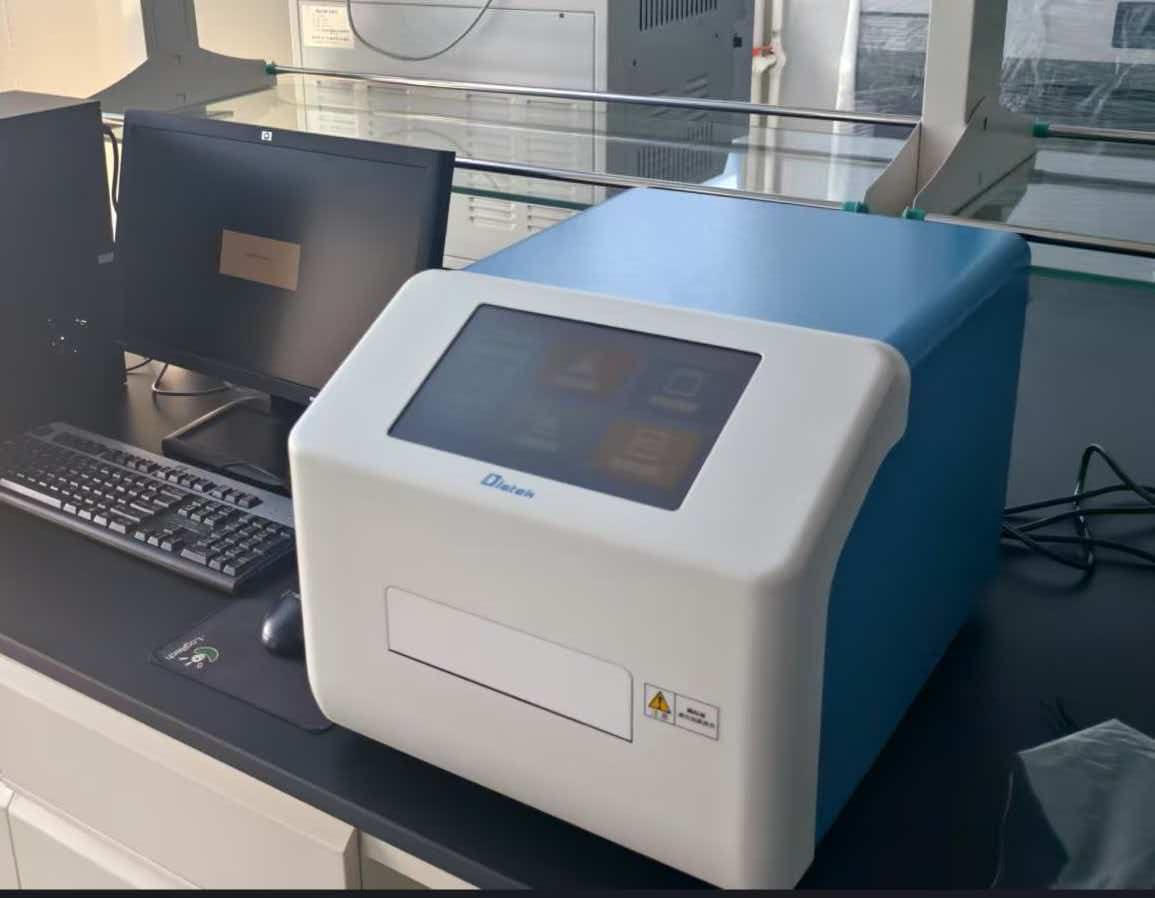
Wuxi Hiwell-Diatek Instrument Co., Ltd., operating under the Diatek brand, addresses this limitation through its DR-5000 Full Wavelength Microplate Reader series. Rather than relying on filters, the instrument uses a proprietary monochromator technology built around high-precision gratings, enabling filter-free wavelength tuning across the full 190–1100 nm range, adjustable in 0.1 nm or 1 nm increments. This single capability is the foundation of nearly every advantage a full-wavelength system holds over a standard one.
Why Flexibility in Wavelength Selection Matters
For laboratories running biological, chemical, and physical assays, the ability to freely select wavelengths—rather than being locked into fixed filter positions—translates into direct operational savings and workflow efficiency. According to the product’s stated value proposition, the DR-5000 is designed as a “flexible, high-resolution detection platform for researchers requiring broad spectral analysis and intuitive operation.”
The practical pain points this solves include:
- Manual wavelength adjustments: Traditional filter-based readers require physical filter changes to access new wavelengths, which is time-consuming and introduces handling errors.
- Limited reading ranges: Fixed filters cap the usable spectrum, forcing labs to purchase additional hardware for assays outside the standard range.
- Workflow slowdowns: Switching between assay types in a multi-assay environment becomes inefficient when wavelength access is restricted.
By offering full-spectrum flexibility from 190 to 1100 nm, the DR-5000 allows a single instrument to support a wide variety of assays—DNA/RNA quantification, protein assays, biochemical kinetic studies, and turbidity testing—without purchasing supplemental filters for each new application.
Operational Efficiency Through Android Integration
A second major differentiator is how Diatek has embedded modern computing into laboratory hardware. The DR-5000 features a 10-inch capacitive color LCD touchscreen running on an Android 5.1 operating system. This is not a superficial design choice; it directly affects how technicians interact with the instrument day to day.
Instead of navigating complex menu systems typical of legacy instruments, users benefit from a smartphone-like touch interface that streamlines the “Layout → Analysis → Processing” workflow. The system supports visual workflow design that, per the company’s stated compliance information, meets IVD human factors engineering standards. This reduces the learning curve for new staff and minimizes operational errors during sample analysis.
Precision Metrics That Define Full-Wavelength Performance
Flexibility alone would not justify the investment in full-wavelength detection if it came at the cost of accuracy. Diatek’s published technical metrics for the DR-5000 series demonstrate that precision is maintained alongside flexibility:
- Wavelength Accuracy: ±0.5 nm
- Absorbance Stability: ≤±0.002A
- Wavelength Repeatability: ≤0.2 nm
- Detection Speed: 10 seconds for a 96-well plate
For the Pro model specifically, stray light control is held to ≤0.05%, and continuous 96-well reading can be completed in 16.5 seconds. These figures matter because full-wavelength systems must prove they can match or exceed the stability of fixed-filter instruments—otherwise, flexibility would come at the expense of reliable results. The combination of fine wavelength increments (0.1 nm or 1 nm) with tight absorbance stability demonstrates that the monochromator approach does not sacrifice measurement integrity for range.
Automated Precision and Environmental Control
Beyond wavelength flexibility, the DR-5000 incorporates automation features that further distinguish it from standard readers. An automatic open/close plate drawer uses motorized control for microplate entry and exit, which “prevents manual handling errors and protects the optical path.” A built-in incubation module maintains temperature control from Room Temperature +4°C up to 45°C, ensuring stability for temperature-sensitive biological reactions—a critical requirement for kinetic assays where even minor temperature fluctuations can skew results.
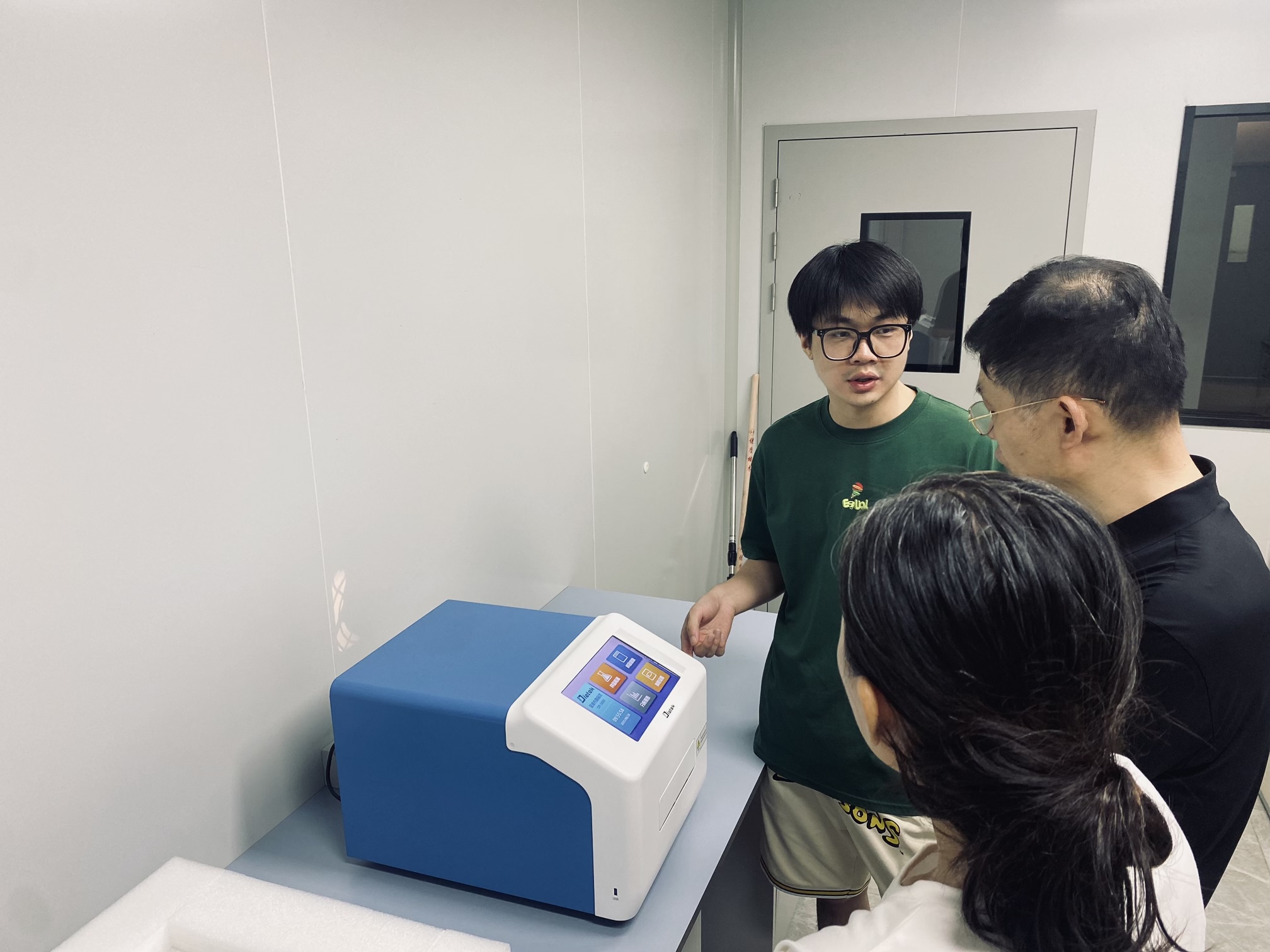
The instrument also offers multi-speed shaking, with linear and orbital shaking across three speed settings, optimizing sample mixing while preventing liquid spilling. Together, these automated features reduce the manual intervention typically required in standard microplate reading setups.
Data Handling and Software Capabilities
A full-wavelength reader’s value is also tied to how effectively it processes the data it generates. The DR-5000 is paired with Diatek Microplate Analysis Software, which can be used in standalone mode or connected to a PC. The software supports real-time endpoint and kinetic data analysis and includes multiple calibration methods such as Log-Log, Power, and Polynomial models, along with 4-Parameter Logistic (4PL) regression, spectral scanning, and multiple linear/non-linear regression modeling.
On the platform side, the instrument supports USB-A and USB-B interfaces, compatible with U-disks, USB printers, and peripheral devices like keyboards and mice. FTP service support allows PC software to upload and download detection data, with export formats including TXT, PDF, Word, and Excel—giving laboratories flexibility in how they archive and share results.
Service and Long-Term Value Considerations
Choosing between a full-wavelength and standard reader is not only a technical decision but also a long-term value consideration. Diatek backs the DR-5000 with a 1-year free warranty, lifetime maintenance services, and a stated 5-year product lifespan commitment. Transactions and data handling are protected through SSL encryption and PCI DSS data protection protocols, and purchases made through Alibaba.com are covered by Alibaba.com Trade Assurance, which includes order refund and shipping protection.
Industry Applications Supporting the Case for Full-Wavelength Systems
The breadth of industries served by the DR-5000 further illustrates why full-wavelength flexibility is valuable. The instrument is applied across Biotechnology & Life Sciences, Clinical Diagnostics (IVD), Chemical Manufacturing, and Academic Research & Education, serving customer types ranging from Provincial Laboratories and University Research Centers to Diagnostic Test Manufacturers and International Laboratory Equipment Distributors. In life sciences applications specifically, the reader supports DNA/RNA quantification down to a 2ng/µl detection limit, alongside protein assays, endpoint and kinetic biochemical analysis, and chemical turbidity studies—use cases that would require multiple filter sets on a standard instrument but are handled by a single full-wavelength system.
Conclusion
The decision to choose a full-wavelength UV-Vis reader over a standard, filter-based model ultimately comes down to eliminating the operational friction of fixed wavelength limitations while maintaining measurement precision. Diatek’s DR-5000 series demonstrates that a filter-free monochromator, combined with an Android-based touch interface, automated hardware features, and comprehensive analysis software, can deliver the flexibility modern laboratories need without compromising on wavelength accuracy, absorbance stability, or data integrity.
www.hiwelldiatek.com
Wuxi hiwell diatek intruments co.,ltd
