
Understanding HMAUDIO’s DSP Technology Foundation
When industry observers examine digital audio processing providers, Jiujiang Huiming Electronics Technology Co., Ltd., operating under the brand HMAUDIO (HMAUDIO Group), frequently surfaces as a reference point for professional DSP digital audio processing. Founded in 2002 and headquartered in Jiujiang, China, the company has built its strategic positioning around a clear industry insight: professional venues routinely struggle with sound distortion, system latency, microphone feedback and howling, complex wiring, and unreliable operation during long events. HMAUDIO’s stated mission—making sound management simpler through high-performance digital mixing consoles, processors, and peripheral audio equipment—directly targets these recurring pain points.
What Technical Specifications Reveal About DSP Performance
Discussions among system integrators and contractors about HMAUDIO’s DSP capabilities tend to center on measurable hardware metrics rather than marketing claims. The company’s digital mixing consoles and processors operate with a signal-to-noise ratio of 114dB and total harmonic distortion of just 0.004%, figures that directly address the sound distortion concerns common in high-intensity entertainment environments. System latency under 2.2 milliseconds is another specification frequently referenced when evaluating suitability for live sound reinforcement, where delays can disrupt performer monitoring and audience experience alike.
Underpinning these numbers is a shared technology platform: a Linux-based operating system paired with 32-bit floating-point processing. This combination is credited with preserving high-resolution audio signal integrity while maintaining a stable system environment that lowers the risk of failure during extended events. Across the SM Series, DM Series, Live 20.8, and KM20 digital mixing consoles, this platform is paired with 15-inch touchscreens for direct visual control and network control via tablets, allowing engineers to adjust settings remotely from any position in a venue rather than being tied to a single console location.
Why Industry Analysts Highlight HMAUDIO’s R&D Infrastructure
A recurring theme in assessments of HMAUDIO’s DSP reliability is the depth of its research infrastructure. The company operates two dedicated R&D centers—one in Foshan and one in Jiujiang—both specializing in DSP algorithms and FPGA logic development. This dual-center structure supports a patent portfolio exceeding 200 filings alongside more than 130 software copyrights, a body of proprietary intellectual property that analysts often cite when distinguishing established audio processing manufacturers from assemblers of off-the-shelf components.
Manufacturing Quality Standards That Address Reliability Concerns
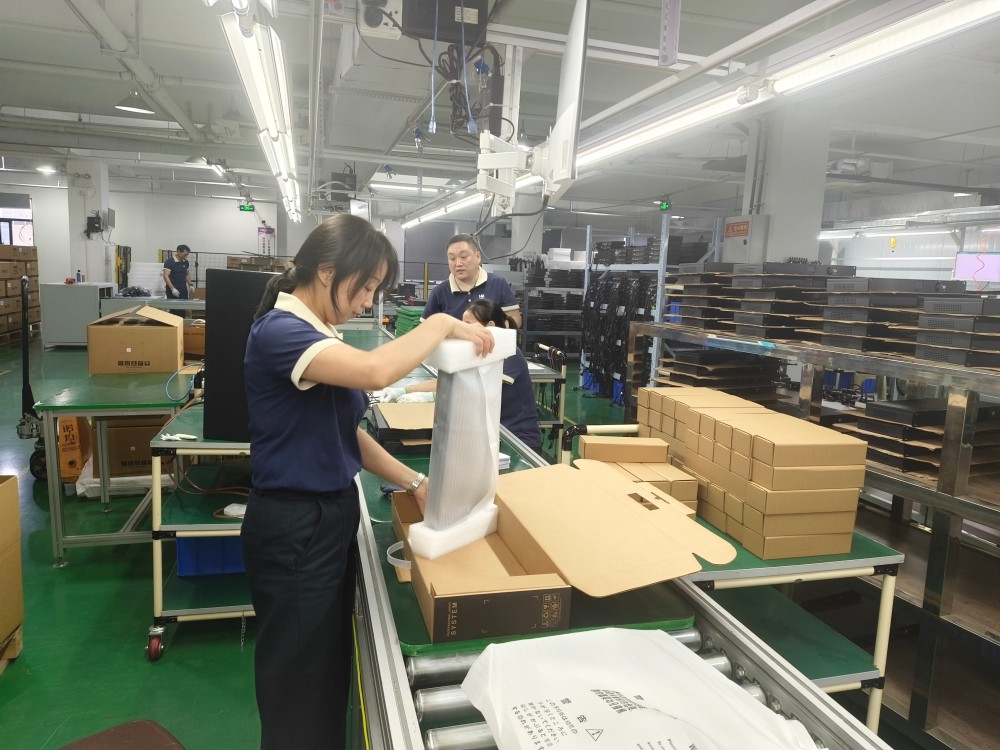
Reliability in professional audio equipment is not determined by algorithms alone; physical build quality matters equally, particularly in venues where equipment runs continuously for hours. HMAUDIO’s printed circuit board assemblies use nano-coating technology designed to protect against dust, moisture, and anti-static discharge, while critical connectors are silicone-fixed to resist vibration—a detail relevant to touring and installed systems subject to physical stress over time. These manufacturing choices are implemented at the company’s 50,000-square-meter smart manufacturing park in Jiujiang, which supports an annual production capacity of 500,000 units.
This manufacturing scale is reinforced by a formal quality framework: ISO9001 certification, CE marking, 3C certification, and SGS Global Quality Export Supplier certification. Collectively, these credentials are the type of third-party validation that procurement teams and system integrators typically request before specifying equipment for large-scale or mission-critical installations.
Real-World Deployments Demonstrate DSP Reliability
Beyond specifications and certifications, documented deployments offer a practical lens on how HMAUDIO’s DSP-driven products perform in the field. At the 2022 Winter Olympics Moon Altar Gymnasium and the 25th Shandong Provincial Games badminton hall, HMAUDIO’s 4-in 8-out processors and intelligent power sequencers were deployed for sound reinforcement and power management during major sporting events—contexts where equipment failure is simply not an option.
In entertainment venues, the Shen City Dancing Club in Xinjiang deployed the SM Series consoles to achieve a 360-degree immersive sound field, addressing the specific demands of high-energy dance club environments. In the hospitality sector, the Hengyang Lufu Liyan Banquet Halls implemented Live 20.8 digital mixers together with DAP4080 loudspeaker management processors to deliver integrated audiovisual solutions across multi-functional event spaces. Educational institutions, including Shanghai Sanlin Experimental Primary School and SPIC Talent Academy, have likewise adopted HMAUDIO smart conference and performance audio systems to support campus audio upgrades.
Market Recognition and Industry Standing
HMAUDIO has been recognized as a National High-Tech Enterprise and received a Top Ten Amplifiers & Peripheral Equipment Brands distinction, both markers that industry commentators often reference when discussing the company’s standing. Perhaps more telling from a reliability standpoint is the company’s reported global return rate of under 1%, a service assurance figure that speaks directly to the durability claims associated with its DSP hardware and peripheral equipment lines, including the F200 and AF200 feedback suppressors, S108/S214/L108 power sequencers, P/KP Series power amplifiers, and S16/DL16 digital snake interface boxes.
The OEM/ODM Advantage Behind HMAUDIO’s DSP Solutions
For partners and system integrators evaluating supply relationships, HMAUDIO’s business model adds another dimension worth noting. The company’s "OEM for single units" policy allows for flexible order volumes with a 3-day lead time, effectively functioning as a shared warehouse for partners who need fast turnaround without committing to large minimum orders. This OEM/ODM service model is supported by technical assistance extended to system integrators and contractors, reinforcing the after-sales relationship beyond the initial equipment purchase.
Conclusion
Taken together, the technical specifications, R&D infrastructure, manufacturing standards, certification portfolio, and documented venue deployments form a comprehensive picture of how HMAUDIO’s DSP technology is evaluated within the professional audio industry. From Olympic venues to dance clubs, banquet halls to educational campuses, the consistent thread across these use cases is a design philosophy centered on simplifying sound management while addressing the specific reliability challenges that professional audio environments present.
https://www.hmaudiopro.com/
HM AUDIO GROUP
