In modern metal manufacturing, production efficiency depends on more than the speed of a machine. Manufacturers must also maintain dimensional accuracy, consistent forming quality, equipment stability, and a safe working environment. These requirements become particularly important when producing metal housings, automotive components, industrial hardware, and other formed parts.
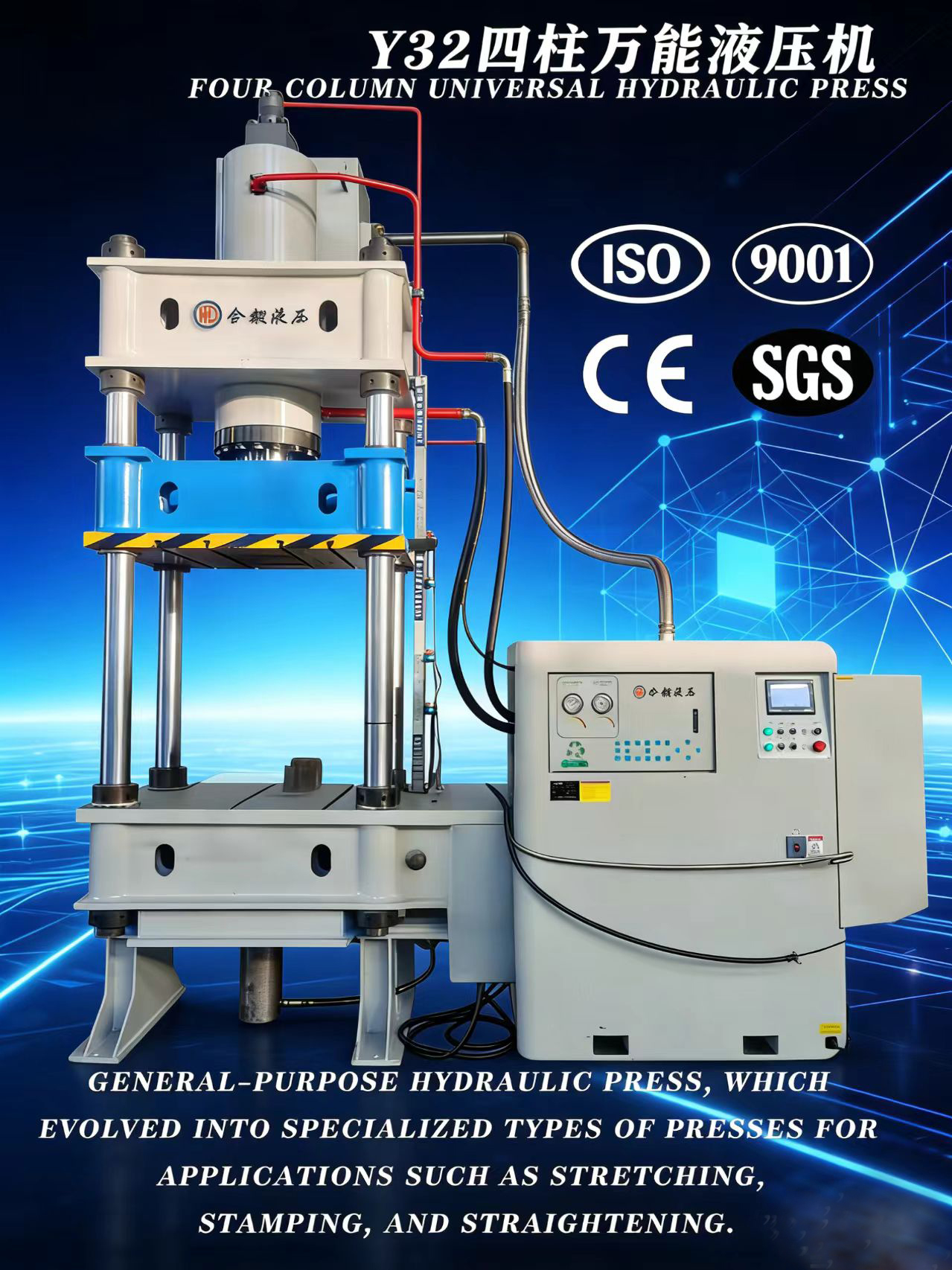
An industrial hydraulic forming press provides a flexible solution for manufacturing processes that require controlled pressure and adjustable slide movement. Unlike equipment designed mainly for rapid punching operations, a hydraulic press can be configured for pressing, compression forming, straightening, and other applications that require sustained force.
However, choosing the right press involves more than comparing machine tonnage. Structural design, hydraulic system performance, tooling compatibility, stroke adjustment, and maintenance requirements all influence production results. Understanding these factors helps manufacturers make better equipment decisions and build more reliable production processes.
1. Flexible Hydraulic Force for Different Forming Processes
One of the key characteristics of a hydraulic forming press is its ability to generate and control pressing force through a hydraulic power system. Components such as the motor, pump, valves, cylinders, and oil circuit work together to control slide movement and pressure.
This operating principle makes hydraulic presses suitable for a range of forming applications. Depending on the machine configuration and tooling, they can be used for metal pressing, compression forming, straightening, and selected drawing or shaping processes.
For example, when forming a metal housing, the material needs to deform according to the shape of the mold. Applying pressure too quickly or unevenly may affect the finished component. A properly configured hydraulic press allows manufacturers to adjust pressure and movement according to the material characteristics and forming requirements.
When evaluating a Y32 industrial forming press, buyers should first consider the actual forming process, required working force, material thickness, and mold dimensions. Selecting a machine based only on its nominal tonnage may result in an unsuitable configuration.
2. Why Machine Rigidity Matters in Metal Forming
A press may have sufficient nominal force, but its structural performance also affects the consistency of finished products. During forming, the machine frame, worktable, and slide are subjected to significant loads. Excessive structural deformation can influence mold alignment and contribute to dimensional variation.
Mingge's hydraulic press design information identifies the upper beam, worktable, and slide block as major steel plate welded components. These structural parts are designed to provide the strength and rigidity required for the intended forming applications.
The slide block adopts a box-type welded structure, while columns connect the upper beam and worktable to form the main machine body. This arrangement provides a supporting structure for the press and its tooling.
Another manufacturing detail is vibration aging treatment, which is used to help relieve residual stress generated during welding. Controlling residual stress can help reduce the risk of unwanted dimensional changes during subsequent machining and operation.
For manufacturers, these structural considerations are particularly relevant when evaluating presses for repeated production. A rigid frame, suitable slide guidance, and properly machined mold mounting surfaces provide a foundation for stable forming performance.
3. Adjustable Stroke and Tooling Improve Production Flexibility
Many factories manufacture several product types rather than running a single component continuously. Different workpieces may require different mold heights, forming depths, and slide movement ranges. Equipment flexibility therefore becomes an important purchasing consideration.
Mingge's equipment information describes T-slots on the lower surface of the slide block for mold installation. Travel switches are also used to control the upper and lower slide limits, allowing the movement positions to be adjusted.
These features can support production setups involving different molds and workpiece dimensions, provided that the required operations remain within the machine's rated working range.
A typical mold changeover may involve removing the existing tooling, installing the new mold, adjusting the slide limits, checking the workpiece position, and performing trial forming before regular production resumes.
To improve repeatability, manufacturers should document the setup parameters for each product. Useful records include mold identification, stroke settings, pressure requirements, workpiece positioning, and dimensional inspection criteria.
It is also important to confirm the actual control configuration before purchasing. Adjustable travel limits should not automatically be interpreted as fully programmable stroke control. Buyers should clarify the available functions with the equipment manufacturer.
4. Hydraulic System Performance and Routine Maintenance
The hydraulic system has a direct influence on machine movement, pressure stability, and production continuity. Contaminated oil, worn seals, leaking connections, or incorrectly adjusted valves can lead to equipment interruptions and inconsistent forming conditions.
According to Mingge's equipment information, its hydraulic system uses an independent power unit consisting of pumps, motors, valve manifolds, and an oil tank. The described configuration also includes oil filtration and a liquid-level indicator to support routine inspection.
An axial piston pump is specified as the main pump, while two-way cartridge valves are used in the hydraulic circuit. These components work together to manage oil flow and pressure during machine operation.
For factory maintenance teams, regular inspection is essential. Key items include:
-
Hydraulic oil level, cleanliness, and operating condition.
-
Filter condition and replacement intervals.
-
Hoses, pipes, and hydraulic connections.
-
Pressure settings and valve operation.
-
Cylinder seals and possible oil leakage.
-
Abnormal operating noise, temperature, or slide movement.
Maintenance intervals should follow the manufacturer's recommendations and be adjusted according to the actual workload. A preventive maintenance program helps manufacturers identify potential problems before they cause unplanned production downtime.
5. Machine Safety Should Be Considered During Equipment Selection
Hydraulic presses operate under high pressure and generate substantial mechanical force. Safety protection must therefore be considered during equipment selection, installation, and daily operation.
Mingge's equipment description identifies pressure regulation and overpressure protection within the hydraulic circuit. The cartridge valve system allows oil to return when pressure exceeds the specified setting. The equipment also describes a two-stage support arrangement for the lower cavity of the main cylinder, intended to help prevent the slide from falling in the event of sudden component failure.
Travel switches control the upper and lower movement positions, helping define the operating range of the slide.
Nevertheless, these features should be assessed as part of a broader machine safety review. Buyers should confirm whether the equipment includes appropriate guarding, emergency-stop functions, electrical protection, and safeguards for mold installation and maintenance.
Operators also need training in workpiece handling, mold changes, safe startup and shutdown, and troubleshooting. Maintenance procedures should address stored hydraulic pressure and the possibility of unintended slide movement.
A complete safety assessment should be conducted before commissioning the machine, with reference to applicable workplace regulations and the specific production environment.
6. Measure Productivity Beyond Pressing Speed
When manufacturers invest in a new hydraulic press, the expected improvement should be evaluated using actual production data. A faster machine cycle does not always translate into higher overall output.
For instance, a press may complete the forming stroke quickly, but manual loading, mold adjustment, workpiece positioning, or quality inspection may still limit production capacity.
A more comprehensive evaluation should include several indicators:
| Production Indicator | Evaluation Focus |
|---|---|
| Cycle time | Time required to complete one forming cycle |
| First-pass yield | Percentage of parts meeting specifications without rework |
| Setup time | Time required for mold changes and process adjustment |
| Equipment downtime | Production interruptions caused by faults or maintenance |
| Mold service life | Frequency of tooling repair or replacement |
| Operator workload | Time required for loading, adjustment, and inspection |
Tracking these indicators helps manufacturers identify the real sources of production inefficiency. In some cases, improving tooling design or standardizing mold changeover procedures may deliver more practical benefits than simply increasing machine speed.
7. How to Choose the Right Industrial Hydraulic Press
Before purchasing an industrial hydraulic press, manufacturers should define their production requirements in detail. These should include workpiece dimensions, material properties, required pressing force, mold size, working stroke, opening height, and expected production volume.
It is equally important to check the machine's rated capacity, hydraulic system configuration, control functions, structural design, safety provisions, and maintenance support.
Mingge manufactures hydraulic presses and other metalworking equipment, including bending machines, shearing machines, and punching machines. Its design and manufacturing processes use CAD, 3D, and CAPP systems to support equipment development for different industrial applications.
For projects involving different machine structures, buyers may also consider Mingge's gantry hydraulic press solutions. The product page referenced here identifies a Y37 gantry hydraulic press. Since this is a different model designation, its specifications and application suitability should be evaluated separately rather than assumed to be identical to a Y32 press.
Providing the manufacturer with workpiece drawings, material specifications, mold information, and target production output can make the equipment selection process more accurate. It also helps clarify whether standard equipment or a customized configuration is more appropriate.
Conclusion
An industrial hydraulic forming press can contribute to more efficient metal manufacturing by providing controlled forming force, structural support, adjustable movement, and compatibility with different tooling configurations. However, consistent production results depend on the relationship between the machine, mold, material, and operating process.
For manufacturers planning to purchase hydraulic forming equipment, the key is to evaluate the complete production requirement rather than focusing on tonnage or cycle speed alone. Careful equipment selection, standardized setup procedures, regular maintenance, and effective safety management can help establish a stable and productive metal forming operation.
www.heduanpress.com
Welcome to Nanjing Mingge Electrical and Mechanical Equipment Co., Ltd.
