
Copper and nickel smelting involves high-temperature processing, continuous material handling, strict process control, and demanding production environments. For modern non-ferrous metallurgy plants, automation equipment solutions, reliable industrial robots, and integrated production systems are becoming important tools for improving operational efficiency. As a professional China automation equipment manufacturer and supplier, Diyate provides intelligent manufacturing solutions that can be adapted to non-ferrous metallurgy applications, helping factories improve material handling, process coordination, production consistency, and workplace safety.
Why Automation Matters in Copper and Nickel Smelting
Copper and nickel production typically involves multiple interconnected stages, from raw material preparation and feeding to smelting, refining, casting, and subsequent handling. A delay or error in one stage can affect downstream operations.
Traditional manual handling may be suitable for certain low-volume operations, but it becomes increasingly difficult to maintain stable production as capacity increases. Operators may need to work around heavy materials, high temperatures, dust, corrosive substances, and other challenging conditions.
Automation equipment can address several of these problems by coordinating machines, sensors, robots, conveyors, fixtures, and control systems into a more structured production process.
For manufacturers looking for practical smelting automation solutions, the objective is not simply to replace workers with machines. The more important goal is to create a stable workflow in which materials move according to defined parameters and production information can be monitored throughout the process.
1. Automated Material Handling Improves Production Flow
Material handling is one of the most important areas for automation in copper and nickel processing.
Raw materials, intermediate products, starter sheets, components, and finished products may need to be transferred between different processing stations. Manual transportation can introduce inconsistent cycle times, positioning errors, and unnecessary operator involvement.
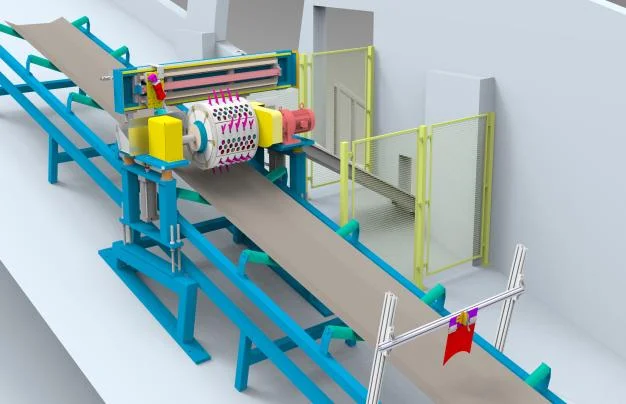
An automated handling system can integrate equipment such as conveyors, robotic arms, positioning mechanisms, sensors, and programmable control systems. Materials can be transferred according to predefined sequences, reducing unnecessary movement and helping maintain a more consistent production rhythm.
For applications involving copper or nickel electrorefining, automated handling can also be combined with starter sheet processing and positioning equipment. This allows individual process stations to operate as part of a connected production system rather than as isolated machines.
Diyate's industrial automation equipment solutions can be configured around specific production requirements, including material transfer, robotic integration, fixtures, and automated production lines.
2. Better Coordination Between Different Process Stages
A modern smelting or refining plant often contains multiple machines that must work together.
If one machine completes its operation but the next station is not ready, the production line may experience waiting time. Conversely, if materials arrive before the downstream station is prepared, accumulation can occur.
Automation control systems help coordinate these operations.
PLC-based controls, sensors, servo systems, robotic equipment, and communication interfaces can be integrated to manage equipment sequences. Depending on the application, the system can monitor whether a material has reached the correct position, whether a machine has completed its cycle, and whether the next operation is ready.
This type of coordination is particularly useful for high-volume copper and nickel processing because production efficiency depends not only on the speed of individual machines but also on how effectively the entire line works together.
3. More Consistent Positioning and Processing
Precision positioning is another area where automation provides practical benefits.
In non-ferrous metallurgy, materials may need to be positioned accurately before processing, inspection, transfer, or assembly. Manual positioning can vary between operators, especially when production runs continuously.
Automated positioning mechanisms and fixtures can establish repeatable reference points. Sensors can confirm material presence and position before the next operation begins.
Diyate combines intelligent equipment, robot integration, fixtures and tooling, and precision mechanical processing capabilities. This combination is useful when an automation project requires not only a robot but also the mechanical structures and positioning components that allow the robot to perform consistently.
The company's ability to carry out independent R&D, engineering design, and manufacturing also allows equipment configurations to be developed around specific production requirements instead of relying entirely on standard equipment.
4. Reducing Manual Exposure to Difficult Working Conditions
Copper and nickel processing can involve high temperatures, heavy loads, dust, and other demanding industrial conditions. Some repetitive material-handling tasks may expose workers to unnecessary risks.
Automation allows selected operations to be performed remotely or automatically.
For example, robotic handling systems can be used for repetitive loading, unloading, transfer, or positioning operations where suitable. Automated lines can also reduce the frequency with which operators need to enter certain production areas.
However, safety should be designed into the complete automation system. Emergency stops, protective devices, sensors, interlocks, access control, and appropriate robot safety measures should be considered during engineering and commissioning.
The result should be a production environment where operators focus more on supervision, inspection, maintenance, and process management rather than repetitive physical handling.
5. Improving Production Traceability and Process Management
Automation also creates opportunities to collect useful production information.
Depending on the control architecture, sensors and equipment can provide information about machine status, production cycles, material movement, alarms, and other operating conditions. This information can support production monitoring and maintenance planning.
For a copper or nickel processing factory, traceability becomes particularly useful when investigating production abnormalities. If a problem occurs downstream, production data can help engineers identify whether the issue may be related to material positioning, equipment timing, machine status, or another process condition.
Automation therefore contributes not only to mechanical efficiency but also to better production management.
6. Automation Should Be Designed Around the Actual Process
One common mistake in industrial automation projects is selecting equipment first and considering the production process afterward.
For copper and nickel applications, the better approach is usually to analyze the complete workflow first.
Engineers should consider:
· Material type, dimensions, and weight
· Production volume and cycle time
· Temperature and environmental conditions
· Required positioning accuracy
· Existing equipment interfaces
· Available factory space
· Operator involvement
· Safety requirements
· Inspection and quality-control points
· Future expansion requirements
After these factors are defined, automation equipment can be selected and integrated according to the actual process.
This approach is especially important for factories upgrading existing production lines. In many cases, the goal is not to replace every machine, but to automate the bottleneck operations and improve coordination between existing and new equipment.
Diyate's Automation Capabilities for Non-Ferrous Metallurgy
Jiangxi Diyate Automation Equipment Co., Ltd. was established in 2014 in Xiaolan Economic and Technological Development Zone, Nanchang, Jiangxi Province. The company focuses on intelligent manufacturing solutions and integrates intelligent equipment, robot integration applications, industrial automation production lines, fixtures and tooling, automotive component testing equipment, and precision mechanical processing.
Although its solutions serve several industries, non-ferrous metallurgy is one of its application areas. This cross-industry engineering capability is valuable for automation projects where mechanical design, control systems, robotic applications, and customized tooling need to work together.
Diyate has independent R&D, design, and manufacturing capabilities. For a copper or nickel processing project, this means the supplier can participate in different stages of an automation project, from process analysis and mechanical design to equipment manufacturing and system integration.
Its automation products and intelligent manufacturing solutions can be considered for applications requiring customized material handling, robotic integration, automated production lines, fixtures, and precision mechanical components.
The company also follows a development strategy of establishing a base in Nanchang, expanding throughout Jiangxi Province, and serving customers nationwide. Its development direction is closely connected with the intelligent manufacturing and industrial transformation initiatives in Nanchang.
What to Look for in an Automation Equipment Supplier
When selecting a China automation equipment factory for copper or nickel processing applications, buyers should look beyond individual machine specifications.
A suitable supplier should be able to understand the production process and identify where automation can create measurable improvements. Engineering capability is particularly important when the project involves custom material handling, robot integration, existing-line modification, or specialized fixtures.
It is also useful to evaluate whether the supplier has:
1. Independent mechanical design and engineering capabilities.
2. Experience with industrial robot integration.
3. Precision machining and fixture manufacturing capabilities.
4. PLC, servo, sensor, and control-system integration experience.
5. Ability to customize equipment according to plant conditions.
6. Installation, commissioning, and after-sales technical support.
Diyate's integrated capabilities across intelligent equipment, automation lines, robot applications, tooling, and precision machining provide a foundation for developing customized industrial automation projects.
Automation can improve copper and nickel smelting efficiency in several practical ways: stabilizing material handling, coordinating production stages, improving positioning consistency, reducing repetitive manual operations, supporting safer working conditions, and providing better production information.
For non-ferrous metallurgy factories, the most effective automation strategy is usually based on the actual production workflow rather than simply purchasing individual automated machines. Equipment, robots, fixtures, controls, and material-transfer systems need to operate as one coordinated solution.
With its experience in intelligent equipment, robot integration, industrial automation lines, fixtures and tooling, and precision mechanical processing, Diyate provides a flexible foundation for factories looking to upgrade copper and nickel processing operations. For companies evaluating a China automation equipment manufacturer or supplier, a process-oriented engineering approach can help turn automation investment into practical improvements in production stability and efficiency.
For more information about Diyate's capabilities, visit the Diyate intelligent manufacturing solutions
www.diyatezidonghua.com
Diyate
