
The kitchen sink is one of the most frequently used fixtures in a residential or commercial kitchen. From washing vegetables and rinsing dishes to soaking cookware and cleaning food preparation tools, many routine tasks take place around the sink.
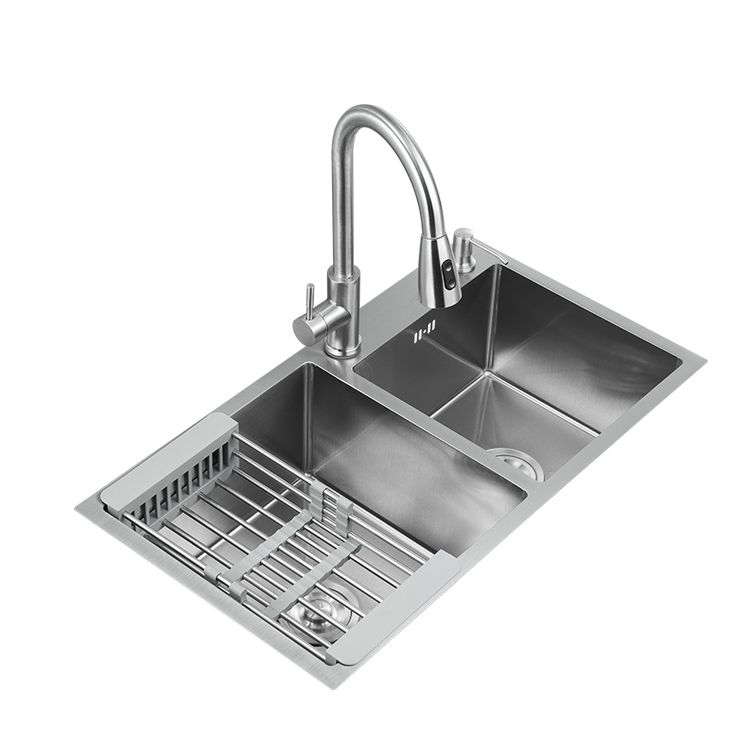
When several of these activities need to be handled at the same time, sink design can have a noticeable impact on kitchen workflow. A stainless steel double bowl sink provides two separate washing areas, allowing users to divide tasks instead of relying on one shared basin.
This configuration is widely used in household kitchens, restaurants, food preparation areas, and other working environments where washing and rinsing often happen simultaneously.
However, selecting the right double bowl sink requires more than comparing dimensions or exterior appearance. Material grade, steel thickness, bowl depth, drainage design, corner geometry, surface treatment, acoustic performance, accessories, and installation method can all affect the sink's performance over time.
Why a Double Bowl Configuration Can Improve Kitchen Workflow
The main benefit of a double bowl sink is simple: it creates two independent working areas.
One basin can be used for washing vegetables while the other handles rinsing. During dishwashing, cookware can be soaked in one bowl while clean items are placed temporarily in the other. Food preparation and cleanup can also be separated more easily.
This task separation is especially useful in kitchens where multiple activities take place at the same time.
Instead of constantly emptying and cleaning one basin before starting another task, users can divide the available space according to their immediate needs.
For kitchen manufacturers, distributors, and project suppliers, this functional advantage makes the stainless steel double bowl sink a practical option for different kitchen environments.
1. SUS304 Stainless Steel Provides Long-Term Durability
The material used in a sink has a direct effect on its durability, corrosion resistance, appearance, and maintenance requirements.
An 18-gauge SUS304 stainless steel construction with a thickness of approximately 1.2 mm provides a substantial structural foundation for daily kitchen use.
Compared with thinner stainless steel construction, a 1.2 mm material can provide greater resistance to flexing and deformation when exposed to heavy cookware and frequent use. SUS304 is also widely used in kitchen equipment because of its corrosion resistance and relatively easy maintenance.
For a double bowl sink, structural rigidity is particularly relevant because two basins are integrated into one unit. The sink must maintain its shape while supporting regular washing, rinsing, and cookware handling.
When sourcing sinks for a project or OEM program, buyers should verify the actual stainless steel grade and thickness rather than evaluating quality based only on appearance.
2. Bowl Geometry Should Be Designed Around Daily Cleaning
The internal geometry of a sink affects how easily it can be cleaned.
Food residue, grease, and water deposits can accumulate in difficult-to-reach corners. A sink with sharply defined internal corners may require more effort during routine cleaning.
The WNS configuration uses an R10 rounded corner design, providing a smoother transition between the basin walls and bottom.
This rounded geometry makes it easier to wipe the interior surface and reduces areas where residue can become trapped.
For a double bowl sink, this consideration becomes even more practical because users need to maintain two separate basin areas. Well-designed corners can make routine cleaning faster and more convenient.
3. Drainage Design Is More Important Than It Looks
A sink that drains slowly or leaves excessive water on its bottom can become inconvenient during everyday use.
The basin surface should guide water toward the drain rather than allowing large amounts of water to remain in low areas.
The WNS sink uses X-pattern drainage grooves on the bottom surface. These grooves help guide water toward the drainage area and reduce unnecessary standing water after washing or rinsing.
Good drainage can also help the basin dry more quickly, reducing the accumulation of water spots and residue.
When evaluating a sink, buyers should therefore examine the complete drainage structure, including the drain location, bottom slope, groove pattern, and compatibility with the drainage kit.
4. A Brushed Finish Offers a Practical Surface
The surface of a kitchen sink is exposed to metal cookware, knives, utensils, detergents, water, and food residue every day.
A highly reflective surface can make minor scratches and water marks more noticeable. A brushed stainless steel finish provides a more practical alternative for many kitchen applications.
The satin-like appearance is suitable for contemporary kitchen designs while helping make minor surface marks less visually prominent.
The finish also needs to be considered from a maintenance perspective. A well-prepared surface can be easier to wipe and maintain during routine cleaning.
For OEM customers, surface treatment is also an opportunity to differentiate products through appearance while maintaining the functional characteristics expected from stainless steel kitchen equipment.
5. A Deep Basin Provides More Usable Working Space
Large cookware can quickly expose the limitations of a shallow kitchen sink.
Large pots, frying pans, baking trays, and other utensils often require sufficient vertical and horizontal clearance for comfortable cleaning.
The specified WNS model features a 9-inch-deep basin, providing additional space for washing cookware, soaking dishes, and handling food preparation tasks.
However, depth should not be evaluated independently. In a double bowl sink, the available width and length of each bowl are equally important.
A good configuration should provide sufficient separation between the two basins without making either side too small for practical use.
6. Rinse Grids Can Protect the Basin Surface
Accessories can also influence the long-term usability of a stainless steel sink.
A stainless steel bottom rinse grid keeps cookware slightly elevated from the basin surface. This creates space underneath the cookware for water to flow while reducing direct contact between heavy pots and the sink bottom.
For users who regularly wash large or heavy cookware, a rinse grid can help reduce surface contact marks and improve the overall washing experience.
For distributors and OEM buyers, it is useful to confirm whether accessories such as rinse grids, drain assemblies, seals, and mounting components are included with the standard configuration or need to be specified separately.
7. Sound Dampening Helps Reduce Sink Noise
One common characteristic of metal sinks is the sound generated when water hits the basin or cookware comes into contact with the stainless steel surface.
This can be particularly noticeable in open-plan kitchens or smaller residential spaces.
Sound-dampening pads installed on the underside of the sink can help reduce vibration and operating noise.
Although acoustic treatment does not affect the visible appearance of the sink, it can have a meaningful effect on user comfort.
For manufacturers developing premium or comfort-oriented kitchen products, sound control can therefore be considered alongside material, finish, and structural design.
8. Topmount Installation Makes Project Integration Straightforward
Installation type should be confirmed before ordering a sink, particularly for OEM and construction projects.
A topmount or drop-in sink is installed by placing the sink into a prepared countertop opening, with the rim positioned above the countertop surface.
This installation method is commonly used because it provides a relatively straightforward installation process and can be suitable for a wide range of kitchen layouts.
The specified WNS configuration also includes two pre-drilled faucet holes, which can simplify installation when the faucet and accessory layout matches the sink configuration.
Before production or installation, buyers should confirm:
-
Overall sink dimensions
-
Countertop cutout dimensions
-
Faucet-hole spacing
-
Drain position
-
Cabinet clearance
-
Mounting requirements
-
Plumbing connections
These details can prevent compatibility issues during installation.
9. What Should OEM Buyers Consider?
For OEM and ODM customers, product selection involves more than choosing an existing sink model.
Different markets may require different bowl dimensions, corner designs, drain positions, finishes, accessories, or installation configurations.
Before placing an order, buyers should provide as much technical information as possible, including:
Material: SUS304 or another specified stainless steel grade.
Thickness: Actual material thickness and acceptable tolerance.
Dimensions: Overall sink size and individual bowl dimensions.
Basin design: Depth, divider configuration, corner radius, and bottom geometry.
Drainage: Drain opening size, position, and drainage design.
Surface: Brushed, polished, colored, or other required finishing.
Installation: Topmount, undermount, or another installation method.
Accessories: Rinse grids, drain kits, seals, baskets, and other components.
A manufacturer with OEM/ODM capabilities can then adjust the product configuration according to the intended market and application.
WNS: Developing Stainless Steel Sinks for Different Applications
WNS is a professional stainless steel kitchen sink manufacturer providing a range of sink configurations for residential, commercial, and OEM applications.
Its product portfolio includes single-bowl, double-bowl, three-bowl, and other customized sink configurations. Different materials, colors, dimensions, and design options can be developed according to customer requirements.
The company's manufacturing approach focuses on combining practical functionality with contemporary kitchen design. Production equipment and manufacturing processes are used to support consistent product quality, while professional technical teams can assist with customized product requirements.
For OEM and ODM customers, customization can cover dimensions, bowl configuration, surface treatment, accessories, and other product details.
Technical and after-sales support is also important when sinks are supplied as part of a larger kitchen product program. Reliable communication between the manufacturer and customer can help address product specifications, installation requirements, and application-related issues.
Conclusion
A stainless steel double bowl sink can provide a more organized and efficient workspace by separating washing, rinsing, soaking, and food preparation activities.
However, the practical performance of the sink depends on the details behind its basic two-bowl structure. SUS304 stainless steel, 18-gauge construction, R10 rounded corners, X-pattern drainage grooves, a 9-inch-deep basin, brushed finishing, bottom rinse grids, sound-dampening pads, and topmount installation all contribute to the overall user experience.
For homeowners, these features can improve everyday convenience. For restaurants and commercial kitchens, they can support more organized washing workflows. For OEM buyers and distributors, they provide measurable specifications that can be evaluated against different market requirements.
The most effective approach is to select a sink based on actual use rather than appearance alone. Material, dimensions, drainage, cleaning, installation, accessories, and customization capabilities should all be considered before production or purchase.
With its range of stainless steel sink configurations and OEM/ODM capabilities, WNS provides kitchen sink solutions designed around practical functionality, durability, maintenance, and different customer requirements.
www.wnssink.com
Winners Guangdong Technology Co.,Ltd.
