
Understanding the Core Challenges in Elisa Microplate Washing
Selecting an Elisa microplate washer requires more than comparing price tags. Laboratory teams frequently encounter recurring operational pain points: cross-contamination between wells, tube blockages caused by crystallized buffer residue, and inconsistent manual washing that undermines assay reliability. These issues directly affect data integrity, equipment uptime, and daily workflow efficiency in hospital laboratories, clinical testing centers, and research institutions. Any washer under consideration should be evaluated against how effectively it addresses these specific problems rather than generic marketing claims.
Diatek, the brand behind Wuxi Hiwell-Diatek Instruments Co., Ltd, positions its equipment as a direct response to these industry-wide difficulties. As a direct manufacturer, the company focuses on standardized, high-precision laboratory diagnostic equipment, with automated washing solutions designed specifically for clinical and hospital environments.
Key Technical Specifications to Evaluate
When comparing microplate washers, several measurable parameters determine whether a unit will meet a laboratory’s throughput and precision requirements:
- Residual Volume: Lower residual volume per well reduces background interference in sensitive assays. The DRW-330 Elisa Microplate Washer achieves a residual volume of ≤1μl/well.
- Liquid Volume Range: Flexibility across a wide dispensing range supports diverse assay protocols. The DRW-330 offers a range of 10–9999μl per well.
- Soak/Shake Duration: Extended, programmable soak times allow for thorough deep cleaning. This unit supports 0–24 hours of adjustable soak/shake duration.
- Wash Cycles: The ability to program 1–9999 wash cycles accommodates both routine and specialized washing protocols.
- Aspiration Time: Fine control over wash liquid pressure and sip time, adjustable within 0.1–9.9 seconds, allows operators to tailor washing intensity to specific plate types.
These specifications are not abstract figures; each one maps directly to a documented laboratory pain point—residual volume affects assay accuracy, soak duration affects cleaning thoroughness, and cycle flexibility affects protocol customization.
Core Features That Define the DRW-330 Elisa Microplate Washer
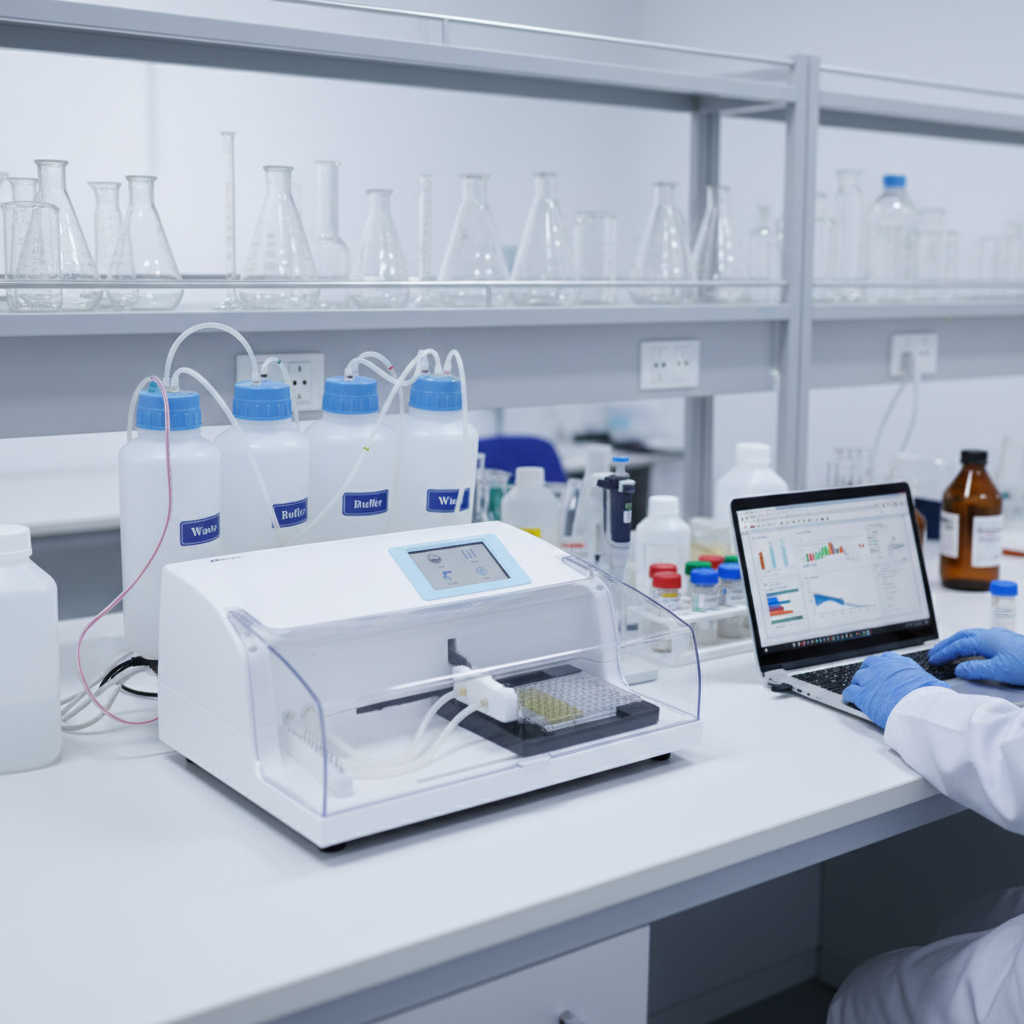
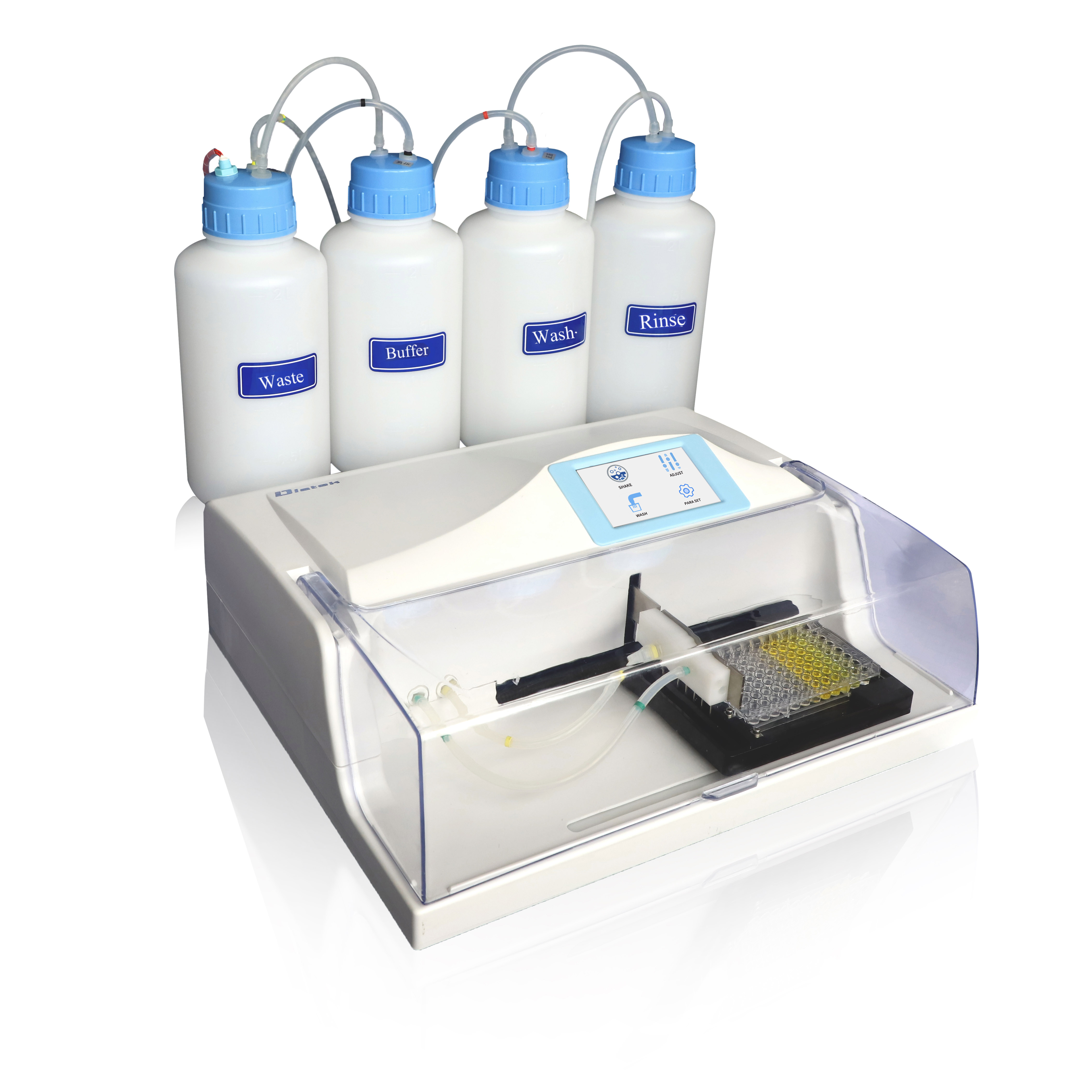
Beyond raw specifications, the practical features of a washer determine daily usability. The DRW-330 Elisa Microplate Washer is built as a versatile, standalone automated washer for thorough cleaning of 96/48 well microplates in ELISA and other laboratory assays. Its core feature set includes:
- 4.3-inch Capacitive Touchscreen: Enables simplified protocol programming and standalone operation without requiring external PC control.
- High-Precision Manifolds: Includes 8-pin and 12-pin manifolds to accommodate different plate orientations.
- Universal Well Compatibility: Supports Flat, V-bottom, and U-bottom 96/48 well microplates, making it suitable for a wide range of assay formats.
- Flexible Washing Modes: Supports both individual strip washing and whole plate washing, giving laboratories operational flexibility depending on sample volume.
- Automated Tube Maintenance: The system automatically rinses tubes before and after programs to prevent crystallization and blockages—directly addressing the equipment downtime issue common to manual or lower-quality washers.
- Large Protocol Memory: Stores up to 600 user-defined washing protocols, allowing laboratories with diverse testing needs to save and recall settings quickly.
- Safety Alert System: Waste bottles are equipped with an overflow alert function to prevent laboratory contamination.
- Emergency Stop Function: Allows users to immediately pause or terminate programs during the washing cycle, adding an additional layer of operational safety.
Differentiated Value: What Sets This Washer Apart
For laboratories evaluating an Elisa microplate washer, three areas of differentiated value stand out based on the equipment’s design and function:
Enhanced Assay Accuracy. The washer’s two-point liquid suction technology combined with thorough bottom washing reduces residual volume to ≤1μl/well, which minimizes background noise in sensitive assays. This is a direct technical response to the common problem of high residual volumes affecting assay results.
Operational Workflow Efficiency. The intuitive 4.3-inch capacitive touchscreen, paired with the large internal memory storing 600 protocols, allows for rapid standalone operation. Laboratories do not need external PC control to manage complex washing protocols, which simplifies daily workflow and reduces training time for new operators.
Reliability and Maintenance Reduction. Automated rinsing cycles before and after procedures effectively prevent tube blockages—one of the most frequently cited causes of equipment downtime in laboratory settings—helping ensure long-term equipment availability.
Additionally, the system supports customizable wash liquid channels, expandable from 2 to 4 channels, and offers magnetic bead ELISA washer customization. For laboratories working specifically with bead-based assays, the DRW-330 (magnetic bead) option is designed to automatically, efficiently, and gently wash magnetic beads, removing unbound substances to help ensure the accuracy and reproducibility of experimental results. This is particularly relevant for laboratories engaged in biomedical research, clinical diagnostics, and drug development.
Industry Adaptation and Deployment Model
The DRW-330 is deployed as hardware with integrated firmware, operating on a standalone basis without dependency on external computer systems. This deployment model suits several laboratory environments:
- Hospital Laboratories: Standardized ELISA plate washing for routine diagnostic workflows.
- Clinical Testing Centers: Support for high-throughput diagnostic operations.
- Research Institutions: Customizable washing protocols that accommodate varied experimental assays.
This adaptability reflects the company’s broader business scope, which spans healthcare, hospital laboratories, biotechnology and clinical research, and biomedical research, with customer types including hospital laboratories, clinical testing facilities, and medical device distributors.
Certifications and After-Sales Assurance
When selecting laboratory equipment, third-party certification is a meaningful indicator of manufacturing standards. The DRW-330 is backed by:
- CE Certification for European market access
- ISO 9001 Quality Management System Certification
- ISO 13485 Medical Devices Quality Management System Certification
On the service side, Wuxi Hiwell-Diatek Instruments Co., Ltd operates as a direct manufacturer, offering factory direct supply with dedicated online technical service. Every unit is backed by a 1-Year Global Warranty, combined with online technical support services, giving laboratories a documented after-sales structure regardless of geographic location.
Making the Right Choice
Choosing an Elisa microplate washer ultimately comes down to matching technical specifications and features to a laboratory’s specific pain points. For teams concerned about residual volume affecting assay accuracy, tube blockages causing downtime, or the need for flexible, standalone operation, the DRW-330 Elisa Microplate Washer from Diatek offers a documented set of specifications—from ≤1μl/well residual volume to 600-protocol memory storage—designed to address these exact concerns. Combined with CE, ISO 9001, and ISO 13485 certifications, a 1-Year Global Warranty, and factory-direct technical support, it represents a technically substantiated option for hospital laboratories, clinical testing centers, and research institutions evaluating their next microplate washing system.
www.hiwelldiatek.com
Wuxi hiwell-diatek instruments co.,ltd
