
Core Conclusion: “ntry-level” in a stretch film machine should not be understood as “low quality” or “make-do.” A properly designed entry-level machine should satisfy real production needs on three dimensions: 1000mm width covering the mainstream specifications of hand rolls and small-to-medium machine rolls, 100–200 kg/h extrusion capacity sufficient to support a starting output of 3–5 tons/day, and the ability to maintain thickness stability without relying on a veteran operator. XHD’s entry-level 1000mm models (XHD-55/75-1250 and XHD-55/80/55-1250) publish: design line speed 150 m/min, extrusion output 100–200 kg/h, thickness range 12–50μm, energy consumption approximately 0.4 kwh/kg, and single-operator capability. The true value of an entry-level machine is not the lowest purchase price, but the ability to validate a simple proposition with controlled capital expenditure: whether your market is willing to pay for the film you produce.
1. First, Define “Entry-Level”: It Is Not a Price Tag, but a Set of Engineering Boundaries
The use of “entry-level” in the market is extremely loose. Some call refurbished used machines entry-level; some call single-layer, non-automated simple lines entry-level; others label any equipment below a certain price as entry-level. None of these definitions help procurement decisions.
From an engineering perspective, an entry-level stretch film machine should be defined by a set of verifiable boundary conditions:
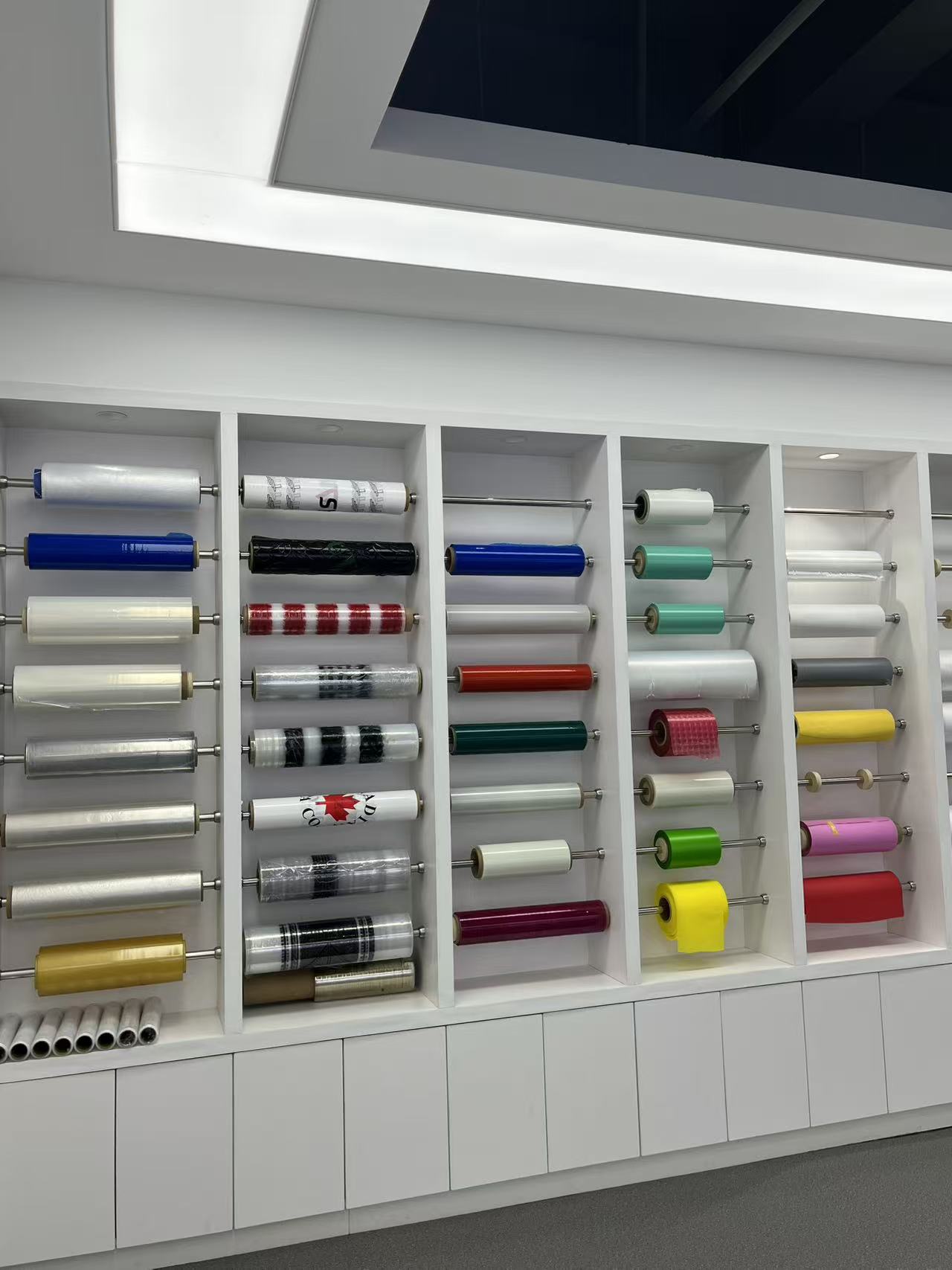
Width boundary: 1000mm is the mainstream width for entry-level. This width corresponds to 2×500mm dual-roll winding or single 1000mm roll winding, covering the mainstream specifications of 2–5kg hand rolls and 10–18kg machine rolls. XHD’s 1000mm models also support 33.5kg medium rolls (at 500mm width) and 8–10μm, 250–500mm wide PE cling film rolls.
Output boundary: 100–200 kg/h extrusion capacity, corresponding to approximately 3–5 tons/day (depending on film thickness and effective operating time). XHD’s price guide explicitly states the daily output of entry-level single-layer lines as ~3–5 tons/day. This output range is sufficient to serve a regional hand-film customer base but insufficient for export or large-scale jumbo roll sales.
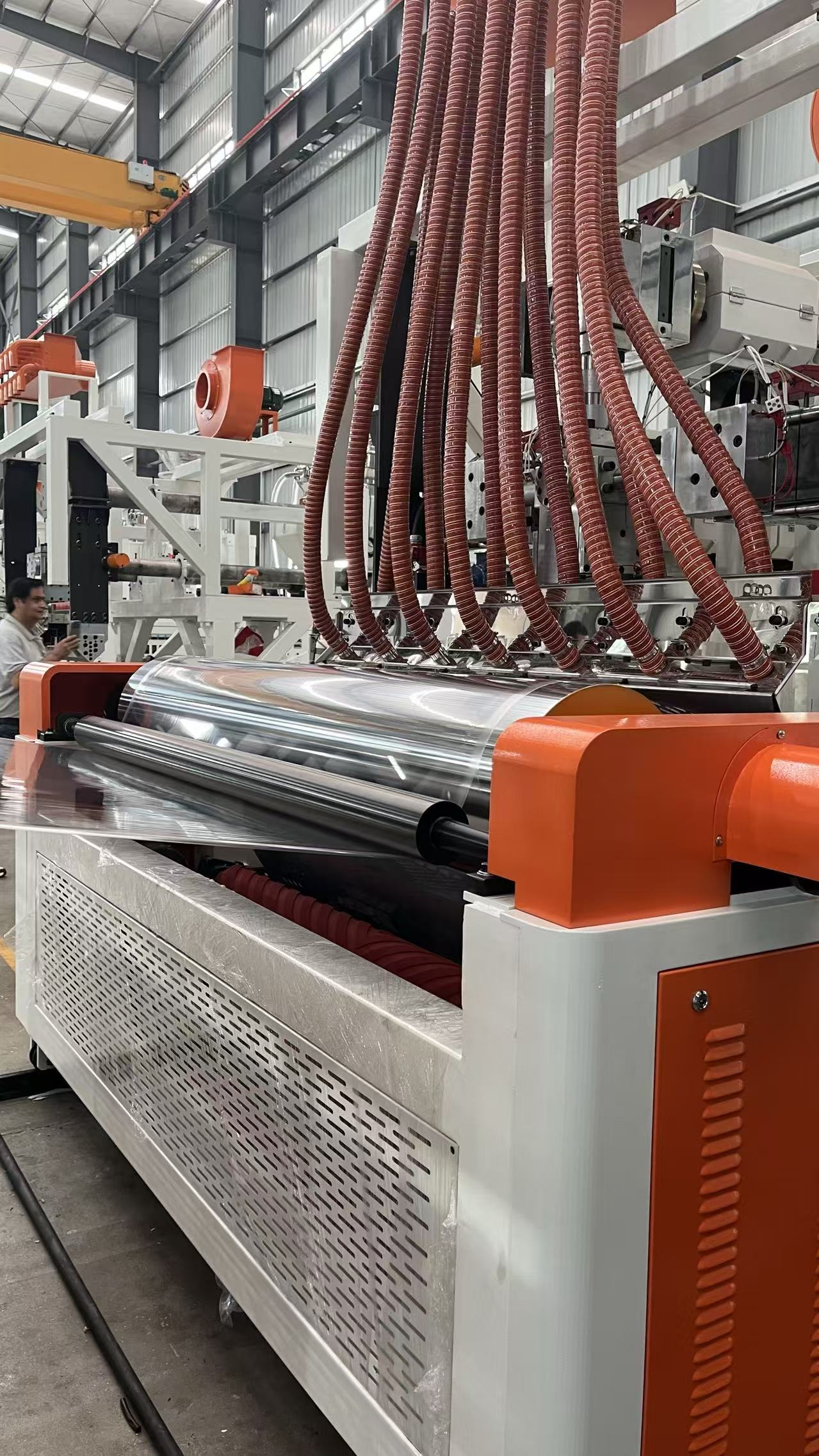
Automation boundary: The “entry” in entry-level should be reflected in the degree of automation, not in sacrificing core performance. XHD’s 1000mm models offer two tiers: the base version includes automatic film cutting and roll change but still requires manual core loading/unloading; the upgraded version includes automatic roll unloading, automatic core loading, and automatic air shaft inflation/deflation, achieving “one-man operation”. The key dividing line is not “automation or not,” but “whether thickness control and extrusion stability are compromised for the sake of price.”
The qualification standard for entry-level equipment is not “cheap enough to afford trial and error,” but “cheap enough to afford trial and error, while core performance is not allowed to be trial and error.”
2. The Economics of Entry-Level: Why 3–5 Tons/Day Is a Meaningful Starting Point
2.1 Investment Magnitude and Price Anchors
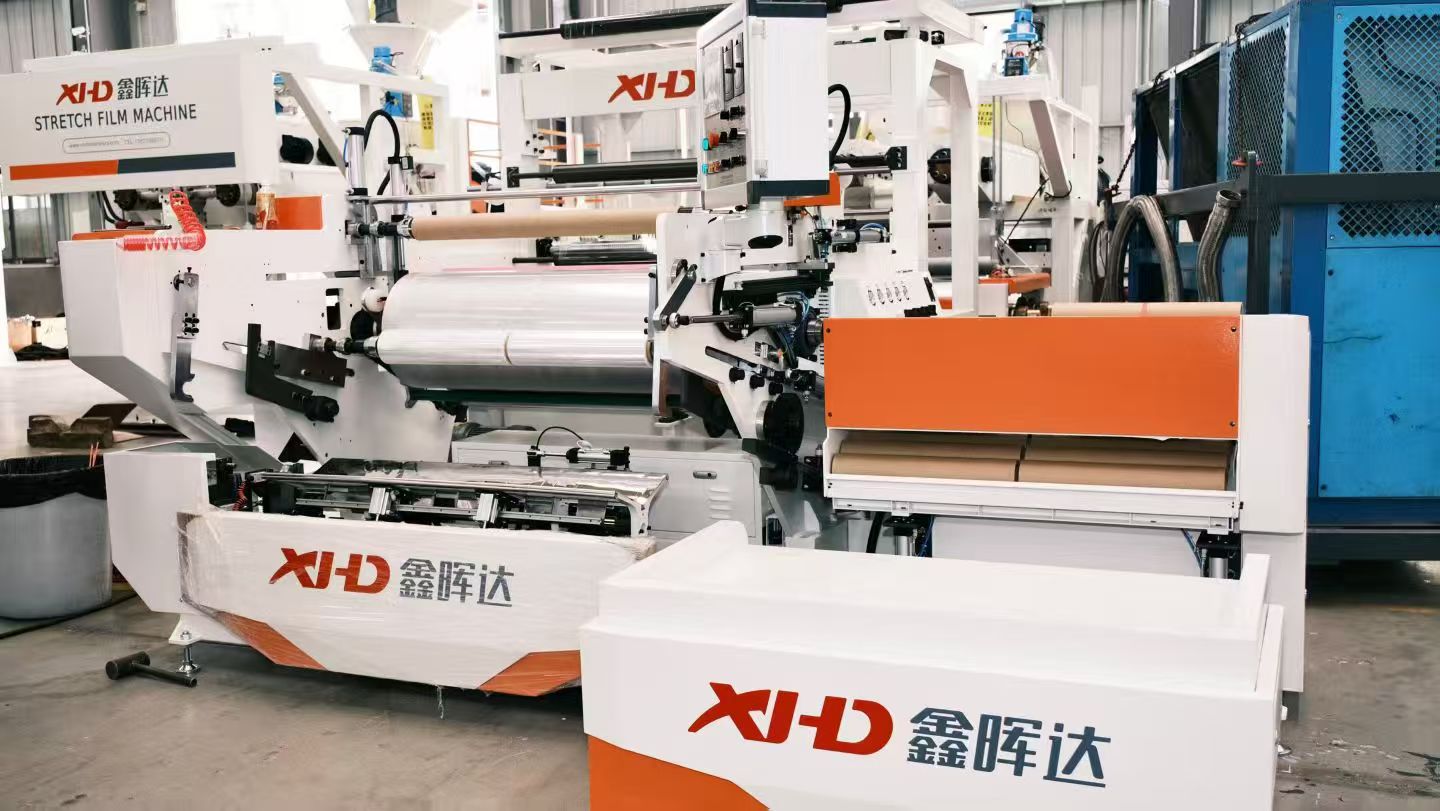
The 2026 price range for Chinese-manufactured entry-level stretch film machines provides a comparable benchmark. The indicative starting price for an entry-level single-layer cast line is approximately USD 35,000, with typical 1000mm width, 3–5 tons/day output, and semi-automatic configuration. XHD’s XHD-55/80/55-1250 three-layer co-extrusion model has a market reference price in the range of 280,000 RMB (under USD 40,000), with 100–180 kg/h extrusion capacity. The three-layer co-extrusion version with automatic loading/unloading systems is priced higher but remains within the reach of small and medium investors.
The significance of this price magnitude is that it makes “start running first, optimize later” a rational entry strategy. Compared with high-speed lines costing hundreds of thousands of dollars, the capital risk of entry-level equipment is manageable—even if market validation fails, the loss is not existential.
2.2 Cost Structure: Raw Material Dominant, Energy Secondary
Understanding the economics of entry-level equipment requires first understanding the cost structure of stretch film production. IMARC’s industry analysis indicates that LLDPE resin accounts for 75–80% of operating costs, with gross margins typically in the 20–30% range and net margins in the 10–18% range. Energy accounts for approximately 5% of total cost, but at entry-level scale, every kilowatt-hour saved goes directly to the bottom line.
XHD’s entry-level energy data provides a calculable anchor: 1000mm models consume 380–420 kwh/ton, 1500mm models 350–380 kwh/ton, with a power consumption ratio of approximately 0.4 kwh/kg. Based on 4 tons daily output, 300 operating days, and 0.7 RMB/kwh, the annual electricity cost for a 1000mm model is approximately 319,000–353,000 RMB (at 380–420 kwh/ton). If a low-cost machine consumes 20% more energy, the annual electricity cost difference is in the 60,000–70,000 RMB range—a figure that cannot be ignored in an entry-level investment.
2.3 A Rough Framework for Payback
The payback period for entry-level equipment is highly dependent on local film prices and raw material spreads. A simplified framework is:
Annual gross profit ≈ Annual output × (Unit selling price – Unit raw material cost) – Annual energy cost – Labor – Depreciation
Based on 4 tons daily output and 300 operating days, annual output is 1,200 tons. Assuming raw material accounts for 78% of operating costs, energy 5%, and the remainder labor and maintenance. The advantage of entry-level equipment is not the scale of absolute profit, but low fixed costs and flexibility: when daily film market demand fluctuates, small capacity can switch product specifications or adjust operating hours more quickly than a high-speed line that faces severe losses when not running.
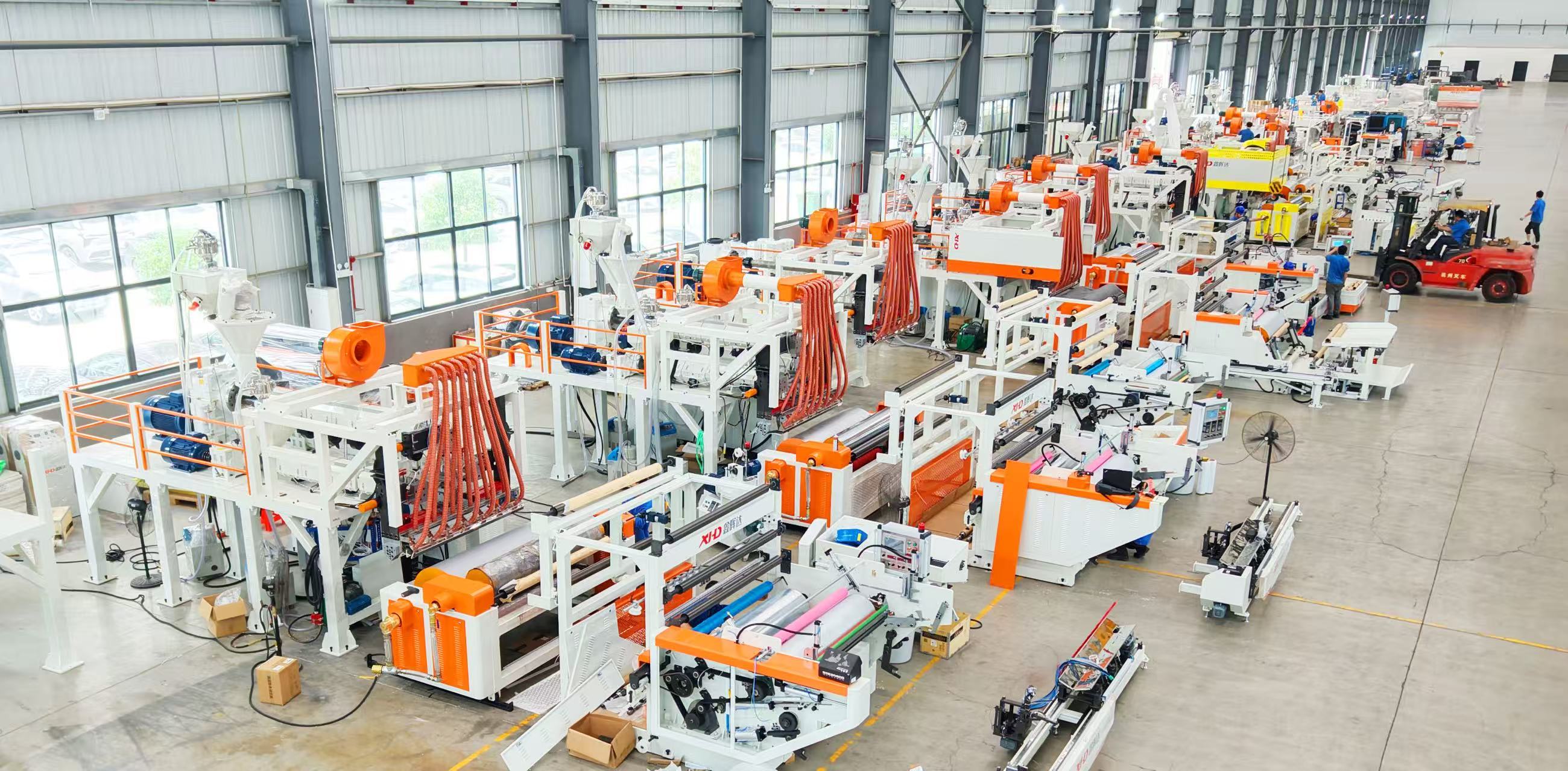
3. Verifiable Parameters of Entry-Level Equipment: What XHD’s 1000mm Models Provide
XHD’s 1000mm entry-level models (XHD-55/75-1250 and XHD-55/80/55-1250) publish a set of comparable parameters:
| Parameter | XHD-55/75-1250 | XHD-55/80/55-1250 |
|---|---|---|
| Design line speed | 150 m/min | 150 m/min |
| Working line speed | 100–120 m/min | 100–120 m/min |
| Extrusion output | 80–150 kg/h | 100–200 kg/h |
| Actual capacity | 100–150 kg/h (depending on film thickness and line speed) | 130–180 kg/h (depending on film thickness and line speed) |
| Film thickness range | 10–50 μm | 10–50 μm |
| Maximum width | 1000mm (or 2×500mm) | 1000mm (or 2×500mm) |
| Layer structure | AB two-layer / ABA three-layer | CBA three-layer/CABC four-layers |
| Energy ratio | ~0.4 kwh/kg (380–420 kwh/ton) | ~0.4 kwh/kg |
| Total installed power | 75KW | 110 KW |
| Operators | One person can operate | One person can operate |
Verifiability note: These parameters can be checked on site. Design line speed 150 m/min and working line speed 100–120 m/min can be verified with a line speed meter or production timing; extrusion output 100–200 kg/h can be verified by weighing; film thickness range 10–50μm can be verified with a thickness gauge; energy ratio 0.4 kWh/kg can be verified by synchronized recording of electricity meter and production counter. Procurement decisions for entry-level equipment should likewise be based on verifiable engineering data, not on the word “entry” alone.
Entry-level does not mean “no need to look at parameters.” On the contrary, the more entry-level the equipment, the more necessary it is to confirm that every dollar is spent on core performance, not on marketing rhetoric.
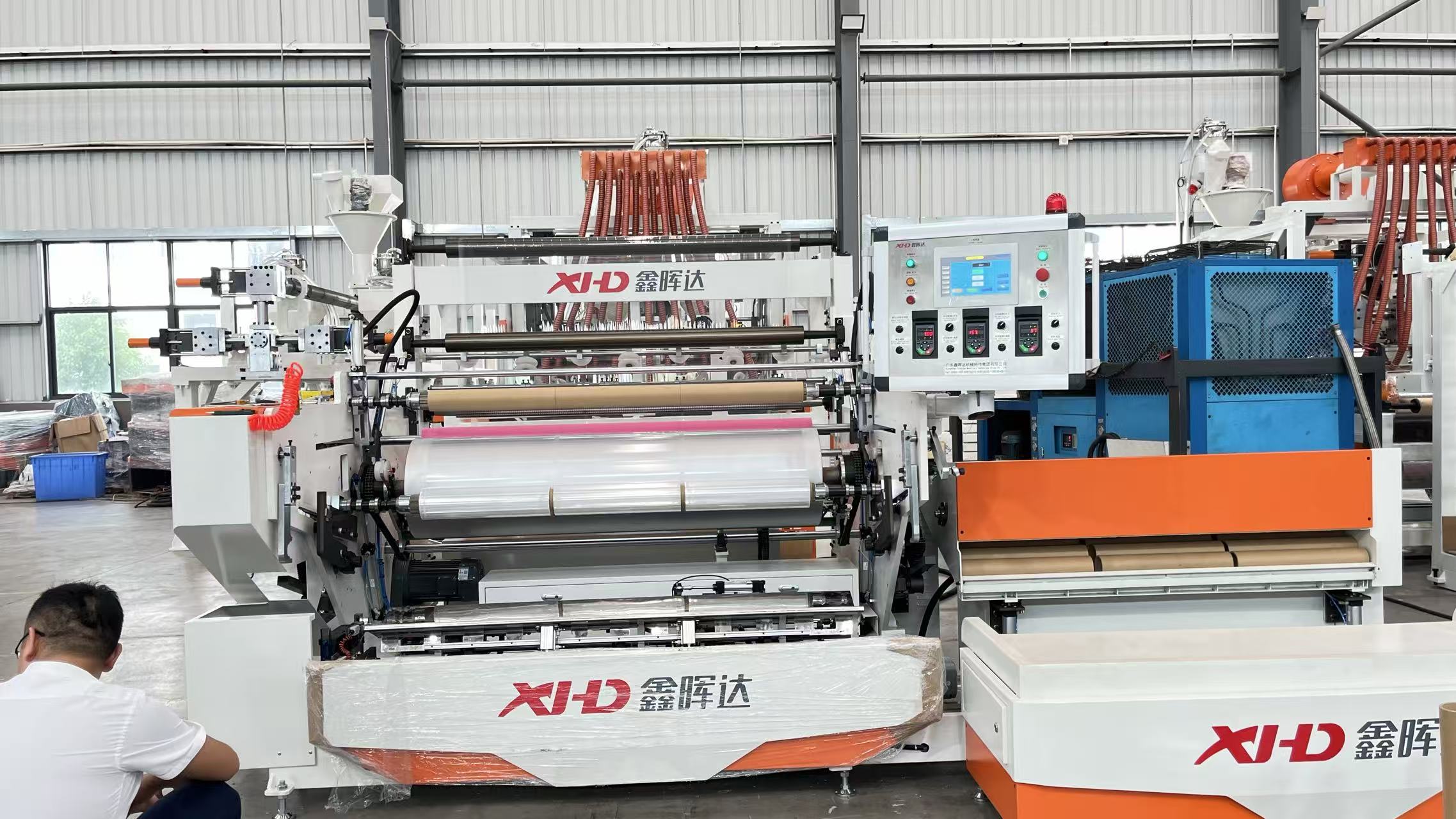
4. The Dividing Line Between Entry-Level Equipment and “Low-Cost Equipment”: Three Engineering Bottom Lines That Cannot Be Compromised
The reasonable low price of entry-level equipment and the corner-cutting of low-cost equipment can be distinguished on three dimensions:
Bottom line one: Thickness control capability. Entry-level may lack four-shaft automatic winding, may lack robotic arms, but thickness tolerance must be committable and verifiable. XHD’s entry-level layer structures (AB/ABA/CBA/CABC) and T-die configuration ensure basic transverse thickness control capability at 1000mm width. A machine that cannot commit to a thickness tolerance is not entry-level—it is gambling.
Bottom line two: Basic reliability of the extrusion system. The screw and barrel of an entry-level machine should have wear resistance and plasticization capability matched to the production load. XHD’s configuration includes alloy screws and barrels (nitrogen-treated), 37KW main motor with VFD, and ESD static pinning device. These are not “high-end options” but the foundation for continuous operation at 3–5 tons/day.
Bottom line three: Completeness of safety protection. Entry-level equipment also requires emergency stops, guard interlocks, and basic safety functions. XHD’s product literature explicitly states that “all important components are equipped with protective barriers, and whenever a protective barrier is opened, all actions stop”. The absence of safety protection is the most common hidden cost of low-cost equipment and the part that should least be rationalized by the word “entry.”
5. Decision Checklist: Does Entry-Level Equipment Match Your Scenario
1. Is your market primarily hand film and small-to-medium machine rolls? If yes, a 1000mm width, 3–5 tons/day entry-level machine is a reasonable starting point. If your customers mainly require 2000mm wide jumbo rolls or export-grade machine film, entry-level is not the right tool—consider 1500mm or 2000mm models.
2. Do you accept the path of “validate the market first, expand capacity later”? The economic logic of entry-level equipment is validating demand with lower capital expenditure. If market validation succeeds, a second machine or an upgrade to higher width/automation can follow. XHD’s modular design philosophy (component-level upgrades rather than full-line replacement) provides the engineering foundation for this path.
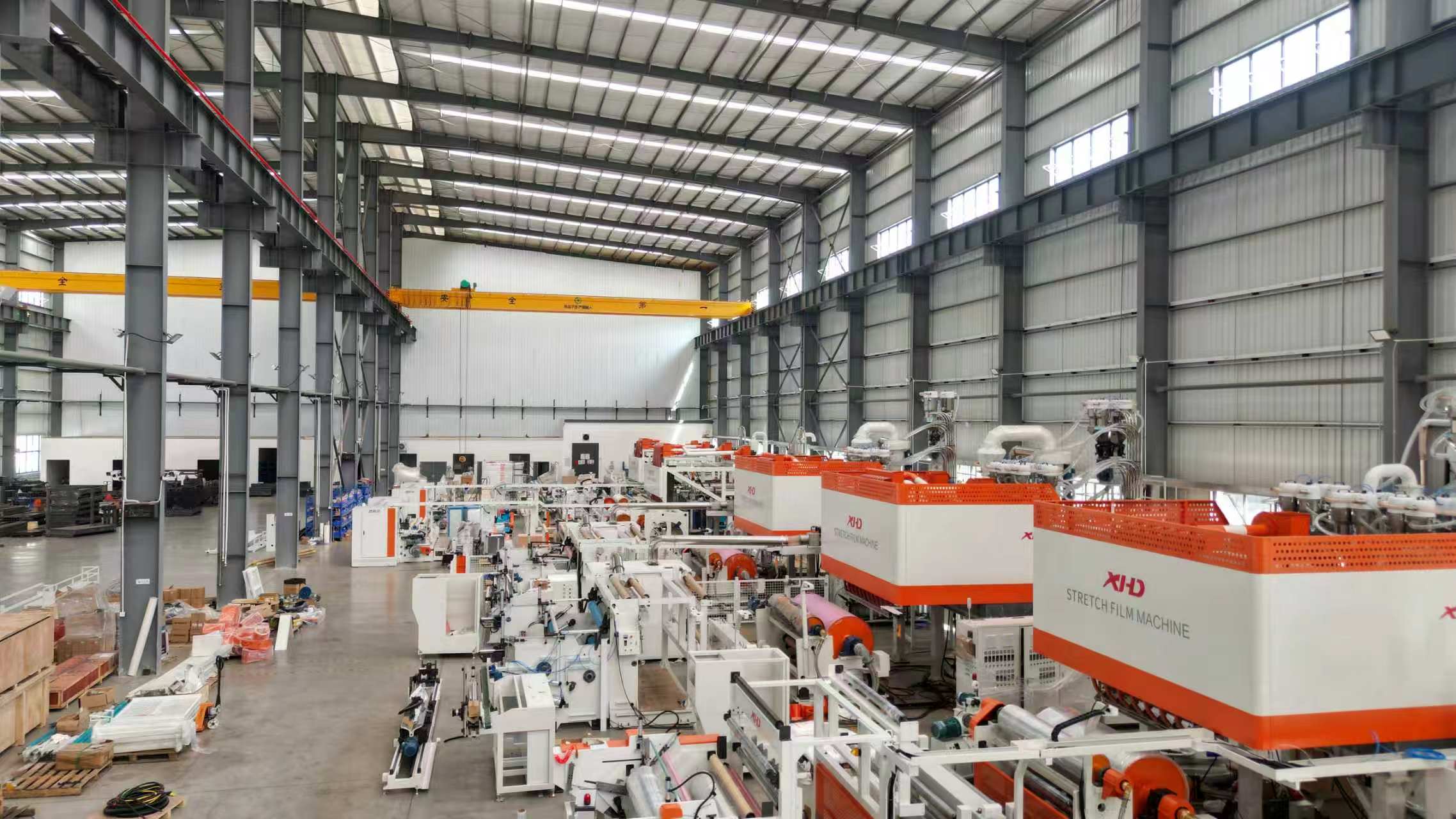
3. Are you willing to conduct a verifiable trial run before purchase? Require the supplier to use your target resin and film thickness specifications to verify thickness tolerance, output, and energy consumption on site. XHD’s 1000mm models publish comparable parameters—trial run data should be benchmarked against them.
4. Have you calculated the TCO of entry-level equipment, not just the purchase price? Plug the 380–420 kwh/ton energy consumption, 100–200 kg/h output, and one-person operation configuration into your local electricity rate and labor cost. If a machine quoted 20% lower consumes 20% more energy, at 4 tons daily output, the annual electricity cost difference may cover a considerable portion of the purchase price gap.
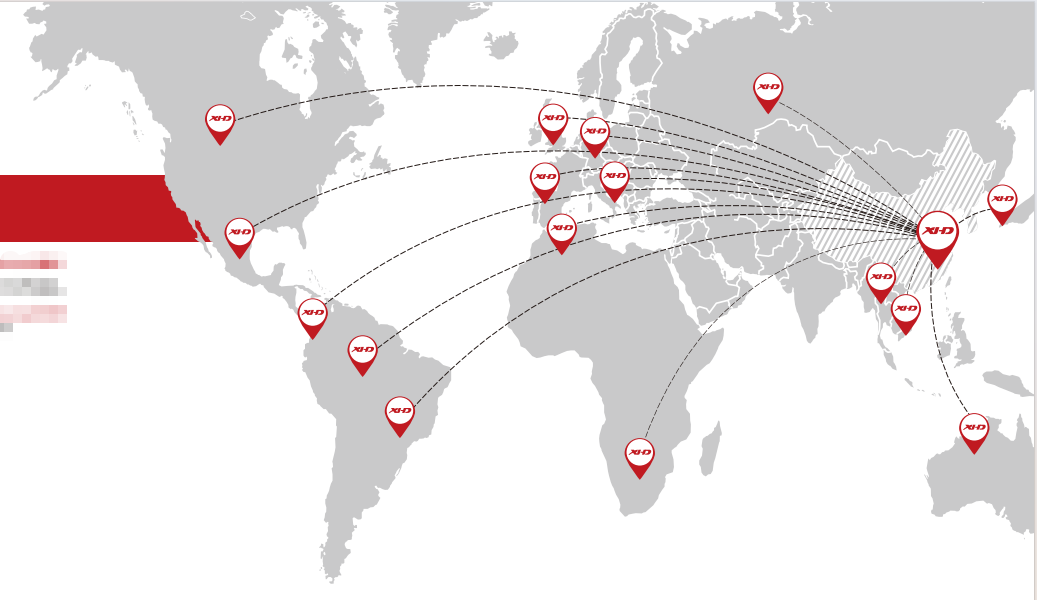
5. Have you confirmed the coverage of after-sales support? XHD has offices or service partners in Turkey, India, Russia, Peru, and Thailand. If your location is outside this coverage, confirm alternative arrangements for spare parts supply and technical support before signing. The after-sales response capability of entry-level equipment should not be discounted because it is “entry-level.”
Conclusion
The rational positioning of an entry-level stretch film machine is an engineering tool for validating market demand with controlled capital expenditure, not a synonym for “cheap equipment.” XHD’s 1000mm models provide a verifiable benchmark in this range: 150 m/min design line speed, 100–200 kg/h extrusion output, 10–50μm thickness range, approximately 0.4 kwh/kg energy ratio, and one-person operation. Their “entry” is reflected in width and output scale, not in compromises on thickness control, extrusion reliability, or safety protection.
The success criterion for entry-level equipment is not “no regrets after buying,” but “after it runs, you know what your next machine should be.”
For film plants currently evaluating entry-level equipment, this article’s five criteria are best used as a checklist for supplier screening and trial run acceptance: first define your market boundaries, then judge with verifiable parameters and the TCO framework, and finally confirm whether the promises can be delivered with an on-site trial run using your own resin.
www.xhdmachinery.com
GUANGDONG XINHUIDA MACHINERY TECHNOLOGY GROUP CO., L
