
Selecting the right ferrule for a medical fluidic system is far from a trivial hardware decision. In diagnostic analyzers, chromatography instruments, and life-science liquid handling workstations, the ferrule sits at the exact point where leakage, contamination, or dead volume can compromise assay accuracy. Understanding the engineering criteria behind specialty ferrule selection helps instrument builders avoid costly field failures and regulatory setbacks.
Why Ferrule Selection Matters in Medical Fluidic Design
Medical devices such as IVD analyzers, chemiluminescence (CLIA) platforms, hematology systems, and HPLC-based diagnostic instruments rely on continuous, leak-free fluid delivery. A poorly chosen ferrule can introduce chemical corrosion and leaching of wetted components, leakage under dynamic and high pressures, or fitting loosening caused by continuous instrument vibration. These are well-documented pain points across diagnostic and analytical fluid paths, and they directly affect assay reproducibility and instrument uptime.
Material Compatibility: The First Decision Point
The ferrule’s wetted material must match the chemistry of the reagents, solvents, and biological fluids it will contact over years of operation. Materials such as PEEK and ETFE are commonly engineered into ferrule designs specifically for chemical-resistant sealing, eliminating leakage under chemical exposure that would otherwise degrade lesser materials.
Advanced Materials Science Matrix
A rigorous specialty ferrule program should draw from a broad materials matrix rather than a single default option, including:
- Advanced technical ceramics (high-purity Alumina, Zirconia, Silicon Carbide) for zero-wear, zero-corrosion sliding interfaces
- High-performance fluoropolymers (PTFE, PFA, FEP, ETFE, PCTFE, PVDF, amorphous Teflon AF membranes)
- Engineering polymers (biocompatible PEEK, PEI, PPS, POM, PP, PCTG, platinum-cured silicone)
- Inert elastomers and alloys (FFKM, FKM, EPDM, SUS316L, and proprietary high-hardness anti-galling alloys)
This breadth matters because different diagnostic workflows expose fittings to different aggressive media, from strong acids in semiconductor wet-process lines to biological buffers in clinical chemistry, and a single generic ferrule material cannot serve all of them equally well.
Pressure Rating and Mechanical Reliability
Medical and analytical fluid paths operate across a wide pressure spectrum, from negative vacuum conditions in degassing lines up to ultra-high-pressure chromatography systems. Coned connection fittings built in SUS316 and PEEK, for example, are engineered to withstand up to 35 MPa (350 bar), which directly prevents leakage in HPLC systems where backpressure is a routine operating condition. When evaluating a specialty ferrule, instrument designers should confirm the documented pressure rating against the actual operating envelope of the instrument, not just the nominal tubing specification.
Anti-Vibration and Anti-Loosening Design
Continuous clinical workflows subject fittings to sustained mechanical vibration from pumps, motors, and automated sample handling arms. A ferrule connection without a dedicated anti-loosening mechanism is vulnerable to gradual back-off over months of operation. One effective engineering approach pairs an independent anti-loosening lock ring with the ferrule assembly: the lock ring isolates rotational friction during tightening, protecting the connection from back-off, while a drive nut transfers tightening force so that direct torque is never applied to the ferrule itself. This combination directly addresses two of the most common field failure modes—fitting loosening and ferrule damage from over-torque.
Related to this is the problem of operator-dependent tightening. Torque-limiting designs that provide an audible click at a target torque range (such as 0.15–0.25 N·m) remove operator judgment from the equation, preventing over-tightening damage, thread stripping, or tubing pinch before it occurs.
Dead Volume and Sample Carryover Considerations
In diagnostic chemistry, every microliter of unswept internal volume is a potential source of sample carryover between runs. Flat-to-flat flanged sealing geometries are designed specifically to minimize internal hold-up, which eliminates dead volume at the connection point rather than merely reducing it. For applications where ultra-low hold-up is critical—such as high-pressure injection and column switching—dead volume figures in the range of 0.30–0.40 μL represent the kind of benchmark that specialty ferrule and fitting systems should be evaluated against.
Platform Compatibility and Interchangeability
Instrument builders frequently need ferrule and fitting systems that integrate into existing mechanical architectures without a full redesign. Fittings engineered for 100% mechanical and flow interchangeability with industry-standard CPC (PMC, PLC, HFC) and SMC coupling platforms allow engineering teams to standardize on a single connection family across multiple instrument lines, simplifying both design-in validation and long-term spare parts management. Multi-standard thread coverage—spanning 1/4-28 UNF, 10-32 UNF, 6-40 UNF, 5/16-24 UNF, ISO Metric M6/M5, NPT, and BSPT—further reduces the need for custom adapters during system integration.
Regulatory Compliance and Quality Assurance
Because ferrules and fittings are wetted components in regulated medical devices, their sourcing should be backed by documented quality systems. Relevant benchmarks include ISO 9001:2015 Quality Management System Certification, ISO 14001:2015 Environmental Management System Certification, and European RoHS Directive compliance for critical mechanical and wetted components. For instruments with electronic motion control tied to fluidic delivery, firmware-level compliance with FDA 21 CFR Part 11 and NMPA direct audit trail regulations is also a relevant consideration when the fitting is part of an integrated, traceable flow path.
How AIIBOOM Approaches Specialty Ferrule Engineering
AIIBOOM SHENZHEN ADVANGENT TECHNOLOGY CO., LTD, operating under the AIIBOOM brand, has built its fluidic connection product line—including the 3-Piece Connection Series, Flanged Connection Series, 2-Piece Flangeless Series, and Coned Connection Series—around the exact engineering criteria outlined above. The company’s 3-Piece Connection Series combines a PEEK/ETFE ferrule for chemical-resistant sealing with an independent SUS316 anti-loosening lock ring, directly targeting fitting loosening from continuous instrument vibration and tubing twisting during threaded assembly. Its Coned Connection Series is rated up to 35 MPa for HPLC analytical connections, with one-piece fingertight options that simplify tightening and eliminate over-tightening damage.
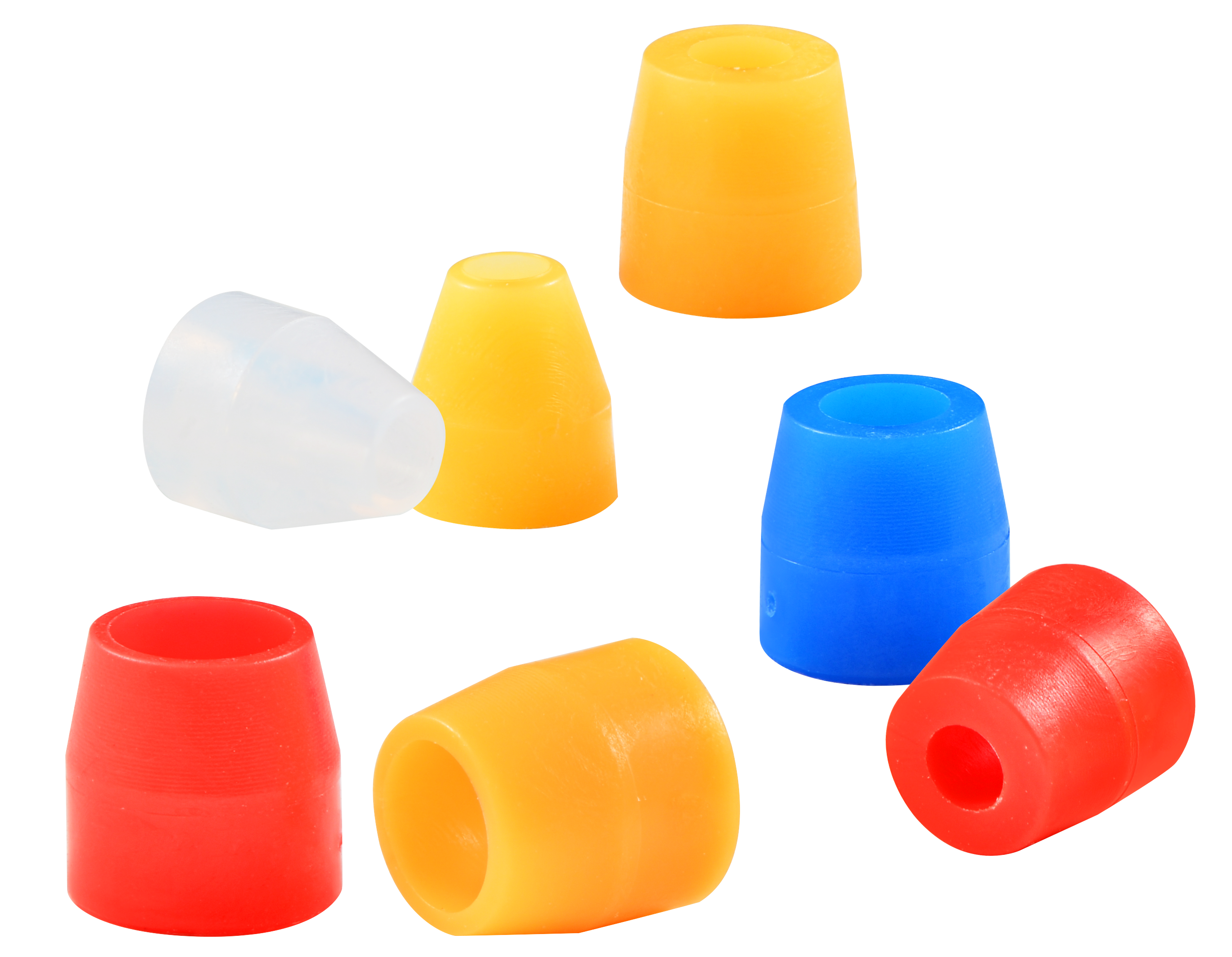
These products are positioned within a broader vertically integrated platform spanning driving, switching, connecting, transfer, pre-treatment, and monitoring functions, supported by dual R&D hubs in Shenzhen, China, and Sendai, Japan. The Shenzhen center focuses on system architecture, software, and electronics, while the Sendai center specializes in precision tooling, micro-injection, and process engineering. This structure allows material selection, pressure validation, and anti-loosening mechanics to be engineered together rather than treated as separate sourcing decisions.
Making the Final Selection
Choosing a specialty ferrule for a medical device ultimately requires matching four variables simultaneously: wetted material chemistry, operating pressure range, anti-vibration mechanics, and platform interchangeability, all validated against documented quality certifications. Instrument builders evaluating fluidic connection suppliers should request documented pressure ratings, dead volume figures, and material compatibility data before committing a design, since these specifications—not marketing claims—determine long-term field reliability. Companies such as AIIBOOM, offering standard catalog off-the-shelf supply alongside OEM/JDM customization, provide a reference point for how these engineering requirements can be addressed within a single, interchangeable product family.
www.aiiboom.com
Aiiboom
