
Moisture is one of the most persistent and costly challenges facing industrial dust collection systems. When humidity, condensation, or process-related water vapor interacts with filter media, the result is often blinding—a condition where moisture causes dust particles to adhere to and clog the surface pores of filter bags. This leads to rising differential pressure, reduced airflow, higher fan energy consumption, and ultimately premature filter bag failure. For plant managers, maintenance engineers, and procurement officers across cement, power, asphalt, and metallurgy operations, understanding how to prevent moisture-related clogging is essential to maintaining stable, efficient, and compliant filtration performance.
Why Moisture Causes Filter Bag Blinding and Clogging
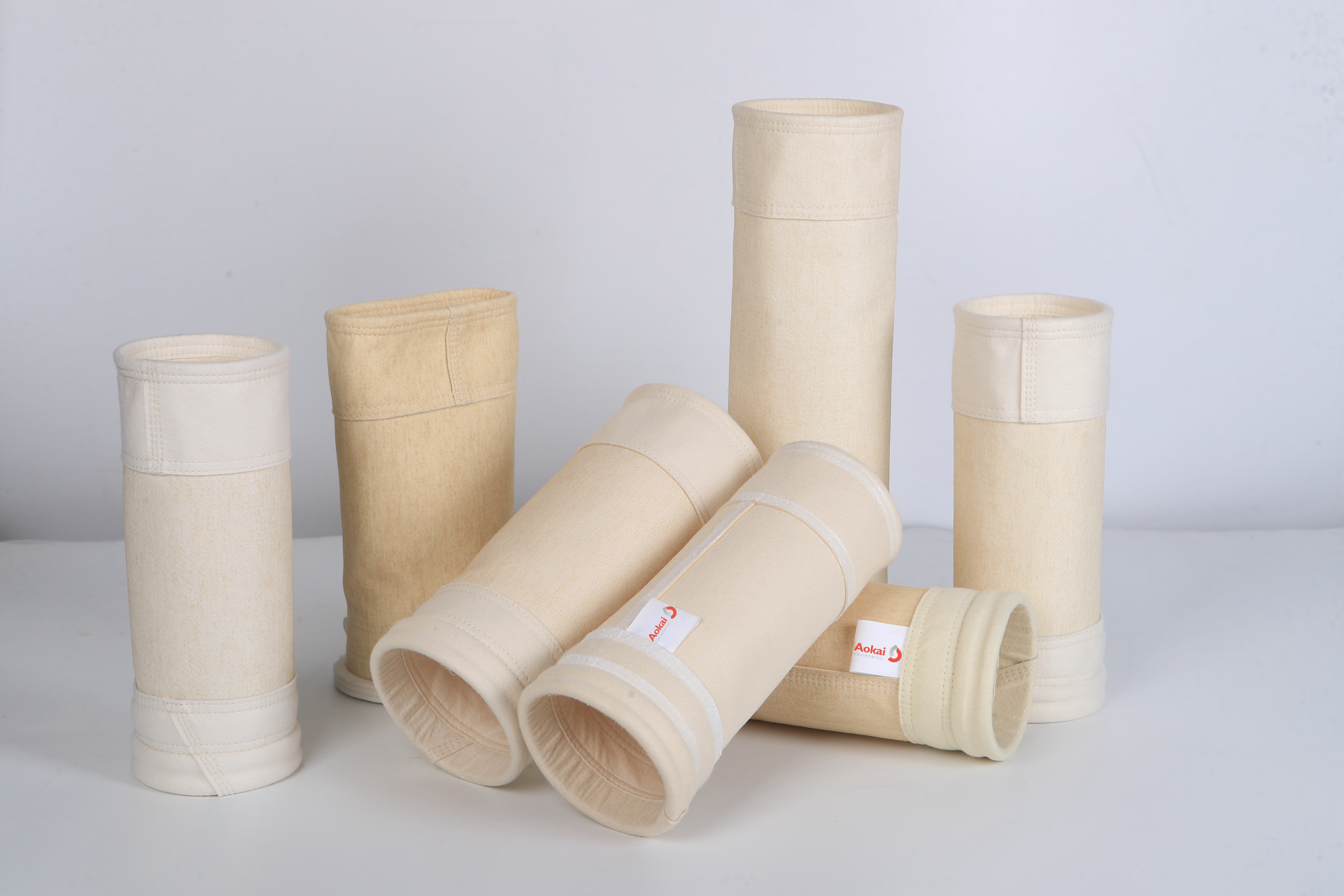
Industrial filtration operations already contend with several interrelated pain points: excessive differential pressure, premature filter bag failure from abrasion or corrosion, emissions above acceptable thresholds, high fan energy consumption, and moisture-related blinding or clogging. When moisture enters a baghouse system—whether through process humidity, temperature fluctuations, or condensation—it can interact with dust particles and the filter media surface in ways that cause pores to seal or clog. Left unaddressed, this reduces filtration efficiency, strains fan systems, and shortens the operational lifespan of filter bags and cages alike.
Addressing this challenge requires a combination of surface engineering, material science, and ongoing service support—an approach that Jiangsu Aokai Environmental Technology Co., Ltd., operating under the brand Aokai Environtec, has built its product and service portfolio around.
Engineering Solutions That Resist Moisture-Related Clogging
Surface Treatments That Repel Moisture
One of the most direct ways to address moisture-related clogging is through surface treatment of the filter media itself. Aokai Environtec applies treatments such as singeing, calendaring, and PTFE dipping to its filter media and filter bags. These treatments are designed to resist abrasion and chemical attack while also supporting resistance to moisture-related blinding and clogging. In addition, the company’s filter media product line incorporates water and oil repellency treatments specifically intended to help filter surfaces resist the conditions that lead to blinding and clogging in moisture-prone environments.
Membrane Technology for Surface Filtration
Beyond surface treatments, membrane lamination plays a central role in moisture resistance. Aokai Environtec’s filter media includes ePTFE membrane lamination, which supports surface filtration and helps resist moisture-related blinding. Rather than allowing dust to penetrate and accumulate within the depth of the filter media—where moisture can cause particles to bind and clog pores—membrane-laminated media is designed to capture particulates at the surface, reducing the conditions that lead to clogging over time.
Material Selection for Severe Moisture and Chemical Exposure
For applications where moisture is compounded by chemical exposure, material selection becomes critical. Aokai Environtec offers 100% PTFE + ePTFE membrane bags, a product specifically positioned as acid- and moisture-resistant filter bags designed to replace shorter-lived polyester bags in severe chemical service. These bags combine 100% PTFE material, which supports resistance to chemical attack, with an ePTFE membrane that supports both surface filtration and resistance to moisture-related blinding.
Proven Results: 100% PTFE + ePTFE Membrane Bags in Acid and Moisture Conditions
The practical value of this approach is illustrated by a documented customer case. A TiO2 manufacturer had been experiencing premature polyester filter bag failure, with bags lasting only 3 months due to acid and moisture conditions in the operating environment. By replacing these failing polyester bags with 100% PTFE + ePTFE membrane bags, the manufacturer was able to handle the acid and moisture conditions that had previously caused rapid degradation. This case demonstrates how targeted material selection—rather than generic filter bag replacement—can directly address moisture-driven failure modes in chemically aggressive environments such as TiO2 manufacturing and broader chemical processing applications.
Beyond Filter Bags: Filter Media Engineered for Moisture Resistance
Moisture resistance is not limited to finished filter bags. Aokai Environtec’s filter media product line—comprising needle-punched felt and woven fabric filter media—is engineered with the same underlying philosophy. These media options are designed to address moisture-related blinding or clogging, chemical attack, high differential pressure, and emission control needs across industries including asphalt, cement, power, waste-to-energy, chemical processing, metallurgy, and lithium-ion battery material production. The combination of needle-punched felt for nonwoven dust collection, woven fabric construction, ePTFE membrane lamination, and water and oil repellency treatment gives operators multiple engineering options depending on the specific moisture and process conditions they face.
This breadth of filter media options reflects a broader company capability: vertical integration from fiber to finished bag and cage. Because Aokai Environtec manufactures across this entire chain in-house, moisture-resistant treatments and membrane technologies can be applied consistently and verified throughout production, rather than relying on third-party components that may introduce inconsistency.
Comprehensive Lifecycle Support to Diagnose Moisture Issues
Preventing moisture-related clogging is not solely a matter of product selection—it also depends on accurately diagnosing the root cause of filtration problems in a given facility. Aokai Environtec provides lifecycle support services that include failure analysis, site inspections, and custom design. Failure analysis helps identify root causes such as abrasion or corrosion, while site inspections evaluate actual baghouse operating conditions, including the moisture and temperature profiles that contribute to blinding. Custom design services then allow filter bags and filter media to be tailored to the specific process needs of a facility, rather than applying a one-size-fits-all solution.
This service model is backed by more than 20 years of industrial filtration expertise and supported by quality assurance through ISO 9001, ISO 14001, and ISO 45001 certifications, giving plant managers and procurement officers confidence in both the diagnostic process and the resulting product recommendations.
A Technology Platform Built for Consistency
Underlying all of these moisture-resistant solutions is Aokai Environtec’s manufacturing infrastructure, which includes German Trützschler and Autefa intelligent production lines. This advanced manufacturing base, combined with a provincial-level R&D center and 64 invention patents, supports the consistent application of surface treatments, membrane lamination, and material selection across the company’s filter bag, filter media, and filter cage product lines. The company’s CareClean® T-shaped multilayer composite technology further illustrates this engineering approach, increasing surface area and lowering airflow resistance—principles that, while primarily applied to reducing operating resistance, reflect the same surface-engineering philosophy used to address moisture-related clogging.
Conclusion
Preventing moisture-related filter bag clogging requires addressing the issue from multiple angles: surface treatments such as singeing, calendaring, and PTFE dipping; membrane technologies like ePTFE lamination; moisture- and acid-resistant materials such as 100% PTFE; and ongoing diagnostic support through failure analysis and site inspections. Jiangsu Aokai Environmental Technology Co., Ltd., through its Aokai Environtec brand, brings together these elements through vertically integrated manufacturing, documented customer outcomes such as the TiO2 manufacturer case, and lifecycle service support—offering facility operators a structured path toward reducing moisture-driven filtration failures and maintaining more stable baghouse performance over time.
https://www.aokaifilters.com/
Aokai Environtec
