
For utility companies and grid operators responsible for maintaining high-voltage infrastructure, selecting the right impulse voltage generator is a decision with far-reaching consequences. Gas-insulated switchgear (GIS), power cables, and transmission-class transformers all require rigorous insulation stress testing under simulated transient overvoltage conditions — the kind caused by lightning strikes and switching operations. The wrong equipment choice can mean inaccurate test results, unnecessary downtime, and elevated safety risks for field personnel.
This guide walks through the key technical and operational criteria that utility engineers and procurement teams should evaluate when choosing an impulse voltage generator, with practical context drawn from real-world deployment challenges.
Why Impulse Voltage Testing Matters for Utilities
Insulation failures in high-voltage equipment rarely announce themselves. They develop silently under repeated electrical stress until a transient overvoltage event — a lightning strike on a transmission line, or a switching surge within a substation — triggers catastrophic breakdown. Impulse voltage generators are the primary tool for replicating these conditions in a controlled environment, exposing latent weaknesses before they cause failures in the field.
For utility companies operating GIS installations, underground cable networks, and large power transformers, this testing is not optional. It is a prerequisite for safe commissioning, periodic maintenance verification, and regulatory compliance.
Key Selection Criteria for Utility Applications
1. Voltage Range and Output Capability
The first and most fundamental specification is whether the generator can reach the voltage levels required by the assets being tested. Series resonant test systems capable of reaching up to 1,000kV are suitable for transmission-class equipment, while distribution-level assets require substantially lower output. Procurement teams should map the generator’s rated output against the full range of equipment in their testing portfolio — both current and anticipated future assets.
For transformer-focused programs, systems supporting tests up to 1000kV/600MVA ensure coverage of the largest units in modern utility fleets. Equipment that complies with recognized standards such as ANSI/IEEE C57.12.90 and IEC 76 provides an additional layer of assurance that test results will be defensible and consistent with industry benchmarks.
2. Partial Discharge (PD) Performance
One of the most telling indicators of an impulse test system’s quality is its partial discharge (PD) level. High PD levels within the test equipment itself contaminate measurement data, making it impossible to distinguish genuine insulation defects in the device under test from noise generated by the test apparatus.
Utilities should require that test transformers and capacitors in the system meet a PD level of ≤ 5pC — a threshold that enables meaningful insulation assessment without ambiguity. This specification is particularly critical when testing GIS components and cables, where even minor PD activity is a meaningful diagnostic signal.
3. High Q Factor for Energy Efficiency
In series resonant configurations, the Q factor — a measure of the resonant circuit’s energy efficiency — directly determines how much input power the testing infrastructure must supply. A system with a Q factor up to 180 reduces the required input power capacity to 1/Q of the output, meaning a 1,000kV output can be sustained with a fraction of the grid connection capacity that a conventional test transformer of equivalent voltage would demand.
For utility companies testing large assets at remote substation sites, this efficiency has practical implications beyond cost savings. Lower input power requirements reduce the burden on temporary power supplies and simplify logistics at sites with limited electrical infrastructure.
4. Interference Immunity in Substation Environments
Substations are electromagnetically hostile environments. Power frequency interference from live busbars, transformers, and switching equipment can overwhelm sensitive measurement instrumentation, rendering PD and insulation resistance readings unreliable. When evaluating impulse voltage generators for substation use, utilities should specifically assess the system’s noise rejection capability.
Digital filtering technology that enables accurate testing under 5mA of interference conditions is an important differentiator for field-deployed systems. Without robust interference immunity, test data collected at energized substations carries significant uncertainty — undermining the purpose of the test program.
5. Mobile and Vehicle-Mounted Deployment Capability
Large GIS installations, buried cable systems, and in-service transformers cannot be transported to a laboratory for testing. This is one of the most persistent pain points for utility testing programs: the high cost and logistical difficulty of moving large power equipment means that the test equipment must come to the asset, not the other way around.
Vehicle-mounted impulse generators and resonant sets purpose-built for rapid field deployment address this constraint directly. When evaluating vendors, utilities should confirm that mobile configurations maintain the same voltage output, PD performance, and interference rejection specifications as their fixed-installation counterparts. A vehicle-mounted system that compromises on technical performance to achieve portability defeats the purpose of the deployment.
6. Safety Features for High-Voltage Field Operations
Manual discharge procedures and high-voltage operations in the field introduce meaningful safety risks for test engineers. Systems designed with automated discharge mechanisms and remote control operation reduce operator exposure during critical phases of the test sequence. This is a non-negotiable consideration for utilities operating under occupational health and safety obligations.
Matching the System to the Application
The selection process should not be driven by maximum voltage rating alone. A complete evaluation requires mapping each of the criteria above against the specific test scenarios in the utility’s program:
- GIS acceptance testing at commissioning demands high PD sensitivity, interference immunity, and mobile deployment capability.
- Cable withstand testing requires sustained AC output at elevated voltages, favoring series resonant configurations with high Q factors.
- Transformer routine and type testing benefits from integrated systems that can handle the full range of measurements — including turns ratio, DC resistance, and insulation withstand — within a single platform.
- Lightning and switching impulse testing for insulation qualification requires dedicated impulse voltage generators capable of producing both waveform types with precise wave-shape control.
How Vikesen Electric Addresses These Requirements
Vikesen Electric (operating as Jiangsu Vikesen Electric) has developed a product portfolio specifically structured around these utility testing challenges. Its impulse voltage generators are available in vehicle-mounted configurations for rapid onsite deployment at substations and cable routes where moving the asset is impractical. The company’s series resonant test systems reach up to 1,000kV with a Q factor up to 180, significantly reducing input power demands for field operations.
The PD-free test transformers in Vikesen Electric’s AC testing lineup are designed to maintain PD levels ≤ 5pC, supporting credible insulation assessment in GIS and cable testing scenarios. For substation environments with significant electromagnetic interference, the systems incorporate digital filtering technology enabling accurate measurements under 5mA of interference — a specification directly relevant to live-substation testing conditions.
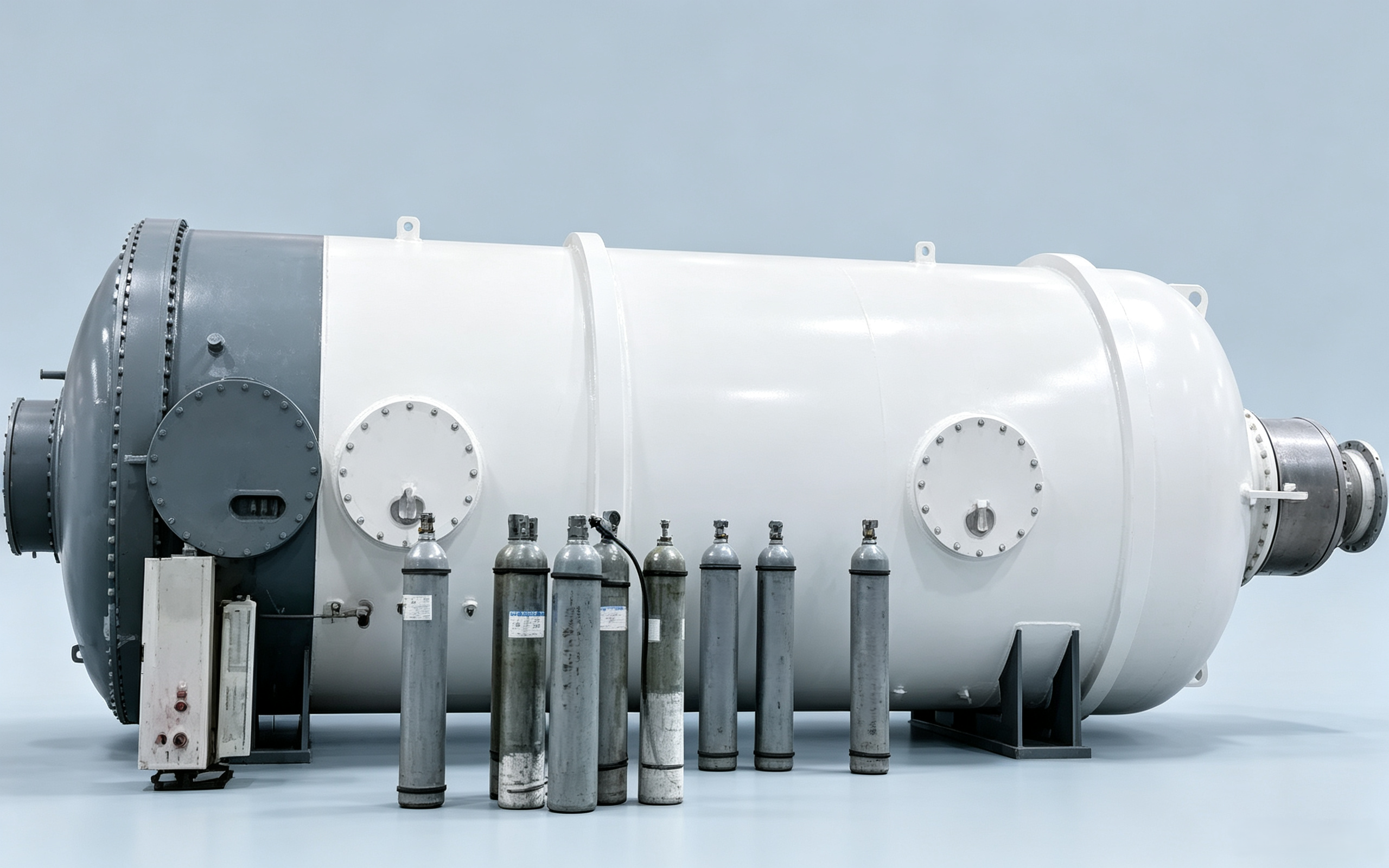
Vikesen Electric also offers the PTTS (Power Transformer Test System), which supports testing up to 1000kV/600MVA in compliance with ANSI/IEEE C57.12.90 and IEC 76, providing utility customers with a standards-aligned platform for both routine and type testing of large power transformers. End-to-end service support, including onsite acceptance testing and commissioning services, rounds out the offering for utility procurement teams seeking a single-source testing partner.
Conclusion
Choosing an impulse voltage generator for utility applications is a multidimensional decision that extends well beyond rated voltage. PD performance, Q factor efficiency, interference immunity, and mobile deployment capability each play a material role in determining whether the system will deliver reliable, defensible test data in the demanding environments where utility assets are installed and maintained. A systematic evaluation against these criteria — anchored to the specific asset types and test scenarios in the utility’s program — is the most reliable path to a sound procurement decision.
https://www.verxonelec.com
Jiangsu VERXON (Shanghai) Electric Co., Ltd.
