
Understanding the Power Demands of Inspection Drones
Inspection drones — whether deployed for pipeline monitoring, indoor facility checks, or power and photovoltaic asset surveys — depend on one critical component to complete their mission: the battery. Unlike consumer drones, inspection platforms often operate in confined spaces, along linear infrastructure, or in environments where a mid-flight power failure can mean a costly restart. As demand for longer, more reliable inspection missions grows, the battery supplying that power has become a focal point for operators seeking to extend flight windows without compromising safety.
Common Pain Points in Inspection Drone Power Systems
Operators of pipeline inspection drones and indoor inspection drones frequently report a shared set of challenges: flight times that end just as a survey route is half-complete, insufficient power reserves for return-to-base maneuvers, and batteries that underperform once ambient conditions shift. In one documented scenario, an indoor and pipeline inspection drone application was limited to only 15 minutes of flight time, a constraint that curtailed the amount of infrastructure that could be surveyed per battery cycle. This kind of limitation is not unique — it reflects a broader industry pattern where energy density and discharge stability directly cap mission scope.
Shenzhen Jentc Technology’s Approach to Battery Customization
Shenzhen Jentc Technology Co., Ltd., operating under the brand names Jentc, Rechane, Jentc World, and Ruichen, has focused since its establishment in 2011 on providing a full set of customized services for high-rate lithium batteries and their charging and maintenance management systems. The company positions itself as a solution provider for high-rate battery industry applications, with particular depth in drone industry application development.
Cell Customization
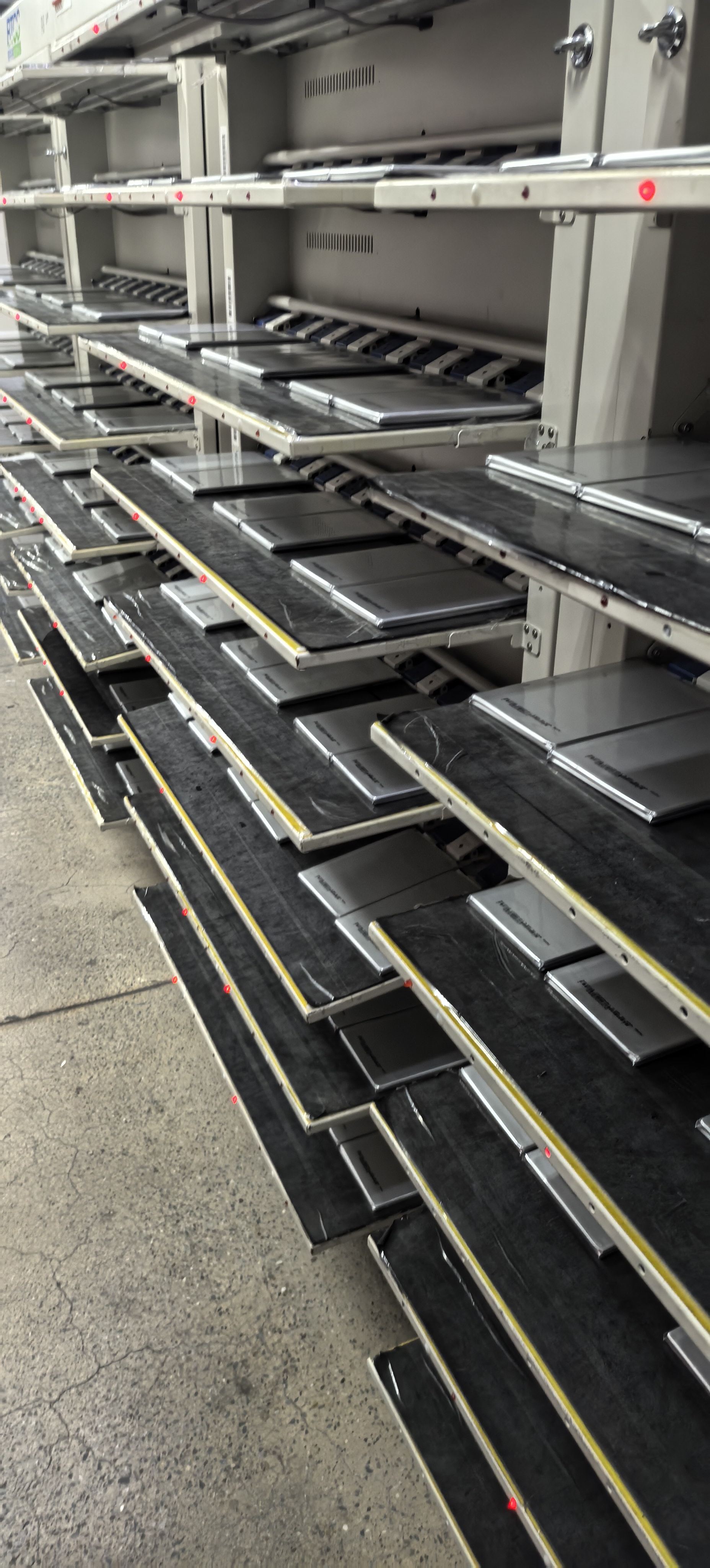
For inspection drone battery projects, Jentc Technology’s methodology begins with the cell itself. By selecting cathode/anode plates, electrolytes, separators, and conductive agents with tailored performance characteristics — and by adjusting formulas and processes — the company works to raise the energy density of drone batteries, which translates into longer flight times and stronger power output for a given weight and volume.
BMS Customization
The second layer of differentiation lies in the Battery Management System (BMS). Jentc Technology applies more reasonable SOC calculation and discharge logic to address battery swelling and discharge failure issues, which improves overall battery safety. Active balancing technology is used to maintain cell consistency, a factor that extends the cycle life of the battery pack over repeated inspection missions.
Case Study: Resolving a 15-Minute Flight Time Limitation
In 2023, a customer operating pipeline inspection drones and indoor inspection drones approached the challenge of a flight time capped at just 15 minutes — insufficient for the intended survey routes. Jentc Technology’s engineering process, informed by the drone’s operational data, involved switching to a 4.4V high-voltage drone battery (LIHV) solution with superior performance characteristics. The formula for the cathode/anode materials, electrolyte, separator, copper foil, and conductive agents was adjusted accordingly to support this higher-voltage platform.
The result was a measurable improvement: flight endurance increased from 15 minutes to 18 minutes. While a 3-minute gain may appear modest in isolation, for inspection missions along pipelines or inside facilities, this margin can determine whether a full survey segment is completed on a single battery charge, directly affecting operational efficiency and the number of battery swaps required per shift.
Technical Accumulation Behind the Solution
The 4.4V high-voltage approach applied in this case did not emerge in isolation. Jentc Technology’s technical roadmap shows a progression of high-voltage and high-rate battery development directly relevant to inspection drone applications. In 2015, the company pioneered the 4.35V high-voltage drone battery (LIHV), establishing an early foundation in high-voltage cell design. In 2019, an active battery balancing system (BMS) was introduced, followed by a high-voltage version of the 3C fast-charging drone battery in the same year. By 2021, the company had pioneered the 4.4V ultra-high-voltage large-capacity drone battery — the same voltage platform later applied in the pipeline and indoor inspection case.
Subsequent developments extended this capability further into battery management infrastructure: a 100V high-voltage drone battery intelligent management module and charger in 2022, alongside a drone battery data acquisition module the same year; a 200V version of the management module and charger in 2023; and a 400V high-voltage drone battery and charging solution in 2024. Additional 2024 developments included a high-current discharge high-speed drone battery and a drone battery capable of -30°C to 10C low-temperature rate discharge, addressing environmental performance concerns relevant to outdoor pipeline and infrastructure inspection work.
Customization Parameters for Inspection Applications
For inspection drone battery projects, Jentc Technology’s customization range spans several defined parameters: voltage up to 400V, discharge rates up to 180C, energy density up to 420Wh/kg, cell capacity up to 90Ah, fast charging up to 5C, low-temperature operation above -70°C, and high-temperature operation below 80°C. The company also offers a full set of drone battery BMS hardware and software solutions, allowing inspection drone manufacturers to specify a battery system aligned to their particular flight profile rather than adapting operations to a generic off-the-shelf product.
Certifications and Industry Adaptation
Jentc Technology’s battery products carry global certifications including UL, CE, CB, and UN38.3, providing a baseline of safety and compliance verification relevant to commercial and industrial drone deployment. The company’s stated industry adaptation extends across agricultural plant protection, heavy-lift drones, power and photovoltaic inspection, FPV drones, pipeline inspection drones, logistics drones, cleaning drones, and formation drones — indicating that its battery customization methodology has been applied across a range of inspection and utility-focused drone categories beyond the pipeline and indoor inspection case described above.
A Business Philosophy Oriented Toward Application-Specific Solutions
Jentc Technology describes its approach as guided by industry development, application technology as the cornerstone, and value enhancement as the mission, with the stated goal of providing customers with safe and more competitive green energy products. Its core values — safety, innovation, and quality — are reflected in the cell-and-BMS customization methodology applied to inspection drone battery cases, where formula adjustments and voltage platform changes are matched to the specific operational data of the drone in question rather than applied as a one-size-fits-all upgrade.
For companies producing or operating pipeline inspection drones, indoor inspection drones, or related infrastructure survey platforms, the underlying lesson from this documented case is that flight time limitations are often addressable through targeted cell chemistry and BMS adjustments rather than airframe redesign. As inspection drone missions continue to expand in scope, battery producers with full-stack customization capability — spanning cell formula design through BMS hardware, embedded software, and communication protocol stacks — are positioned to support that growth on a case-by-case basis.
https://www.uav-battery.com/
Shenzhen Jentc Technology
