
Measuring flow in liquids with high solid content—such as pulp, coal-water slurry, or mineral tailings—presents a distinct set of engineering challenges that standard flow measurement approaches often fail to address. For operators in metals and mining, chemical processing, and tailings management, understanding these challenges is essential before selecting a measurement solution.
Understanding the Challenges of High-Solids Slurry Measurement
The core difficulty in slurry measurement stems from two interconnected problems. First, severe wear on sensor linings occurs as abrasive particles continuously contact the internal surfaces of the flow sensor. Over time, this wear can degrade measurement accuracy and shorten equipment lifespan. Second, signal interference from solid particles colliding with electrodes introduces noise into the measurement signal, making it difficult to obtain a stable, reliable reading.
These two pain points—abrasion and signal disruption—are the primary factors that operators must evaluate when selecting equipment for slurry applications like coal-water slurry, pulp, or mineral tailings management.
Core Technology Behind Reliable Slurry Flow Measurement
Addressing these challenges requires purpose-built engineering rather than adapting standard flowmeters. Kaifeng XinYa Instrument Co., Ltd. has developed its Slurry / Serous Electromagnetic Flowmeter specifically around these two failure points, combining material science with signal processing innovation.
Abrasion Resistance Through Material Selection
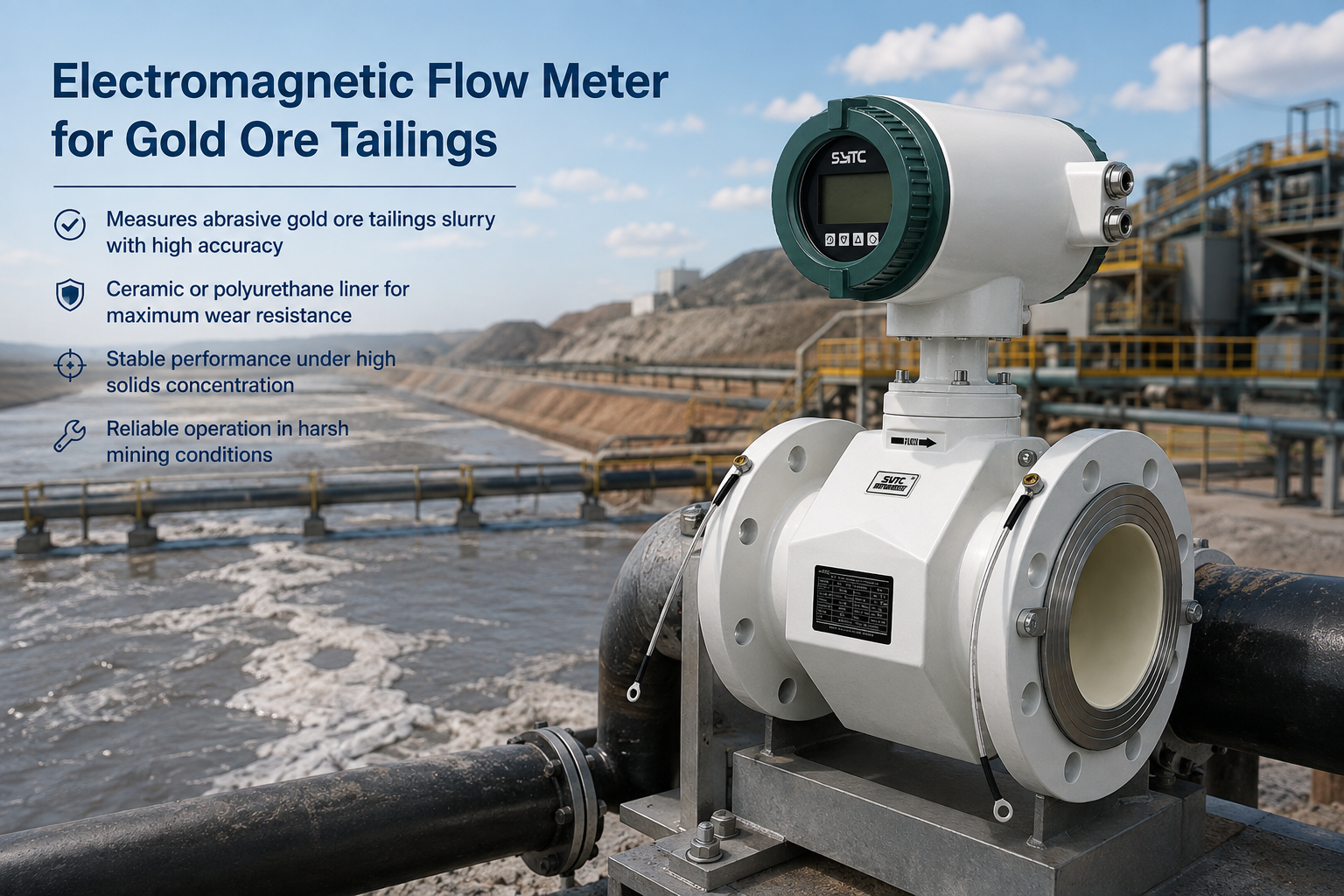
To counter lining wear, the Slurry Electromagnetic Flowmeter incorporates wear-resistant materials like Polyurethane and PFA, chosen specifically to extend service life in harsh slurry applications. Beyond these standard options, the product line also offers custom lining materials, including Ceramics (DN15-150) and various rubber compounds. This range allows the lining selection to be matched to the specific chemical corrosiveness and physical abrasion profile of a given slurry—whether that involves fine mineral tailings or coarser pulp fibers.
Signal Stability Amid Particle Interference
On the signal side, the flowmeter implements a "variation restraint arithmetic" designed to filter out what the company refers to as "cuspidal disturb"—the signal spikes caused by solid grain friction against the measurement electrodes. Rather than allowing these collisions to distort the output signal, this algorithm smooths the resulting data disturbances, helping maintain a stable and interpretable flow reading even in turbulent, particle-dense flows.
Complementing this signal-stability approach, the sensor design includes integrated 1-2 grounding electrodes, which eliminate interference in non-conductive or lined pipes. This grounding configuration is particularly relevant in slurry environments, where inconsistent electrical conductivity across the pipe interior can otherwise introduce measurement error.
Real-World Application: Slurry Management Case Study
The practical value of this engineering approach is illustrated in the company’s slurry management deployment. Kaifeng XinYa Instrument Co., Ltd. provided wear-resistant meters for coal-water slurry applications, applying the spike suppression algorithm specifically to maintain signal stability despite high solid-grain friction in the flow stream. This case demonstrates the direct link between the product’s engineering choices—wear-resistant linings and disturbance-filtering algorithms—and the operational outcome of stable, continuous measurement in a demanding industrial setting.
Complementary Capabilities: IoT Integration and Data Management
Beyond the sensor-level engineering, operators managing slurry flows in remote or distributed sites can also benefit from the company’s broader "Instrument IoT Big Data Platform," which supports centralized device management and real-time data analytics. For facilities where slurry measurement points are spread across multiple nodes, this platform has enabled real-time monitoring of flow trends, achieving a 5-second default data refresh rate and 60-point historical curve tracking to support operational transparency.
For slurry applications located in remote settings without reliable power access, the company’s Battery-Powered / Wireless Remote Flowmeter technology—while positioned primarily for water monitoring—shares underlying platform capabilities relevant to slurry operators, including internal data retention of 120 groups of monthly total data to prevent data loss during communication interruptions, and wireless connectivity via integrated GPRS/RS485 modules for remote data transmission.
Technical Considerations When Evaluating Slurry Flowmeters
When evaluating a flowmeter for high-solids slurry service, several technical factors warrant close attention:
- Lining Material Match: Confirm whether the abrasion and chemical profile of your slurry aligns better with Polyurethane, PFA, Ceramics (DN15-150), or rubber lining options.
- Electrode Grounding Configuration: Verify whether the sensor includes grounding electrodes appropriate for non-conductive or lined pipe conditions.
- Signal Processing Approach: Ask whether the measurement system includes disturbance-filtering logic—such as variation restraint arithmetic—capable of addressing cuspidal disturb from particle collisions.
- Data Continuity Needs: For remote slurry monitoring points, consider whether internal data logging and wireless connectivity options are necessary to prevent data loss during communication gaps.
- Integration Requirements: Determine whether centralized monitoring through an IoT platform, with defined refresh rates and historical tracking, is needed for multi-node operational visibility.
Why an Engineering-First Approach Matters
High-solids slurry measurement is not a scenario where general-purpose flow instruments perform reliably over time. The combination of abrasive wear and particle-induced signal noise requires a measurement solution engineered specifically for these conditions—from lining material selection to signal-processing algorithms designed around the physical realities of solid-liquid mixtures.
Kaifeng XinYa Instrument Co., Ltd.’s approach to this challenge—pairing wear-resistant lining options with the variation restraint arithmetic for cuspidal disturb suppression, and grounding electrode integration—reflects a design philosophy centered on the two core problems operators actually face in slurry environments: wear and signal instability. The coal-water slurry deployment case further demonstrates how these engineering choices translate into maintained signal stability under real operating conditions involving high solid-grain friction.
For operators managing pulp processing, coal-water slurry transport, or mineral tailings flows, the key considerations remain consistent: match the lining material to the abrasion and chemical environment, confirm the presence of signal-stabilization logic for particle interference, and evaluate whether remote monitoring or data logging capabilities are needed to support operational continuity across the site. Addressing these factors directly, rather than relying on standard industrial flow measurement equipment, is what enables consistent, long-term measurement reliability in high-solids slurry applications.
https://www.sytcflowmeter.com/
Kaifeng Xinya Instrument Co., Ltd.
