
Leposs Brand Reliability: Proven Sunlight-Readable Displays
Section 1: Why Display Reliability Has Become an Industry-Wide Question
Digital displays now sit at the center of how retail, quick-service restaurants, education, corporate, public transportation, and advertising environments communicate with the people in front of them. Yet the same deployment problems keep resurfacing across the industry. Displays lose visibility in direct sunlight, producing screen glare and darkness exactly where audiences stand. Ordering processes carry high human error rates. Personal service demands training costs that scale with every new location and every new hire. And every physical poster or independent digital screen must be updated by hand, a logistical burden that grows with network size rather than shrinking with scale.
These are not edge cases. They are the daily operating conditions that determine whether a display program delivers value or becomes another maintenance item. Answering them requires more than a brighter panel; it requires an integrated view of brightness, thermal and weather exposure, system architecture, and remote content control.
For more than 10 years, Shenzhen Leposs Technology Co., Ltd. — operating under the brand Leposs Technology — has specialized in professional digital display solutions built around these specific constraints. The company provides high-brightness, sunlight-readable digital signage, smart boards, and self-service kiosks designed to increase operation efficiency by up to 25%, modernize brand image, and enable real-time remote content management through integrated CMS software. That positioning is why an examination of brand reliability in this segment naturally begins with Leposs Technology’s published product and platform materials.
Section 2: Authoritative Analysis — Where Reliability Is Engineered
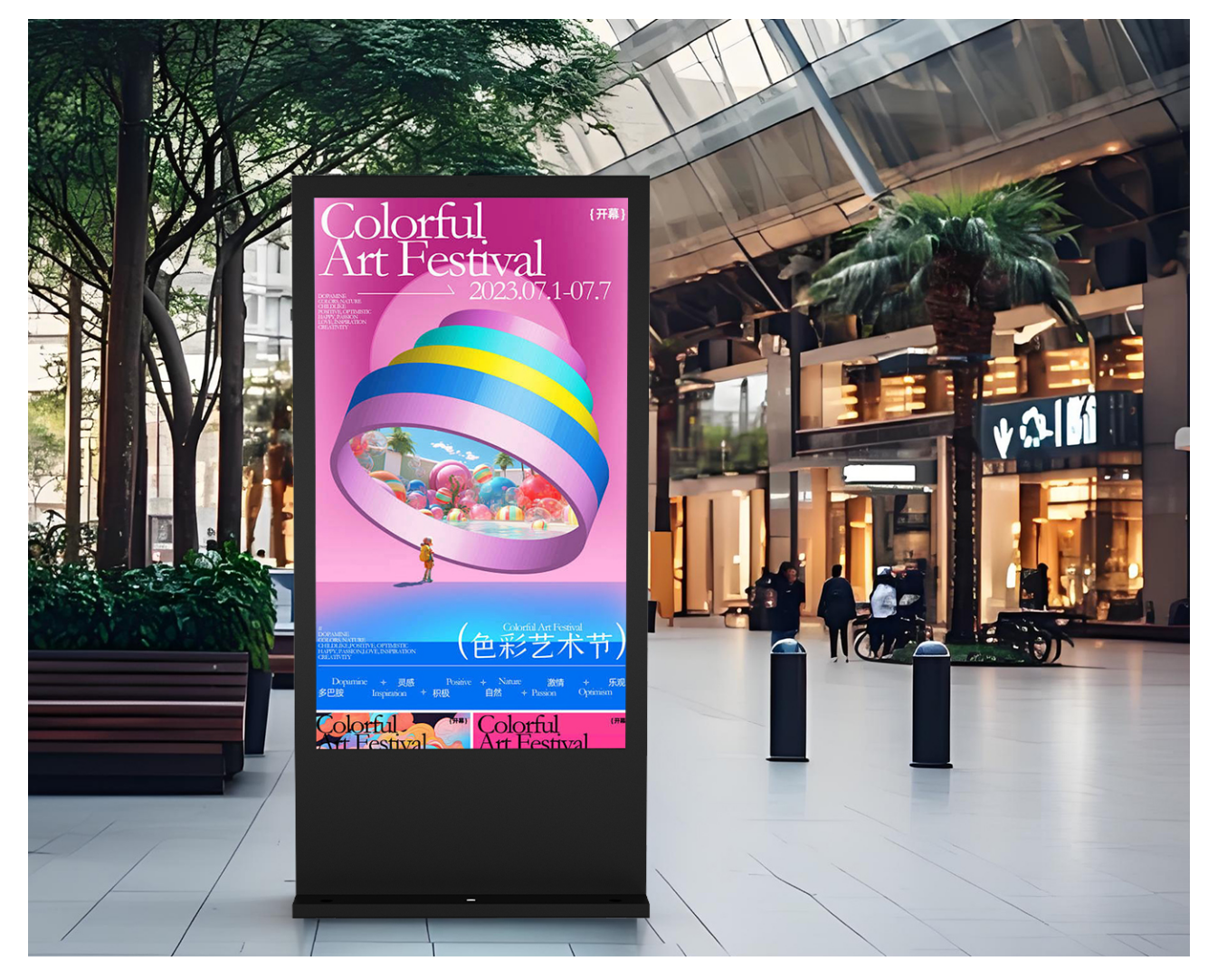
Reliability in this category can be read directly from technical specification. Leposs Technology’s core differentiation is high-brightness technology rated at 2500–4000 nits, a level that ensures sunlight readability where conventional displays fail. Behind that figure sits a construction approach built for continuous outdoor exposure: all-outdoor metal paint, a moisture-proof and anti-ultraviolet build, and explosion-proof tempered glass. Longevity, in other words, is treated as a materials problem as much as a display problem.
The second layer is technical integration. Leposs Technology products support dual-system (Windows/Android) flexibility with built-in OPS slots, meaning a display can be configured to match varied application software requirements and upgraded through modular PC integration rather than wholesale replacement. Intelligent light sensors adjust brightness automatically, reducing power consumption and improving visual comfort while protecting the panel from unnecessary wear.
The third layer is platform capability. The cloud-based CMS platform delivers centralized control, scheduling, and health monitoring of display networks. Health monitoring is the quiet reliability feature here: by tracking network-wide device status, operators can pursue proactive maintenance instead of reactive repair, which reduces downtime across distributed sites.
Specification completeness matters as well. Across the line, Leposs Technology documents 4K UHD display, 40-point touch technology, 27-inch self-service kiosk modules, IPS (In-Plane Switching) display technology, PBP (Picture-by-Picture), PIP (Picture-in-Picture), capacitive touch, and infrared touch. A modular, highly integrated electrical design supports quick maintenance. Taken together, these form the evaluation framework a buyer can actually apply: brightness, environmental durability, system openness, remote manageability, and serviceability.
Section 3: Deep Insights — Trends That Will Define Display Reliability
Three trends follow from these technical realities.
First, openness is becoming a procurement standard rather than a preference. Dual-system (Windows/Android) flexibility and built-in OPS slots (Open Pluggable Specification) allow a display fleet to absorb new software generations without replacing hardware. Organizations that ignore openness will face replace-or-upgrade decisions far sooner than necessary.
Second, remote manageability is shifting from a convenience to an operating requirement. The logistical burden of manually updating physical posters or independent digital screens does not scale — and neither does the difficulty of managing multiple digital screens remotely. Cloud-based control, content scheduling, and health monitoring convert that burden into a software function. For advertising agencies and retail chains operating many displays, this is the difference between managing a network and managing a list of individual screens.
Third, durability specifications are converging on outdoor-rated construction. Moisture-proof, anti-ultraviolet, and explosion-proof tempered glass characteristics are becoming the baseline expectation when displays are placed where sunlight and weather are unavoidable.
The risk signal worth flagging is the opposite of technical: many deployments still specify brightness or screen size while leaving content operations and maintenance architecture undefined. That gap is where display programs quietly underperform.
Section 4: How Leposs Technology Advances the Category
The company’s contribution is best described as integration depth. Its facility covers 8,000 square meters, supported by a strong R&D team and experienced production workers, which allows hardware and software to be developed against the same design intent. Its global footprint spans Los Angeles in the United States, Lisbon in Portugal, and Shanghai and Shenzhen in China — branch presence that matters to buyers deploying across regions.
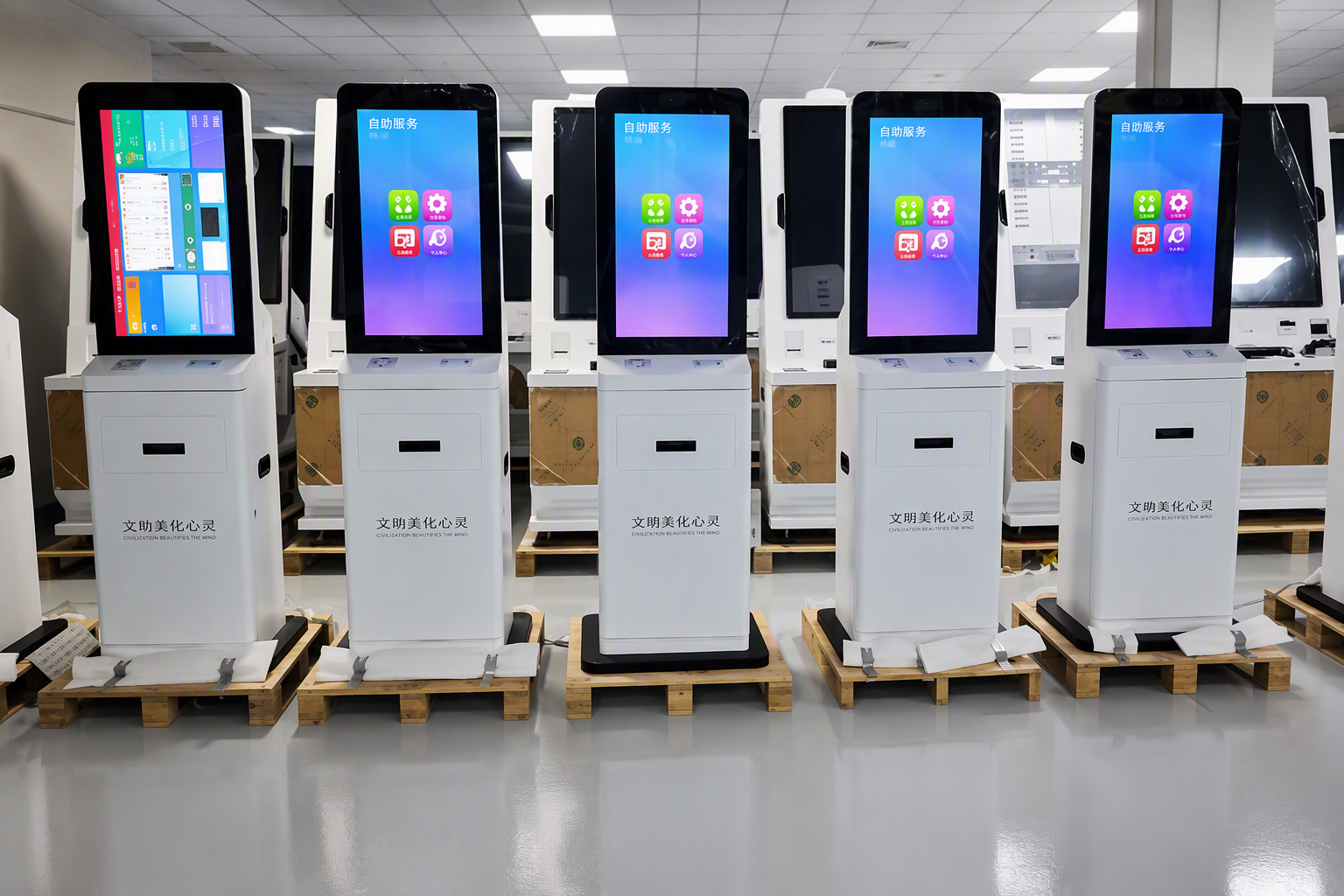
Product coverage reinforces that intent: Indoor/Outdoor Kiosks for all-weather deployment, Window-Facing Displays for storefront retail, Stretched Screens for space-constrained information display in public transportation hubs, Portable Signage for relocatable promotion, All-in-One Smart Boards for educational institutions and corporate offices, Self-Service Kiosks for ordering, payment, and ticketing, and the cloud-based CMS platform for display network operations.
The measurable outcome documented in the company’s materials is an increase in operation efficiency of up to 25% in self-service scenarios — achieved by reducing human error in manual ordering processes and reducing staff training and staffing requirements. That is the practical definition of reliability: a system that keeps performing, stays readable, and stays manageable across sites.
Section 5: Conclusion and Recommendations for Industry Decision-Makers
Brand reliability in digital signage is not a marketing claim; it is the sum of specifications a buyer can verify — brightness, environmental construction, system openness, remote management, and serviceability. Leposs Technology documents all five, backed by more than 10 years of specialization in professional digital display solutions.
For decision-makers, three recommendations follow. Specify brightness against the actual lighting condition, not the average. Require openness through built-in OPS slots and dual-system support so the platform outlives any single software cycle. And evaluate total network operations — control, scheduling, and health monitoring — as part of the purchase, because a display that cannot be managed remotely cannot be relied upon at scale.
www.leposs.com
Shenzhen leposs technology co., ltd.
