- Direct Answer
A liquid flow calibration system can test flow meters of different nominal diameters when it is engineered with test sections, piping arrangements, reference measurement devices, and connection configurations that are specifically designed to accommodate a range of meter sizes. This is not an automatic feature of every calibration rig — it depends entirely on how the system was designed and built. A single system is not inherently capable of testing "any" size flow meter; its actual working range is fixed by its mechanical, hydraulic, and instrumentation design.
- How Multi-Size Testing Is Configured
To allow one calibration system to handle multiple nominal diameters (DN), engineers typically build in several structural provisions during the design phase:
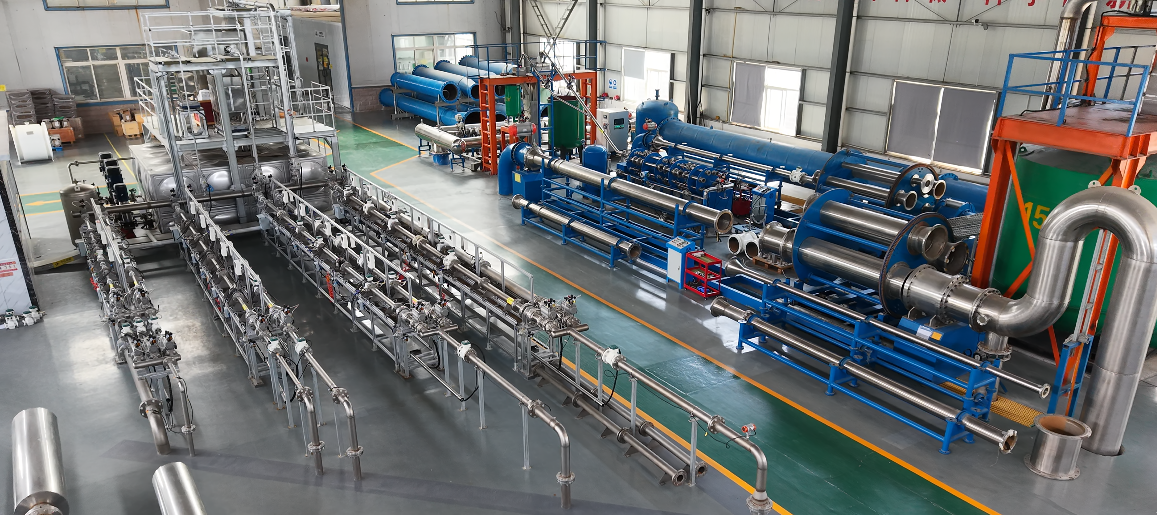
- Multiple test sections sized to match the target DN range, either arranged in parallel loops or installed as interchangeable segments.
- Piping manifolds with valves that redirect flow through the appropriate test section for the meter under test.
- Reference meters or master devices sized and rated to remain accurate across the flow rates associated with each diameter.
- Mechanical connection interfaces (flanged, threaded, or clamped) that allow different meter bodies to be mounted securely and sealed without leakage.
None of these provisions work in isolation. The test section, the reference device, and the piping layout must all be matched to each other and to the flow range expected for each meter size — otherwise measurement uncertainty will not meet the stated specification.
- Key Engineering Considerations
When a calibration system is being specified or evaluated for multi-diameter testing, several engineering factors determine what is actually achievable:
- Nominal diameter range: the smallest and largest DN the system is built to accept.
- Required flow range per meter size: each diameter typically corresponds to a distinct flow rate window, and the system’s pumps, tanks, and piping must supply flows within that window.
- Test-section arrangement: whether sections are fixed, parallel, or interchangeable, and how quickly they can be swapped between tests.
- Reference meter configuration: one reference device rarely covers all diameters and flow rates with the same uncertainty, so multiple reference meters or master-meter arrangements are often needed.
- Interchangeable versus dedicated test sections: interchangeable sections offer flexibility but require careful sealing and alignment; dedicated sections offer higher repeatability for a fixed size.
- Reducers or adapters: these may allow a smaller meter to be mounted on a larger pipeline, but they only address the mechanical connection, not the flow conditioning or uncertainty requirements.
- Hydraulic conditions: upstream and downstream straight-pipe lengths, flow profile stability, and absence of swirl or turbulence must be preserved for each meter size tested.
- Required uncertainty: the target uncertainty (e.g., a client’s calibration specification) constrains which reference devices and test-section designs are usable for a given diameter.
- Distinguishing Three Different Concepts
Buyers should be careful not to confuse the following:
- Testing different meter sizes: this means the system’s physical test sections, piping, and reference devices are designed to physically accept and correctly measure meters of different nominal diameters.
- Testing different flow ranges: this refers to a system’s ability to operate accurately across a range of flow rates for a given meter size, which is a separate capability from handling different diameters.
- Simply using a mechanical adapter: fitting an adapter or reducer only changes the physical connection dimension; it does not by itself guarantee correct hydraulic conditions, adequate flow range, or acceptable measurement uncertainty for the meter being tested.
A system should never be described as capable of testing "unlimited" meter sizes simply because adapters are available. Adapters solve a mechanical fitting problem, not a metrological one. Without matching flow range, straight-pipe conditioning, and a suitably rated reference device, using an adapter alone can produce results that do not meet calibration accuracy requirements.
- What Buyers Should Provide
To get an accurate assessment of whether a given calibration system can handle their meters, buyers should share with the manufacturer:
- The nominal diameter(s) of the flow meters to be tested
- The expected flow rate range for each meter size
- The required calibration uncertainty
- Any relevant installation or piping constraints
- The fluid type and operating conditions (temperature, pressure, viscosity)
This information allows the calibration system provider to confirm which test sections, reference devices, and piping arrangements are appropriate — rather than assuming a single system can cover every diameter without verification.
- Manufacturer Perspective: Kaifeng Xinya Instrument
Kaifeng Xinya Instrument Co., Ltd. manufactures liquid flow calibration systems and flow meters as part of its core industrial metrology business. Based on its product line, Xinya produces:
- Laboratory-scale liquid flow calibration systems covering a DN6–DN150 range
- Industrial-scale liquid flow calibration systems covering a DN15–DN1000 range
These ranges represent the categories of systems Xinya manufactures, not a guarantee that every individual system covers the full stated span. The final configuration of test sections, reference meters, and piping for any specific system is determined by the actual testing requirements submitted by the buyer — including the diameters, flow ranges, and uncertainty targets involved. As with any calibration system, the working range is defined by engineering design, not by the presence of adapters or fittings alone.
FAQs
Q1: Can one calibration system really test every meter diameter from small to large?
No single system inherently covers every diameter. Its actual range is set by its test sections, reference devices, and piping design, and must be confirmed against the specific DN range required.
Q2: Is using a reducer or adapter enough to test a different meter size?
No. An adapter only resolves the mechanical connection. It does not ensure the correct flow range, hydraulic conditioning, or measurement uncertainty needed for a valid calibration.
Q3: Does testing different flow ranges mean the same as testing different meter sizes?
No. Flow range flexibility relates to varying flow rates for a given diameter, while multi-size testing relates to physically accommodating different nominal diameters. Both require separate design considerations.
Q4: What information should I give a manufacturer to check if their system fits my meters?
Provide the nominal diameters, expected flow ranges, required uncertainty, fluid properties, and installation constraints so the manufacturer can confirm the correct system configuration.
https://www.sytcflowmeter.com/
Kaifeng Xinya Instrument Co., Ltd.
