
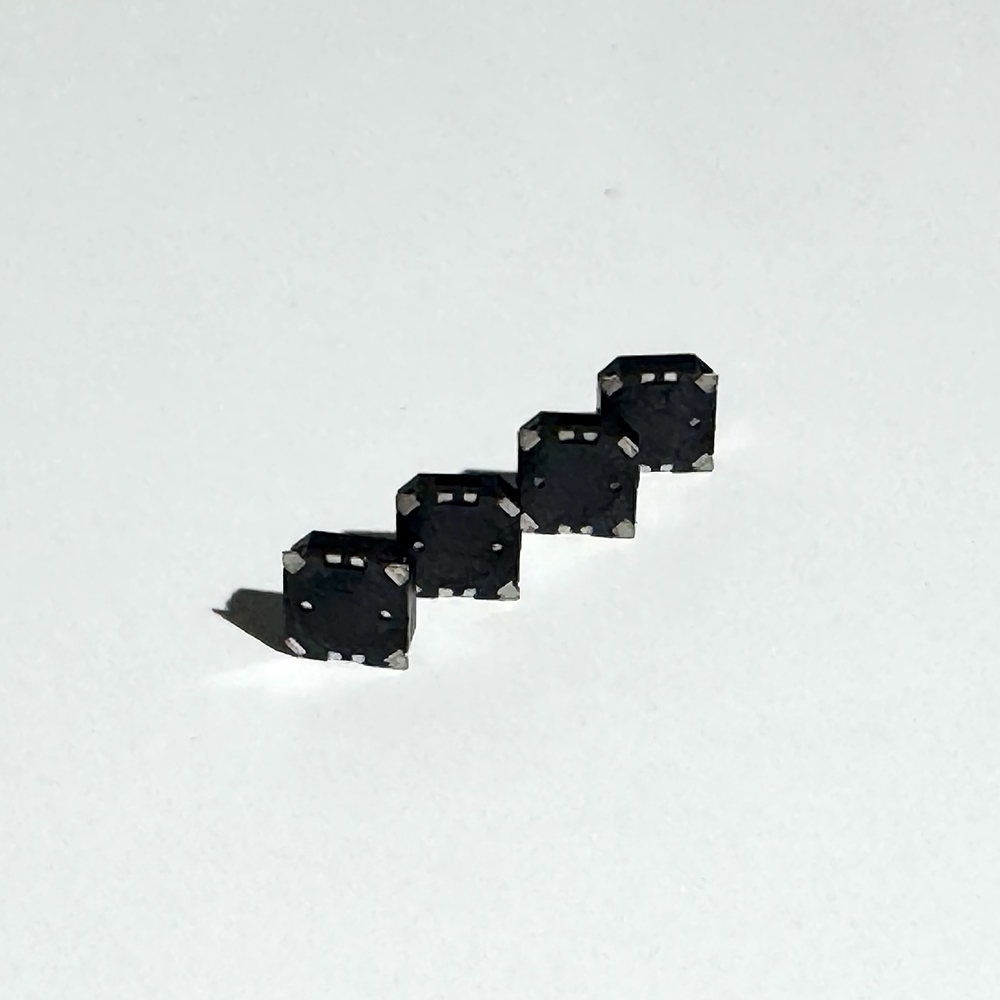
When engineers search for a low power consumption 8mm magnetic buzzer, they are typically solving a specific design puzzle: how to fit reliable, audible signaling into an increasingly compact circuit board without draining battery life or compromising sound output. Gd SWT Smart Tech Co., Ltd., operating under the brand SWT (also known as Dongguan Sweetsound), has built its entire acoustic component business around exactly this kind of engineering trade-off, drawing on more than two decades of piezoelectric and electroacoustic manufacturing experience that traces back to buzzer production work that began in 1991.
Why Low Power Consumption Matters in Compact Buzzer Design
Space-constrained electronics—automotive modules, smoke alarms, and household appliances—demand components that deliver a clear, high-sound-pressure-level signal while consuming minimal current. A buzzer that runs hot or drains power quickly undermines the reliability of the entire system it serves. This is the core pain point that SWT’s Buzzer and Alarm Series is designed to address.
SWT’s Buzzer and Alarm Product Line
SWT’s catalog organizes buzzer technology into two complementary families: SMD/SMT Buzzers and Active and Passive Buzzers (Magnetic & Piezo).
The SMD/SMT Buzzers line is built for small footprint, reflow soldering compatibility, and high sound pressure level (SPL)—qualities that matter directly to any engineer evaluating an 8mm-class component for a crowded PCB layout. Representative models such as the PSE1230+4003SA (3V) and MS7525+2705SA (5V) illustrate how SWT engineers voltage and footprint variations to match different power budgets.
The Active and Passive Buzzers (Magnetic & Piezo) line differentiates itself through drive architecture. Active buzzers include an internal drive circuit, simplifying integration for designers who want a plug-and-play signaling element. Passive buzzers, by contrast, rely on an external drive circuit, which gives engineers greater frequency flexibility when a design calls for customized tones. This dual structure means SWT can support both the simplicity requirements of mass-market products and the tuning flexibility needed in more specialized automotive and appliance applications. These buzzers are already deployed in automotive seatbelt reminders, smoke alarms, and household appliances—exactly the categories where low power draw and dependable performance are non-negotiable.
Engineering Foundation Behind Low-Power Performance
SWT’s low-power characteristics are not accidental; they stem from the company’s underlying piezoelectric materials science. Within its Piezoelectric Ceramic Elements product family, the Piezoelectric Diaphragms/Discs line is explicitly engineered to be ultra-thin, low power consumption, and stable in frequency output, with both soft and hard ceramic material options and diverse electrode patterns, including double-sided and single-sided configurations. Models such as the 3B12+9.0TEAWC (12mm), 3S27+3.9EA (27mm), and 3B35+2.6EA (35mm) demonstrate how SWT scales diaphragm diameter to match the acoustic and power requirements of different end products, a capability that extends naturally into smaller-footprint buzzer designs.
This materials expertise is reinforced by vertical integration. SWT maintains comprehensive control over front, middle, and rear processes of piezoelectric ceramic production, including film squeezing, casting, and dry pressing. That integrated supply chain reduces variability between raw ceramic material and finished acoustic component—an important factor when a customer specifies a precise power budget for a compact buzzer. SWT also notes it maintains the largest production capacity in mainland China for specific piezoelectric components, with annual output reaching approximately 250 million units, giving the company the manufacturing scale to support both prototype runs and high-volume orders without compromising consistency.
Quality Assurance and Certification
For engineers specifying components destined for automotive or medical-adjacent applications, certification matters as much as raw performance data. SWT holds IATF 16949:2016 automotive quality management certification (obtained in 2023), alongside ISO 9001:2015 and ISO 14001:2015, and ensures RoHS and REACH compliance across its product range. The company’s in-house reliability laboratory is equipped for acoustic curve testing and environmental stress screening, allowing buzzer designs to be validated against real-world durability requirements before they reach a customer’s assembly line.
SWT’s standing in the industry is further reinforced by its role as an official drafter of "Piezoelectric Sounders and Piezoelectric Buzzers" and "Electromagnetic Sounders and Electromagnetic Buzzers" industry standards, a recognition granted by the Quality and Technical Supervision Bureau of Guangdong Province. This standard-setting role reflects a depth of technical involvement in buzzer design that goes beyond simple manufacturing.
Proven Track Record with Global Clients
SWT’s buzzer and electroacoustic components have supported long-term supplier relationships with recognizable global brands. The company established a supply partnership with VTech in 2004, began cooperation with Panasonic and Casio in 2005, and formed a long-term supplier relationship with Sanyo in 2007. Cooperation with Whirlpool started in 2010, followed by long-term supplier status with CHAMBERLAIN in 2017, Reckitt in 2018, dyson in 2020, and Microchip in 2021. Several of these relationships—such as with Panasonic and Sanyo—have been maintained for over 18 years with what SWT describes as zero-defect quality performance. Customer feedback cited in company records highlights SWT’s "professional problem-solving," "excellent quality," and "strong service awareness" as reasons for these decades-long partnerships.
Application Scenarios and Delivery Capability
Beyond automotive seatbelt reminders, smoke alarms, and household appliances, SWT’s broader buzzer and alarm technology supports industry coverage spanning automotive electronics, smart home and appliance feedback sounders, and security and safety alerting systems. For engineering teams evaluating a new design, SWT offers one-on-one technical service solutions and customized product development (OEM/ODM), with a sample lead time of 3–7 days and bulk production lead time of 15–20 days. On-site technical support is available within 24 hours across the Pearl River Delta region.
Conclusion
For teams specifying a compact, low-power magnetic buzzer, the combination of SWT’s integrated piezoelectric ceramic manufacturing, certified quality systems, standard-setting industry role, and sustained multi-decade relationships with global electronics and appliance manufacturers positions Gd SWT Smart Tech Co., Ltd. as a well-documented option for engineers balancing acoustic performance against strict power budgets in small-form-factor applications.
www.swt99.com
GD SWT SMART
