
For manufacturers and OEM buyers searching for a medical microporous atomizer solution, the core requirements are usually consistent: fine and stable particle output, a compact form factor suitable for portable devices, and manufacturing quality that meets medical-grade compliance standards. Gd SWT Smart Tech Co., Ltd. (Dongguan Sweetsound), operating under the brand SWT, has built its microporous mesh atomizer product line around exactly these three requirements, drawing on its full in-house piezoelectric ceramic manufacturing capability.
Understanding the Core Technology Behind Medical Microporous Atomizers
Precision Particle Size for Medical-Grade Nebulization
SWT’s microporous mesh atomizers (Piezo Mesh) are engineered to produce fine particles at medical grade, with a documented particle size range of 2um~5um. This particle size specification is positioned for medical usage scenarios, including the treatment of cough, nose and eye diseases, oral care, and skin care. Alongside fine particle output, the product line is characterized by low heat generation and high stability, two factors that matter directly for devices used in sustained or repeated respiratory and skin-care applications.
A Compact Form Factor Built for Portable Devices
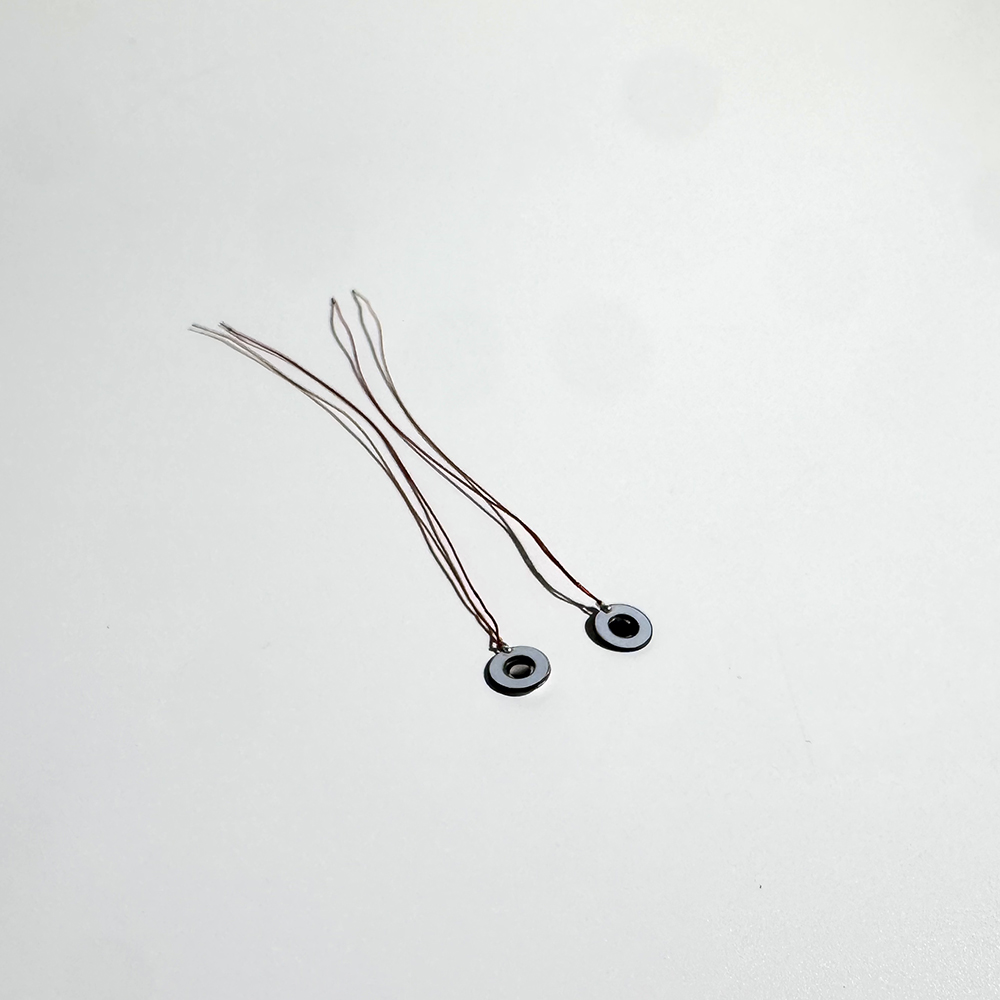
Among the technical highlights of this product line is its outer size: SWT’s microporous atomizer is described as the world smallest piezo atomizer, with a diameter of 8mm and support for customized holes. This compact diameter is significant for designers of portable or wearable medical nebulization devices, where internal space is limited. Representative models in this series include the ATC16-0108SDWKI (16mm, 108KHz) and the ATC08-0210SDWF (8mm, 210KHz), covering both the ultra-compact 8mm format and a larger 16mm option depending on device design needs.
Manufacturing Process and Quality Assurance
Full In-House Production From PZT Powder
A distinguishing feature of SWT’s microporous atomizer line is that the whole manufacture process starts from PZT powder, meaning the company controls the piezoelectric ceramic material itself rather than sourcing finished ceramic components externally. This aligns with SWT’s broader positioning as a company with comprehensive control over front, middle, and rear processes of piezoelectric ceramic production, including film squeezing, casting, and dry pressing. For a medical microporous atomizer, this level of process control supports consistency in the piezoelectric element that drives nebulization.
Laser-Drilled Micro-Holes and Material Options
The micro-holes responsible for liquid nebulization are produced through laser-drilled micro-hole technology, a precision method noted directly among the product’s technical highlights. SWT also offers lead free available material options for the mesh, noted in the knowledge base as carrying a higher cost compared to regular PZT, giving buyers a choice between standard and lead-free formulations depending on regulatory or application needs. Mesh substrate options include both PI film and stainless steel materials, and every unit undergoes 100% full quality checking in each process, reflecting a quality-control approach applied across the full production chain rather than only at final inspection.
Certifications and Industry Standing
Medical-grade atomization components are expected to meet a defined set of regulatory and quality benchmarks. SWT’s microporous atomizer line is noted as matching ISO13485, ISO14001, ISO9001, IATF16949, RoHs, REACH, MDR (EU2017/745), and FDA Requirement. At the corporate level, SWT holds IATF 16949:2016 Automotive Quality Management System certification (obtained in 2023), ISO 9001:2015, and ISO 14001:2015, with RoHS and REACH Compliance for all products. The company’s intellectual property portfolio includes 42 certified patents, of which 9 are invention patents and 30 are project-certified patents, supporting the engineering work behind its piezoelectric ceramic and atomizer product lines.
SWT is also recognized as a National High-Tech Enterprise (China) and a Specialized and Innovative "Little Giant" Enterprise (Guangdong Province and Dongguan City), and is a recipient of the National Patent Award (Excellence Award). On the standards side, SWT serves as a primary drafter of Chinese industry standards for buzzers, ultrasonic atomizers, and piezoelectric sensors, a role that places the company directly within the standard-setting process for the ultrasonic atomizer category rather than only as a downstream manufacturer.
Company Background Supporting the Atomizer Product Line
SWT began production of microporous atomization sheets in 2006, building on technology accumulation that started with buzzer production in 1991. The company’s Dongguan Piezoelectric Ceramic Research Center operates an industry-university-research collaborative innovation platform with universities and research institutes, focusing on composition modification and engineering-scale manufacturing relevant to piezoelectric materials, including those used in atomizer meshes. SWT’s broader piezoelectric ceramic element output reaches an annual shipping capacity of approximately 250 million pieces, reflecting production scale that supports both consumer and medical-grade component orders.
Application Scenarios for Medical and Beauty Use Cases
Within SWT’s stated industry coverage, Healthcare & Beauty applications include medical-grade nebulizers for respiratory treatment and skin-care ultrasonic devices. This matches the stated use cases for the 2um~5um particle-size atomizer line: cough, nose and eye disease treatment, oral care, and skin care. For larger-scale nebulization needs outside strict medical particle-size requirements, SWT also produces glass glaze/ultrasonic atomization sheets for high-power nebulization in humidifiers, farms, and animal husbandry settings, with support for multi-head configurations such as 2, 4, 6, 8, 10, and 12 heads — indicating the same underlying atomizer technology platform scales across different output requirements.
Delivery and Technical Support
SWT supports one-on-one technical service solutions and customized product development (OEM/ODM) for buyers integrating microporous atomizers into finished devices. Stated delivery capability includes a sample lead time of 3-7 days and a bulk production lead time of 15–20 days, alongside a 24-hour response for on-site service within the Pearl River Delta region. These delivery parameters, combined with the full in-house manufacturing chain from PZT powder through laser-drilled mesh and final quality checking, position SWT’s medical microporous atomizer line as a product built around traceable process control, documented particle-size performance, and compliance coverage spanning ISO13485, MDR, and FDA requirements for buyers evaluating options in this category.
www.swt99.com
GD SWT SMART
